
Die 5-Achs-CNC-Bearbeitung von Aluminiumteilen und das CNC-Drehen decken die beiden sich ergänzenden Verfahren ab, die den meisten Präzisionsbauteilen aus Aluminium zugrunde liegen: das Fräsen komplexer 3D-Geometrien in einer einzigen Aufspannung und das Drehen rotationssymmetrischer Teile mit hohem Durchsatz. Für Einkäufer von Aluminiumgehäusen, Halterungen, Wellen, Verteilern oder optischen Halterungen bestimmt die Wahl zwischen 5-Achs-Bearbeitung und CNC-Drehen (oder einer Kombination aus beidem) Toleranz, Oberflächengüte, Lieferzeit und Stückkosten. Dieser Leitfaden erläutert die technischen Grundlagen, das Materialverhalten, die Toleranzphilosophie und die Beschaffungskriterien – mit den detaillierten Spezifikationen, die Sie für eine präzise Angebotsanfrage benötigen.
TL;DR – Wichtigste Erkenntnisse
- Die 5-Achs-Bearbeitung hält das Werkstück fest in eine Aufstellung bei Annäherung aus fünf Richtungen, Dadurch werden die Positionierungsfehler vermieden, die sich bei mehreren 3-Achsen-Systemen summieren.
- CNC-Drehen ist der Durchsatzmeister für runde Teile – Wellen, Buchsen, Bolzen – und erreicht ±0,005 mm bei Durchmessern mit Schweizer Drehmaschinen.
- Die Aluminiumlegierungen 6061-T6 und 7075-T6 sind die dominierenden Werkstoffe für die CNC-Bearbeitung von Aluminium; 6061 bietet ein ausgewogenes Verhältnis von Kosten und Bearbeitbarkeit, 7075 liefert Festigkeit in Luft- und Raumfahrtqualität zu höheren Kosten.
- 5-Achsen-Aluminiumteile erreichen ±0,01 mm auf komplexen, konturierten Oberflächen; gedrehte Aluminiumteile erreichen ±0,005 mm auf kritischen Durchmessern.
- Die Rückverfolgbarkeit der Materialien wurde mittels OES, CMM-Inspektion und dokumentiertem Cpk überprüft, um OEM-Lieferanten von Lohnfertigern zu unterscheiden.
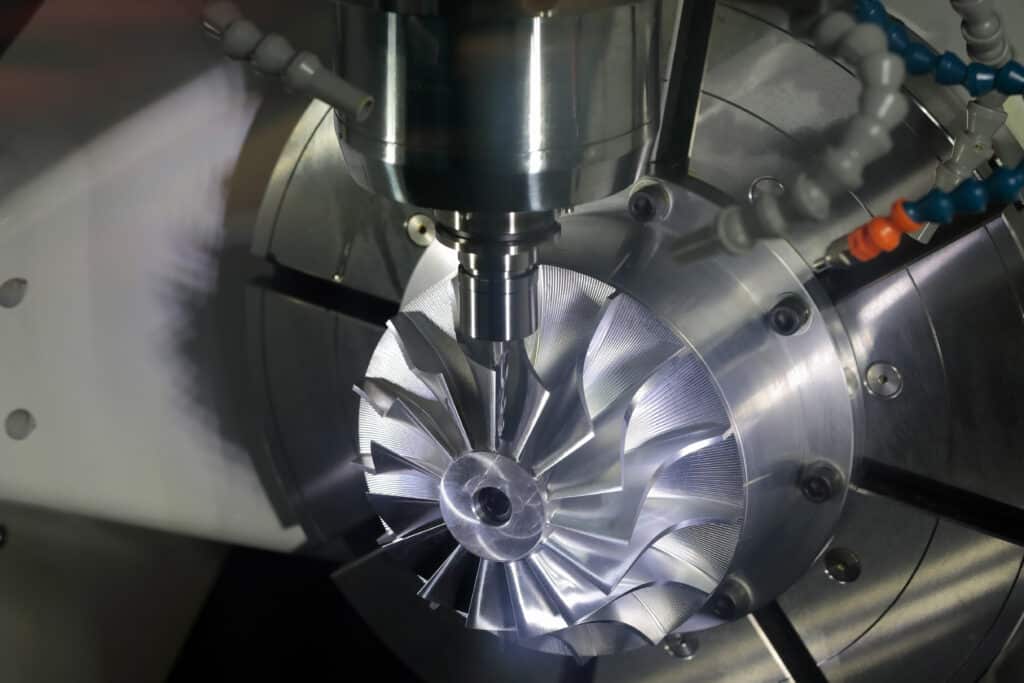
Worin besteht der Unterschied zwischen 5-Achs-Bearbeitung und CNC-Drehen?
Die beiden Verfahren lösen unterschiedliche geometrische Probleme. 5-Achs-Bearbeitung Das Werkzeug bewegt sich entlang fünf Achsen um ein stationäres oder rotierendes Werkstück – drei linearen (X, Y, Z) und zwei rotatorischen (typischerweise A und C). Dadurch kann das Werkzeug Hinterschnitte, schräge Vorsprünge und Konturflächen erreichen. ohne Neubefestigung. CNC-Drehen Das Werkstück wird gegen ein stationäres Schneidwerkzeug gewendet; ideal für alle Teile mit Rotationssymmetrie.
| Attribut | 5-Achs-Bearbeitung | CNC-Drehen |
|---|---|---|
| Optimale Geometrie | Komplexe 3D-Konturen, Hinterschneidungen, abgewinkelte Merkmale | Runde Teile: Wellen, Buchsen, Bolzen, Armaturen |
| Anzahl der Setups | Eine (einzelne Vorrichtung) | Eins bis zwei |
| Toleranz (Aluminium) | ±0,01 mm auf den Konturen | ±0,005 mm bei Durchmessern |
| Oberflächengüte (Ra) | 0,4–1,6 μm | 0,4–1,6 μm |
| Lautstärke-optimaler Bereich | 1–2.000 Stück | 50–1.000.000+ Stück |
| Zykluszeit | Länger (Mehrachseninterpolation) | Kurz (hohe Spindeldrehzahl) |
| Typischer Kostenindex | 2,0× | 0,6–1,0× |
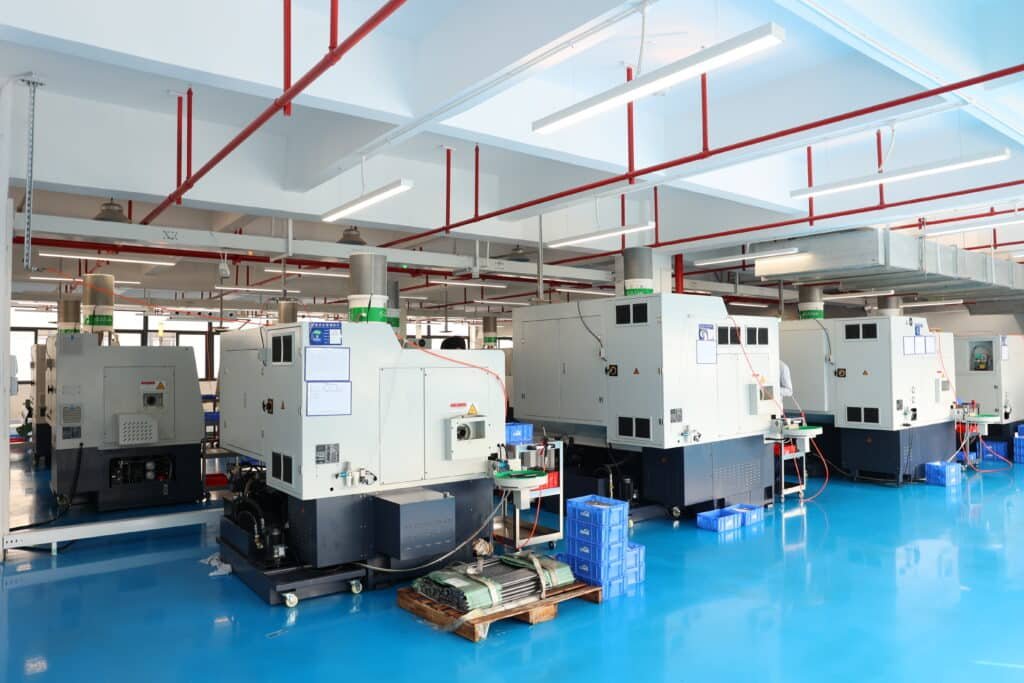
Viele reale Bauteile benötigen beides. Eine gedrehte Aluminiumwelle mit einer gefrästen Fläche und einer Querbohrung wird zunächst auf einer Drehbank und anschließend auf einer Fräsmaschine bearbeitet – oder auf einem Dreh-Fräs-Zentrum, das beides in einer Maschine vereint. KeyFix's CNC-Bearbeitungsfähigkeit Deckt beide Enden dieses Spektrums ab und betreibt STS C-Series 5-Achs-Bearbeitungszentren sowie Langdrehautomaten unter einem Dach.
💡 Anmerkung des Ingenieurs: Wenn Ihr Teil rund ist und einige wenige außermittige Merkmale aufweist, geben Sie an, dass Fräs-Drehmaschine (mit angetriebenen Werkzeugen) Anstatt Dreh- und Fräsvorgänge separat durchzuführen, kombiniert die Dreh-Fräs-Anlage beides in einer einzigen Aufspannung. Dadurch wird der Umspannfehler vermieden, der die Positionstoleranz zwischen den gedrehten und gefrästen Elementen beeinträchtigt.
Warum Aluminium für CNC-gefräste Teile wählen?
Aluminium ist aus vier Gründen das am häufigsten bearbeitete Metall in der Präzisionsfertigung: Bearbeitbarkeit, Gewicht, Leitfähigkeit und Korrosionsbeständigkeit.
Bearbeitbarkeit — Aluminium lässt sich schneller bearbeiten als Stahl, Edelstahl oder Titan, mit einer Bearbeitbarkeitsrate von etwa 70–90 % Automatenmessing. Höhere Schnittgeschwindigkeiten bedeuten kürzere Zykluszeiten und geringere Stückkosten.
Gewicht - Bei 2,70 g/cm³, Aluminium ist ungefähr ein Drittel der Dichte von Stahl, Damit ist es der Standard für gewichtskritische Komponenten in der Luft- und Raumfahrt, der Automobilindustrie und der Robotik.
Wärme- und elektrische Leitfähigkeit — Aufgrund seiner hohen Wärmeleitfähigkeit eignet sich Aluminium für Kühlkörper, Elektronikgehäuse und HF-Gehäuse.
Korrosionsbeständigkeit — Aluminium bildet eine selbstschützende Oxidschicht; durch Anodisieren wird diese noch weiter verbessert, sodass sie für den Einsatz im Freien und auf See geeignet ist.
| Aluminiumlegierung | Streckgrenze (MPa) | Bearbeitbarkeit | Korrosion | Beste Anwendung |
|---|---|---|---|---|
| 6061-T6 | 276 | Exzellent | Gut (Anodisieren verbessert sich) | Universalhalterungen, Gehäuse, Platten |
| 7075-T6 | 503 | Gut | Mittel (Anodisierung erforderlich) | Strukturbauteile für die Luft- und Raumfahrt, hochbelastete Bauteile |
| 2024-T3 | 345 | Gut | Mäßig | Flugzeugbeschläge, ermüdungskritische Teile |
| 5052-H32 | 193 | Gut (gummibärchen) | Ausgezeichnet (maritim) | Blechgehäuse, Schiffsbeschläge |
| 6063-T5 | 145 | Exzellent | Gut | Extrudierte Profile, Architektur |
Für die meisten 5-Achs-CNC-Bearbeitungsteile aus Aluminium und CNC-Drehteile, 6061-T6 ist der Standardwert für das Volume. Es bietet ein ausgewogenes Verhältnis von Kosten, Bearbeitbarkeit und mechanischer Leistungsfähigkeit. 7075-T6 ist Anwendungen vorbehalten, bei denen das Verhältnis von Festigkeit zu Gewicht von größter Bedeutung ist und die höheren Materialkosten gerechtfertigt sind.
Welche Toleranzen sind bei der 5-Achs-Bearbeitung von Aluminium möglich?
Die Toleranzfähigkeit von Antriebsmaschinen ist teurer als jede andere Spezifikation. Das Prinzip: Geben Sie die Toleranz an, die Ihre Funktion erfordert, nicht die engste Toleranz, die die Maschine einhalten kann.
| Toleranzklasse | Wert (mm) | Kostenmultiplikator | Prüfverfahren | Aluminiumanwendung |
|---|---|---|---|---|
| Allgemein (ISO 2768-m) | ±0,10–0,20 | 1,0× | Bremssattel | Nichtkritische Klammern |
| Fein (ISO 2768-f) | ±0,05–0,10 | 1,3× | Mikrometer, Höhenmesser | Montageschnittstellen |
| Präzision | ±0,02–0,05 | 1,8× | Messuhr, Koordinatenmessgerät | Lagerpassungen, Ausrichtung |
| Hohe Präzision | ±0,01–0,02 | 2,5× | CMM | Optische Halterungen, Dichtflächen |
| Höchste Präzision | ±0,005–0,01 | 4,0× | CMM, temperaturgesteuert | Halbleiterwerkzeuge |
Eine präzise Aluminiumzeichnung definiert einige kritische Merkmale mit engen Toleranzen und erlaubt ansonsten größere Toleranzen – wodurch die Prüfzeit um 40–60 % verkürzt wird, ohne die Funktion zu beeinträchtigen. KeyFix verifiziert kritische Merkmale anhand von CMM-Messungen bei ±0,001 mm Genauigkeit, mit vollständiger Dokumentation der Erstmusterprüfung durch seine Qualitätskontroll- und Inspektionsstandards Programm.
⚠️ Häufige Fehlerquelle: Die Anwendung einer pauschalen Toleranz von ±0,01 mm auf alle Abmessungen eines Aluminiumbauteils – einschließlich nicht-funktionaler Merkmale – kann die Prüfkosten verdoppeln und die Ausschussrate verdreifachen. Ultrapräzisionstoleranzen sollten nur für die 3–8 Merkmale reserviert werden, die sie tatsächlich erfordern.
Welche Oberflächenbehandlungen und -veredelungen eignen sich für CNC-gefräste Aluminiumteile?
CNC-gefertigte Aluminiumteile benötigen häufig eine Oberflächenbehandlung zum Schutz vor Korrosion, zur Verbesserung der Verschleißfestigkeit, der elektrischen Eigenschaften oder des Aussehens. Die natürliche Oxidschicht schützt das unbehandelte Aluminium, aber speziell entwickelte Oberflächenbehandlungen verlängern die Lebensdauer deutlich.
| Behandlung | Dicke (μm) | Schlüsselobjekt | Aussehen | Optimale Nutzung |
|---|---|---|---|---|
| Typ II Anodisierung | 5–25 | Korrosion + Farbe | Klar oder gefärbt | Für drinnen und draußen geeignet, dekorativ |
| Hartanodisierung Typ III | 25–75 | Verschleißfestigkeit (400+ HV) | Grau bis Schwarz | Hochbeansprucht, industriell |
| Chromat-Umwandlung (Alodine) | 0,5–4 | Elektrische Leitfähigkeit + Korrosion | Gold oder klar | Erdung, HF-Gehäuse |
| Kugelstrahlen | Oberflächenstruktur | Gleichmäßig matt | Satingrau | Kosmetische Vorbereitung |
| Pulverbeschichtung | 60–120 | Korrosion + Farbe | Jede RAL-Farbe | Außengehege |
| Gebürstet + Klar eloxiert | 8–15 | Hochwertige Ästhetik | Gebürstetes Metallic | Konsumgüter |
KeyFix koordiniert Anodisierung, Chromatierung und Pulverbeschichtung über qualifizierte Partnerunternehmen und betreibt gleichzeitig eigene Zink-Nickel- und DACROMET-Anlagen für Stahlbauteile – detaillierte Informationen dazu finden Sie in der Produktbeschreibung. Rohmaterial und Oberflächenbehandlung Seite.
Wie werden 5-Achs-Aluminiumteile und CNC-Drehteile hergestellt?
Der Produktionsablauf hängt von Geometrie, Volumen und Toleranz ab. Die folgende Tabelle ordnet die Prozesse den jeweiligen Teiletypen zu.
| Verfahren | Am besten geeignet für | Volumen | Toleranz | KeyFix-Funktion |
|---|---|---|---|---|
| 5-Achs-Simultanfräsen | Laufräder, konturierte Gehäuse, Hinterschneidungen | 1–2.000 | ±0,01 mm | STS C-Serie 5-Achs-Bearbeitungszentren |
| 3+2-Positionen-Fräsen | Schräge Bohrungen, mehrseitige prismatische Teile | 1–5.000 | ±0,02 mm | 5-Achsen im Positionsmodus |
| CNC-Drehen (2-Achsen) | Wellen, Buchsen, einfache runde Teile | 50.000–100.000 | ±0,02 mm | Schweizer Drehmaschinen und Spanndrehmaschinen |
| Schweizer Drehen | Kleine, schlanke Präzisionsteile (≤32 mm) | 500–1.000.000+ | ±0,005 mm | SYNTEC-gesteuerte Schweizer Drehmaschinen |
| Fräsdrehmaschine (angetriebene Werkzeuge) | Runde Teile mit außermittigen Merkmalen | 50–50.000 | ±0,01 mm | Kombinierte Dreh- und Fräszellen |
KeyFix betreibt STS C-Serie 5-Achs-Bearbeitungszentren mit Spindeldrehzahl 4000 U/min, Präzision ±0,005 mm und Z-Achsen-Verfahrweg 250 mm, Die Anlage bearbeitet komplexe Bauteile mit einem Durchmesser von 35 bis 71 mm mithilfe eines SYNTEC CNC-Systems. Dieses Anlagenprofil wird ausführlich auf der Website erläutert. Bearbeitungstechnologie Überblick – umfasst alles von Prototypen für 5-Achs-Aluminiumgehäuse bis hin zu Serienfertigungen von Drehteilen.
Benötigen Sie ein Angebot für 5-Achs-Aluminium- oder CNC-Drehteile? Senden Sie Ihre STEP-Datei oder Zeichnung an die KeyFix-Ingenieure – Sie erhalten innerhalb von 48 Stunden eine DFM-Prüfung und ein Angebot. Hier ein Angebot anfordern oder senden Sie eine E-Mail an sales@keyfixpro.com.
Was sollte in einer CNC-Zeichnung für Aluminium angegeben werden?
Eine vollständige Zeichnung verhindert das Hin und Her, das die Angebotserstellung verzögert und die Ablehnungsquote erhöht.
| Zeichnungsaufruf | Was anzugeben ist | Warum es wichtig ist |
|---|---|---|
| Legierung und Härtegrad | z. B. 6061-T6, 7075-T6 | Antriebsfestigkeit, Bearbeitbarkeit, Kosten |
| Kritische Toleranzen | Merkmalspezifisch (z. B. ±0,01 mm Bohrung) | Passform und Funktion der Bedienelemente |
| Oberflächengüte (Ra) | Pro Oberfläche (z. B. Ra 0,8 μm Dichtfläche) | Kosten für die Fertigstellung der Laufwerke |
| Oberflächenbehandlung | Art, Dicke, Abdeckbereiche | Definiert Korrosion + Aussehen |
| Thread-Aufrufe | Standard ISO/UNC-Gewinde | Vermeidet den Zuschlag für Spezialwerkzeuge |
| Randzustand | Entgraten, Anfasen, Radiusvorgabe | Beeinträchtigt die Handhabungssicherheit und die Montage. |
| Materialzertifizierung | Werksbescheinigung, RoHS/REACH-Konformitätsbescheinigung (falls erforderlich) | Erforderlich für regulierte Branchen |
KeyFix bearbeitet Aluminiumteile für die Bereiche Automobil, Luft- und Raumfahrt, Elektronik und Maschinenbau. Automobilbefestigungs- und Komponentenprogramme Und Leichtbau-Rennkomponenten demonstrieren Sie die Bandbreite der Aluminiumarbeiten, die nach OEM-Spezifikation ausgeführt werden.
Wie qualifiziert man einen Hersteller von 5-Achs-CNC-Maschinen für Aluminium?
Die Beschaffung von Präzisionsbauteilen aus Aluminium erfordert die Überprüfung sowohl der Ausrüstung als auch der Qualitätssysteme.
| Prüfpunkt | Mindestanforderung | KeyFix-Status |
|---|---|---|
| Qualitätssystem | ISO 9001-Mindeststandard | IATF 16949 + ISO 9001 + ISO 14001 |
| 5-Achs-Ausrüstung | Moderne Mehrachsenzentren | STS C-Serie 5-Achsen, SYNTEC-Steuerung |
| Materialprüfung | OES auf eingehendem Aluminium | AMETEK OES auf 100 % von Wärmemengen |
| Dimensionskontrolle | Koordinatenmessgerät mit dokumentierter Genauigkeit | CMM mit einer Genauigkeit von ±0,001 mm, temperaturgeregelt |
| Oberflächenbeschaffenheitsprüfung | Profilometer | Digitale Rauheitsmessgeräte |
| SPC-Implementierung | Cpk ≥ 1,33 bei kritischen Dimensionen | Cpk ≥ 1,67, Echtzeit-SPC |
| Erster Artikel berichtet | Vollständige dreidimensionale Anordnung | AS9102 / PPAP Level 3-fähig |
| Rückverfolgbarkeit | Pro Charge bis zur Materialwärme | Digitale Rückverfolgbarkeit pro Charge |
Der vertikal integrierte Campus von KeyFix vereint 5-Achs-CNC-Bearbeitung, Kaltumformung, Und Präzisionsstanzen unter einem einheitlichen IATF 16949 Qualitätssystem, das eine dokumentierte Fehlerquote von 0 PPM in über 100 Programmen in mehr als 20 Ländern unterstützt.
Welche Logistik- und Versandbedingungen gelten?
| Begriff | Detail |
|---|---|
| Produktionsstandort | Huizhou, Provinz Guangdong |
| Standardversandbedingungen | FCA Dongguan |
| Seefrachtbegriff | FOB Hafen Shenzhen Yantian |
| Prototypen-Vorlaufzeit | 7–14 Werktage (Luftfracht-Express) |
| Produktionsvorlaufzeit | 4–6 Wochen nach PPAP-Zulassung |
Die Nähe des Produktionsstandorts Huizhou zu Dongguan und dem Hafen Shenzhen Yantian optimiert die Exportlogistik – die fertigen Aluminiumteile gelangen innerhalb kurzer Binnenstrecken vom Bearbeitungszentrum zum Hafen, wodurch sich die Transitzeit und die Frachtkosten für internationale Käufer verringern.
Häufig gestellte Fragen
Wie hoch ist die Mindestbestellmenge für 5-Achs-CNC-Aluminiumteile?
Die Prototypenmengen beginnen bei 10 Stück Für CNC-gefräste Aluminiumteile mit Lieferzeiten von 7–14 Tagen per Luftfracht. Die Produktionsmengen lassen sich effizient skalieren von 100 Stück Die Preise steigen mit zunehmender Stückzahl, wobei gestaffelte Preise für 1.000, 10.000 und über 100.000 Stück gelten. Die Fertigung mittels Schweizer Drehautomaten ist ab einer Stückzahl von 10.000 am kostengünstigsten.
Welche Zertifizierungen besitzt KeyFix für die CNC-Bearbeitung?
KeyFix hält IATF 16949, ISO 9001, Und ISO 14001 Zertifizierungen. Vollständige Erstmusterprüfberichte, Materialzertifikate und PPAP-Level-3-Dokumentation sind Standard für OEM-Programme. Das gesamte Qualitätssystem ist detailliert beschrieben in der Inspektionsstandards Dokumentation.
Kann KeyFix sowohl 5-Achs-gefräste als auch CNC-gedrehte Aluminiumteile bearbeiten?
Ja. KeyFix setzt STS C-Serie 5-Achs-Bearbeitungszentren für komplexe Konturteile und Langdrehmaschinen für präzisionsgedrehte Komponenten sowie Dreh-Fräs-Zellen für runde Teile mit außermittigen Merkmalen ein. Diese Kombination deckt das gesamte Geometriespektrum eines einzigen Anbieters ab.
Welche Aluminiumlegierungen verarbeitet KeyFix?
KeyFix Maschinen verarbeiten Aluminiumlegierungen der Typen 6061-T6, 7075-T6, 2024-T3, 5052-H32 und 6063-T5. Das eingehende Material wird von AMETEK OES geprüft. Kundenspezifische Legierungsanforderungen werden mit Werkszertifikat erfüllt.
Welche Lieferzeiten und Versandbedingungen gelten?
Die Prototypenfertigung dauert 7–14 Werktage; die Serienproduktion wird 4–6 Wochen nach PPAP-Freigabe versandt. Standardversandkosten: FCA Dongguan, mit Seefracht als FOB Hafen Shenzhen Yantian aus dem Produktionswerk Huizhou.
Wie gewährleistet KeyFix die Maßgenauigkeit bei 5-Achs-Aluminiumteilen?
Durch CMM-Inspektion bei ±0,001 mm Die Genauigkeit wird in einem temperaturkontrollierten Messraum gewährleistet, kombiniert mit einer Echtzeit-SPC-Überwachung, die einen Cpk-Wert von ≥ 1,67 für kritische Abmessungen anstrebt. Jede neue Teilenummer wird mit einem dokumentierten Erstmusterprüfbericht versehen.
Benötigt Ihr nächstes Projekt CNC-bearbeitete Aluminiumteile (5-Achs-Bearbeitung) oder CNC-Drehteile – Gehäuse, Halterungen, Wellen, Verteiler oder Präzisionsbauteile? Dann senden Sie Ihre Zeichnung oder STEP-Datei an das Entwicklungsteam von KeyFix. Wir erstellen Ihnen innerhalb von 48 Stunden kostenlos ein DFM-Angebot. Mehr erfahren Produktportfolio oder Kontaktieren Sie KeyFix an sales@keyfixpro.com.
Autor: KeyFix-Entwicklungsteam Veröffentlicht: 31. Mai 2026 Letzte Aktualisierung: 31. Mai 2026