
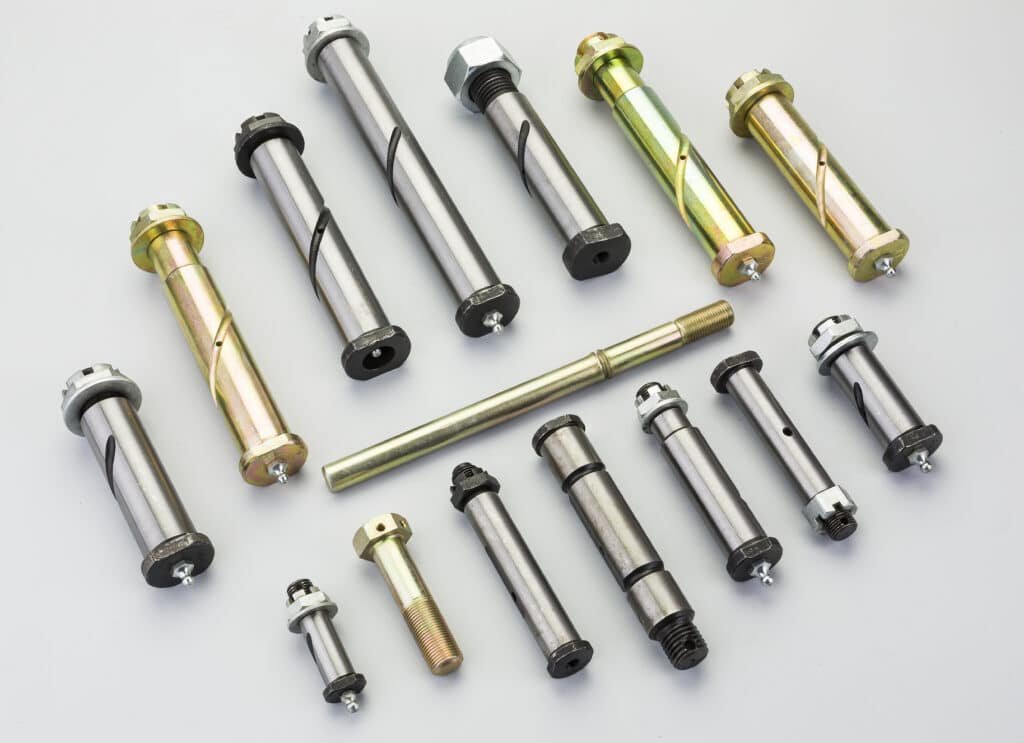
Bei der Beschaffung kundenspezifische Hülsenbearbeitungsteile Ob es sich um eine Edelstahlbuchse für eine Hydraulikbaugruppe oder eine Aluminiumbuchse für einen Querlenker in der Automobilaufhängung handelt – die Materialwahl, die Toleranzvorgaben und die Oberflächenbeschaffenheit beeinflussen Lebensdauer, Passgenauigkeit und Stückkosten. Dieser Leitfaden bietet OEM-Ingenieuren und Einkaufsleitern das technische Rüstzeug, um Edelstahl- und Aluminiumbuchsenkomponenten korrekt zu spezifizieren und den passenden Bearbeitungspartner vor der Angebotsanfrage auszuwählen.
TL;DR – Wichtigste Erkenntnisse
- Edelstahlhülsen (303, 304, 316) weisen Toleranzen auf ±0,01 mm oder enger Auf CNC-Drehmaschinen lassen sich Aluminiumbuchsen aus 6061-T6 oder 7075-T6 schneller und mit geringerem Werkzeugverschleiß bearbeiten.
- 6061-T6 ergibt eine Zugfestigkeit von 276 MPa; 7075-T6 erreicht 572 MPa – nahezu doppelt so fest. Verwenden Sie 7075 nur dann, wenn die Lastanalyse bestätigt, dass 6061 die Belastung nicht aufnehmen kann.
- Die Standardtoleranz für die Buchsenbohrung beträgt H7 auf Gehäuse-Innendurchmesser; Wellen-Bohrungs-Laufspiel folgt typischerweise f7 oder h6 gemäß ISO 286-1.
- Für Anwendungen in der Chemie-, Schiffs- und Medizintechnik werden Edelstahlhülsen aus den Werkstoffen 316/316L bevorzugt; 303 Maschinen 40% schneller als 304 und eignet sich für Teile, die in großen Mengen in trockener Umgebung eingesetzt werden.
- Anodisieren (Hartbeschichtung Typ II oder Typ III) ist der Standard-Oberflächenschutz für Aluminiumbuchsen; Edelstahlhülsen werden in der Regel passiviert oder elektropoliert geliefert, eine zusätzliche Beschichtung ist nicht erforderlich.
Was sind kundenspezifische Hülsenbearbeitungsteile und Aluminiumbuchsen?
A Ärmel Ein Hohlzylinder, der auf einen bestimmten Innendurchmesser, Außendurchmesser und eine bestimmte Länge bearbeitet ist, dient als Auskleidung, Abstandshalter, Adapter oder Stützelement in einer mechanischen Baugruppe. Buchse (auch Gleitlager oder Hülsenlager genannt) ist eine spezielle Hülsenart, die dazu dient, radiale oder axiale Lasten zwischen einer sich bewegenden Welle und einem stationären Gehäuse aufzunehmen und die Lagerfläche bereitzustellen, die Wälzlager in engen Räumen, schwingungsgedämpften Verbindungen oder Umgebungen mit hoher Verschmutzung nicht bieten können.
Beide Teile sehen auf der Zeichnung einfach aus. Die Schwierigkeit liegt in der Passform. Ein Ärmel, der 0,015 mm Untermaß am Außendurchmesser drückt nicht in sein Gehäuse; eines, das 0,005 mm Übergröße Das kann zu Rissen in dünnwandigen Bohrungen führen. Dies bei einer Produktionscharge korrekt zu gewährleisten, ist ein Problem der CNC-Bearbeitung und Prozesskontrolle, kein Konstruktionsproblem.
Welche Edelstahl Welche Qualitätsstufe sollten Sie für maßgefertigte Hüllen angeben?
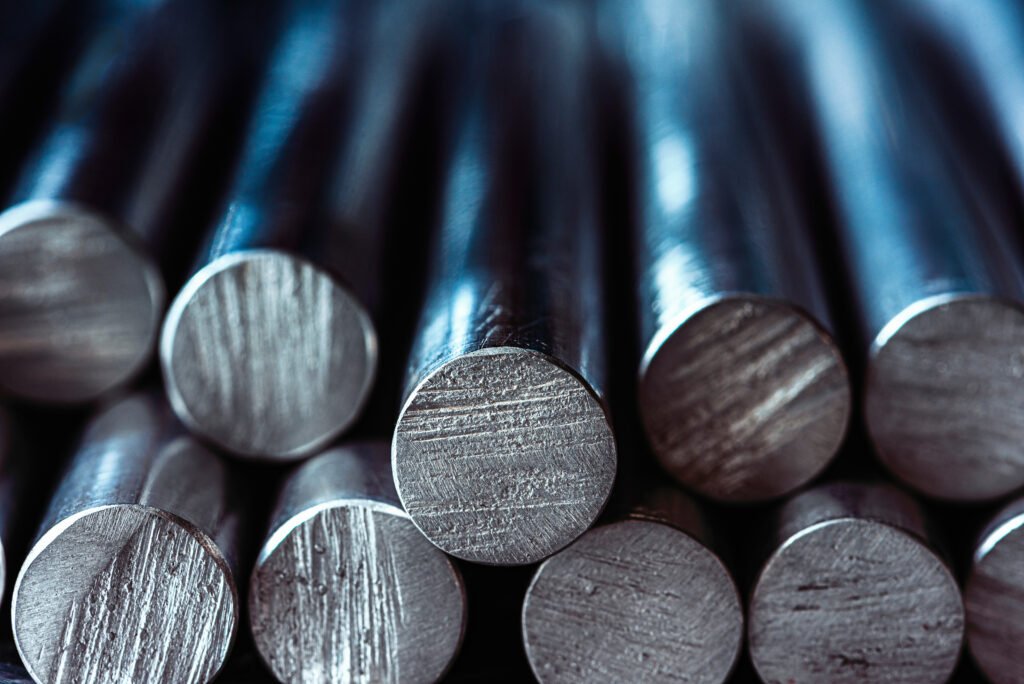
Die Wahl der Werkstoffsorte beeinflusst Kosten, Korrosionsbeständigkeit und erreichbare Zykluszeit – und die drei gebräuchlichsten Sorten verhalten sich unter einem Schneidwerkzeug sehr unterschiedlich.
Edelstahl 303 enthält zugesetzten Schwefel (0,15–0,35%), der die Späne zerkleinert und den Werkzeugverschleiß reduziert. Es bearbeitet ungefähr 40% schneller als 304 Mit saubererer Oberfläche und geringeren Stückkosten. Geeignet für Hülsen in trockenen Innenräumen – Ventilschäfte, Instrumentenbuchsen, Befestigungsabstandshalter –, wo die Umgebung sie nicht angreifen kann.
Edelstahl 304 (18-8) ist die ausgewogene Option: bessere Korrosionsbeständigkeit als 303, keine Einbußen bei der mechanischen Festigkeit (75–85 ksi Zugfestigkeit im geglühten Zustand) und es lässt sich sauber schweißen. Verwenden Sie 304 für Teile mit Lebensmittelkontakt, Hülsen für Wassersysteme und Baugruppen, die WIG-Schweißverbindungen erfordern.
316/316L Die Zugabe von Molybdän verbessert die Chloridbeständigkeit deutlich. Daher ist 316 die richtige Wahl für Schiffsausrüstung, die chemische Verarbeitung und Komponenten für medizinische Geräte. Der Nachteil: 316 ist von den drei Werkstoffen am schwierigsten zu bearbeiten – er verfestigt sich beim Zerspanen stark, was langsamere Vorschübe und scharfe Hartmetallwerkzeuge erfordert. Rechnen Sie mit längeren Zykluszeiten. 20–30% länger als 304 bei äquivalenter Geometrie.
| Grad | Zugfestigkeit (geglüht) | Bearbeitbarkeit vs. 304 | Beste Anwendung |
|---|---|---|---|
| 303 | 75–90 ksi | +40% schneller | Hohes Durchsatzvolumen, trockene Umgebung |
| 304 / 304L | 75–85 ksi | Ausgangswert | Lebensmittel, Wasser, allgemeine Industrie |
| 316 / 316L | 75–90 ksi | 20–30% langsamer | Marine, Chemie, Medizin |
| 17-4 PH | Bis zu 150 ksi (H900) | Ähnlich wie 304 | Hochfeste Präzisionswellen |
📋 Technischer Tipp: Bei kundenspezifischen Edelstahlbuchsen müssen Güteklasse UND Zustand in der Zeichnung angegeben werden – “316L nach ASTM A276, geglüht” ist eine vollständige Angabe. Wird der Zustand nicht angegeben, kann der Lieferant Stangenmaterial in beliebiger Härte liefern, was die Maßhaltigkeit bei dünnwandigen Bohrungen beeinflussen kann.
Welche Aluminiumlegierung Am besten geeignet für kundenspezifisch gefertigte Buchsen?
Zwei Legierungen decken den Großteil der Anwendungen für Aluminiumbuchsen ab: 6061-T6 für allgemeine Programme und 7075-T6 für Konstruktionen mit hoher Belastung und kritischem Gewicht.
6061-T6 liefert Zugfestigkeit 310 MPa und Streckgrenze 276 MPa – Ausreichend für die meisten Anwendungen mit Buchsen in der Automobil-, Industrie- und Fahrrad-/Motorradbranche. Es lässt sich sauber in jeder Farbe eloxieren, schweißt rissfrei und ermöglicht eine Bearbeitung mit hohen Produktionsraten, wodurch die Stückkosten niedrig bleiben. Es ist die Standardwahl, es sei denn, Ihre Verbindungsanalyse zeigt, dass die Belastung die Belastbarkeit von 6061 übersteigt.
7075-T6 erreicht Zugfestigkeit 572 MPa und Streckgrenze 503 MPa – etwa doppelt so teuer wie 6061 und damit vergleichbar mit niedriggekohltem Stahl. Seine Dauerfestigkeit ist deutlich höher, was für Fahrwerksbuchsen, Steuerungsgestänge in der Luft- und Raumfahrt und alle Verbindungen, die über Millionen von Zyklen zyklischer Belastung ausgesetzt sind, von Bedeutung ist. Der Nachteil: 7075 ist teurer. 15–25% mehr pro Teil Im Vergleich zu einer gleichwertigen Geometrie aus 6061 lässt es sich nicht zuverlässig schweißen und eloxiert eher zu Grau oder Braun als zu einer leuchtenden Farbe.
| Eigentum | 6061-T6 | 7075-T6 |
|---|---|---|
| Zugfestigkeit | 310 MPa (45.000 psi) | 572 MPa (83.000 psi) |
| Streckgrenze | 276 MPa (40.000 psi) | 503 MPa (73.000 psi) |
| Dichte | 2,70 g/cm³ | 2,81 g/cm³ |
| Brinellhärte | 95 HB | 150 HB |
| Bearbeitbarkeit | Exzellent | Gut (10–20% höherer Werkzeugverschleiß) |
| Schweißbarkeit | Ja | Nicht empfehlenswert |
| Anodisierungsqualität | Ausgezeichnet (klar, Farbe) | Grau-brauner Farbton |
| Relative Kosten | Ausgangswert | +15–25% |
Wenn Sie Aluminiumbuchsen für ein Halterung für EV-Batterieträger, 6061-T6 ist fast immer die richtige Antwort – ausreichende Festigkeit, halbe Materialkosten von 7075 und kompatibel mit den Temperaturwechsel- und Salzsprühnebelbedingungen, denen Akkupacks ausgesetzt sind. Drehpunkte des Drohnenrahmens oder Rennaufhängungsstreben Wo jedes Gramm zählt und die Belastung pro Flächeneinheit hoch ist, rechtfertigt 7075-T6 seinen höheren Preis.
⚠️ Häufige Fehlerquelle: Die Verwendung von 7075 in einem Aluminiumbuchsenprogramm, weil es “stabiler erscheint”, ohne die Belastungsberechnungen durchzuführen, führt zu zusätzlichen Kosten von 15–251 TP3T pro Stück – ohne strukturellen Vorteil. Zudem entsteht ein Problem mit der Eloxalfarbe, falls die Buchse sichtbar ist und zu anderen Bauteilen aus 6061 passen muss.
Was Toleranzen Anwendbar auf kundenspezifische Hülsen- und Buchsenpassungen?
Die Toleranz ist das entscheidende Kriterium, das eine funktionstüchtige Buchse vom Ausschuss trennt. Das ISO-286-1-System regelt die Passungen zwischen Bohrungen und Wellen für metrische Baugruppen – und deckt damit praktisch alle OEM-Programme für bearbeitete Buchsen außerhalb Nordamerikas sowie die meisten metrischen Programme in Nordamerika ab.
Eine standardmäßige Aluminium-Presspassungsbuchse in einem Stahlgehäuse verwendet:
- Gehäusebohrung: H7 (positives Spiel; Buchsen-Außendurchmesser wird mit kontrollierter Überdeckung eingepresst)
- Buchsen-Außendurchmesser: p6 oder r6 (stellt sicher, dass sich die Buchsensitze im Gehäuse nicht drehen)
- Buchsen-ID nach dem Einbau: F7 oder E7 (Laufspiel für die Welle)
- Schaft: f7 oder h6 (Wellendurchmesser relativ zur eingebauten Buchsenbohrung)
Ein konkretes Beispiel: eine Aluminiumbuchse mit 8 mm Innendurchmesser, die in ein Gehäuse mit 12 mm Außendurchmesser eingepresst ist. Der Innendurchmesser gibt an, dass … F7-Toleranz entsprechend +13 μm / +28 μm; die OD spezifiziert eine m6-Toleranz entsprechend +7 μm / +18 μm. Nach der Installation beträgt die gesamte Außendurchmessertoleranz ungefähr 0,030 mm und die ID-Toleranz beträgt ungefähr 0,065 mm.
💡 Anmerkung des Ingenieurs: Aluminiumbuchsen dehnen sich ungefähr aus 23,6 μm pro Meter pro °C Die Ausdehnung ist etwa doppelt so hoch wie bei Stahlgehäusen (11–13 μm/m/°C). Bei thermischer Belastung (z. B. im Antriebsstrang eines Elektrofahrzeugs oder im Motorraum) kann diese unterschiedliche Ausdehnung dazu führen, dass sich eine eingepresste Aluminiumbuchse in einer Stahlbohrung bei erhöhter Temperatur lockert. Berücksichtigen Sie bei der Auslegung Ihrer Presspassung die maximal mögliche Temperaturdifferenz oder verwenden Sie eine Sicherungsmasse oder eine Flanschverbindung.
Brauchen Sie Hilfe bei der Entscheidung? Senden Sie Ihre Hülsen- oder Buchsenzeichnung an die Keyfix-Ingenieure. Wir prüfen die Passgenauigkeit, weisen auf Risiken der Wärmeausdehnung hin und erstellen Ihnen ein Angebot für die Bearbeitung und Oberflächenveredelung – in der Regel innerhalb von 48 Stunden.
Welche Oberflächenbehandlungen sind Standard für Edelstahlhülsen und Aluminiumbuchsen?
Material und Oberflächenbeschaffenheit beeinflussen sich gegenseitig. Geben Sie sie gemeinsam in der Zeichnung an, nicht als separate nachträgliche Überlegungen.
Edelstahlhülsen werden typischerweise in einem von drei Oberflächenzuständen geliefert:
- Bearbeitet + passiviert gemäß ASTM A967: Entfernt freies Eisen von der Oberfläche, stellt die Chromoxidschicht wieder her und ist die Standardbehandlung für die meisten industriellen und lebensmittelgeeigneten Hülsen.
- ElektropoliertEntfernt ca. 20–40 μm Oberflächenmaterial, erzeugt eine spiegelglatte Oberfläche, reduziert die Oberflächenrauheit Ra auf 0,2–0,4 μm und verbessert die Beständigkeit gegen Spaltkorrosion. Standard für Anwendungen in der Pharma- und Halbleiterindustrie.
- Kugelgestrahlt: matte Oberfläche, gleichmäßige Reflektivität, häufig für ästhetische Baugruppen spezifiziert.
Aluminiumbuchsen erhalten fast immer eine Anodisierung:
- Schwefelsäureanodisierung Typ II5–25 µm dicke Oxidschicht, mäßiger Korrosions- und Verschleißschutz, geeignet für Farbstoffe. Standard für allgemeine Industrie- und Automobil-Buchsenprogramme.
- Hartanodisierung Typ III (Hartbeschichtung): 25–75 µm Schichtdicke, Härte 60–70 Rockwell C-äquivalent, deutlich verbesserte Verschleißfestigkeit der Buchsenbohrung. Geeignet für Buchsen mit direktem Metall-auf-Metall-Kontakt oder häufigen oszillierenden Bewegungen.
- MIL-A-8625 Gilt für beide Arten von Verteidigungs- und Luft- und Raumfahrtprogrammen – geben Sie dies in der Zeichnung an, wenn Ihr Kunde dies verlangt.
| Material | Gemeinsame Ausführung | Standardreferenz | Anwendungsfall |
|---|---|---|---|
| Edelstahl 303/304 | Passivieren | ASTM A967 | Industrielle Lebensmittelausrüstung |
| 316 / 316L Edelstahl | Elektropolieren | ASTM B912 | Medizin, Pharmazie, Schifffahrt |
| Aluminium 6061 | Typ II Anodisierung | MIL-A-8625 | Allgemeine OEM-Buchsen |
| Aluminium 6061 | Hartanodisierung Typ III | MIL-A-8625 | Hochverschleiß-Zylinderlaufbuchsen |
| 7075 Aluminium | Typ II Anodisierung | MIL-A-8625 | Luft- und Raumfahrt, tragende Teile |
Wie qualifiziert man eine maßgefertigte Hülse und eine Aluminiumbuchse? Anbieter?
Fünf Fragen unterscheiden einen kompetenten Partner für kundenspezifische Bearbeitung von einem, der Teile liefert, die zwar gut aussehen, aber falsche Maße haben.
1. Was CNC Die Ausrüstung steuert die Teile?
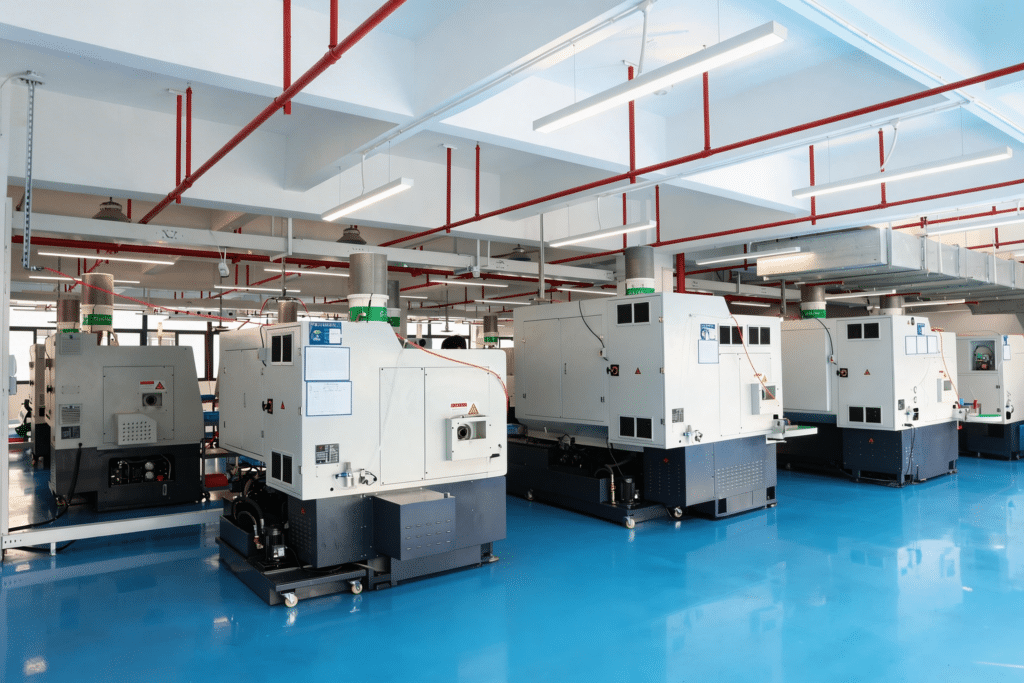
Edelstahl- und Aluminiumbuchsen mit Bohrungsdurchmessern unter M50 lassen sich am besten auf einer CNC-Langdrehmaschine oder einer Mehrspindel-CNC-Drehmaschine mit angetriebenen Werkzeugen bearbeiten. Erfragen Sie die Maschinenliste und die maximale Spindelleistung – leistungsschwache Maschinen neigen bei Edelstahl zu Vibrationen.
2. Welche internen Messtechnikkapazitäten stehen zur Verfügung?
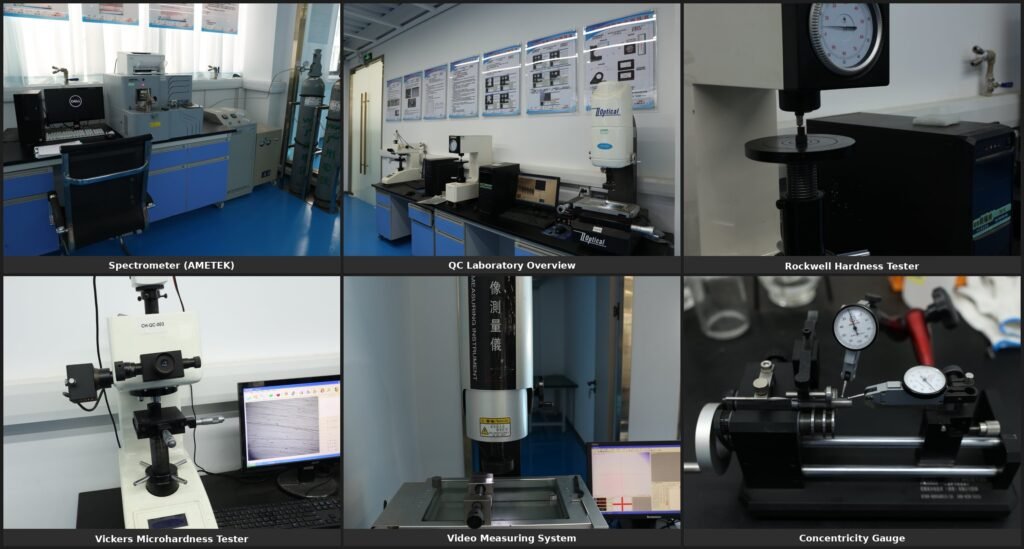
Mindestens benötigen Sie ein Luftmessgerät oder ein Koordinatenmessgerät, das folgende Messungen durchführen kann: 0,001 mm Zusätzlich wird ein Oberflächenrauheitsmessgerät zur Ra-Verifizierung benötigt. Optische Komparatoren allein reichen für enge Toleranzen bei Buchseninnendurchmessern nicht aus.
3. Führt der Lieferant die Wärmebehandlung im eigenen Haus durch?
7075-T6-Aluminium erfordert eine Lösungsglühung und künstliche Alterung – kritische Prozessschritte, die die Endabmessungen beeinflussen. Eine externe Wärmebehandlung verlängert die Lieferzeit, und die durch den Alterungsprozess bedingte Maßzunahme muss bei der Vorbearbeitung kompensiert werden.
4. Können sie ein vollständiges Materialpaket erstellen?
Jede Lieferung sollte einen Werksprüfbericht (MTR) gemäß EN 10204 (Abschnitt 3.1) für das Stangenmaterial, Maßprüfprotokolle und ein Konformitätszertifikat (CoC) enthalten. Bei Automobilprogrammen ist zusätzlich PPAP Level 3 mit Prozessfähigkeitsdaten (Cpk ≥ 1,33 für kritische Merkmale) erforderlich.
5. Welcher Qualitätsstandard gilt für die Einrichtung?
ISO 9001 ist die Grundlage. Für die Automobilzulieferer der Stufen 1 und 2, IATF 16949 ist das Minimum. Keyfix arbeitet nach IATF 16949 mit hauseigener CNC-Dreherei, Schweizer Drehbearbeitung, Koordination der Hartanodisierung und vollständiger PPAP-Fähigkeit – so dass Edelstahlhülsen und Aluminiumbuchsen ein einziges Qualitätssystem, ein einziges CoC und ein einziges PPAP-Paket durchlaufen.
Häufig gestellte Fragen
Wie hoch ist die Standard-Mindestbestellmenge für kundenspezifisch gefertigte Edelstahlhülsen und Aluminiumbuchsen?
CNC-gefräste Sonderteile beginnen typischerweise bei 50–200 Stück Für erste Muster ist kein aufwendiges Werkzeug erforderlich – lediglich CNC-Programmierung und Vorrichtungen. Die Mindestbestellmenge (MOQ) für die Serienproduktion hängt von der Teilekomplexität und der Bearbeitungszeit ab: Einfache Hülsen beginnen oft bei 500–1.000 Stück; komplexe Buchsen mit mehreren Funktionen können ab 200 Stück gefertigt werden. Keyfix bietet CNC-Muster mit niedriger Mindestbestellmenge zur Designvalidierung vor der Serienproduktion an.
Wie lange ist die Lieferzeit für kundenspezifische Hülsen- und Buchsenmuster?
Die CNC-Programmierung und Vorrichtungsentwicklung dauert in der Regel 3–7 Tage. Die ersten Muster werden versandt in 1–2 Wochen Für Standardgeometrien aus Edelstahl und Aluminium. Hinzufügen 1–2 Wochen wenn Anodisieren oder Elektropolieren vorgeschrieben ist, und ein weiteres 2–4 Wochen wenn für ein Automobilprogramm ein PPAP der Stufe 3 erforderlich ist.
Können dünnwandige Edelstahlhülsen ohne Verformung bearbeitet werden?
Ja, mit der richtigen Spannstrategie. Dünnwandige Teile – typischerweise mit einer Wandstärke unter 101 µm Außendurchmesser – erfordern weiche Spannbacken oder eine spezielle Dornvorrichtung, um Verformungen durch die Spannvorrichtung beim Drehen zu vermeiden. Keyfix verwendet eigens entwickelte Werkzeuge, um dünnwandige Edelstahlhülsen beim Fertigbohren zu fixieren und so eine Rundheit des Außendurchmessers von unter 0,005 mm bei Serienfertigungslosen zu erreichen.
Welche Zertifizierungen sind in jeder Lieferung enthalten?
Die Standarddokumentation umfasst einen Werksprüfbericht 3.1 gemäß EN 10204 für Stangenmaterial, Maßprüfprotokolle mit CMM-Daten zu kritischen Merkmalen, Oberflächenrauheitsmessungen, Protokolle des Anodisierungs- oder Passivierungsprozesses sowie eine Konformitätsbescheinigung. Für Automobilprogramme ist die vollständige PPAP-Level-3-Dokumentation mit FMEA, Kontrollplan, MSA und IMDS-Einreichung verfügbar.
Unterstützen Sie für nordamerikanische Kunden neben metrischen auch imperiale Maßeinheiten?
Ja. Keyfix-Maschinen sind sowohl für metrische (ISO 286-1 Passungssystem) als auch für Zoll-Toleranzangaben gemäß ASME Y14.5 geeignet. Für nordamerikanische Kunden werden Zeichnungen in Zoll mit ASME GD&T akzeptiert und wie eingereicht bemaßt – eine Einheitenumrechnung Ihrerseits ist nicht erforderlich.
Welche Oberflächenveredelungen sind für Aluminiumbuchsen neben der Standard-Anodisierung erhältlich?
Verfügbare Oberflächenbehandlungen umfassen Typ-II-Klarlack-Anodisierung, Typ-II-Farbanodisierung (Schwarz, Rot, Blau, Gold, Grün), Typ-III-Hartanodisierung nach MIL-A-8625, Chromatierung (Alodine/Iridite) nach MIL-DTL-5541 sowie die unbearbeitete Ausführung mit schützender VCI-Verpackung. Bei Lagerbohrungen, bei denen eine Anodisierungsschicht die Passung beeinträchtigen würde, kann der Bohrungsinnendurchmesser während der Anodisierung abgedeckt und nach der Beschichtung bearbeitet werden.
Welche Incoterms unterstützen Sie und wie sieht ein typischer Seefrachttransport aus?
FOB ist der Standard. CIF und DDP sind auf Anfrage erhältlich. Seefracht von Guangzhou nach Los Angeles läuft 18–22 Tage; nach Hamburg oder Rotterdam, 25–30 Tage. Luftfracht ist für Erstbestellungen und Eilaufträge verfügbar – typischerweise 3–5 Tage Tür-zu-Tür-Lieferung. VCI-Verpackungen sind Standard bei allen Aluminium- und Edelstahl-Sendungen, um Korrosion während des Transports zu verhindern.
Senden Sie Ihre Hülsen- oder Buchsenzeichnung an die Keyfix-Entwicklungsteam – einschließlich Passgenauigkeitsangaben, Oberflächenspezifikation und Jahresvolumen. Wir prüfen die Geometrie im Hinblick auf unsere CNC-Drehmöglichkeiten, kennzeichnen etwaige Toleranz- oder Oberflächenabweichungen und senden Ihnen innerhalb von 48 Stunden einen DFM-Bericht und ein Angebot zu.
Autor: Keyfix-Entwicklungsteam Veröffentlicht: 10. Mai 2026 Letzte Aktualisierung: 10. Mai 2026