Advanced Deck Screw Engineering: Custom Solutions for Outdoor Construction
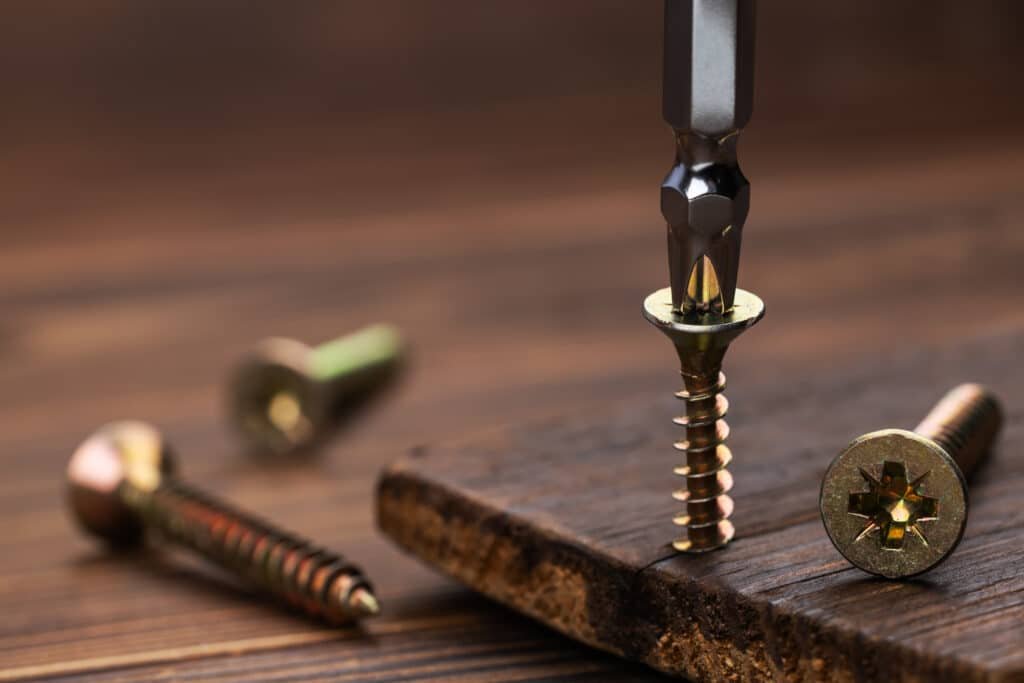
The outdoor construction fastener market continues evolving as material innovations demand specialized attachment solutions. North American deck screw consumption exceeded 2.8 billion units in 2022, with composite decking growth driving 7.3% annual increases. Custom deck screws address this expanding market through application-specific thread geometries, corrosion-resistant coatings, and proprietary drive systems optimized for wood species, composite formulations, and installer preferences.
KEYFIX engineers custom deck screws spanning #6 through #14 diameters, 1.25″ through 6″ lengths, with specialized features including color-matched heads, self-countersinking designs, dual-thread configurations, and coating systems providing 1000+ hour salt spray resistance. This article examines design considerations, manufacturing technologies, and performance validation defining excellence in outdoor fastener production.
Deck Screw Design Fundamentals
Custom deck screws differ substantially from general-purpose wood screws through features addressing specific outdoor installation challenges—moisture exposure, thermal cycling, diverse substrate materials, and aesthetic requirements.
Thread Geometry Optimization
| Thread Type | Design Features | Best Applications | Key Advantages |
|---|---|---|---|
| Type 17 Auger Point | Self-drilling tip, aggressive thread | Hardwoods, dense composites | No pilot holes, reduced splitting |
| Dual Thread (Hi-Lo) | Coarse upper, fine lower threads | Cedar, pressure-treated lumber | Fast installation, maximum holding |
| Deep Thread | Increased thread depth, sharp crests | Softwoods, weathered lumber | Enhanced pullout resistance |
| Composite-Optimized | Variable pitch, blunt point | PVC, capped composite | Prevents mushrooming, smooth finish |
| Reverse Thread Tip | Opposing thread direction at point | Composite, tropical hardwoods | Eliminates surface tearing |
Type 17 Auger Points incorporate self-drilling tips with cutting edges and material evacuation flutes—enabling penetration through hardwoods and dense composite materials without pilot holes. Sharp cutting edges slice wood fibers rather than displacing material, reducing splitting in boards near edges. KEYFIX produces Type 17 points through precision grinding operations maintaining consistent edge geometry critical for reliable performance across production lots.
Dual-Thread Configurations combine coarse upper threads (rapid board engagement, reduced installation torque) with fine lower threads (maximum holding power in substrate framing). This design reduces installation time 30-40% versus single-thread screws according to independent testing by the American Wood Council, while maintaining equivalent withdrawal strength.
Reverse-Thread Tips feature 3-5 threads at the point rotating opposite the primary thread direction. During installation, reverse threads pull composite surface material downward preventing “mushrooming”—surface fiber distortion creating unsightly raised areas around fastener heads. KEYFIX engineers optimize reverse thread length and pitch for specific composite densities through accelerated installation testing.
Material Selection and Coating Technology
Outdoor exposure demands corrosion resistance exceeding interior fastener requirements—moisture, temperature cycling, UV radiation, and chemical preservatives in treated lumber accelerate degradation.
Coating System Performance Comparison
| Coating Type | Base Material | Salt Spray Resistance | Color Options | Cost Factor |
|---|---|---|---|---|
| Zinc Plating | Carbon steel | 96-240 hours | Yellow, clear | 1.0× baseline |
| Polymer Coating | Carbon steel | 500-1000 hours | Tan, brown, green, gray | 1.4× |
| Ceramic Coating | Carbon steel | 1000-1500 hours | Multiple custom colors | 1.8× |
| Stainless 305 | Stainless steel | 2000+ hours | Natural metallic | 3.5× |
| Stainless 316 | Stainless steel | 3000+ hours | Natural metallic | 4.2× |
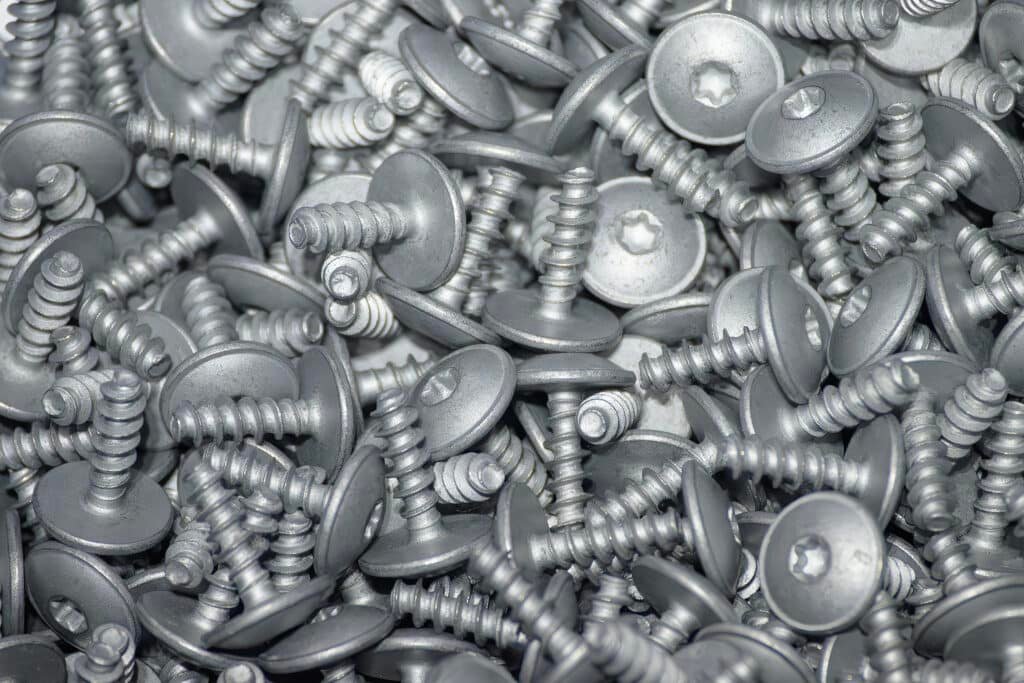
Carbon Steel with Advanced Coatings balances performance against cost. Polymer-based coating systems (epoxy, urethane) encapsulate fasteners with 15-25μm protective layers—providing mechanical barrier plus corrosion inhibitors. KEYFIX offers proprietary coating formulations color-matched to popular decking brands (Trex, TimberTech, Azek)—brown, tan, gray, and green options blending with board surfaces. Accelerated weathering testing (ASTM G155 xenon arc exposure) validates color stability through 2000+ hour equivalent outdoor exposure.
Ceramic-Based Coatings combine inorganic zinc-aluminum flakes with ceramic binders creating 8-12μm layers exhibiting exceptional adhesion and UV stability. These systems provide 1000-1500 hour salt spray resistance per ASTM B117 testing—suitable for coastal installations within 5 miles of ocean exposure. Friction coefficients remain stable (0.12-0.16) preventing over-torque during installation despite extended outdoor storage.
Stainless Steel Fasteners eliminate coating degradation concerns through inherent corrosion resistance. Type 305 (modified 18-8 composition optimized for cold-heading) serves general deck applications, while Type 316 (molybdenum addition) specifies for saltwater environments or direct contact with copper-based wood preservatives. According to research published in Corrosion Science journal, molybdenum creates localized pH modifications at corrosion initiation sites substantially improving chloride resistance.
Manufacturing Technologies for Custom Production
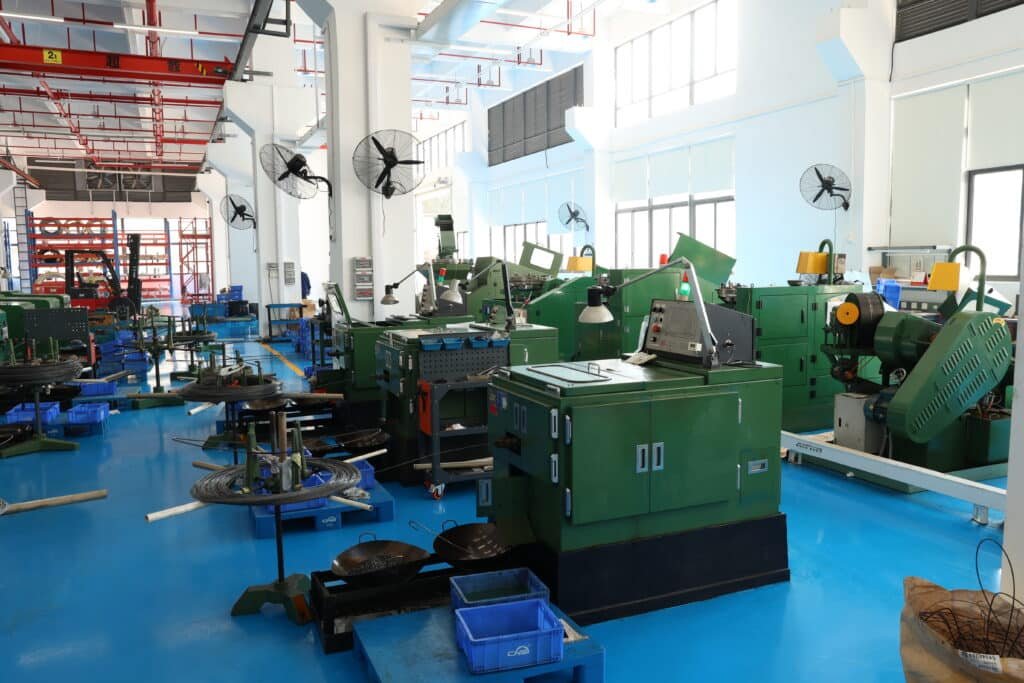
Producing custom deck screws requires integrated capabilities spanning wire heading, thread rolling, heat treatment, coating application, and quality verification—each process contributing to final fastener performance.
KEYFIX Manufacturing Capabilities
| Process Stage | Equipment | Capacity | Quality Control |
|---|---|---|---|
| Cold Heading | 16 progressive headers (4-6 station) | #6 – #14 diameter | ±0.005″ head dimensions |
| Point Forming | CNC grinding, rotary pointers | Type 17, gimlet, composite-optimized | ±2° point angle consistency |
| Thread Rolling | Planetary and flat die systems | 8-32 TPI precision | ASME B18.6.1 compliance |
| Heat Treatment | Continuous belt furnace | Controlled hardness (HRC 25-45) | ±10°F temperature uniformity |
| Coating Application | Tumble barrel, spray systems | 15-25μm thickness | Adhesion per ASTM D3359 |
| Drive Recess | Progressive stamping, CNC | Phillips, square, Torx, proprietary | Depth ±0.003″ |
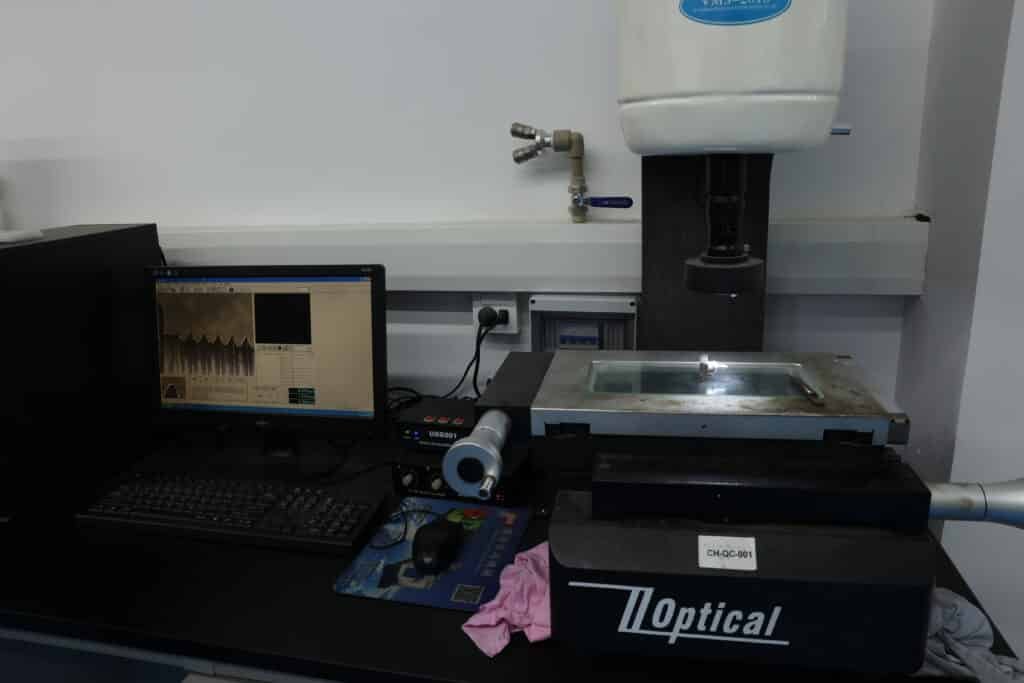
| Quality Testing | Optical inspection, torque-tension | 100% drive recess, statistical sampling | ISO 9001 procedures |
Cold Heading Operations form screw blanks from carbon steel or stainless wire through progressive die sequences. Four-station headers produce basic head geometries (#6-#10 diameter), while six-station equipment handles larger sizes (#12-#14) requiring greater material displacement. KEYFIX utilizes specialized heading dies with generous radii and optimized approach angles minimizing work-hardening—critical for stainless steel grades exhibiting rapid strain-hardening during deformation.
Point Forming Technologies create self-drilling geometry enabling pilot-hole-free installation. Type 17 auger points require precision CNC grinding—maintaining cutting edge sharpness, flute depth, and point angle consistency across production. Rotary pointing equipment handles high-volume production of gimlet points (simple cone geometry) or blunt composite-optimized points preventing surface damage during installation. KEYFIX’s pointing department processes 500,000+ screws daily with automated optical inspection validating point geometry on statistical sampling basis.
Thread Rolling Operations displace material into thread form through hardened cylindrical or flat dies. Unlike thread cutting (removing material, interrupting grain flow), rolling work-hardens thread surfaces improving strength and fatigue resistance approximately 30% according to ASM International fastener engineering data. Planetary thread rollers provide gradual thread formation through multiple die passes—particularly valuable for stainless steel’s work-hardening tendencies preventing thread tearing or surface damage.
Coating Application Methods vary by system chemistry and performance requirements. Tumble barrel coating immerses screws in liquid polymer formulations, drains excess, then oven-cures creating uniform coverage. Electrostatic spray systems apply powder coatings (epoxy, polyester) with charged particles attracted to grounded fasteners—enabling precise film thickness control and material efficiency exceeding 95%. KEYFIX coordinates coating, accommodating different chemistries, color requirements, and production volumes.
Performance Validation and Testing
Ensuring custom deck screws meet specification requirements demands comprehensive testing protocols validating installation performance, corrosion resistance, and long-term holding strength.
Quality Testing Protocol Matrix
| Test Type | Standard Reference | Parameters Measured | Acceptance Criteria |
|---|---|---|---|
| Installation Torque | Internal protocols | Driving torque, seating consistency | <15 in-lbs variance, no camout |
| Withdrawal Strength | ASTM D1761 | Pullout load per inch embedment | >300 lbf/inch (hardwood), >200 lbf/inch (composite) |
| Shear Strength | ASTM F606 | Lateral load capacity | >Grade 2 specification (60 ksi min) |
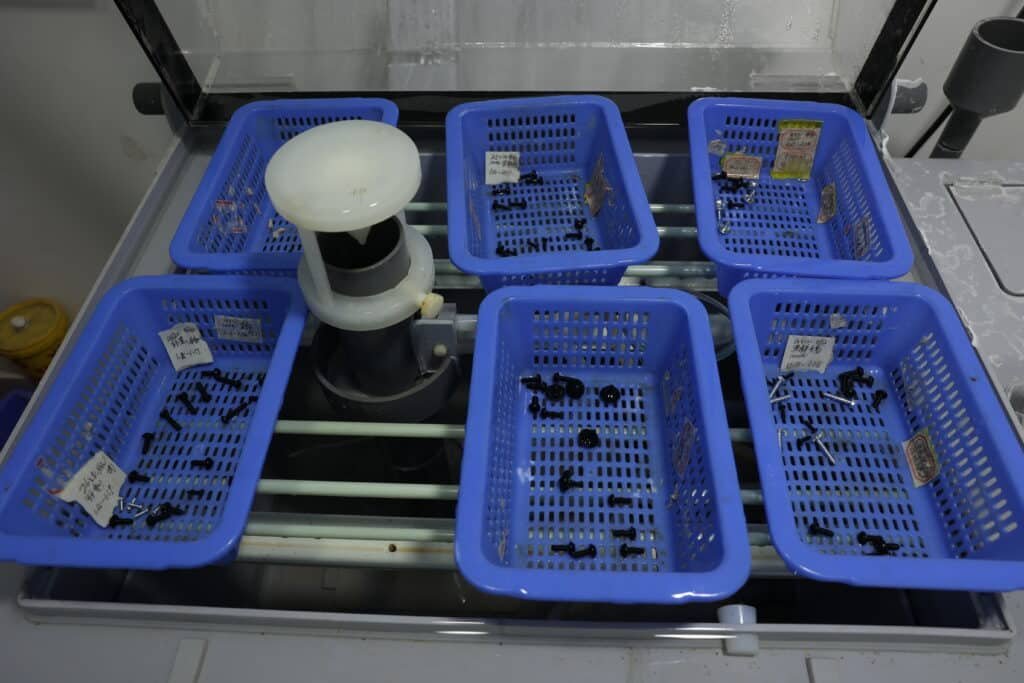
| Salt Spray Exposure | ASTM B117 | Hours to red rust appearance | Per coating specification (500-1500 hrs) |
| Coating Adhesion | ASTM D3359 | Cross-hatch tape test | 5B rating (no coating removal) |
| Thermal Cycling | ASTM D1037 modified | Dimensional stability through temp cycles | No loosening after 20 cycles (-20°F to 140°F) |
| Drive Recess Durability | ASME B18.6.1 | Bit engagement, stripping resistance | 10+ installation cycles without damage |
Installation Performance Testing simulates field conditions across diverse materials. KEYFIX conducts comparative evaluations driving screws into representative substrates—pressure-treated southern yellow pine, cedar, redwood, composite brands (Trex, TimberTech, Fiberon), tropical hardwoods (ipe, cumaru). Instrumented drivers measure installation torque, seating depth consistency, and drive bit wear. Results guide thread geometry optimization and coating friction coefficient specifications.
Withdrawal Strength Testing per ASTM D1761 measures maximum axial load before screw pulls free from substrate. Variables include wood species (specific gravity affects holding), moisture content, thread embedment length, and installation method. Custom deck screws targeting hardwood applications typically achieve 300-400 lbf per inch embedment, while composite-optimized designs reach 200-250 lbf per inch reflecting lower density substrates.
Accelerated Corrosion Testing validates coating system durability. Neutral salt spray (ASTM B117) exposes coated screws to 5% sodium chloride fog at 95°F, recording time until red rust appearance. Target performance varies by application—500 hours minimum for protected deck undersides, 1000+ hours for exposed coastal installations. Cyclic corrosion testing (SAE J2334) alternates salt spray, humidity, and ambient conditions more accurately simulating real-world exposure patterns including wetting/drying cycles.
Application-Specific Design Considerations
Different decking materials impose distinct installation requirements affecting custom deck screws specification—substrate density, thermal expansion characteristics, surface hardness, and aesthetic expectations.
Material-Specific Screw Recommendations
| Decking Type | Optimal Thread Design | Coating/Material | Head Style | Special Features |
|---|---|---|---|---|
| Pressure-Treated Pine | Dual-thread, Type 17 point | Polymer coating, tan/brown | Bugle head, #8 × 2.5″ | ACQ-compatible coating |
| Cedar/Redwood | Deep thread, sharp point | Stainless 305 or coated | Trim head, #7 × 2″ | Reduced shank prevents splitting |
| Composite (capped) | Reverse-thread tip, variable pitch | Color-matched coating | Low-profile trim, #8 × 2.25″ | Composite-optimized point |
| PVC Decking | Fine thread, blunt point | Stainless 305 white | Countersunk trim | Prevents mushrooming |
| Tropical Hardwood | Type 17, aggressive thread | Stainless 316 | Standard bugle, #8 × 2.5-3″ | Pilot holes recommended |
Pressure-Treated Lumber Applications require coating systems resisting copper-based preservative chemicals. Alkaline copper quaternary (ACQ) and copper azole formulations accelerate corrosion of inadequately protected carbon steel. KEYFIX’s ACQ-compatible polymer coatings incorporate corrosion inhibitors and barrier properties validated through immersion testing in preservative solutions—confirming 1000+ hour performance equivalent to coastal salt spray exposure.
Composite Decking Installations demand specialized features preventing surface damage. Capped composite products (PVC shell over wood-plastic core) require blunt points and reverse-thread tips preventing shell penetration tearing. Thread pitch optimization balances installation speed against holding strength in lower-density substrates. Color-matching proves critical—KEYFIX offers brown, gray, tan options blending with popular composite brands, with custom color-matching available for private-label decking manufacturers.
Tropical Hardwood Decking (ipe, cumaru, tigerwood) exhibits densities approaching 1.0 specific gravity—requiring aggressive Type 17 self-drilling points or pilot hole pre-drilling. Stainless steel material prevents tannin-induced corrosion (chemical reaction between wood acids and fastener metals). KEYFIX engineers recommend #8 diameter minimum in 2.5-3″ lengths providing adequate thread engagement in dense material resisting withdrawal forces from thermal expansion cycling.
Selecting a Custom Deck Screw Partner
Evaluating potential manufacturers requires assessing specialized capabilities, quality system maturity, and application engineering support beyond commodity fastener suppliers.
Supplier Evaluation Criteria
| Evaluation Area | Basic Supplier | KEYFIX Standard |
|---|---|---|
| Customization Options | Limited sizes/coatings | Thread design, coating color, drive system, head style |
| Material Expertise | Carbon steel only | Carbon steel + stainless 305/316 + proprietary coatings |
| Testing Capability | Dimensional inspection | Installation testing, withdrawal, salt spray, thermal cycling |
| Coating Options | Standard zinc | Polymer, ceramic, color-matched, custom formulations |
| Minimum Quantity | 50,000-100,000 | 10,000 pieces (1,000 samples) |
| Lead Time | 8-12 weeks | Typically 4–6 weeks production, 7–14 business days samples |
| Engineering Support | Order processing | Application consultation, substrate testing, custom development |
Manufacturing Capability Assessment examines equipment diversity and process integration. Modern cold-heading equipment (4-6 station progressives), precision pointing operations (CNC grinding for Type 17), thread rolling systems, heat treatment furnaces, and coating lines indicate comprehensive capability. KEYFIX’s 25 cold heading machines and 22 thread rolling machines give the production flexibility to accommodate custom deck screw specifications.
Application Engineering Support differentiates manufacturing partners from catalog suppliers. Experienced engineers provide substrate compatibility consultation—recommending thread designs for specific wood species or composite formulations, coating selection based on environmental exposure, drive system optimization balancing installer preference against performance. KEYFIX conducts complimentary installation testing when developing custom specifications—evaluating driving torque, seating consistency, and withdrawal strength in customer-provided materials.
Quality Documentation demonstrates systematic process control. Request sample inspection reports showing actual measurements (not just pass/fail stamps), salt spray test data with photographic progression documenting corrosion development, coating adhesion test results per ASTM D3359, and installation torque data across production sampling. Documentation quality reveals organizational sophistication and quality culture maturity.
Conclusion
The specialized requirements of outdoor construction demand custom deck screws combining optimized thread geometry, corrosion-resistant coatings, and application-specific features addressing diverse decking materials. KEYFIX manufactures comprehensive custom solutions through integrated capabilities—16 cold-heading machines, precision pointing operations, thread rolling systems, proprietary coating technologies, and comprehensive testing laboratories.
ISO 9001:2015 certified quality management ensures consistent performance across production lots. Engineering collaboration optimizes specifications for specific applications—pressure-treated lumber, composite decking, tropical hardwoods, or specialty materials. Color-matching capabilities blend fasteners with decking aesthetics, while coating systems provide 1000+ hour salt spray resistance for coastal installations.
Whether your project involves residential deck construction, commercial boardwalk installation, marine pier applications, or private-label fastener development for decking manufacturers, KEYFIX engineers optimize thread design, coating selection, and performance validation delivering reliable outdoor fastening solutions.
Contact our engineering team to discuss your custom deck screws requirements—we’ll analyze substrate materials, environmental exposure, aesthetic preferences, and volume requirements developing cost-effective specifications meeting performance and delivery objectives.