
Introduction: The Evolution of Aesthetic Fastening Solutions
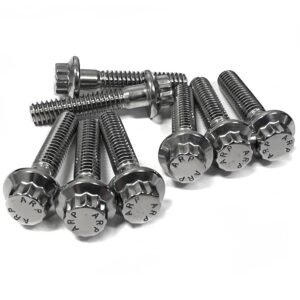
Black automotive screws have transitioned from niche specialty components to mainstream design elements as vehicle aesthetics increasingly emphasize monochromatic color schemes, stealth appearance packages, and premium visual integration. Market research indicates that 67% of new vehicle purchasers consider interior and exterior finish details when making purchase decisions, with visible fastener appearance directly influencing perceived build quality. Black automotive fasteners have become more common with EV design languages and performance trims featuring blacked-out elements.
KEYFIX, an IATF 16949:2016 certified manufacturer established in 2005, specializes in precision-engineered black finish fasteners addressing automotive OEM requirements across exterior body panels, interior trim assemblies, and under-hood installations. Our integrated finishing capabilities—black oxide conversion coating, electrostatic powder coating, PVD (physical vapor deposition) systems, and advanced anodizing for aluminum substrates—deliver consistent aesthetic appearance while maintaining functional corrosion protection. Combined with cold forging (near-net-shape, typically 95%+ material utilization), 5-axis CNC machining (±0.005mm tolerance), and comprehensive quality validation, KEYFIX produces black automotive solutions meeting stringent appearance specifications and long-term durability requirements.
This technical analysis examines black finish technologies, material compatibility considerations, aesthetic quality standards, and application engineering principles essential for procurement specialists and design engineers specifying black automotive screws in contemporary vehicle development programs.
Black Finish Technologies: Comparative Analysis
Multiple coating and conversion processes achieve black appearance on automotive fasteners—each technology presents distinct advantages regarding corrosion protection, aesthetic qualities, temperature resistance, and economic considerations.

Black Finish Process Technology Comparison
| Finish Technology | Layer Thickness | Appearance Characteristics | Corrosion Resistance | Temperature Limit | Relative Cost | Optimal Applications |
|---|---|---|---|---|---|---|
| Black Oxide Conversion | 0.5-1.5μm molecular | Semi-matte to satin, slight sheen | Minimal (96-120 hours NSS) | 425°C capability | 1.0× (baseline) | Interior visible, low-corrosion environments |
| Black Zinc-Nickel | 8-12μm electroplate | Dark gray-black, uniform coverage | Excellent (720-1000 hours NSS) | 300°C maximum | 2.8× premium | Chassis, underbody, moderate exposure |
| Powder Coating (Matte Black) | 40-80μm thermoplastic | Deep matte, texture variations available | Very good (500-800 hours NSS) | 120°C continuous | 2.2× premium | Exterior trim, visible body fasteners |
| Powder Coating (Gloss Black) | 40-80μm thermoplastic | High-gloss mirror finish | Very good (500-800 hours NSS) | 120°C continuous | 2.3× premium | Decorative applications, show vehicles |
| PVD Titanium Nitride | 1-5μm vapor deposit | Black-bronze to charcoal, metallic | Excellent (1000+ hours NSS) | 500°C capability | 5.5× premium | Luxury vehicles, performance applications |
| PVD Chromium Nitride | 1-5μm vapor deposit | Gunmetal to dark gray, metallic sheen | Excellent (1000+ hours NSS) | 600°C capability | 5.8× premium | High-temperature, premium aesthetics |
| Black Anodizing (Aluminum) | 10-25μm oxide layer | Deep black, matte to semi-gloss | Excellent on aluminum substrates | 200°C maximum | 2.5× premium | Aluminum fasteners, lightweight applications |
| Black E-Coat (Electrocoat) | 15-35μm electrodeposition | Uniform satin-matte appearance | Very good (400-600 hours NSS) | 180°C operating | 1.8× premium | Body assembly, paint-bake compatibility |
Black Oxide Chemical Conversion represents the most economical black finish methodology—hot alkaline chemical bath (135-145°C) reacts with steel surface forming magnetite (Fe₃O₄) molecular layer providing characteristic black appearance. Unlike coatings that add dimensional thickness, conversion process integrates with base metal maintaining tight tolerances critical for precision assemblies. KEYFIX operates black oxide lines processing 5,000+ fasteners per batch, with post-treatment oil impregnation enhancing corrosion protection to 96-120 hours neutral salt spray per ASTM B117. This technology suits interior applications where aesthetic appearance matters but severe corrosion exposure remains unlikely—dashboard mounting, center console assembly, door panel attachment.
Electrostatic Powder Coating delivers superior aesthetic customization with excellent durability—dry powder particles electrostatically charged adhere to grounded fasteners, subsequent curing at 180-200°C polymerizes coating forming durable finish. Available in unlimited RAL/Pantone colors with varied textures (smooth matte, textured matte, semi-gloss, high-gloss), powder coating enables precise color matching to vehicle trim elements. KEYFIX maintains extensive black powder formulation library: deep matte black (RAL 9005) matching soft-touch plastics, semi-gloss black coordinating with piano black trim, and textured black complementing leather grain patterns. Post-cure thread chasing ensures coating doesn’t interfere with assembly torque specifications, critical consideration for automated installation processes.
PVD (Physical Vapor Deposition) Coating provides premium metallic black finishes with exceptional hardness—vacuum chamber process vaporizes titanium or chromium targets, ionized metal atoms react with nitrogen forming nitride compounds depositing on fastener surfaces. Resulting coatings exhibit 2,000-2,500 HV hardness (versus 200-250 HV for powder coating) providing superior scratch and wear resistance. KEYFIX supplies PVD-coated fasteners in titanium nitride (black-bronze appearance) and chromium nitride (gunmetal-charcoal) finishes for luxury vehicle applications demanding premium aesthetics—high-end audio equipment mounting, performance vehicle interior trim, electric vehicle battery cover fasteners where exposed fasteners contribute to overall design language.
Material Substrate Considerations
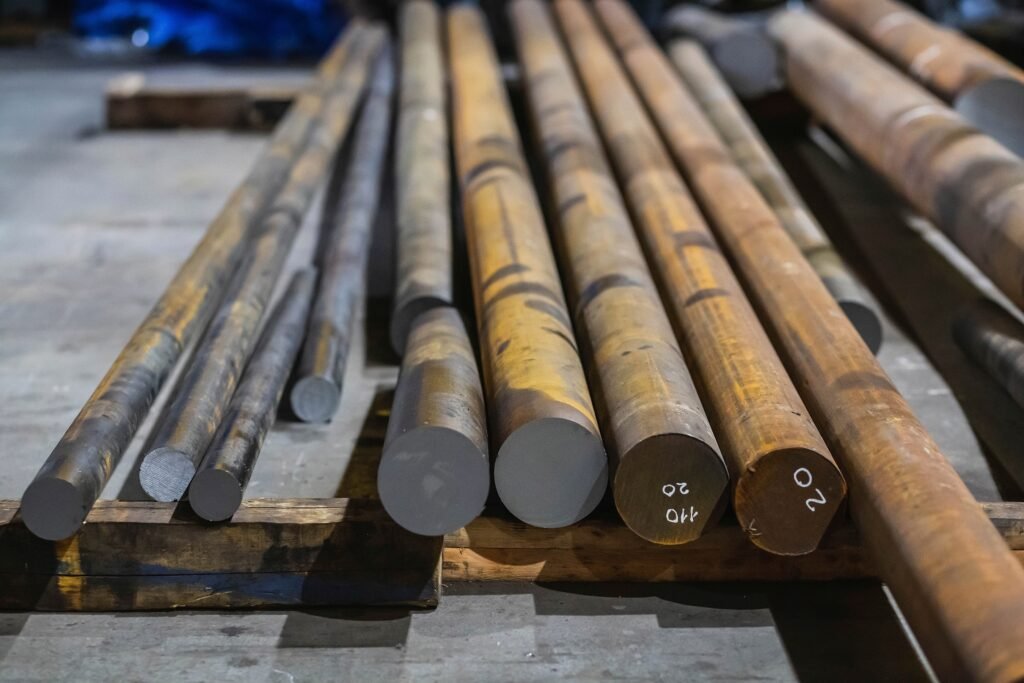
Base fastener material selection profoundly influences black finish adhesion, appearance consistency, corrosion protection effectiveness, and long-term durability—automotive applications require careful material-finish compatibility evaluation.
Material-Finish Compatibility Matrix
| Base Material | Recommended Black Finishes | Adhesion Considerations | Appearance Quality | Durability Factors |
|---|---|---|---|---|
| Carbon Steel (1018, 1035) | Black oxide, powder coat, e-coat, black zinc-nickel | Excellent adhesion after degreasing | Uniform appearance, consistent coverage | Requires finish for corrosion protection |
| Alloy Steel (4140, 4340) | Black oxide, powder coat, PVD, black zinc-nickel | May require blast cleaning for optimal adhesion | Excellent uniformity on heat-treated surfaces | Heat treatment before coating critical |
| Stainless 304/316 | Black oxide (specialized process), PVD, powder coat | Requires activation/etching for adhesion | Challenging for oxide, excellent for PVD | Natural corrosion resistance, finish for aesthetics |
| Aluminum 6061/7075 | Black anodizing (Type II/III), powder coat, PVD | Anodizing ideal, powder requires chromate pretreat | Anodizing produces deepest black color | Anodizing integrates with substrate chemically |
| Brass (C360, C464) | Black oxide, black nickel plate, powder coat | Good adhesion with proper surface prep | Oxide produces brown-black, nickel true black | Underlying brass color may influence appearance |
| Titanium (Grade 2, Grade 5) | Black anodizing, PVD coating | Excellent adhesion both methods | Anodizing color depth varies, PVD consistent | Both methods preserve corrosion immunity |
Pre-Treatment Surface Preparation critically influences black finish quality and adhesion longevity—KEYFIX implements multi-stage cleaning protocols removing manufacturing residues before coating application. Alkaline degreasing eliminates oils from machining operations, mechanical media blasting (aluminum oxide, ceramic beads) provides surface profile enhancing mechanical interlocking, chemical etching activates surfaces promoting chemical bonding (particularly critical for stainless steel and aluminum), and thorough rinsing removes all contaminants preventing coating defects. Quality pre-treatment adds 15-20% to finishing cost but eliminates 85-90% of field coating failures per automotive coating industry statistical analysis.
Heat Treatment Sequencing affects finish adhesion and appearance—alloy steel fasteners requiring Grade 10.9 or 12.9 properties must undergo heat treatment (quench and temper) before black finish application. Heat treating after coating causes finish degradation through oxidation, outgassing, or thermal decomposition. KEYFIX’s production planning coordinates heat treatment operations preceding all finishing processes, with post-heat-treat blast cleaning removing scale and decarburization before coating application. Temperature-resistant finishes (black oxide, PVD) tolerate subsequent low-temperature operations (<200°C) if assembly processes require post-finish thermal exposure.
Aesthetic Quality Standards and Validation
Black automotive screws appearance specifications extend beyond simple color designation—automotive OEMs define comprehensive visual quality parameters addressing uniformity, surface texture, gloss level, and defect tolerance.
Visual Quality Specification Framework
| Aesthetic Parameter | Measurement Method | Typical OEM Requirements | KEYFIX Quality Control |
|---|---|---|---|
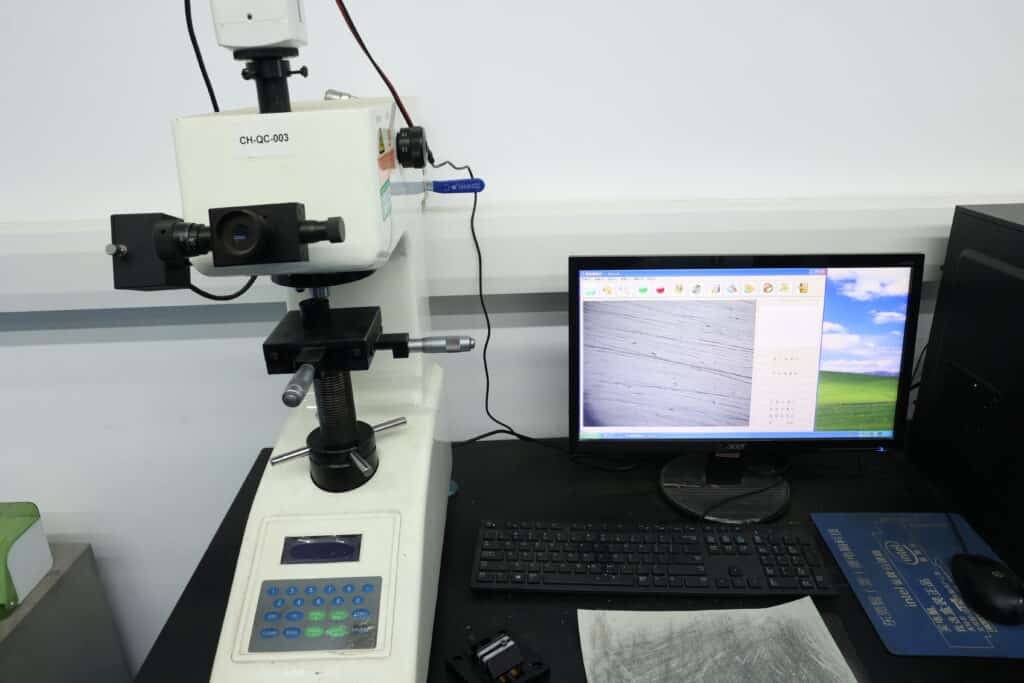
| Color Consistency (ΔE) | Spectrophotometer measurement | ΔE ≤2.0 within batch, ΔE ≤3.0 batch-to-batch | Master-sample comparison, statistical sampling |
| Gloss Level | 60° gloss meter per ASTM D523 | Matte <10 GU, Semi-gloss 30-60 GU, Gloss >70 GU | BYK-Gardner multi-angle glossmeter |
| Surface Smoothness | Visual inspection + profilometry | Ra ≤1.6μm for visible applications | Tactile assessment + Mitutoyo profilometer |
| Coverage Uniformity | Visual examination (5× magnification) | 100% coverage, no substrate visible | Inspection booth with standardized lighting |
| Coating Thickness | Magnetic induction, X-ray fluorescence | ±20% of nominal specification | Thickness measurement per specification, statistical sampling |
| Defect Tolerance | Visual classification system | Class A: zero defects; Class B: defects <0.5mm outside visible zones | Trained inspectors, defect categorization |
| Adhesion Strength | Cross-hatch tape test ASTM D3359 | Minimum 4B rating (≤5% area removal) | Periodic destructive testing |
| Corrosion Resistance | Accelerated salt spray ASTM B117 | Per application: 96-1000 hours to red rust | Environmental test chambers, ongoing validation |
Color Consistency Validation employs spectrophotometric analysis measuring reflected light wavelengths—ΔE (Delta E) value quantifies color difference between reference standard and production samples using CIE Lab* color space. ΔE <1.0 represents barely perceptible difference, ΔE 2.0-3.0 noticeable under direct comparison, ΔE >5.0 obviously different colors. KEYFIX keeps black finishes consistent through statistical process control on coating parameters (powder flow rate, voltage, cure temperature/time) and comparison against approved master samples.
Gloss Level Specification dramatically influences perceived quality—matte black finishes (<10 gloss units at 60°) complement soft-touch interior plastics and leather surfaces, semi-gloss (30-60 GU) coordinates with satin chrome trim elements, high-gloss (>70 GU) matches piano black decorative panels. KEYFIX formulates powder coating chemistries and PVD process parameters achieving specified gloss ranges, with BYK-Gardner multi-angle glossmeters validating conformance. Gloss measurement sensitivity to surface contamination necessitates clean handling protocols—cotton gloves during inspection, dedicated lint-free storage containers, individual packaging for Class A visible fasteners.
Defect Classification Systems categorize appearance anomalies by severity and location—Class A visible surfaces (instrument panel, door handles, center console) demand zero cosmetic defects (no scratches, dents, coating runs, orange peel texture), Class B semi-visible areas (door panel edges, under-seat mounting) tolerate minor defects outside primary sight lines, Class C concealed locations (subframe attachment, hidden brackets) prioritize functional properties over aesthetics. KEYFIX implements lighting inspection booths with standardized 6,500K color temperature and controlled intensity, training inspectors using reference defect standards establishing acceptance/rejection criteria aligned with customer specifications.
Application Engineering for Black Fasteners
Different vehicle systems impose distinct requirements on black automotive screws beyond aesthetic appearance—understanding these functional demands enables appropriate specification balancing visual integration with mechanical performance.
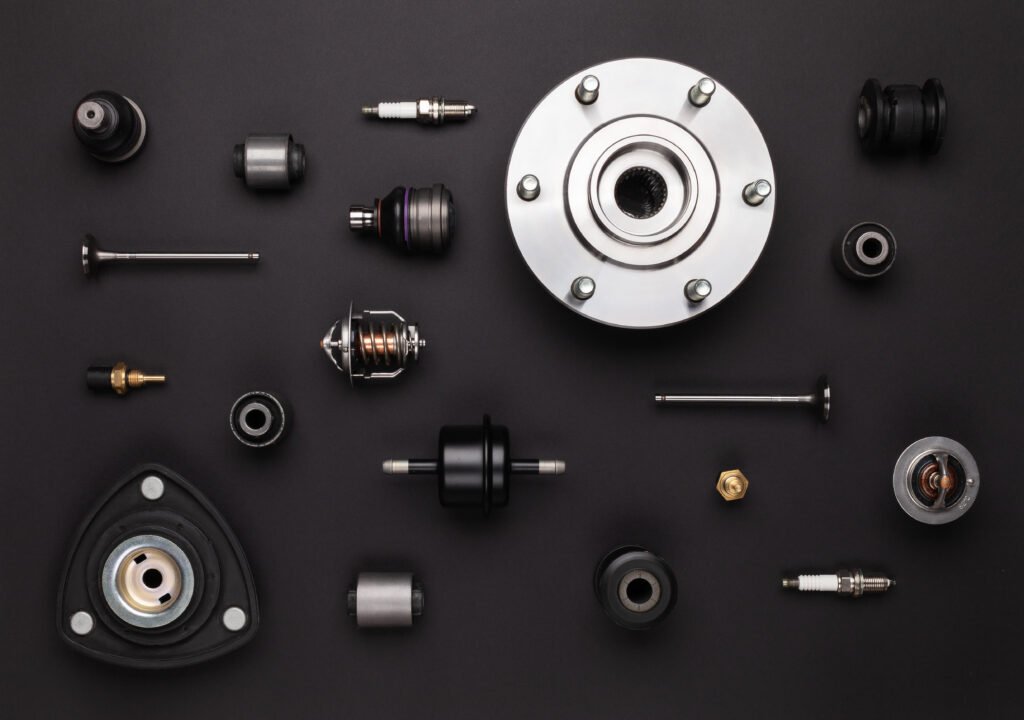
Application-Specific Requirements Matrix
| Vehicle System | Representative Applications | Functional Priorities | Recommended Finish | Material Selection |
|---|---|---|---|---|
| Exterior Body Panels | Hood/trunk trim, mirror covers, window surrounds | Weather resistance, paint compatibility, UV stability | Powder coat (UV-resistant formulation), PVD | Stainless 304/316, aluminum with anodize |
| Interior Visible Trim | Dashboard assembly, center console, door panels | Color matching, tactile quality, low VOC emissions | Powder coat (low-bake), black oxide + lacquer | Carbon steel, stainless, aluminum alloys |
| Under-Hood Components | Engine cover, airbox, battery hold-down | Temperature resistance, oil/fuel resistance | Black oxide + sealant, high-temp powder, PVD | Alloy steel heat-treated, stainless A286 |
| Chassis/Suspension | Control arms, sway bar links, subframe brackets | Corrosion protection priority, vibration resistance | Black zinc-nickel, DACROMET with black topcoat | Grade 10.9 alloy steel with coating |
| Electrical/Battery Systems | ECU mounting, battery terminals, sensor brackets | Non-magnetic, electrical conductivity/isolation | Black oxide (steel), black anodize (aluminum) | Stainless austenitic, aluminum, brass |
| Performance/Appearance Packages | Blacked-out trim, sport package components | Premium aesthetic, brand differentiation | PVD (luxury), powder coat (volume production) | Aluminum, stainless, titanium (premium) |
Exterior Body Panel Applications demand UV-resistant black finishes preventing fading and chalking from solar exposure—standard powder coating formulations exhibit 5-10% gloss loss after 1,000 hours QUV accelerated weathering, while UV-stabilized formulations maintain 95%+ gloss retention. KEYFIX specifies outdoor-rated powder chemistries incorporating UV absorbers and hindered amine light stabilizers (HALS) for exterior black automotive screws—hood vent fasteners, side mirror trim screws, roof rack mounting bolts. Accelerated weathering testing (ASTM G154) validates 3-5 year Florida exposure equivalence before production release.
Under-Hood Thermal Environments limit finish selection—continuous temperatures exceeding 120°C degrade conventional powder coatings through thermal decomposition and oxidative breakdown. Black oxide conversion coating tolerates 425°C intermittent exposure making it suitable for exhaust manifold periphery and turbocharger heat shield attachment. High-temperature powder formulations (silicone-modified chemistries) maintain integrity to 200°C for engine cover and battery tray applications. KEYFIX validates temperature resistance through thermal cycling testing—500 cycles from -40°C to specified maximum temperature with periodic visual inspection confirming no blistering, delamination, or color shift.
Corrosion Protection in Aesthetic Applications requires balancing appearance priorities against environmental durability—pure aesthetic finishes like black oxide provide minimal corrosion resistance (96-120 hours salt spray) adequate only for protected interior environments. Exterior and underbody black automotive screws specify multi-layer protection: zinc or zinc-nickel electroplate substrate providing sacrificial corrosion barrier, black chromate conversion or black topcoat delivering aesthetic appearance. KEYFIX produces black zinc-nickel fasteners achieving 720-1,000 hour neutral salt spray resistance with uniform black appearance, suitable for chassis components, suspension mounting, and moderate-exposure underbody applications.
Manufacturing Process Integration
Producing black automotive screws requires coordinated manufacturing sequencing—dimensional precision, mechanical properties, and finish quality each demand specific process ordering preventing conflicts between operations.
Optimal Manufacturing Sequence Flow
| Process Stage | Operations | Critical Control Parameters | Quality Verification |
|---|---|---|---|
| 1. Material Procurement | Steel wire/bar stock acquisition | Chemistry per ASTM, dimensional tolerances | Mill certificate review, spectrometer confirmation |
| 2. Cold Forming/Machining | Header or CNC operations creating geometry | ±0.010mm heads (cold), ±0.005mm (CNC) | 2D video measuring, visual examination |
| 3. Thread Generation | Rolling or cutting external threads | Pitch diameter ±0.02mm, Class 2A/3A profile | Thread plug gauges, optical comparator |
| 4. Heat Treatment | Quench and temper (if alloy steel) | Austenitize 1560-1650°F, temper per grade | Hardness testing (Rockwell C), microstructure |
| 5. Pre-Finish Cleaning | Alkaline degrease, blast cleaning, rinse | Complete residue removal, surface activation | Visual cleanliness, water-break test |
| 6. Black Finish Application | Oxide, powder, PVD, or plating process | Temperature, time, thickness per specification | Spectrophotometer, thickness gauge, visual |
| 7. Post-Finish Treatment | Lacquer seal (oxide), thread chase (powder) | Complete coverage, thread function validation | Adhesion testing, torque verification |
| 8. Final Inspection/Packaging | Dimensional, visual, functional checks | All specifications confirmed | 100% visual, statistical dimensional sampling |
Thread Chase Operations following powder coating ensure assembly torque consistency—40-80μm coating thickness can partially fill thread valleys increasing effective pitch diameter and installation resistance. KEYFIX employs automated thread chase equipment (rotary cutting taps or thread dies) removing coating buildup from functional thread surfaces while preserving coating on thread crests and flanks. Torque-tension testing validates that coated threads achieve specified clamp loads within acceptable torque ranges—typically targeting 65-75% of fastener proof load for structural joints, 40-50% for interior trim assemblies.
Statistical Process Control During Finishing monitors critical parameters preventing batch-to-batch variation—powder coating lines track powder flow rate (±5% target), electrostatic voltage (±10% specification), conveyor speed affecting residence time (±3% control), and cure oven temperature profiles (±5°C uniformity). KEYFIX implements real-time SPC with automated alerts when parameters trend toward control limits, enabling corrective action before non-conforming production occurs. Process capability studies demonstrate Cpk ≥1.67 on coating thickness and color consistency, statistically confirming stable, capable processes meeting Six Sigma quality objectives.
Supplier Evaluation: KEYFIX Competitive Advantages
Selecting a black automotive screws manufacturer requires assessment beyond commodity fastener capabilities—finish quality consistency, aesthetic expertise, and automotive industry understanding differentiate specialized suppliers.
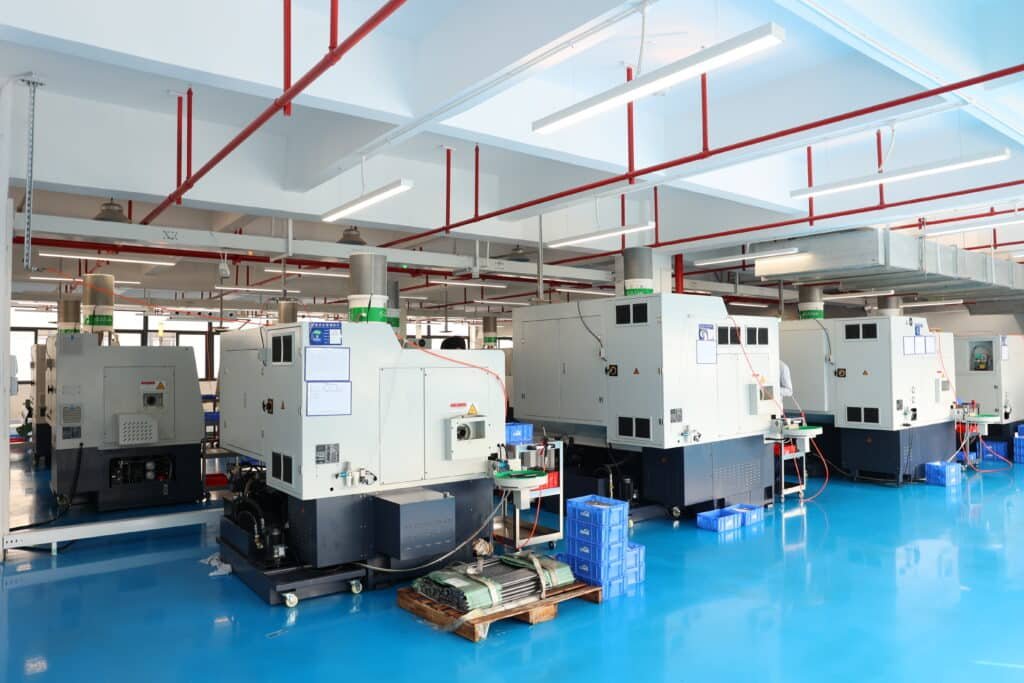
Supplier Capability Assessment Framework
| Evaluation Factor | Standard Industry Practice | KEYFIX Specialized Capability | Customer Value Proposition |
|---|---|---|---|
| Finish Technology Range | 1-2 coating methods available | 7 distinct black finish technologies (oxide, powder, PVD, anodize, e-coat, zinc-nickel, black chrome) | Complete aesthetic solution source, optimal finish for each application |
| Color Consistency Control | Visual comparison to standard | Spectrophotometric measurement, ΔE ≤2.0 batch control | Consistent appearance across production runs, multiple supply shipments |
| Automotive Certification | ISO 9001 general quality | IATF 16949:2016 automotive-specific QMS | OEM-qualified supplier, comprehensive PPAP capability |
| Aesthetic Quality Standards | Basic visual inspection | Trained inspectors, standardized lighting, defect classification | Meets Class A visible fastener requirements |
| Surface Preparation | Single-stage cleaning | Multi-stage prep: degrease, blast, activate, rinse | Superior coating adhesion, extended durability |
| UV/Weathering Resistance | Standard powder formulations | Outdoor-rated UV-stabilized chemistries validated | 3-5 year exterior durability without fading |
| Production Flexibility | High-volume only, 10,000+ MOQ | 1,000-5,000 MOQ for custom black finishes | Prototype-to-production support, multiple vehicle programs |
| Technical Support | Order fulfillment focus | Finish selection guidance, appearance matching, testing validation | Application engineering partnership |
Spectrophotometric color control, where the customer specifies it, measures reflected light across the visible spectrum (400-700nm) and reports objective color data in CIE Lab* color space. Reference standards established during PPAP approval serve as master specification, with production samples measured statistically (5% sampling frequency) calculating ΔE values confirming conformance to ±2.0 tolerance. This quantitative approach eliminates subjective inspector variation while providing documented evidence of color consistency supporting long-term supply agreements spanning multiple model years.
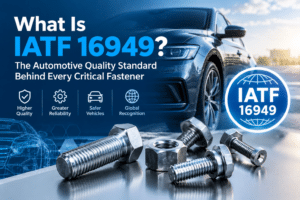
IATF 16949:2016 Automotive Quality Certification demonstrates organizational capability beyond general ISO 9001 requirements—automotive-specific elements include APQP (advanced product quality planning) methodology guiding new black fastener development, PPAP (production part approval process) providing comprehensive first-article validation with appearance approval documentation, FMEA (failure mode effects analysis) systematically identifying potential finish defects implementing preventive controls, and customer-specific requirements compliance addressing each OEM’s unique black finish specifications. KEYFIX’s IATF 16949 certification, audited by NQA, validates sustained compliance and continuous improvement culture.
Finish Selection Technical Advisory services help customers navigate aesthetic-functional tradeoffs—KEYFIX application engineers assess environmental exposure (interior protected, exterior UV, underbody salt spray), temperature ranges (ambient, engine compartment, exhaust proximity), appearance criticality (Class A visible, Class B semi-visible, Class C concealed), and economic constraints providing finish recommendations optimized for each requirement profile. Comparative sample sets demonstrating different black finish technologies (oxide, powder matte, powder gloss, PVD) on customer-supplied fastener geometries enable informed specification decisions before tooling investment.
Conclusion: Precision Black Finishing for Automotive Excellence
Black automotive screws represent the convergence of aesthetic design intent and functional engineering requirements—achieving consistent black appearance while maintaining dimensional precision, corrosion protection, and mechanical properties demands specialized manufacturing expertise and comprehensive quality systems. The proliferation of monochromatic vehicle design themes, electric vehicle minimalist aesthetics, and performance appearance packages elevates black fastener importance from niche specialty to mainstream requirement across automotive segments.
KEYFIX’s 20+ years of precision fastener manufacturing integrate black finish technologies—black oxide conversion, electrostatic powder coating (matte and gloss variants), PVD titanium/chromium nitride, black anodizing, black zinc-nickel electroplating, and black e-coating,—addressing the complete spectrum of automotive black fastener applications. Our IATF 16949:2016 certification, color control targets (ΔE ≤2.0), and UV-resistant outdoor formulations demonstrate capability producing black automotive screws meeting stringent OEM appearance specifications and long-term durability requirements.
Engage KEYFIX’s finishing specialists to evaluate your black fastener requirements—we provide finish selection consultation analyzing application environments and aesthetic priorities, appearance sample sets demonstrating technology alternatives on representative geometries, accelerated weathering and corrosion testing validating long-term performance, and complete PPAP documentation supporting OEM qualification processes including dimensional validation, finish quality approval, and environmental durability confirmation.
Request black finish sample evaluation showcasing KEYFIX aesthetic quality across multiple technologies, review spectrophotometric color data demonstrating batch-to-batch consistency, access technical resources including UV stability comparison data and finish selection decision matrices, or schedule virtual finishing facility tours examining powder coating systems, PVD chambers, black oxide processing, and quality laboratories equipped with spectrophotometers, gloss meters, and environmental test chambers validating appearance durability.