Introduction: When Standard Fasteners Fall Short
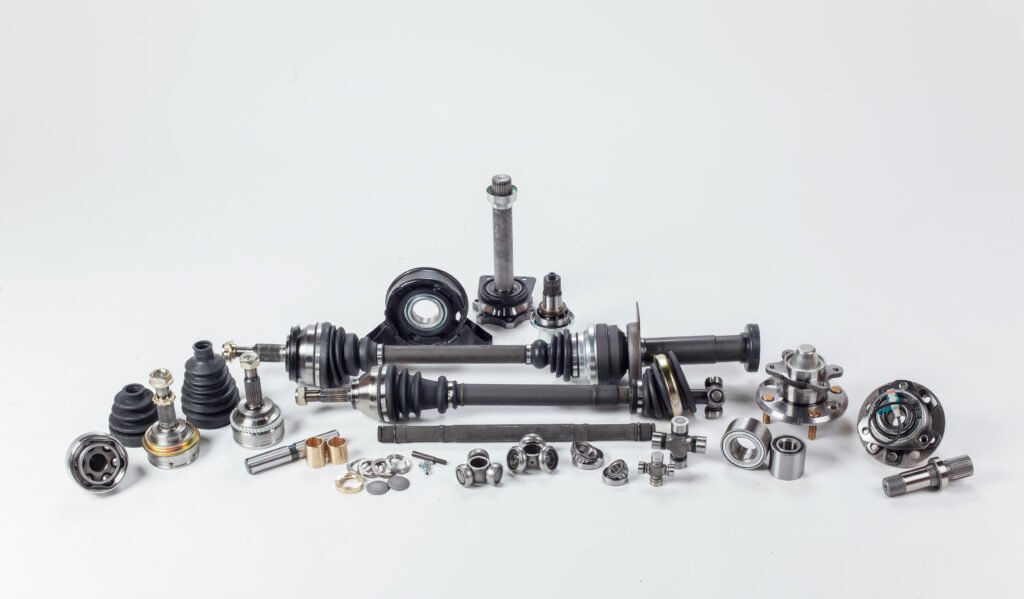
A heavy threaded long screw automotive application arises wherever a vehicle assembly must clamp through substantial material thickness, resist extreme tensile and shear forces, or maintain preload under sustained vibration and thermal cycling. Subframe mounting, engine cradle attachment, tow-hook anchorage, battery tray securing in electric vehicles, and multi-layer structural sandwich joints all demand fasteners that exceed the dimensional envelope and load capacity of standard catalog screws.
These are not commodity hardware items. A heavy threaded long screw for automotive structural duty must reconcile competing engineering requirements: sufficient thread engagement length to develop full proof load, adequate shank diameter to resist double-shear at bolted joints, controlled clamp stretch for fatigue-resistant preloading, and corrosion endurance matching the vehicle’s design life. Specifying the wrong combination of diameter, length, thread pitch, or material grade risks catastrophic joint separation under dynamic service loads — a failure mode with direct safety implications.
This guide provides the dimensional, metallurgical, and process-engineering data that procurement engineers and vehicle designers need to specify heavy threaded long screw automotive fasteners with confidence.
Defining “Heavy” and “Long” in Automotive Fastener Context
Industry terminology can be ambiguous. For the purposes of this guide, the following quantitative boundaries distinguish heavy threaded long screw automotive hardware from standard fasteners:
| Parameter | Standard Automotive Screw | Heavy Threaded Long Screw Automotive |
|---|---|---|
| Nominal Diameter | M4 – M8 | M10 – M24 (and larger) |
| Total Length (Under Head) | 10 – 50 mm | 60 – 300+ mm |
| Property Class (Steel) | 4.8 – 8.8 | 8.8 – 12.9 (and beyond) |
| Thread Engagement Depth | 1.0 D – 1.5 D | 1.5 D – 3.0 D |
| Minimum Proof Load (M12 example) | 32.0 kN (class 8.8) | 52.5 kN (class 10.9) / 61.2 kN (class 12.9) |
| Typical Tightening Torque (M12) | 50 – 80 Nm | 80 – 190 Nm |
The “heavy” designation reflects both cross-sectional mass and load-carrying duty, while “long” refers to fasteners whose grip length requires special manufacturing consideration — cold-heading feasibility, thread-rolling reach, straightness maintenance, and heat-treatment uniformity all become progressively more challenging as length-to-diameter ratios exceed 8:1.
Vehicle Applications Requiring Heavy Threaded Long Screws
Heavy threaded long screw automotive fasteners concentrate in high-load structural zones where joint integrity is safety-critical. The table below maps primary vehicle applications to their governing load conditions and typical dimensional requirements.
| Vehicle Application | Load Type | Typical Size Range | Length Range | Property Class | Governing Specification |
|---|---|---|---|---|---|
| Front/Rear Subframe Mounting | Combined shear + tension | M12 – M16 | 80 – 160 mm | 10.9 / 12.9 | OEM-specific DVP&R |
| Engine Cradle to Body | High-frequency vibration + static load | M10 – M14 | 70 – 130 mm | 10.9 | VDA 235-101 |
| Tow Hook / Recovery Point | Impulse tensile overload | M14 – M20 | 90 – 180 mm | 10.9 / 12.9 | ECE R55 |
| EV Battery Tray to Floor | Distributed clamping + crash load | M8 – M12 | 60 – 120 mm | 10.9 | LV 124 / USABC |
| Suspension Trailing Arm Pivot | Cyclic shear + bending fatigue | M14 – M18 | 100 – 200 mm | 10.9 | ISO 898-1 |
| Cab-to-Frame (Commercial Vehicle) | Multi-layer clamping through isolators | M16 – M24 | 150 – 300 mm | 8.8 / 10.9 | SAE J429 |
| Roll Cage / ROPS Mounting | Crash energy absorption | M10 – M14 | 80 – 150 mm | 12.9 | FMVSS 216 / ECE R29 |
| Fifth Wheel Coupling Plate | High cyclic shear | M16 – M20 | 100 – 200 mm | 10.9 | SAE J700 |
Each application imposes a distinct combination of static proof load, dynamic fatigue endurance, and environmental exposure — reinforcing the principle that heavy threaded long screw automotive fasteners must be engineered per application rather than selected from generic stock.
Thread Design: Coarse vs. Fine Pitch for Long Engagement
Thread pitch selection for heavy threaded long screw automotive applications involves a direct trade-off between assembly speed and tensile performance.
| Thread Characteristic | Coarse Pitch (Standard ISO) | Fine Pitch (ISO Fine Series) |
|---|---|---|
| Pitch Value (M12 example) | 1.75 mm | 1.25 mm or 1.50 mm |
| Tensile Stress Area (M12) | 84.3 mm² | 92.1 mm² (1.25 pitch) |
| Proof Load at Class 10.9 (M12) | 52.5 kN | 57.4 kN |
| Stripping Resistance | Lower (fewer thread roots per unit length) | Higher (more engaged thread roots) |
| Assembly Speed | Faster (fewer rotations per mm) | Slower (more rotations per mm) |
| Vibration Resistance | Moderate | Superior (lower helix angle) |
| Tolerance to Dirt / Damage | High (wider root clearance) | Low (easily cross-threaded) |
| Recommended Use Case | General structural, field-assembled joints | Precision-torqued powertrain, vibration-critical mounts |
For most heavy threaded long screw automotive applications in structural body and chassis zones, coarse pitch is preferred because it tolerates the surface contamination and alignment imperfections inherent in high-volume assembly environments. Fine pitch is reserved for applications where the 8–10 % tensile stress area advantage translates into meaningful joint-capacity gains — typically powertrain and suspension attachment points where torque-angle tightening protocols are enforced.
Material Grades and Mechanical Properties
The alloy composition of a heavy threaded long screw automotive fastener determines its ultimate tensile strength, fatigue endurance limit, and susceptibility to environmental degradation mechanisms including hydrogen embrittlement and stress corrosion cracking.
| Property Class (ISO 898-1) | Material Grade | Tensile Strength (MPa) | Proof Load (MPa) | Elongation at Break | Primary Automotive Use |
|---|---|---|---|---|---|
| 8.8 | Medium-carbon steel (e.g., 35VB, 38MnB5) | 800 – 830 | 600 | ≥ 12 % | Cab-to-frame, non-critical brackets |
| 9.8 | Medium-carbon steel, quenched & tempered | 900 – 940 | 650 | ≥ 10 % | Intermediate-duty structural joints |
| 10.9 | Alloy steel (e.g., 34CrMo4, 42CrMo4) | 1,040 – 1,100 | 830 | ≥ 9 % | Subframe, suspension pivots, battery trays |
| 12.9 | Alloy steel (e.g., 34CrNiMo6, 42CrMoS4) | 1,220 – 1,300 | 970 | ≥ 8 % | Tow hooks, roll-cage mounts, recovery points |
| 10.9 (Stainless A4-80) | 316-series austenitic stainless | 800 | 640 | ≥ 16 % | Exhaust-adjacent structure, coastal-climate fleets |
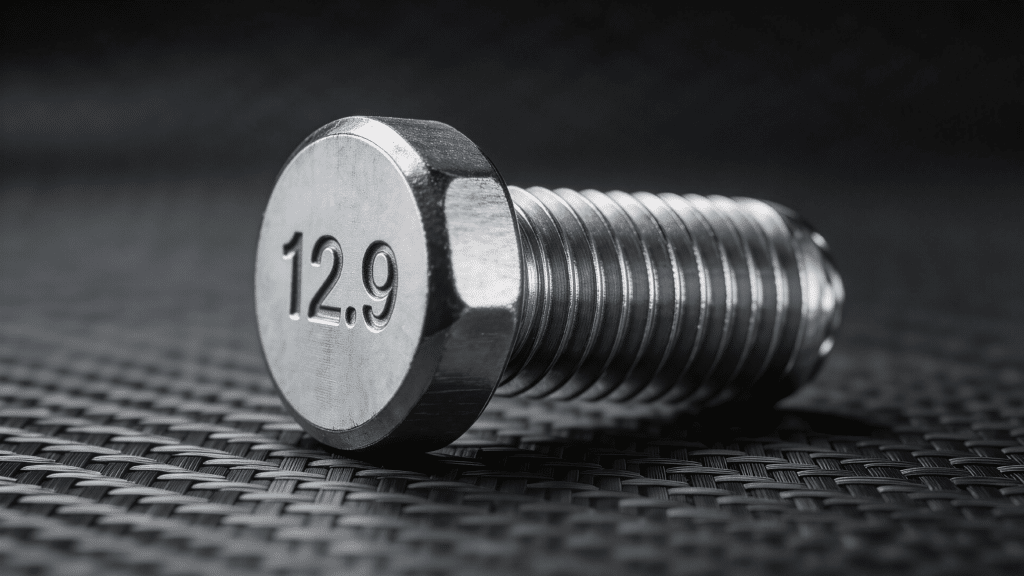
A critical caution applies to class 12.9 heavy threaded long screw automotive fasteners: their elevated hardness (39–44 HRC) increases susceptibility to hydrogen-induced delayed fracture. Any electroplating process (zinc, zinc-nickel, cadmium) introduces atomic hydrogen that must be baked out at 190–230 °C within 4 hours of plating. Failure to perform this de-embrittlement bake creates a latent fracture risk that may manifest days or weeks after vehicle assembly — with zero visible warning prior to catastrophic bolt failure.
Surface Treatment for Long-Service Durability
Heavy threaded long screw automotive fasteners in underbody and structural positions face the most aggressive corrosion environment on the vehicle: road salt, stone chips, water pooling, and crevice conditions between clamped surfaces.
| Coating System | Thickness (μm) | Salt Spray Endurance (hrs) | Friction Coefficient (μ) | Suitability for Class 12.9 |
|---|---|---|---|---|
| Zinc Flake (DACROMET / Geomet) | 6 – 12 | 720 – 1,000+ | 0.12 – 0.18 (controlled) | Excellent (no H₂ risk) |
| Zinc-Nickel Electroplate (12–15 % Ni) | 8 – 15 | 720 – 1,000+ | 0.10 – 0.16 | Good (requires post-bake) |
| Hot-Dip Galvanize | 45 – 85 | 1,000+ | 0.14 – 0.22 (variable) | Unsuitable (embrittlement risk at > 10.9) |
| E-coat (Cathodic Epoxy) | 15 – 30 | 500 – 750 | 0.10 – 0.15 | Good (no H₂ risk) |
| Zinc Phosphate + Oil | 5 – 15 | 96 – 200 | 0.08 – 0.14 | Good (no plating step) |
Friction coefficient control deserves special attention for heavy threaded long screw automotive fasteners. Because clamp load is calculated from applied torque divided by the friction-dependent nut factor (K), a ±0.03 variation in μ produces ±15–20 % clamp-load scatter — potentially pushing a joint below its minimum proof-load requirement or above its yield limit. Zinc flake coatings with integrated friction-control topcoats (e.g., Geomet 500 + Deltaseal) deliver the tightest μ corridors, making them the preferred specification for torque-critical structural joints.
KEYFIX’s zinc-flake (DACROMET) and zinc-nickel coatings, are validated beyond 1,000 hours neutral salt spray per ASTM B117, with friction coefficient specified per lot — the control required for torque-controlled heavy threaded long screw automotive assembly.
Manufacturing Challenges for Long, Heavy-Gauge Fasteners
Producing heavy threaded long screw automotive fasteners at scale introduces process difficulties that do not arise with shorter, smaller-diameter hardware.
| Manufacturing Challenge | Root Cause | KEYFIX Solution |
|---|---|---|
| Cold-heading force exceeds press capacity | Large cross-section + high-strength alloy | Multi-station progressive headers rated to 800+ tonnes; warm-forging option for extreme diameters |
| Thread rolling reach limited by die length | Fastener length exceeds standard flat-die stroke | Extended-stroke planetary rollers; multi-pass rolling for lengths > 200 mm |
| Straightness deviation over long shank | Residual stress asymmetry during heading | Post-heading straightening passes; straightness verified to ≤ 0.15 mm/100 mm TIR |
| Heat-treatment uniformity across length | Temperature gradient in continuous furnace | Controlled atmosphere batch furnaces with ±5 °C zone uniformity; Jominy verification |
| Hydrogen bake effectiveness on thick sections | Hydrogen diffusion path length increases with diameter | Extended bake cycles (8–24 hr at 200 °C for diameters > M16); residual-H₂ verification by thermal desorption analysis |
| Dimensional inspection of deep thread engagement | Standard gauges cannot reach full thread depth | Custom extended-reach GO/NO-GO gauges; thread-profile scanning with optical comparator |
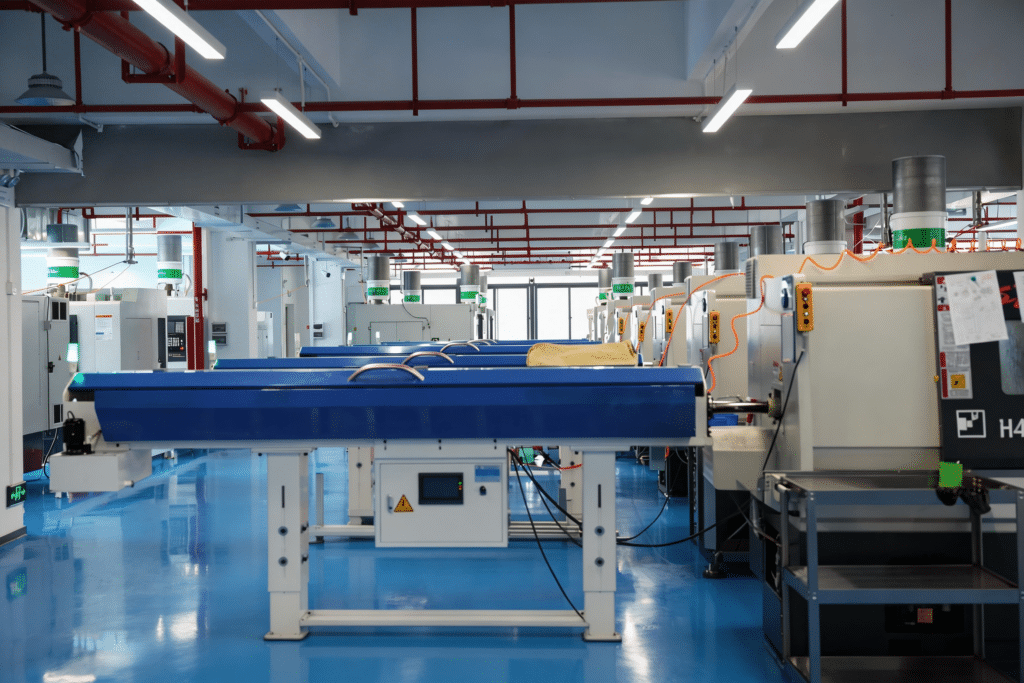
KEYFIX’s cold forging lines handle heavy-gauge blanks on multi-station headers, while YCM NFX 380A 5-axis CNC centers perform secondary operations (hex recesses, flange serrations, pilot-point geometries) at ±0.005 mm. Production lots are checked by 2D video measuring and Mitutoyo gauges, screened by automated optical sorting, and released under AQL 0.4 outgoing inspection with a target below 25 PPM, all within IATF 16949-certified quality protocols.
Specification Checklist for Custom Orders
| Data Element | Information Needed | Engineering Purpose |
|---|---|---|
| Vehicle Platform & Position | OEM, model, attachment location | Identifies governing test standards and load cases |
| Diameter × Length × Pitch | Metric or SAE, coarse or fine | Defines tooling requirements and thread-rolling feasibility |
| Property Class | 8.8, 10.9, 12.9, or custom | Determines alloy selection and heat-treatment cycle |
| Head Style | Hex, hex flange, 12-point, socket head | Sets forging die configuration and drive-tool compatibility |
| Coating & Friction Target | DACROMET, Zn-Ni, Zn-flake; target μ range | Specifies surface-treatment process and topcoat selection |
| Annual Volume & Release Schedule | Pieces per year, quarterly call-offs | Optimizes tooling investment and inventory strategy |
| PPAP Level Required | Level 1 through Level 5 | Determines documentation package and sample quantity |
KEYFIX’s 20-person engineering and QA team supports full PPAP documentation — dimensional layouts, material certifications, process capability studies (Cpk ≥ 1.67), and initial sample inspection reports — for every heavy threaded long screw automotive program from prototype through volume production.
Frequently Asked Questions
What length-to-diameter ratio can KEYFIX cold-forge in a single operation?
KEYFIX’s multi-station progressive headers routinely produce fasteners up to 10:1 length-to-diameter ratio via cold forging. For ratios exceeding 10:1, a warm-forging or combined forging-plus-machining approach maintains grain-flow integrity while achieving the required dimensional envelope. Lengths up to 300 mm are achievable across the M10–M24 diameter range.
Why is friction coefficient control critical for heavy threaded long screw automotive joints?
Clamp load in a torque-controlled joint is inversely proportional to the friction-dependent nut factor. A ±0.03 variation in friction coefficient translates to ±15–20 % clamp-load scatter, which can push joints below minimum proof load or above yield. Zinc flake coatings with friction-control topcoats hold μ within ±0.02, ensuring consistent preload across every fastener on the assembly line.
Does KEYFIX supply both prototype and series-production quantities?
Yes. CNC-machined prototypes have no MOQ. Cold-forged production runs typically begin at 10,000 pieces per variant, with progressive cost reductions at 50K, 100K, and 500K+ tiers. Contact sales@keyfixpro.com for program-specific quotations.
How is hydrogen embrittlement prevented in class 12.9 long screws?
All KEYFIX fasteners exceeding class 10.9 undergo mandatory post-plating hydrogen-relief baking at 190–230 °C. Standard bake duration is 8 hours for diameters up to M16 and 24 hours for larger sections, with residual hydrogen verified by thermal desorption analysis when specified by the customer’s material standard.
KEYFIX — established in 2005, IATF 16949 / ISO 9001 / ISO 14001 certified — manufactures precision heavy threaded long screw automotive fasteners for structural, chassis, and EV applications worldwide. With 20+ years of manufacturing experience, threads up to M30, and a production chain spanning cold forging and CNC machining plus heat treatment and surface coating, KEYFIX delivers the load capacity, dimensional accuracy, and corrosion endurance that safety-critical vehicle joints require. Visit www.keyfixpro.com or contact sales@keyfixpro.com.