Introduction: Why Screw Selection Is a Safety Engineering Decision
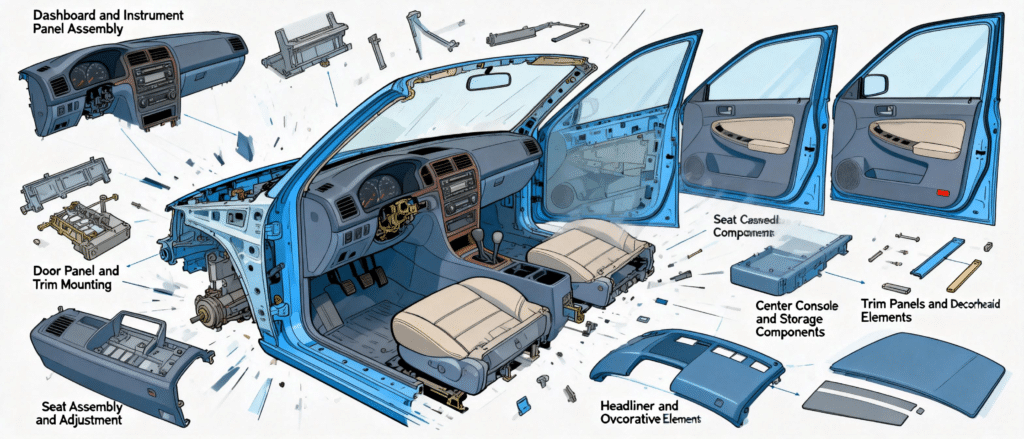
Screws automotive applications encompass more than 3,500 individual threaded fastener positions on a modern passenger vehicle. Each position carries a distinct combination of mechanical load, thermal exposure, chemical environment, and — critically — failure consequence. A loosened interior trim screw generates a customer-perceptible rattle; a fractured brake caliper screw can trigger loss of vehicle control. Both are “automotive screws,” but the engineering rigor required to specify them differs by orders of magnitude.
This reality demands a specification approach that goes beyond simple strength-class matching. Procurement engineers and vehicle designers must evaluate screws automotive applications through a risk lens that weighs failure probability against failure severity — a methodology borrowed from FMEA (Failure Mode and Effects Analysis) and applied specifically to threaded-fastener selection.
This guide organizes the full spectrum of screws automotive applications into four risk tiers, maps each tier to quantified material, dimensional, and coating requirements, and presents the manufacturing capabilities that a qualified fastener supplier must demonstrate for each tier. The result is a practical, decision-ready framework for specifying every threaded joint on a vehicle — from decorative trim to structural crash path.
The Four-Tier Risk Classification for Automotive Screws
Not all screws automotive applications carry equal stakes. The following classification stratifies vehicle fastener positions by failure consequence, providing the organizing framework for all downstream specification decisions.
| Risk Tier | Failure Consequence | Regulatory Exposure | Example Positions | Approximate Count per Vehicle |
|---|---|---|---|---|
| Tier 1 — Safety-Critical | Loss of vehicle control, occupant injury, or fatality | Mandatory recall under FMVSS / ECE / GB | Brake caliper mounting, steering column, seat belt anchorage, wheel studs | 40 – 80 |
| Tier 2 — Structurally Significant | Degraded crash performance, fluid leak, or drivetrain loss | Potential recall; warranty campaign likely | Subframe bolts, engine mounting, fuel rail fittings, suspension pivots | 150 – 300 |
| Tier 3 — Functionally Important | Component malfunction, noise, electrical failure | Warranty claim; customer dissatisfaction | Headlamp housing, wiper motor mount, ECU bracket, HVAC blower | 400 – 800 |
| Tier 4 — Cosmetic / Convenience | Rattle, visual defect, loose trim | Minor warranty or goodwill repair | Interior trim panels, glove-box hinge, badge mounting, carpet retainer | 2,000 – 2,500 |
This four-tier structure mirrors the severity rankings used in automotive DFMEA (Design Failure Mode and Effects Analysis). A Tier 1 screw demands maximum material strength, certified traceability, and PPM-level outgoing quality; a Tier 4 screw prioritizes low cost and aesthetic integration with relaxed mechanical requirements. Specifying every screw to Tier 1 standards would be financially prohibitive; specifying a Tier 1 position to Tier 4 standards would be negligent. The framework prevents both extremes.
Tier 1: Safety-Critical Screws Automotive Applications
Tier 1 positions are defined by a single criterion: if the screw fails, the vehicle occupant is placed at immediate physical risk. Regulatory bodies worldwide mandate specific performance thresholds for these positions, and field failures trigger mandatory recall campaigns.
Specification Requirements
| Parameter | Tier 1 Requirement | Governing Standard |
|---|---|---|
| Property Class | 10.9 minimum; 12.9 for high-shear positions | ISO 898-1 |
| Material | Alloy steel (42CrMo4, 34CrNiMo6) or equivalent | OEM material spec (e.g., GMW 3110) |
| Tensile Strength | ≥ 1,040 MPa (class 10.9) | ISO 898-1 |
| Fatigue Endurance | ≥ 10⁷ cycles at 50 % proof load amplitude | OEM DVP&R protocol |
| Surface Treatment | Zinc-nickel (12–15 % Ni) or zinc flake; 720+ hr NSS | ASTM B117 |
| H₂ Embrittlement Control | Post-plating bake ≤ 4 hr; residual H₂ ≤ 2.0 ppm | ASTM F1940 |
| Process Capability (Cpk) | ≥ 1.67 on all critical dimensions | AIAG SPC manual |
| Traceability | Per-piece or per-lot to raw-material heat number | IATF 16949 §8.5.2 |
| Outgoing Quality | PPM-level target; automated inspection | IATF 16949 |
Typical Tier 1 Applications
| Vehicle Position | Screw Type | Size Range | Critical Load Mode |
|---|---|---|---|
| Brake caliper to knuckle | Hex-flange bolt, class 10.9+ | M10 – M14 | Double shear + thermal cycling |
| Steering rack to subframe | Hex bolt with prevailing-torque nut | M12 – M16 | Combined shear-tension under impact |
| Seat belt anchorage to B-pillar | Hex-flange bolt, class 10.9 | M10 – M12 | Tensile overload in frontal crash |
| Wheel lug bolt / stud | Conical seat or spherical seat | M12 × 1.5 / M14 × 1.5 | Cyclic shear + clamp-load retention |
| Airbag module to steering wheel | Torx security bolt | M5 – M6 | Vibration retention + tamper resistance |
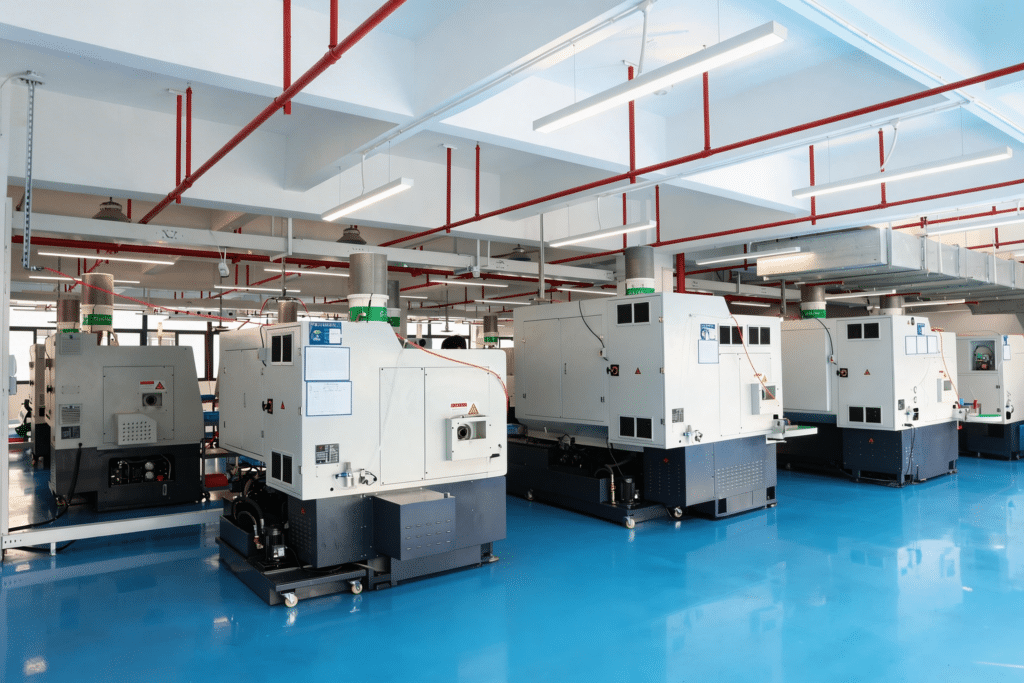
KEYFIX manufactures Tier 1 screws automotive applications using alloy-steel cold forging with continuous grain flow (40–60 % shear-strength advantage over machined equivalents), followed by carburizing, oil quench, and temper — all under IATF 16949 protocols with automated optical sorting and 2D video measuring at 0.001 mm optical resolution.
Tier 2: Structurally Significant Screws Automotive Applications
Tier 2 positions affect vehicle structural integrity and drivetrain function but are typically not in the immediate occupant-safety load path. Failure manifests as fluid leakage, excessive vibration, or reduced crash energy absorption rather than direct control loss.
Specification Requirements
| Parameter | Tier 2 Requirement | Notes |
|---|---|---|
| Property Class | 8.8 – 10.9 | Application-dependent |
| Material | Medium-carbon steel (35VB, 38MnB5) or stainless 304/316L | Stainless for exhaust-adjacent positions |
| Tensile Strength | ≥ 800 MPa (class 8.8); ≥ 1,040 MPa (class 10.9) | Per ISO 898-1 |
| Corrosion Resistance | 480 – 1,000 hr NSS depending on exposure zone | Underbody: 720+ hr; engine bay: 480+ hr |
| Thread Locking | Pre-applied micro-encapsulated patch or prevailing torque | Mandatory for vibration-exposed joints |
| Process Capability (Cpk) | ≥ 1.33 on critical dimensions | ≥ 1.67 preferred |
| PPAP Level | Level 3 minimum | Full dimensional layout + capability study |
Typical Tier 2 Applications
| Vehicle Position | Screw Type | Size Range | Primary Stressor |
|---|---|---|---|
| Engine mount to subframe | Hex-flange bolt, class 10.9 | M10 – M14 | NVH vibration + thermal cycling |
| Transmission bell-housing | Socket head cap screw, class 10.9 | M10 – M12 | Torsional shear from drivetrain |
| Fuel rail to intake manifold | Hex-flange bolt, stainless 304 | M6 – M8 | Fuel vapor corrosion + vibration |
| Suspension control arm pivot | Through-bolt with prevailing nut | M12 – M16 | Cyclic bending fatigue |
| EV battery tray to floor | Hex-flange bolt with sealing washer | M8 – M12 | Crash load + IP67 sealing |
| Exhaust manifold stud | Stud + hex nut, stainless 316L or Inconel | M8 – M10 | 650+ °C sustained temperature |
EV battery-tray attachment represents a rapidly growing segment within Tier 2 screws automotive applications. These joints must simultaneously resist crash deceleration loads (up to 20 G per FMVSS 305), maintain IP67 waterproof sealing, and resist galvanic corrosion between aluminum tray and steel floor pan. KEYFIX addresses this combination with zinc-nickel-coated alloy-steel flange bolts paired with captive EPDM sealing washers, validated to 1,000+ hour salt spray and 1 m water-column immersion per IEC 60529.
Tier 3: Functionally Important Screws Automotive Applications
Tier 3 positions secure components that, if detached, compromise vehicle functionality or generate warranty claims but do not affect occupant safety. Specification emphasis shifts from ultimate strength toward vibration retention, corrosion endurance, and assembly efficiency.
Specification Requirements
| Parameter | Tier 3 Requirement | Notes |
|---|---|---|
| Property Class | 4.8 – 8.8 (steel); A2-70 (stainless) | Lower strength acceptable |
| Material | Low/medium-carbon steel, stainless 410/430, or aluminum 6061 | Material driven by environment and weight |
| Corrosion Resistance | 200 – 720 hr NSS | Trivalent zinc adequate for interior; Zn-Ni for exposed positions |
| Thread Type | Machine thread, tapping thread, or thread-forming | Substrate determines thread form |
| Drive Recess | Phillips, Torx, or hex socket | Torx preferred for automated assembly |
| Cosmetic Requirement | Moderate (no visible rust or plating defect at delivery) | Color-matched heads for visible positions |
| Process Capability (Cpk) | ≥ 1.33 | Standard automotive threshold |
Typical Tier 3 Applications
| Vehicle Position | Screw Type | Size Range | Key Specification Priority |
|---|---|---|---|
| Headlamp housing to fender | Self-tapping flange-head, zinc-plated | M5 – M6 (equiv. #10 – #14) | Alignment repeatability; vibration retention |
| Wiper motor to linkage bracket | Machine screw, class 8.8 | M6 – M8 | Fatigue endurance under cyclic motion |
| ECU / BCM mounting bracket | Thread-forming screw into Al die-cast | M4 – M5 | Low insertion torque; no chip generation |
| HVAC blower motor | Phillips pan-head, zinc-plated | M4 – M5 | NVH isolation; consistent clamp load |
| Door latch mechanism | Torx pan-head, class 8.8 | M5 – M6 | Tamper resistance; long-term reliability |
| Side mirror housing | Self-tapping screw into ABS plastic | M3.5 – M4.5 | Hi-lo thread for polymer retention |
| Horn bracket to radiator support | Hex-flange self-tapping | M6 | Vibration retention in high-temp zone |
Thread-forming screws represent a significant portion of Tier 3 screws automotive applications because they eliminate chip generation when driven into aluminum or magnesium die-cast bosses — preventing metallic debris from contaminating sensitive electronic assemblies. KEYFIX produces trilobular thread-forming screws via cold heading with lobe geometry held to ±0.02 mm, ensuring consistent thread engagement and insertion torque across multi-million-piece production runs.
Tier 4: Cosmetic and Convenience Screws Automotive Applications
Tier 4 positions account for the largest population of screws on any vehicle — often 60–70 % of the total screw count. Individual failure is inconsequential to safety or function but collectively affects perceived vehicle quality, assembly efficiency, and warranty cost.
Specification Requirements
| Parameter | Tier 4 Requirement | Notes |
|---|---|---|
| Property Class | 4.8 or equivalent (low-strength adequate) | Over-specification wastes cost |
| Material | Low-carbon steel, stainless 410, nylon, or aluminum | Plastic clips increasingly replace screws |
| Corrosion Resistance | 96 – 200 hr NSS (interior); 200 – 480 hr (exterior visible) | Black oxide or trivalent zinc sufficient for interior |
| Cosmetic Finish | Color-matched (black, grey, chrome); no visible plating defect | Aesthetic requirement supersedes strength |
| Assembly Method | Push-in clip, quarter-turn, or low-torque self-tapping | Minimize assembly time per vehicle |
| Inspection Level | AQL sampling (no 100 % sort required) | Cost-driven quality approach |
Typical Tier 4 Applications
| Vehicle Position | Screw Type | Size Range | Design Objective |
|---|---|---|---|
| Dashboard trim panel | Push-in clip or Phillips self-tapping | M3 – M4 | Sub-second installation; rattle prevention |
| Glove-box hinge | Phillips flat-head, black oxide | M4 | Flush aesthetic; moderate cycle life |
| Door sill plate cover | Torx countersunk, chrome or black | M4 – M5 | Decorative finish; easy service removal |
| Carpet retainer | Nylon expanding rivet or self-tapping | M3.5 | Zero-tool installation where possible |
| Badge / emblem mounting | Adhesive-backed stud or micro screw | M2 – M3 | Invisible fastening; theft deterrence |
| Trunk liner | Phillips truss-head, large bearing area | M4 – M5 | Prevent pull-through in soft substrate |
Although Tier 4 screws automotive applications face relaxed mechanical demands, they impose the most stringent aesthetic and assembly-speed requirements. A chrome trim screw with a visible plating blister fails its purpose even if its mechanical properties are perfect. KEYFIX’s 100 % optical sorting system inspects head surface finish, plating uniformity, and dimensional conformance on Tier 4 fasteners at production speeds exceeding 300 pieces per minute.
Cross-Tier Material Selection Matrix
The following consolidated table maps material families to all four risk tiers, enabling engineers to identify the optimal alloy for any position on the vehicle.
| Material Family | Tensile Range (MPa) | Applicable Tiers | Corrosion Strategy | Weight Index | Cost Index |
|---|---|---|---|---|---|
| Low-Carbon Steel (1010, 1022) | 350 – 450 | 3, 4 | Zinc or black oxide coating | 1.0× (baseline) | 1.0× |
| Medium-Carbon Steel (1045, 35VB) | 500 – 700 | 2, 3 | Zinc-nickel or DACROMET | 1.0× | 1.1× |
| Alloy Steel (42CrMo4, 34CrNiMo6) | 900 – 1,300 | 1, 2 | Zinc-nickel + H₂ bake | 1.0× | 1.4× |
| Boron Steel (10B21, 22MnB5) | 800 – 1,200 | 1, 2 | Zinc flake or zinc-nickel + H₂ bake | 1.0× | 1.2× |
| Austenitic Stainless (304, 316L) | 500 – 700 | 2, 3 | Inherent; no coating needed | 1.0× | 2.3× |
| Martensitic Stainless (410, 416) | 450 – 700 | 3, 4 | Inherent + optional passivation | 1.0× | 1.8× |
| Aluminum Alloy (6061-T6, 7075-T6) | 270 – 570 | 3, 4 | Anodize (Type II or III) | 0.36× | 1.7× |
| Titanium (Ti-6Al-4V) | 950 – 1,100 | 1 (motorsport), 2 (EV) | Inherent; no coating needed | 0.57× | 6.0× |
Surface Treatment Selection by Exposure Zone
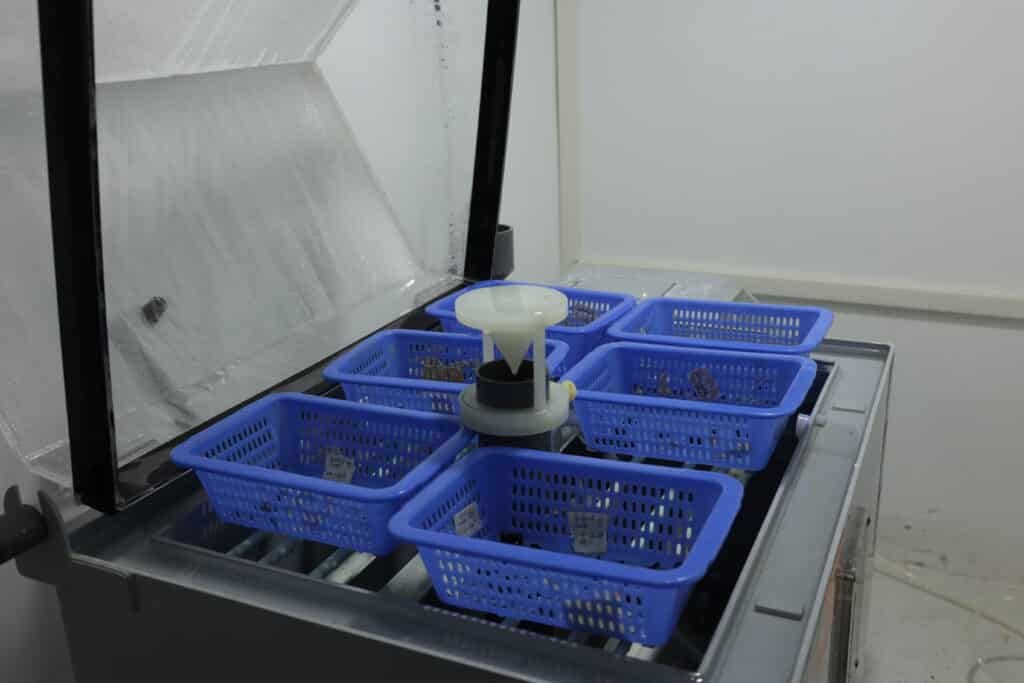
Coating selection for screws automotive applications depends on the specific exposure environment — which varies dramatically across the vehicle.
| Vehicle Exposure Zone | Typical Corrosion Agents | Minimum Salt Spray Requirement | Recommended Coating | Applicable Tiers |
|---|---|---|---|---|
| Interior (climate-controlled) | Humidity, skin oils | 96 hr | Black oxide, trivalent zinc | 3, 4 |
| Engine Bay | Coolant mist, oil, heat (≤ 180 °C) | 480 hr | Zinc-nickel or DACROMET | 1, 2, 3 |
| Underbody (splash zone) | Road salt, gravel, water immersion | 720 hr | Zinc-nickel (15 μm) or zinc flake | 1, 2 |
| Wheel Well / Suspension | Salt + stone chips + brake dust | 1,000 hr | Zinc flake (GEOMET) with topcoat | 1, 2 |
| Exhaust System Proximity | 400–900 °C radiant heat, condensate | N/A (heat exceeds salt-spray relevance) | Nickel alloy screw or stainless substrate | 2 |
| Exterior Visible (decorative) | UV, rain, car-wash chemicals | 200 – 500 hr | Decorative chrome, anodize, or e-coat | 3, 4 |
KEYFIX operates dedicated zinc-nickel and DACROMET surface-treatment lines that routinely validate production lots to 1,000+ hour neutral salt spray per ASTM B117, with friction coefficient controlled to ±0.02 for torque-critical Tier 1 and Tier 2 joints.
Manufacturing Capability Requirements by Tier
A qualified fastener supplier must demonstrate tier-appropriate manufacturing infrastructure. The matrix below maps required capabilities to each risk tier.
| Manufacturing Capability | Tier 1 | Tier 2 | Tier 3 | Tier 4 |
|---|---|---|---|---|
| IATF 16949 Certification | Mandatory | Mandatory | Mandatory | Strongly preferred |
| Cold Forging (Multi-Station) | Required | Required | Required | Optional (stamping OK) |
| CNC Secondary Machining | Required (±0.005 mm) | Required | Optional | Rarely needed |
| Thread Rolling (Rolled > Cut) | Mandatory | Mandatory | Preferred | Optional |
| Controlled-Atmosphere Heat Treatment | Required | Required for class ≥ 8.8 | Optional | Not required |
| OES / XRF Incoming Material Verification | Required (100 % of heats) | Required | Preferred | Sample-based OK |
| Precision Dimensional Inspection (CMM, video measuring or 3D scan) | Required | Required | Preferred | Not required |
| 100 % Optical Sorting | Required | Required | Required for visible fasteners | Preferred |
| SPC with Real-Time Cpk Monitoring | Required (Cpk ≥ 1.67) | Required (Cpk ≥ 1.33) | Required (Cpk ≥ 1.33) | Optional |
| Digital Per-Lot Traceability | Required | Required | Preferred | Optional |
| PPAP Level 3+ Capability | Required | Required | Required | Level 1 acceptable |
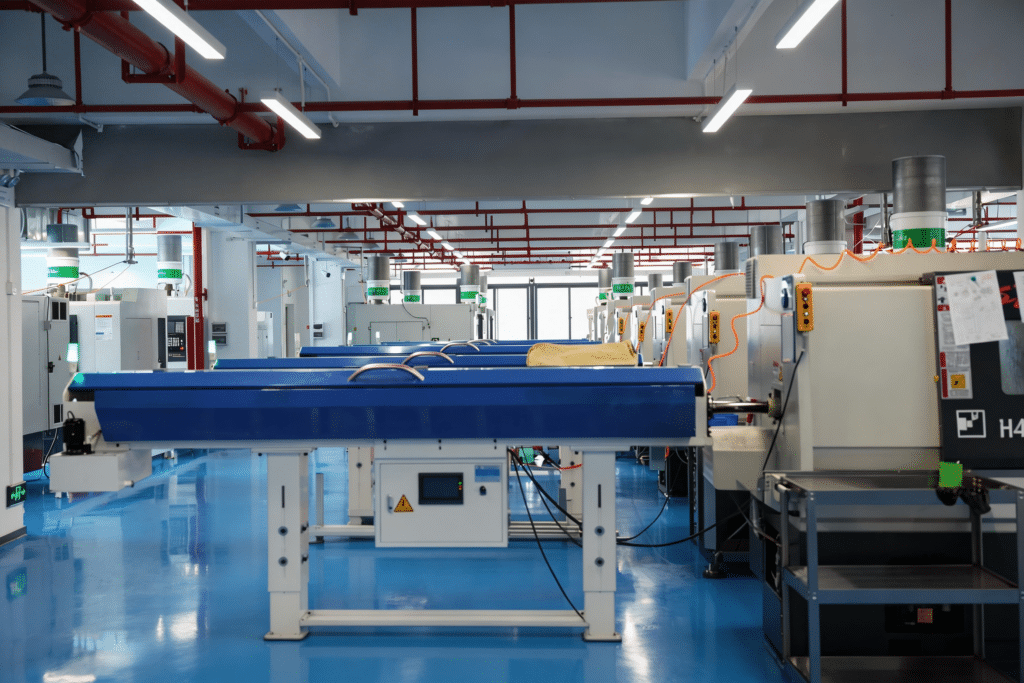
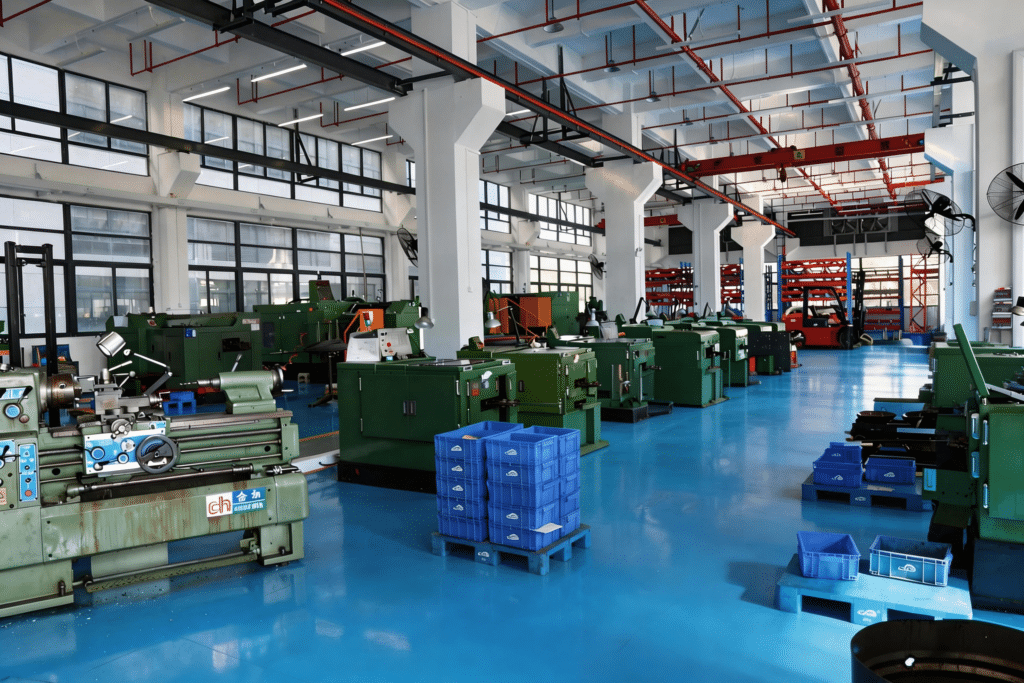
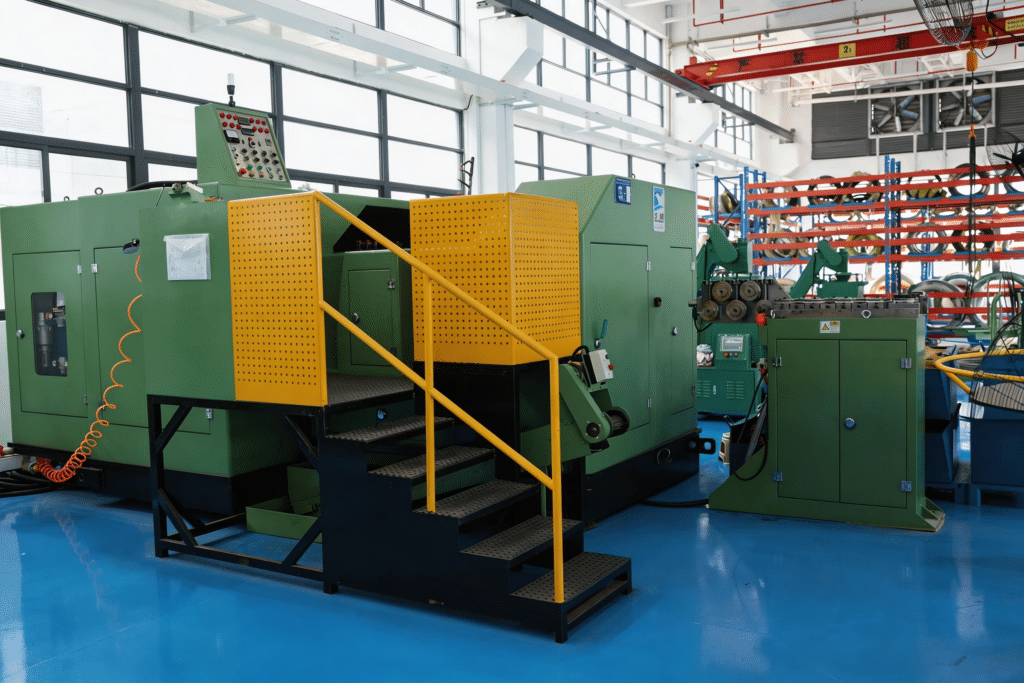
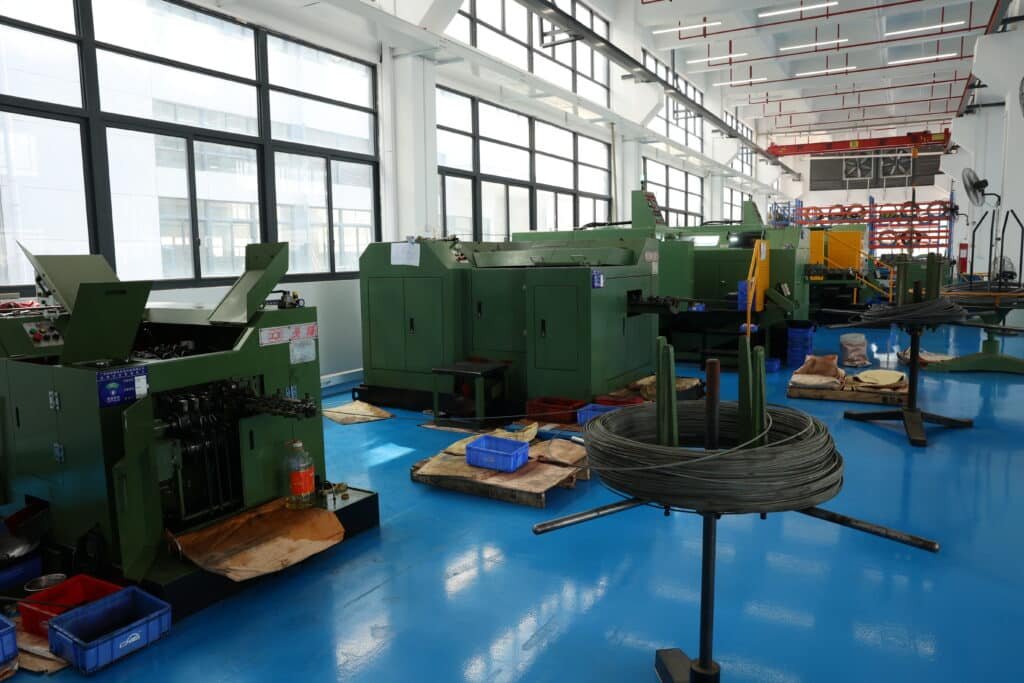
KEYFIX’s own 8,000 m² plant in Guangdong covers every Tier 1 capability: 25 multi-station cold heading machines, 32 CNC machines including 2 YCM NFX 380A 5-axis centers at ±0.005 mm, SPECTRO (Germany) OES for incoming alloy verification, heat treatment and zinc-nickel / zinc-flake coating, 2D video measuring and Shining3D 3D scanning, and automated optical sorting. This infrastructure — certified to IATF 16949, ISO 9001, and ISO 14001 — supports AQL 0.4 outgoing inspection with a target below 25 PPM across all four risk tiers.
Emerging Trends Reshaping Screws Automotive Applications
Three industry shifts are redefining specification practices for automotive screws.
Electrification — EV platforms introduce fastener positions with no ICE-era precedent: battery module compression screws requiring IP67 sealing, high-voltage busbar inserts demanding electrical isolation, and lightweight motor-housing fasteners where aluminum or titanium replaces steel. Screws automotive applications in EV-specific zones increasingly specify alloy combinations (aluminum screw into aluminum casting) that eliminate galvanic corrosion without relying on barrier coatings.
Multi-Material Body Construction — Mixed aluminum-steel-CFRP body structures require fasteners that bridge dissimilar substrates without inducing galvanic corrosion at the joint interface. Isolating barrier washers, zinc-aluminum flake coatings, and engineered polymer bushings are becoming standard ancillary components alongside the screw itself.
Automated Assembly at Sub-Second Cycle Times — As takt times compress below 45 seconds per station, screws automotive applications increasingly demand features that accelerate automated insertion: dog-point tips for robotic blind-alignment, captive SEMS washers eliminating loose-part handling, and pre-applied thread-locking patches removing secondary adhesive-dispensing stations.
Frequently Asked Questions
How many screws does a typical passenger car contain?
A modern passenger vehicle uses approximately 3,000–4,000 individual threaded screws and bolts. Roughly 2–3 % are Tier 1 (safety-critical), 5–10 % are Tier 2 (structurally significant), 15–25 % are Tier 3 (functionally important), and 60–70 % are Tier 4 (cosmetic/convenience). The precise count varies by platform, body style, and powertrain configuration.
What property class covers the majority of screws automotive applications?
Class 8.8 accounts for the single largest share of automotive screw positions, serving the broad Tier 2 and upper Tier 3 range. Class 10.9 dominates Tier 1 safety-critical and high-load Tier 2 positions. Class 4.8 and equivalent low-strength grades cover most Tier 4 interior trim applications.
Can one supplier cover all four risk tiers?
Yes — provided the supplier maintains the full range of manufacturing capabilities from Tier 1 (cold forging, heat treatment, precision inspection, automated sorting) through Tier 4 (high-volume stamping, decorative finishing). KEYFIX’s integrated production chain covers all four tiers under a single IATF 16949 quality system, simplifying procurement logistics and consolidating quality accountability for OEM and Tier 1 clients worldwide.
How does KEYFIX control defects on Tier 1 safety-critical screws?
Every Tier 1 production lot undergoes alloy verification via SPECTRO (Germany) OES, dimensional control via 2D video measuring and Mitutoyo gauges, IPQC checks every 2 hours, automated optical sorting for geometry and surface defects, and traceability linking each shipped carton to its raw-material heat number, heat-treatment batch, and coating parameters. This multi-layer quality architecture — governed by IATF 16949 protocols and supported by a 20-person engineering and QA team — supports AQL 0.4 outgoing inspection with a target below 25 PPM.
KEYFIX — established in 2005, IATF 16949 / ISO 9001 / ISO 14001 certified — serves as a single-source manufacturer for screws automotive applications across all four risk tiers, supporting OEM and Tier 1 programs worldwide. With 20+ years of precision manufacturing experience and its own Guangdong plant spanning cold forging, CNC machining and automated inspection, plus heat treatment and surface coating, KEYFIX delivers the material integrity, dimensional accuracy, and quality depth that modern vehicle architectures demand. Visit www.keyfixpro.com or contact sales@keyfixpro.com.