Introduction: The Invisible Fasteners Holding Your Vehicle Together
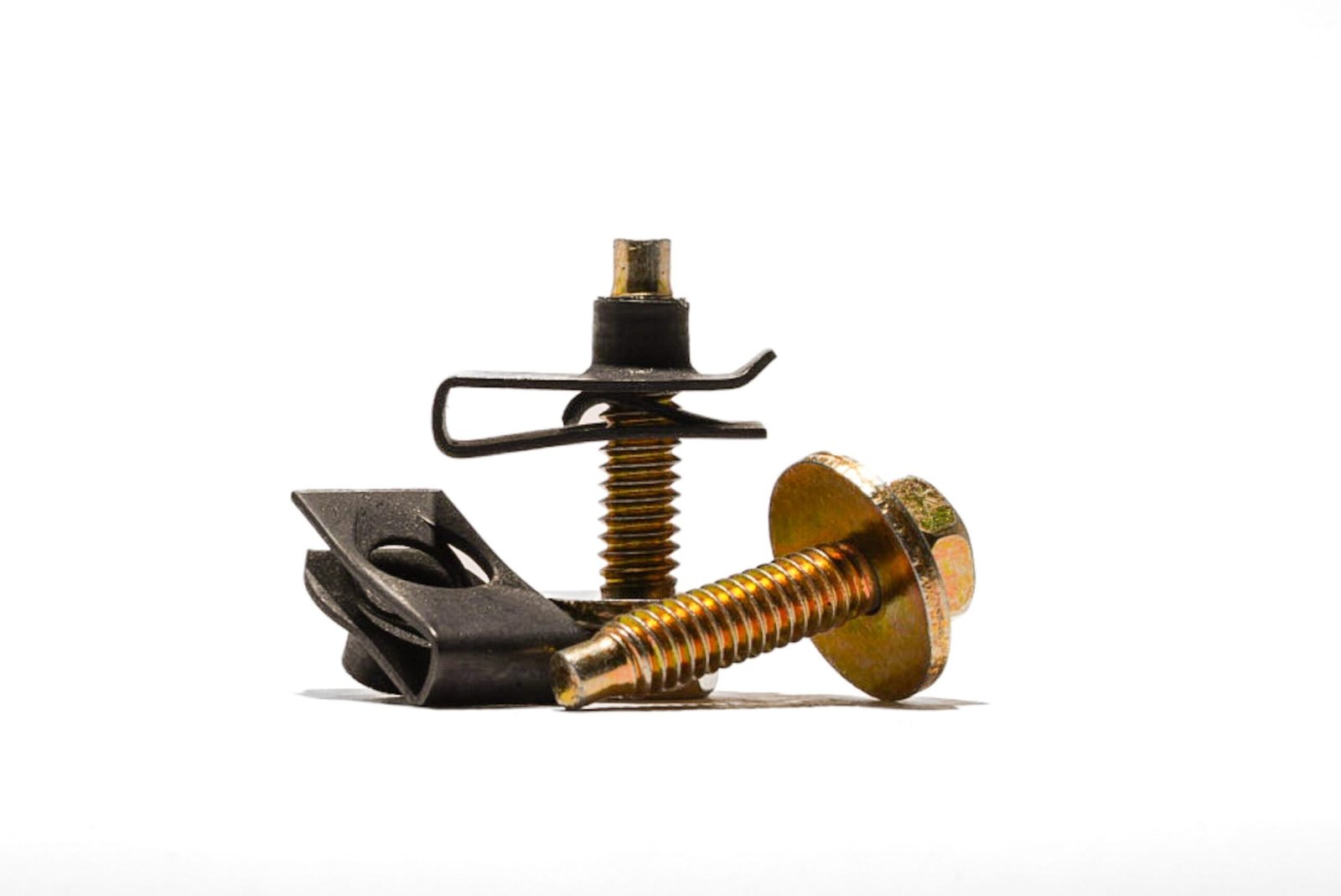
Automotive clip nuts are spring-steel or stainless-steel receptacles that snap onto panel flanges, edges, or pre-punched holes to provide a captive threaded mounting point for subsequent screw installation. They eliminate the need for weld nuts, caged nuts, or back-side access during body-in-white and trim assembly — enabling single-sided, tool-free nut placement that shaves seconds per joint on high-volume production lines.
China has become the dominant global source for automotive clip nuts, manufacturing an estimated 60–70 % of the world’s clip-nut output across hundreds of stamping facilities in Hebei, Zhejiang, and Guangdong provinces. Yet the quality spectrum among automotive clip nuts China suppliers ranges from commodity-grade aftermarket replacements to IATF 16949-certified OEM components with full PPAP documentation. For procurement engineers evaluating this supply base, the differentiator is not price per thousand — it is retention force consistency, dimensional precision, and corrosion endurance under real-world vehicle loading.
This guide quantifies the mechanical performance criteria that separate OEM-grade automotive clip nuts China production from generic alternatives, providing the engineering data needed to specify and qualify these fasteners with confidence.
Clip Nut Geometry Variants and Their Vehicle Applications
Automotive clip nuts exist in multiple geometric families, each engineered for a specific panel-attachment method. Selecting the wrong variant for a given panel geometry is the most common specification error in clip-nut procurement.
| Clip Nut Type | Attachment Method | Panel Thickness Range | Typical Thread Sizes | Primary Vehicle Application |
|---|---|---|---|---|
| U-Nut (Speed Nut) | Snaps over panel edge or flange | 0.5 – 3.0 mm | M4, M5, M6, M8 | Fender-to-body, rocker panel trim, splash shield |
| J-Nut | Hooks into panel hole from one side | 0.7 – 2.5 mm | M5, M6, M8 | Door inner panel, quarter panel trim |
| Flat Spring Nut | Slides onto panel edge, held by spring tension | 0.5 – 1.5 mm | M4, M5, M6 | Interior trim, headliner bracket, dash sub-frame |
| Cage Nut (Captive Nut) | Pressed into square hole; nut floats ±2 mm | 0.8 – 3.0 mm | M5, M6, M8, M10 | Chassis cross-member, battery tray, structural bracket |
| Barrel Nut (Chimney Nut) | Inserts into round hole; expands on screw engagement | 1.0 – 4.0 mm | M6, M8 | Bumper reinforcement, radiator support |
| Extruded Clip Nut | Stamped hole with extruded thread-forming collar | 0.8 – 2.0 mm | M5, M6 | Sheet-metal brackets, sensor mounts |
U-nuts and J-nuts collectively account for the largest share of automotive clip nuts China exports because they serve the highest-volume vehicle zones: exterior trim attachment and interior panel mounting. Cage nuts dominate structural and EV battery-tray applications where the ±2 mm float compensates for cumulative body-build tolerances.
Retention Force Specifications: The Core Quality Metric
The defining performance parameter for any clip nut is its retention force — the resistance to dislodgement before a mating screw is installed. A clip nut that falls off during body transport between assembly stations creates a missing-hardware defect that halts production or, worse, ships undetected.
| Performance Parameter | OEM Specification (Typical) | Premium China Supplier | Generic China Supplier |
|---|---|---|---|
| Push-On Force (Installation) | 15 – 45 N | 20 – 40 N (controlled window) | 10 – 60 N (wide scatter) |
| Retention Force (Pull-Off) | ≥ 50 N (before screw engagement) | ≥ 65 N | 25 – 50 N (marginal) |
| Retention After Vibration (10⁶ cycles) | ≥ 40 N residual | ≥ 50 N residual | Not tested |
| Screw Drive Torque (Prevailing) | 0.5 – 3.0 Nm | 0.8 – 2.5 Nm (tight window) | 0.3 – 4.0 Nm (erratic) |
| Screw Strip Torque | ≥ 8 Nm (M6) | ≥ 10 Nm | 5 – 8 Nm (borderline) |
| Float Range (Cage Nut) | ±1.5 – ±2.5 mm | ±2.0 mm ±0.2 mm | ±2.0 mm ±0.8 mm (inconsistent) |
| Reusability | ≥ 5 insertion-removal cycles at ≥ 80 % retention | 5+ cycles verified | Not specified |
The push-on versus pull-off asymmetry is a deliberate design feature: clip nuts must be easy to install (low push-on force) yet difficult to dislodge (high pull-off force). This asymmetry is achieved through precisely formed spring legs with controlled deflection geometry. When automotive clip nuts China suppliers stamp these legs with inconsistent die clearances, the force window widens, and the asymmetry collapses — producing clip nuts that either resist installation (operator fatigue, line slowdown) or fall off in transit (missing-hardware defect).
KEYFIX controls this force window through progressive stamping dies maintained at ±0.02 mm punch-to-die clearance, with 100 % in-line force testing on push-on and pull-off parameters for every production lot.
Material and Surface Treatment Comparison
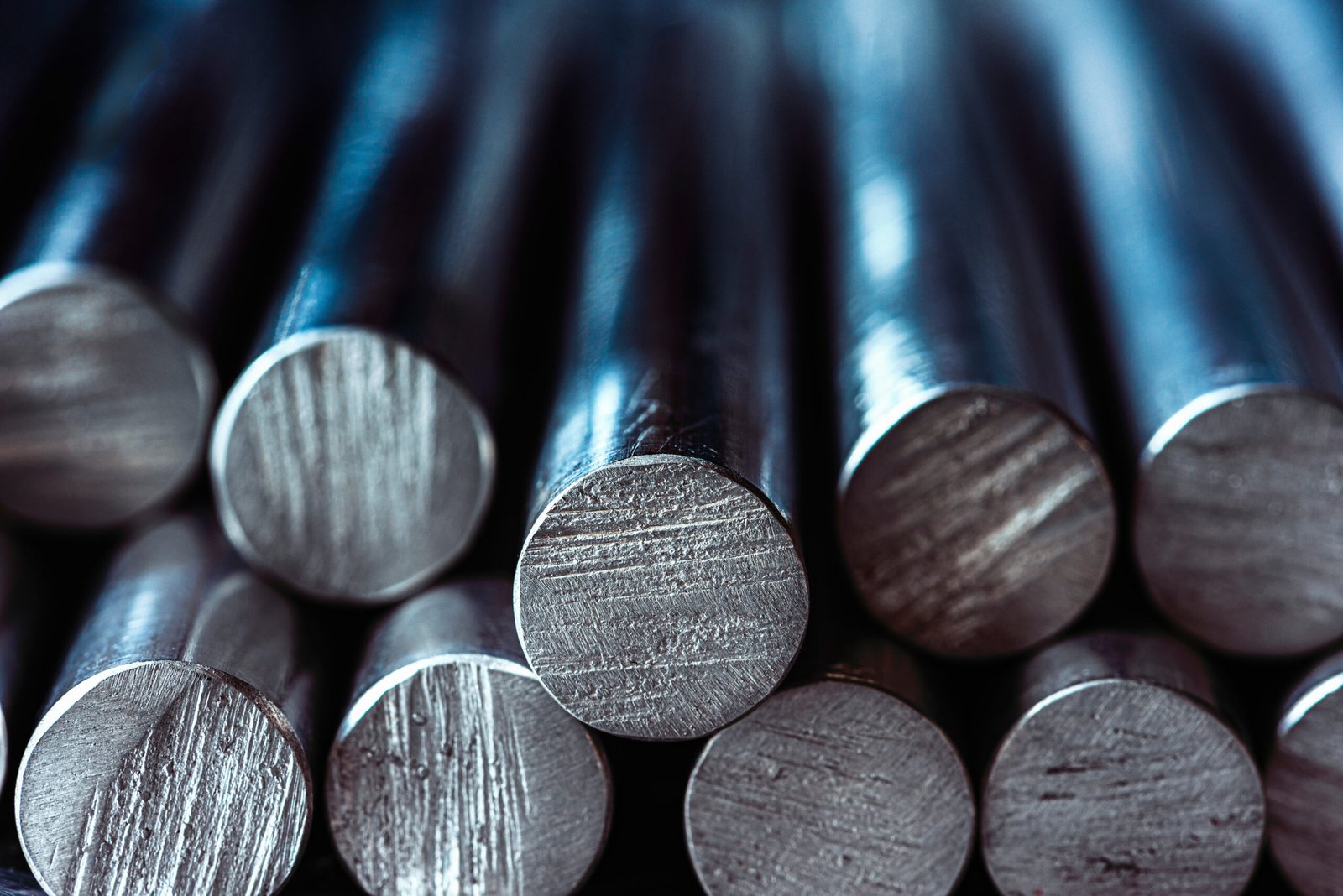
Material selection for automotive clip nuts balances spring resilience, corrosion resistance, and formability.
| Material | Hardness (HV) | Spring Resilience | Corrosion Strategy | Cost Index | Best-Fit Application |
|---|---|---|---|---|---|
| Spring Steel (SAE 1050–1075) | 380 – 480 | Excellent | Zinc or zinc-nickel plating required | 1.0× | High-retention exterior U-nuts, J-nuts |
| Low-Carbon Steel (SAE 1008–1010) | 120 – 180 | Moderate | Zinc or phosphate coating | 0.8× | Interior flat spring nuts, low-load clips |
| Stainless Steel (301, 304) | 250 – 400 (work-hardened) | Good | Inherent; no coating needed | 2.5× | Exhaust-adjacent, coastal-market vehicles |
| Stainless Steel (631 / 17-7PH) | 400 – 500 (precipitation-hardened) | Excellent | Inherent | 4.0× | Underbody structural, EV battery tray |
Surface treatment must withstand the same corrosion environment as adjacent body panels — typically 720+ hours neutral salt spray for exterior-exposed positions.
| Coating | Thickness (μm) | Salt Spray (hrs) | Friction Impact on Screw Drive | Suitability |
|---|---|---|---|---|
| Trivalent Zinc Electroplate | 8 – 12 | 200 – 400 | Moderate; acceptable for most | Interior + mild exterior |
| Zinc-Nickel (12–15 % Ni) | 8 – 15 | 720 – 1,000+ | Low; consistent μ | Underbody, wheel well, engine bay |
| Zinc Flake (DACROMET / Geomet) | 6 – 10 | 500 – 1,000 | Very low; controlled friction | Structural, torque-critical joints |
| Phosphate + Oil | 3 – 8 | 48 – 96 | Very low | Interior only; temporary protection |
| E-Coat (Cathodic Epoxy) | 15 – 25 | 500 – 750 | Moderate | Underbody panels with subsequent paint |
KEYFIX’s zinc-nickel and DACROMET coatings, deliver automotive clip nuts validated beyond 1,000 hours neutral salt spray per ASTM B117 — matching the corrosion endurance of the body panels they attach to.
Dimensional Tolerances That Matter
Beyond retention force, dimensional accuracy of automotive clip nuts directly affects assembly-line performance: an oversized clip nut jams on the panel edge; an undersized one drops through the mounting hole.
| Critical Dimension | OEM Tolerance | KEYFIX Capability | Impact of Non-Conformance |
|---|---|---|---|
| Hole / Edge Engagement Width | ±0.10 mm | ±0.05 mm | Loose fit → fall-off; tight fit → installation damage |
| Thread Pitch Diameter (Nut Element) | 6H class (ISO 965-1) | 6H verified by GO/NO-GO gauge | Over-size → low clamp load; under-size → cross-threading |
| Overall Height (Installed) | ±0.20 mm | ±0.10 mm | Exceeds stack → screw bottoms out before clamping |
| Spring Leg Symmetry (Deflection) | ≤ 0.15 mm difference L vs. R | ≤ 0.08 mm | Asymmetric retention → rotation under vibration |
| Burr Height (Stamped Edges) | ≤ 0.10 mm | ≤ 0.05 mm | Operator cut injury; paint damage on adjacent panel |
KEYFIX achieves these tolerances through precision progressive stamping, with die maintenance scheduled before tolerance drift reaches the reject boundary.
Qualifying an Automotive Clip Nuts China Supplier: 8-Point Audit Checklist
Not every stamping shop in China can produce OEM-grade clip nuts. The following audit framework separates qualified manufacturers from commodity shops.
| Audit Point | What to Verify | Red Flag |
|---|---|---|
| IATF 16949 Certification | Certificate scope covers stamped fasteners and clip nuts | Scope limited to machined parts or non-automotive |
| Progressive Die Capability | Multi-station dies forming clip, thread, and spring features in one press cycle | Manual bending or secondary spot-welding of nut element |
| In-Line Force Testing | 100 % push-on / pull-off force verification on production line | Force tested only on first-article or sample basis |
| Material Traceability | Incoming coil certified to SAE / JIS spec; heat-traceable | Generic “spring steel” with no mill certificate |
| Corrosion Validation | Salt spray test reports per ASTM B117 on actual coated clip nuts | Salt spray tested on flat coupons, not formed parts |
| Thread Gauging | GO/NO-GO verification per ISO 965-1 on every lot | Thread conformance assumed from die condition |
| Dimensional SPC | Cpk ≥ 1.33 on critical engagement dimensions | No SPC data; 100 % manual inspection claimed |
| PPAP Readiness | Capable of Level 3 PPAP with full dimensional layout + capability study | Only Level 1 (warrant submission) available |
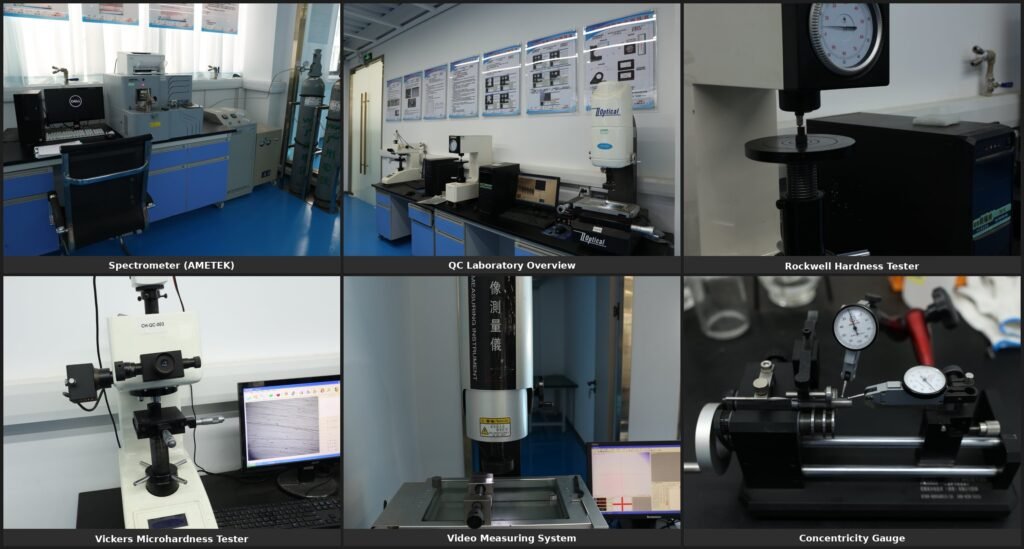
KEYFIX satisfies these points: IATF 16949 + ISO 9001 + ISO 14001 certified, with stamping, retention-force testing arranged through third-party testing laboratories, SPECTRO (Germany) OES incoming material verification, 2D video measuring at 0.001 mm optical resolution, automated optical sorting, and AQL 0.4 outgoing inspection with a target below 25 PPM. This infrastructure positions KEYFIX as a premium-tier automotive clip nuts China source for OEM and Tier 1 clients worldwide.
Vehicle-Zone Application Map
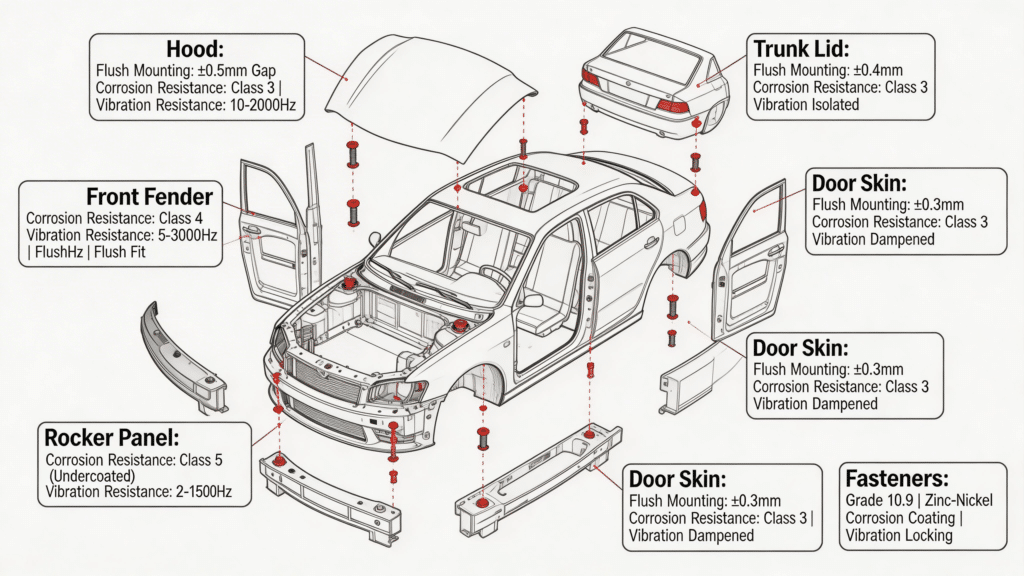
Different vehicle zones impose different performance demands on clip nuts. The matrix below guides specification by location.
| Vehicle Zone | Dominant Stress | Recommended Clip Type | Material | Coating | Thread Size |
|---|---|---|---|---|---|
| Fender / Wheel Arch | Stone chip + salt spray | U-nut, heavy spring | SAE 1065 spring steel | Zinc-nickel 15 μm | M6 |
| Door Inner Panel | Slam vibration + humidity | J-nut with float | SAE 1050 spring steel | Trivalent zinc | M5 – M6 |
| Instrument Panel | NVH sensitivity | Flat spring nut | SAE 1010 low-carbon | Phosphate + oil | M4 – M5 |
| Underbody Splash Shield | Road debris + water immersion | U-nut, heavy gauge | SAE 1065 or 301 SS | DACROMET | M6 – M8 |
| EV Battery Tray | Crash load + IP67 sealing | Cage nut with seal washer | 17-7PH stainless | Passivated | M8 – M10 |
| Bumper Reinforcement | Low-speed impact absorption | Barrel nut | SAE 1050 | Zinc-nickel | M6 – M8 |
| Roof Rail / Rack Mount | Wind uplift + UV | J-nut, stainless | 304 stainless | Inherent | M6 |
Emerging Trends in Automotive Clip Nut Engineering
Three developments are reshaping the requirements for automotive clip nuts China manufacturers.
EV Battery Enclosure Integration — Battery tray assemblies demand clip nuts that combine structural crash-load resistance with IP67 water-ingress prevention. Captive sealing washers integrated onto cage nuts during the stamping process are replacing separate gasket rings, reducing assembly part count and eliminating potential leak paths.
Multi-Material Lightweighting — As vehicle bodies mix aluminum, advanced high-strength steel, and CFRP, clip nuts must accommodate wider panel-thickness ranges and bridge galvanic-corrosion mismatches. Engineered polymer-insulated clip nuts and stainless-steel variants with isolation coatings are gaining traction in mixed-material body architectures.
Automated Clip-Nut Placement — Robotic pick-and-place systems increasingly replace manual clip-nut installation on body-in-white lines. These systems demand clip nuts with tighter dimensional tolerances (±0.05 mm engagement width) and more consistent push-on force windows (±5 N) to ensure reliable automated insertion without force-feedback faults.
Frequently Asked Questions
What is the difference between a clip nut and a weld nut?
A clip nut snaps onto a panel mechanically and can be installed without heat, electricity, or back-side access. A weld nut is permanently fused to the panel via resistance welding, requiring two-sided electrode access and adding thermal distortion risk to thin panels. Clip nuts are preferred where removability, single-sided access, or heat-sensitive substrates are involved.
How does KEYFIX ensure clip nut retention force consistency?
Every KEYFIX clip nut production lot undergoes 100 % in-line force testing measuring both push-on and pull-off values. Progressive stamping dies are maintained at ±0.02 mm clearance with automated wear monitoring, and SPC charts track retention force Cpk in real time. This process architecture sustains the tight force windows (e.g., 20–40 N push-on, ≥ 65 N pull-off) that OEM body assembly lines require.
Can KEYFIX supply both prototype and volume quantities?
Yes. Stamped prototypes start at 1,000 pieces for design validation. Production runs begin at 50,000 pieces per variant, with cost reductions at 100K, 500K, and 1M+ tiers. Contact sales@keyfixpro.com for program-specific quotations.
Which coating is best for underbody clip nuts exposed to road salt?
Zinc-nickel alloy plating (12–15 % Ni) delivers the strongest protection for underbody positions, exceeding 720 hours neutral salt spray per ASTM B117. For positions additionally exposed to high-pH alkaline cleaners, zinc flake coatings (DACROMET / Geomet) provide comparable salt spray endurance with superior chemical resistance.
KEYFIX — established in 2005, IATF 16949 / ISO 9001 / ISO 14001 certified — manufactures precision automotive clip nuts for OEM and Tier 1 body-assembly programs worldwide. With 20+ years of stamping and cold-forging experience, 2D video measuring and Shining3D 3D scanning, zinc-nickel and zinc-flake coating, and retention-force validation through third-party testing laboratories, KEYFIX delivers the quality consistency that high-volume vehicle production demands. Visit www.keyfixpro.com or contact sales@keyfixpro.com.