Introduction: Why CNC Machinery Parts Sourcing Deserves Engineering Rigor
CNC machinery parts china suppliers power the precision-component backbone of global manufacturing. From semiconductor wafer-handling mechanisms requiring ±0.002 mm positional accuracy to automotive drivetrain shafts cycling through billions of rotations, the quality of a CNC-machined part ultimately determines whether the machinery it enters performs reliably or fails in service. China now accounts for an estimated 40 % of global CNC-machined component output — a scale that makes it unavoidable as a sourcing region, yet simultaneously varied in capability.
The quality spectrum among cnc machinery parts china suppliers spans from high-mix job shops producing single prototypes on 3-axis mills, to vertically integrated campuses operating fleets of 5-axis Swiss-type lathes, mill-turn centers, and CMM inspection laboratories. The difference between these tiers is not merely equipment — it is the presence or absence of documented process capability (Cpk), material traceability, and quality systems that survive the scrutiny of aerospace, medical, and automotive OEM audits.
This guide provides procurement engineers and product developers with a complete technical framework for specifying, sourcing, and qualifying cnc machinery parts china production. It covers machining process selection, material behavior, tolerance philosophy, surface finishing, inspection methodology, and supplier qualification — with quantified data throughout to replace generic marketing claims with engineering decision criteria.
CNC Process Selection: Matching Geometry to Machining Method
The first technical decision in sourcing CNC machinery parts is selecting the correct machining process. Each method has a sweet spot defined by part geometry, volume, and tolerance requirements. Specifying the wrong process — for example, 3-axis milling for a geometry that demands 5-axis simultaneous positioning — inflates cost, extends lead time, and often compromises tolerance achievement.
| Machining Process | Optimal Geometry | Typical Volume | Achievable Tolerance | Cost Index | Lead Time Factor |
|---|---|---|---|---|---|
| 3-Axis CNC Milling | Prismatic parts, pockets, 2.5D features | 1 – 10,000 | ±0.025 mm | 1.0× | 1.0× |
| 4-Axis CNC Milling | Rotary-indexed features on prismatic parts | 10 – 5,000 | ±0.020 mm | 1.3× | 1.1× |
| 5-Axis Simultaneous Milling | Complex 3D surfaces, impeller blades, undercuts | 1 – 2,000 | ±0.010 mm | 2.0× | 1.3× |
| 2-Axis CNC Turning | Simple round parts, shafts, bushings | 50 – 100,000 | ±0.020 mm | 0.6× | 0.7× |
| Mill-Turn Live Tooling | Round parts with off-axis features | 50 – 50,000 | ±0.010 mm | 1.4× | 0.9× |
| Swiss-Type CNC Turning | Small-diameter (≤ 32 mm), high-volume, slender parts | 500 – 1,000,000+ | ±0.005 mm | 1.5× | 1.0× |
| Wire EDM | Hardened steel, complex profiles, thin sections | 1 – 5,000 | ±0.003 mm | 2.5× | 1.5× |
| Sinker EDM | Blind cavities, sharp internal corners, hardened steel | 1 – 1,000 | ±0.005 mm | 2.8× | 1.6× |
| Precision Grinding | Hardened surfaces, flat/cylindrical, Ra ≤ 0.2 μm | 10 – 10,000 | ±0.002 mm | 2.2× | 1.4× |
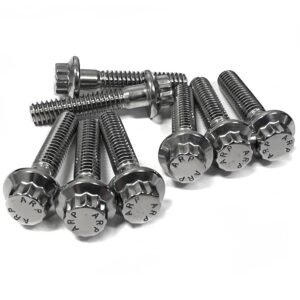
Swiss-type CNC turning occupies a particularly strategic position within the cnc machinery parts china landscape. These machines — also called Swiss lathes or Swiss screw machines — hold the workpiece in a sliding guide bushing immediately behind the cutting tool, virtually eliminating deflection during cutting. This configuration enables length-to-diameter ratios exceeding 30:1 at tolerances of ±0.005 mm, making Swiss turning the dominant process for medical surgical instruments, electronic connector pins, hydraulic valve spools, and precision fastener components.
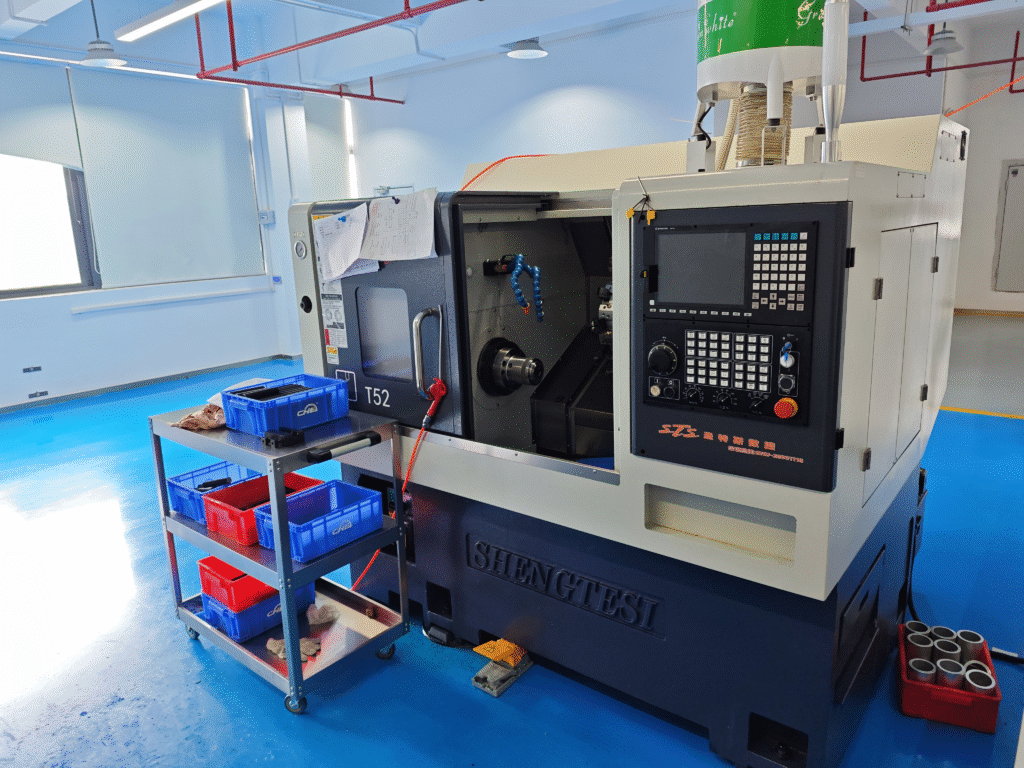
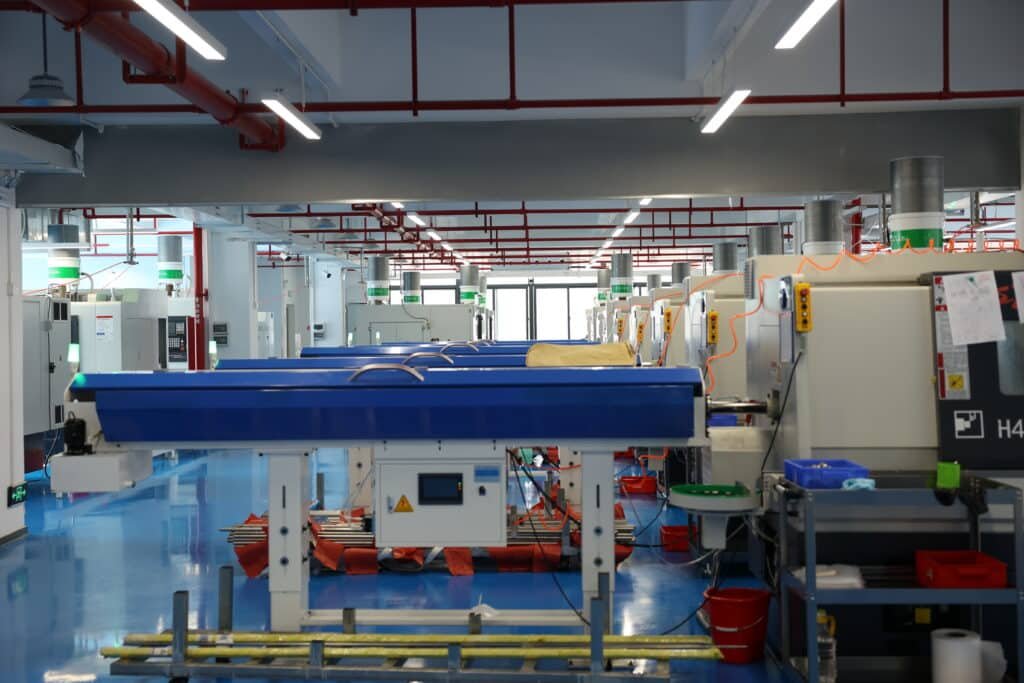
KEYFIX operates 32 CNC machines, including CNC lathes, mill-turn centers and 2 YCM NFX 380A 5-axis machining centers, holding ±0.005 mm with Cpk ≥ 1.67 targeted on critical dimensions. This equipment profile covers the full process spectrum from prototype single-piece runs through million-piece production programs.
Material Selection for CNC Machinery Parts
Material choice drives cost, machinability, mechanical performance, and lead time. The table below catalogues the most common CNC machining materials by their engineering attributes.
| Material Family | Yield Strength (MPa) | Machinability Rating (1–10) | Density (g/cm³) | Corrosion Behavior | Cost Index | Typical Application |
|---|---|---|---|---|---|---|
| Aluminum 6061-T6 | 276 | 9 | 2.70 | Good (anodize for enhancement) | 1.0× | Structural brackets, housings, heat sinks |
| Aluminum 7075-T6 | 503 | 8 | 2.81 | Moderate (anodize required) | 1.4× | Aerospace, high-stress lightweight |
| Brass C36000 | 310 | 10 | 8.50 | Excellent | 2.8× | Connector bodies, decorative hardware |
| Copper C110 | 70 | 7 | 8.96 | Oxidizes in air | 3.2× | Electrical contacts, bus bars |
| Mild Steel 1018 | 370 | 7 | 7.87 | Poor (requires coating) | 0.7× | Structural shafts, general machinery |
| Alloy Steel 4140 | 655 | 6 | 7.85 | Poor (requires coating) | 1.1× | Gears, shafts, tooling |
| Stainless Steel 304 | 215 | 4 | 8.00 | Excellent | 1.8× | Food, medical, marine |
| Stainless Steel 316L | 290 | 4 | 7.98 | Outstanding (chloride-resistant) | 2.1× | Medical implants, chemical, marine |
| Titanium Ti-6Al-4V | 880 | 3 | 4.43 | Outstanding | 8.5× | Aerospace structural, medical implants |
| Inconel 718 | 1,034 | 2 | 8.19 | Outstanding (to 700 °C) | 12.0× | Jet engine, gas turbine, extreme service |
| PEEK | 90 | 7 | 1.32 | Outstanding | 9.0× | Medical, semiconductor, high-temp plastic |
| POM (Delrin / Acetal) | 70 | 10 | 1.41 | Good | 1.5× | Precision gears, low-friction parts |
Machinability rating (1–10 scale, higher = easier) correlates directly to cycle time and tooling cost. Materials below a rating of 4 — Inconel, titanium, 316L stainless in work-hardened condition — require carbide or ceramic tooling, reduced cutting speeds, and aggressive coolant delivery. These factors can triple the cost per feature compared to aluminum 6061. Specifying Inconel for a feature that stainless 316L could serve adequately represents one of the most common cost-overrun errors in cnc machinery parts china procurement.
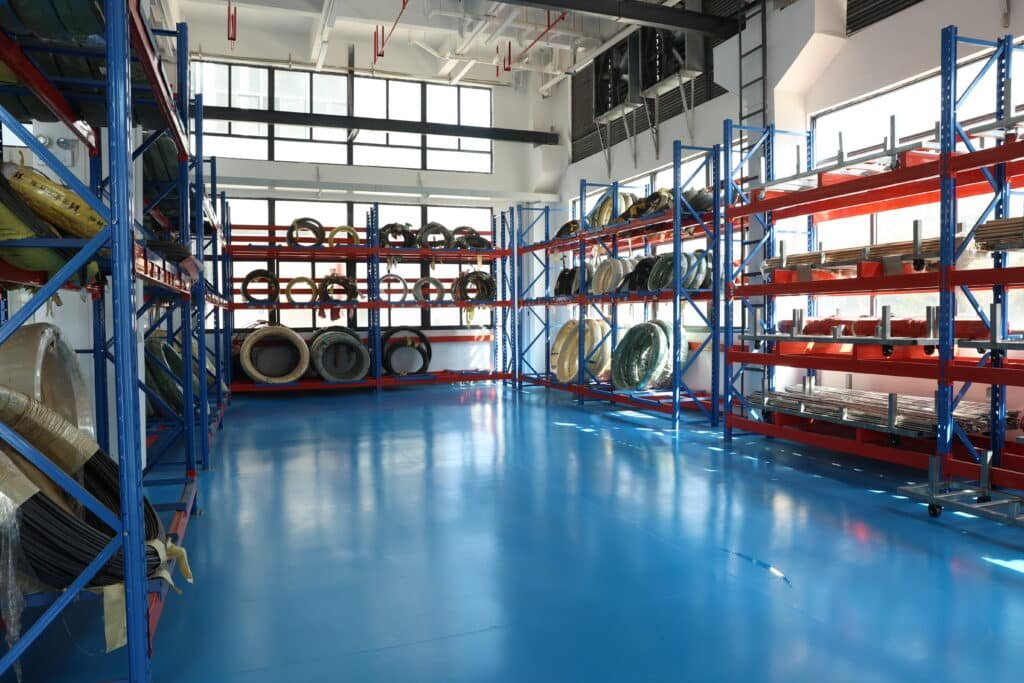
KEYFIX maintains an in-house material library spanning the full range in the table above, with incoming material verification via SPECTRO optical emission spectrometry (OES) on 100 % of received heats. This verification step catches mill-certificate discrepancies before material enters the production floor — a quality gate that distinguishes premium-tier suppliers from shops relying solely on documentation claims.
Tolerance Philosophy: Specifying What Matters
Over-tolerancing is the single largest source of unnecessary cost in CNC machined parts. Every additional decimal place tightens inspection time, cycle time, and scrap rate disproportionately. The principle: specify the tolerance required by function, not the tolerance technically achievable.
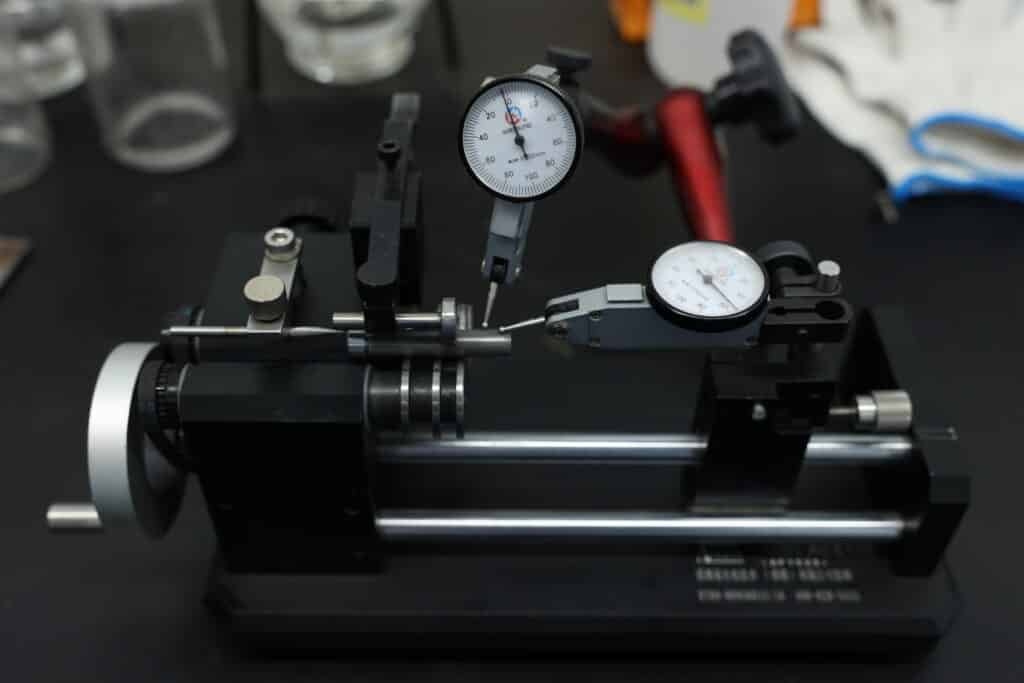
| Tolerance Class | Typical Value (mm) | Cost Multiplier | Inspection Method Required | Suitable Application |
|---|---|---|---|---|
| General / Coarse (ISO 2768-c) | ±0.30 – ±0.50 | 1.0× | Caliper | Non-critical brackets, cosmetic features |
| Medium (ISO 2768-m) | ±0.10 – ±0.20 | 1.2× | Caliper, micrometer | General machinery, mating clearances |
| Fine (ISO 2768-f) | ±0.05 – ±0.10 | 1.4× | Micrometer, height gauge | Housings, mounting interfaces |
| Precision | ±0.02 – ±0.05 | 1.8× | Dial indicator, profilometer | Bearing fits, alignment features |
| High Precision | ±0.005 – ±0.02 | 2.5× | CMM, optical comparator | Hydraulic spools, connector pins |
| Ultra Precision | ±0.001 – ±0.005 | 4.0× | CMM with temperature control | Optics mounts, semiconductor tooling |
| Sub-Micron | ≤ ±0.001 | 8.0×+ | Interferometry, gauge blocks | Metrology, ultra-high-precision assembly |
Not every feature on a part requires the same tolerance class. A well-specified CNC drawing identifies 3–8 critical features with tight tolerances and allows general tolerances on the remainder. This approach reduces inspection cycle time by 40–60 % without sacrificing functional performance.
KEYFIX verifies dimensions with a 2D video measuring system (0.001 mm optical measurement resolution), Shining3D 3D scanning and 145 Mitutoyo precision gauges. First article inspection reports (FAIR) document every critical dimension with Cpk calculation, traceable gauge calibration, and photographic evidence.
Surface Finish Specification
Surface finish (Ra) directly affects fatigue life, sealing integrity, wear resistance, and visual appearance. As with dimensional tolerance, over-specifying surface finish inflates cost without functional benefit.
| Ra Value (μm) | Visual Description | Typical Process | Cost Multiplier | Application |
|---|---|---|---|---|
| 6.3 – 12.5 | Visible tool marks | Rough turning, rough milling | 1.0× | Non-mating surfaces, internal features |
| 3.2 – 6.3 | Moderate tool marks | Finish turning, finish milling | 1.1× | General machinery surfaces |
| 1.6 – 3.2 | Smooth, slight texture | Fine turning, fine milling | 1.3× | Paint prep, standard bearing journals |
| 0.8 – 1.6 | Semi-polished | Reaming, fine grinding | 1.6× | Precision bearing fits, sealing surfaces |
| 0.4 – 0.8 | Polished | Honing, fine grinding | 2.2× | Hydraulic cylinder bores, rotary seals |
| 0.1 – 0.4 | Mirror polish | Lapping, superfinishing | 3.5× | Optical components, high-pressure seals |
| ≤ 0.1 | Reflective mirror | Polishing, electropolishing | 6.0×+ | Medical implants, semiconductor wafer tooling |
Surface finish on stainless steel medical components frequently requires electropolishing to Ra ≤ 0.4 μm — a specification driven by biocompatibility and cleanability rather than mechanical function. Conversely, an aluminum structural housing typically performs adequately at Ra 3.2 μm, where specifying Ra 0.8 μm adds 60 % to cost without adding value.
Surface Treatment and Coating Options
Post-machining surface treatment adds corrosion resistance, improves wear behavior, enhances appearance, or provides electrical properties. Selecting the correct treatment requires understanding both base material compatibility and the service environment.
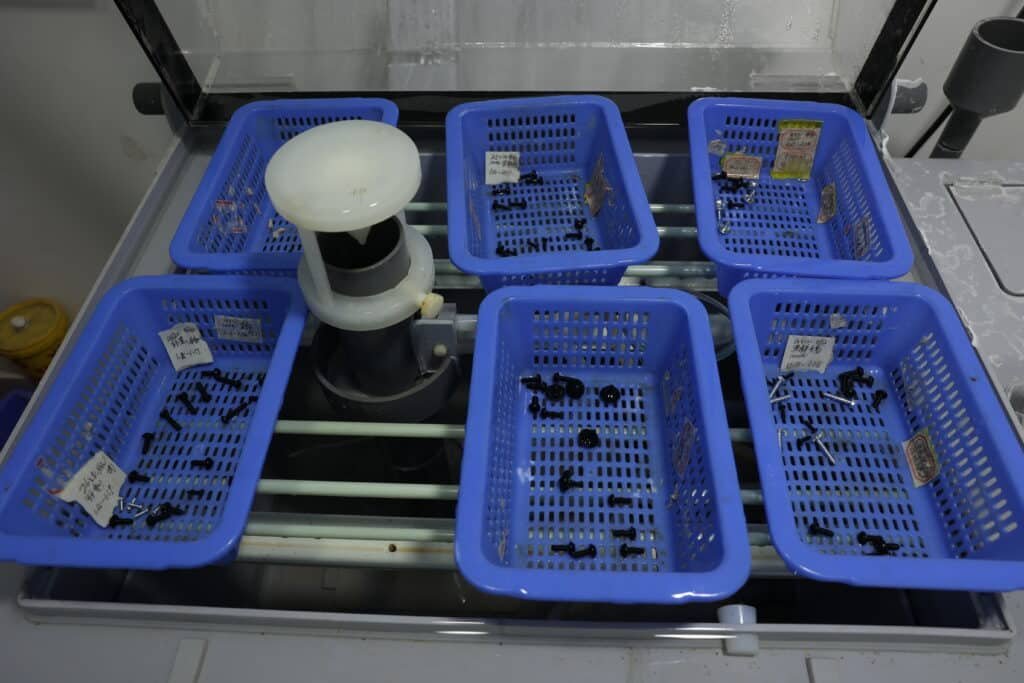
| Treatment | Base Material | Thickness (μm) | Key Property | Cost Index | Service Environment |
|---|---|---|---|---|---|
| Type II Anodize | Aluminum | 5 – 25 | Corrosion resistance, color | 1.0× | Indoor, mild outdoor |
| Type III Hard Anodize | Aluminum | 25 – 75 | Wear resistance (400+ HV) | 1.8× | High-wear, industrial |
| Chromate Conversion (Alodine) | Aluminum | 0.5 – 4 | Electrical conductivity + corrosion | 0.7× | Electrical grounding features |
| Electroless Nickel | Steel, aluminum | 10 – 50 | Uniform deposition, 500+ HV | 1.6× | Complex geometries needing wear + corrosion |
| Zinc Electroplate (Trivalent) | Steel | 8 – 15 | General corrosion | 0.8× | Indoor machinery |
| Zinc-Nickel Alloy | Steel | 8 – 15 | 720+ hr salt spray | 1.3× | Outdoor, automotive |
| Black Oxide | Steel | 1 – 3 | Aesthetic + mild corrosion | 0.5× | Interior machinery, tooling |
| Passivation | Stainless steel | Conversion layer | Restores chromium layer | 0.6× | Medical, food-grade |
| Electropolishing | Stainless steel | Removes 25 – 50 μm | Ra ≤ 0.4 μm, biocompatible | 2.5× | Medical implants, pharma |
| PVD Coating (TiN, CrN) | Hardened steel | 1 – 5 | 2,000+ HV, decorative color | 3.5× | Cutting tools, wear-critical features |
| Powder Coating | Steel, aluminum | 60 – 120 | Aesthetic + corrosion | 1.2× | Housings, outdoor enclosures |
KEYFIX coordinates zinc-nickel and DACROMET coatings validated beyond 1,000 hours neutral salt spray per ASTM B117, plus Type II/III anodizing, electroless nickel, and electropolishing, — enabling single-source coordination for parts requiring combined machining and finishing.
Inspection and Quality Control Infrastructure
The difference between a commodity CNC shop and an OEM-qualified supplier often reveals itself in the inspection laboratory. The following inspection capabilities separate tier levels.
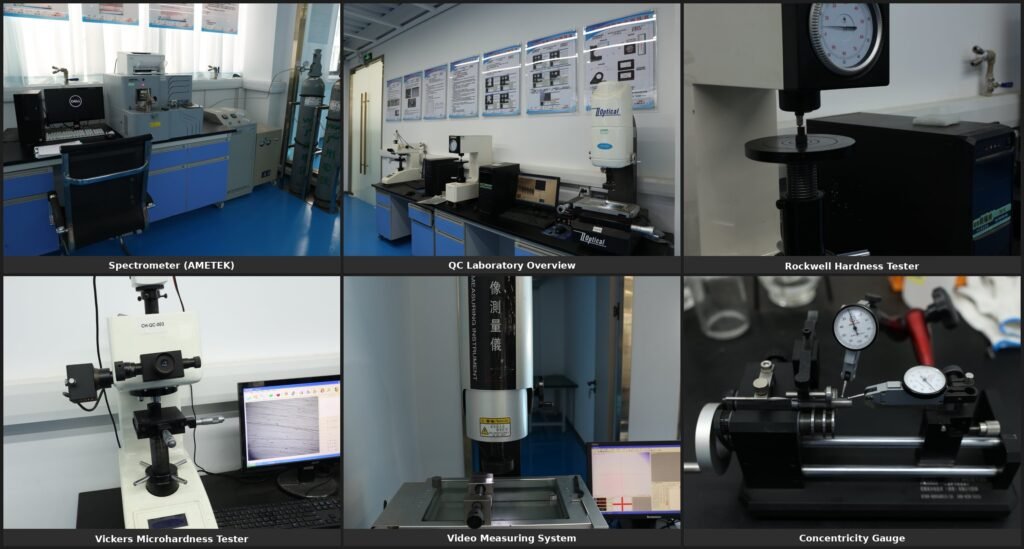
| Inspection Capability | Commodity Shop | Mid-Tier Supplier | OEM-Qualified Supplier |
|---|---|---|---|
| Calipers, Micrometers | Yes | Yes | Yes |
| Height Gauges, Dial Indicators | Limited | Yes | Yes |
| Optical Comparator | Rarely | Sometimes | Standard |
| Coordinate Measuring Machine (CMM) | No | Shared/limited | Dedicated, temperature-controlled |
| Surface Roughness Tester | No | Yes | Multi-stylus, digital |
| Hardness Testing (Rockwell, Vickers) | No | Sample-basis | Every heat-treat lot |
| Material Verification (OES / XRF) | Certificate only | Certificate + sample XRF | 100 % OES on incoming heats |
| First Article Inspection Reports | Basic dimensional | Full layout | AS9102 / PPAP Level 3+ |
| SPC with Cpk Monitoring | No | Occasional | Real-time on critical dimensions |
| Gauge Calibration Program | Informal | Annual | NIST-traceable; documented |
KEYFIX operates a full OEM-qualified inspection infrastructure: 2D video measuring with 0.001 mm optical resolution, Shining3D 3D scanning, Rockwell and Vickers hardness testers, SPECTRO (Germany) OES for alloy verification, automated optical sorting, and IPQC checks every 2 hours under a control plan for each part number. First article inspection reports include complete dimensional layouts, material certificates, surface finish measurements, and capability studies for every new part number.
Design for Manufacturing (DFM) Principles
A well-designed CNC part costs 30–50 % less to produce than a poorly designed equivalent performing the same function. The following principles reduce cost without compromising performance.
| DFM Principle | Cost Impact | Explanation |
|---|---|---|
| Avoid sharp internal corners | 15–30 % | Internal corners require small-diameter tools and multiple passes; specify tool-radius fillets (typically 1–3 mm) |
| Minimize deep pockets | 20–40 % | Pocket depth beyond 4× tool diameter requires long-reach tools and reduced cutting speeds |
| Standardize hole sizes | 10–20 % | Mixing custom hole sizes requires multiple tool changes; use standard drill or reamer sizes |
| Limit tight-tolerance features | 25–50 % | Each ±0.01 mm feature adds inspection time; reserve precision for functional surfaces |
| Use standard threads | 10–15 % | Custom thread pitches require specialty taps; specify standard ISO or UNC/UNF threads |
| Avoid thin walls | 20–60 % | Walls thinner than 0.8 mm deflect during cutting; specify 1.5 mm+ where possible |
| Accept visible tool marks on non-cosmetic faces | 15–25 % | Specifying Ra 3.2 μm instead of Ra 1.6 μm on internal features saves finishing time |
| Consolidate material grades | 5–15 % | Using multiple exotic alloys in one assembly increases material handling cost |
| Design for single setup | 20–35 % | Features machinable in one fixturing are far cheaper than multi-setup features |
KEYFIX’s 20-person engineering and QA team provides a free DFM review for every new part number, identifying cost-reduction opportunities before quoting while maintaining functional performance.
Industry Applications for CNC Machinery Parts
Different industries impose distinct technical and regulatory requirements on CNC-machined components. Understanding these requirements upfront accelerates supplier qualification.
| Industry | Typical Materials | Tolerance Class | Critical Certifications | KEYFIX Capability |
|---|---|---|---|---|
| Automotive (Tier 1 / OEM) | 4140, 40Cr, 304, aluminum 6061 | ±0.005 – ±0.02 mm | IATF 16949, PPAP Level 3 | IATF 16949 certified; PPAP-capable |
| Medical Devices | 316L SS, PEEK, titanium | ±0.005 – ±0.02 mm | ISO 13485, FDA | Not a KEYFIX focus industry |
| Aerospace | 7075 Al, titanium, Inconel | ±0.005 – ±0.015 mm | AS9100, NADCAP | Not a KEYFIX focus industry |
| Semiconductor | 316L SS, aluminum 6061, PEEK | ±0.002 – ±0.01 mm | Class 10,000 cleanroom | Certified cleanroom sub-tier |
| Robotics / Automation | 6061, 7075, 4140, POM | ±0.01 – ±0.02 mm | ISO 9001 | Full in-house |
| Oil & Gas | 316L SS, Inconel 625, Duplex | ±0.02 – ±0.05 mm | API, NACE MR0175 | Sub-tier for specialty alloys |
| Hydraulic / Pneumatic | 4140, 303 SS, bronze | ±0.005 – ±0.01 mm | ISO 9001 | Full in-house |
| Precision Fasteners | 42CrMo4, 34CrNiMo6, stainless | ±0.005 mm | IATF 16949 | Core competency |
KEYFIX holds IATF 16949, ISO 9001, and ISO 14001 certifications, with deep core expertise in precision fastener components and automotive CNC parts. KEYFIX does not hold AS9100 or ISO 13485 certification; its focus is automotive, industrial machinery, precision machinery, electronics and metrology-instrument programs.
Supplier Qualification: 12-Point Audit Framework for CNC Machinery Parts China
Not every shop claiming CNC capability can deliver OEM-grade parts consistently. The following audit framework — extending beyond generic ISO 9001 verification — separates qualified manufacturers from commodity shops.
| Audit Point | What to Verify | Red Flag Indicator |
|---|---|---|
| Equipment Fleet Age | Machines ≤ 10 years old for precision work | Predominantly older (20+ year) machines for ultra-precision specs |
| Equipment Brand Quality | Reputable brands (Haas, Mazak, DMG Mori, Okuma, Matsuura, STS, SYNTEC) | Predominantly unknown or rebuilt machines |
| Spindle Runout Specification | ≤ 3 μm for precision work | Not documented or measured |
| Temperature Control | ≥ 20 °C ±2 °C in machining area; ±1 °C in metrology | No thermal stability measures for tight-tolerance work |
| Dimensional Metrology | Calibrated CMM, video measuring or 3D scanning, matched to drawing requirements | Reliance on calipers / manual gauges only |
| Material Verification Method | OES or XRF on incoming heats | Certificate-only verification |
| SPC Implementation | Real-time Cpk tracking on critical dims | No SPC; reactive quality only |
| PPAP / FAIR Capability | Level 3+ PPAP; AS9102 FAIR capability | Only Level 1 submission |
| Operator Skill Level | Certified machinists; documented training matrix | High turnover; minimal documentation |
| Tool Management | Tool library with wear monitoring | Manual tool tracking; inconsistent life |
| Fixture Engineering | In-house fixture design capability | Outsourced fixturing; long lead times |
| Traceability System | Digital per-lot traceability to heat number | Paper-based; gaps in chain of custody |
KEYFIX satisfies every qualification criterion: IATF 16949 / ISO 9001 / ISO 14001 certified, operating 32 CNC machines including CNC lathes, mill-turn centers and 2 YCM NFX 380A 5-axis centers in its own 8,000 m² plant in Guangdong, with SPECTRO (Germany) OES for material verification, 2D video measuring and Shining3D 3D scanning, IPQC every 2 hours, and per-lot traceability. This infrastructure supports AQL 0.4 outgoing inspection and a target below 25 PPM.
Cost Drivers and Pricing Transparency
Understanding what drives CNC part cost enables more effective negotiation and design optimization. The following breakdown applies to typical mid-complexity parts.
| Cost Component | Typical Share of Total | What Drives It |
|---|---|---|
| Raw Material | 15 – 35 % | Material grade, stock size, market conditions |
| Machine Time | 30 – 50 % | Cycle time × machine hourly rate (varies by equipment) |
| Tooling & Consumables | 5 – 15 % | Tool wear rate, specialty tools required |
| Setup & Programming | 5 – 20 % (higher for low volume) | Fixturing complexity, CAM programming time |
| Inspection & Quality | 5 – 15 % | Feature count requiring CMM, FAIR documentation |
| Surface Treatment | 0 – 25 % | Coating type, part complexity for fixturing |
| Packaging & Logistics | 2 – 5 % | Part fragility, export documentation |
| Margin | 15 – 30 % | Supplier tier, competitive positioning |
Volume dramatically shifts this breakdown. For prototype quantities (1–10 pieces), setup and programming can exceed 50 % of unit cost. For production volumes (10,000+ pieces), setup amortizes to near-zero, and machine time dominates. This is why dual sourcing — using a prototype specialist for initial runs and a volume specialist for production — often outperforms single-sourcing across both phases.
KEYFIX provides transparent quotations that separately itemize material, machine time, setup, inspection, and treatment costs — enabling clients to identify specific design changes that reduce unit price rather than negotiating an opaque lump-sum figure.
Lead Time Expectations
Lead time for CNC machinery parts china production depends on part complexity, volume, material availability, and inspection requirements.
| Phase | Typical Duration | Key Variables |
|---|---|---|
| Quotation | 72 hours | Drawing complexity, DFM review depth |
| Material Procurement | 3 – 21 days | Stock availability vs. mill order |
| Programming & Fixturing | 1 – 10 days | Complexity, number of setups |
| First Article Production | 2 – 7 days | Setup runtime + first part inspection |
| FAIR / PPAP Documentation | 3 – 14 days | PPAP level required, dimensional complexity |
| Volume Production | Parallel with above phases | Machine utilization, volume |
| Surface Treatment | 3 – 10 days | In-house vs sub-tier, treatment type |
| Inspection & Packaging | 1 – 3 days | Sample size, report format |
| International Shipping | 3 – 45 days | Air (express) vs. sea freight |
Prototypes and samples typically ship within 7–14 business days, and production typically ships 4–6 weeks after sample approval, depending on part complexity, quantity and surface treatment. KEYFIX runs cold forging and CNC machining in its own Guangdong plant, with heat treatment and surface coating, which keeps coordination between process steps short.
Common Sourcing Mistakes and How to Avoid Them
| Mistake | Consequence | Preventive Action |
|---|---|---|
| Specifying tolerance tighter than function requires | 30–100 % cost premium | Identify functional tolerance from assembly requirement; use ISO 2768 general elsewhere |
| Selecting exotic material unnecessarily | 200–800 % material premium | Verify whether standard stainless or alloy steel meets the requirement |
| Skipping DFM review | 15–35 % unnecessary cost | Engage supplier engineering early; iterate drawings before quote |
| Over-specifying surface finish | 50–200 % finishing cost premium | Specify Ra by function; accept higher Ra on non-critical surfaces |
| Selecting supplier on lowest price alone | Quality failures, rework, missed deliveries | Weight quality systems and capability equally with price |
| Not verifying material traceability | Field failures from off-spec material | Require OES / XRF verification reports with PPAP |
| Ignoring thermal environment | ±0.01 mm tolerances drift ±0.02 mm without temp control | Require metrology room temperature stability documentation |
| Single-sourcing prototype and volume | Higher total cost of ownership | Dual-source strategically for each production phase |
Frequently Asked Questions
What is the typical tolerance capability of CNC machinery parts china production?
Mid-tier suppliers reliably achieve ±0.02 mm on general features. Premium suppliers like KEYFIX hold ±0.005 mm on critical CNC-turned and 5-axis features; tighter values are achieved industry-wide only on selected features through precision grinding or lapping. Tolerances tighter than ±0.002 mm require temperature-controlled machining and specialized processes such as wire EDM or lapping.
How does KEYFIX ensure consistent quality across million-piece production runs?
Through statistical process control (SPC) on critical dimensions, targeting Cpk ≥ 1.67, with IPQC checks every 2 hours. Every production shift begins with first-article verification against the PPAP baseline; ongoing production is sampled per the AQL plan, with any dimension drift triggering automatic adjustment before reaching the control limit. This architecture, combined with automated optical sorting and AQL 0.4 outgoing inspection, supports a target below 25 PPM.
Can KEYFIX support prototype-to-production scaling for CNC machinery parts?
Yes. Prototype quantities start at 1 piece for CNC-machined parts typically shipped within 7–14 business days. As volume scales, parts transition from 5-axis machining to optimized mill-turn or Swiss-type production, with cost reductions at 100, 1,000, 10,000, and 100,000+ tiers. The same engineering team manages both phases, preserving design intent and specification continuity.
What materials does KEYFIX routinely machine?
Aluminum 6061, 7075; brass C36000, C26000; copper C110; mild steel 1018, 1045; alloy steel 4140, 42CrMo4, 34CrNiMo6; stainless steel 303, 304, 316L, 17-4PH; titanium Ti-6Al-4V; engineering plastics POM, PEEK, nylon. Custom alloy requests are accommodated with OES verification on incoming material.
How does KEYFIX protect client intellectual property?
All client drawings and design files are handled under signed Non-Disclosure Agreements. Digital files are stored in access-controlled repositories with audit logging. Production drawings distributed to the shop floor carry client-specific part numbers only, with no reference to end-application. Finished parts can be shipped in unmarked packaging to protect supply chain confidentiality.
What minimum order quantities apply?
CNC-machined prototypes start at 1 piece. Production runs scale efficiently from 100 pieces upward, with tiered pricing at 1,000, 10,000, and 100,000+ quantities. Swiss-type turning production is most cost-effective at 10,000+ pieces due to setup amortization. Contact sales@keyfixpro.com for project-specific quotations.
KEYFIX — established in 2005, IATF 16949 / ISO 9001 / ISO 14001 certified — delivers precision CNC machinery parts for OEM and Tier 1 programs worldwide. With 20+ years of precision manufacturing experience, a 20-person engineering and QA team, 32 CNC machines including 2 YCM NFX 380A 5-axis centers, SPECTRO (Germany) OES material verification, 2D video measuring and Shining3D 3D scanning, heat treatment and coating, and AQL 0.4 outgoing inspection with a target below 25 PPM, KEYFIX combines the engineering rigor of a Tier 1 supplier with the cost competitiveness of Chinese manufacturing. Visit www.keyfixpro.com or contact sales@keyfixpro.com.