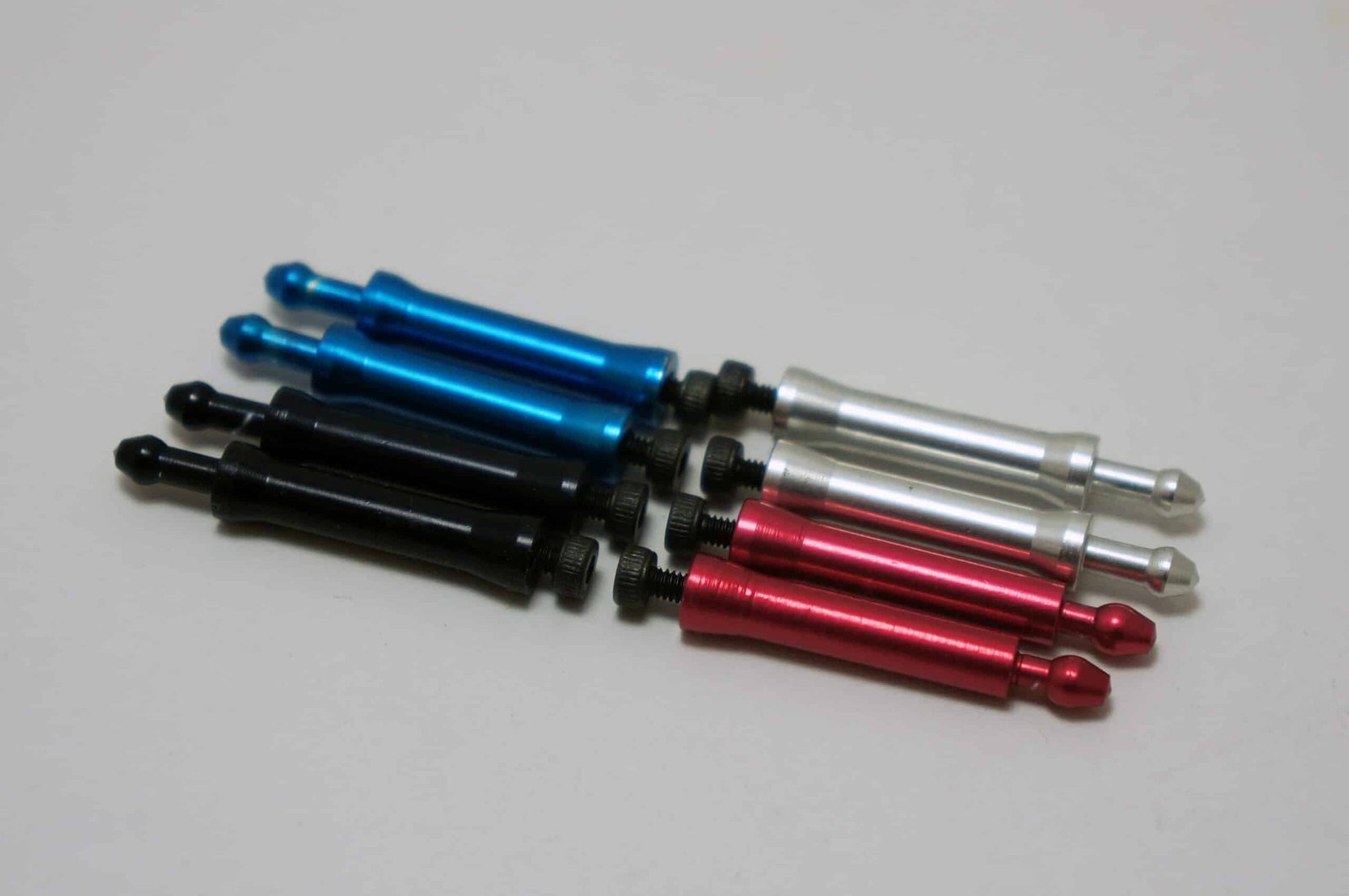
Custom cotter pin sets cover a much wider engineering scope than the simple split pin most people picture. A complete set includes split cotter pins (DIN 94 / ISO 1234), R-clips, hairpin cotters, threaded clevis pins with cotters, and aluminum or stainless-steel safety pins — each engineered for specific load, vibration, and corrosion environments. Whether you’re sourcing for agricultural machinery, automotive chassis, aerospace ground support, or marine equipment, the right material-process-finish combination determines whether the pin survives a single use or 20,000+ vibration cycles. This guide gives you the spec-level framework to write a cotter pin RFQ that gets accurate quotes from qualified manufacturers in China.
TL;DR — Key Takeaways
- DIN 94 / ISO 1234 split cotter pins cover diameters from 0.6 mm to 20 mm with standardized prong-length geometry that ensures consistent open-out behavior.
- Carbon steel (1010, 1018) is the volume default; stainless A2 (304) and A4 (316L) add 300–500 hr salt-spray improvement; aluminum cuts pin weight by 65 % for aerospace and weight-critical applications.
- Zinc plating, hot-dip galvanization, and Dacromet coatings span a corrosion-life range from 96 hr to 1,000+ hr per ASTM B117 — pick by exposure environment, not by appearance.
- Threaded clevis pins with integrated cotter holes consolidate two fasteners into one assembly, reducing BOM line count and assembly time by 30–40 % on agricultural implements.
- Shear strength on a 5 mm A2 stainless cotter pin is approximately 2.8 kN per shear plane — verify by physical test, not by catalog claim, when sourcing from a new supplier.
What Cotter Pin Types Belong in a Complete Custom Set?
A cotter pin set isn’t a single product — it’s a family of locking pins that share a common function (preventing axial movement of mating parts) but differ in geometry, installation method, and reusability.
| Pin Type | Standard | Installation | Removable? | Typical Application |
|---|---|---|---|---|
| Split cotter pin (DIN 94 / ISO 1234) | DIN 94, ISO 1234, ASME B18.8.1 | Insert + bend prongs | Single use (bend-out damages prongs) | Castle nuts, clevis joints, axle pins |
| R-clip (hairpin cotter) | DIN 11024, ASME B18.8.1 | Spring-snap into groove | Yes — reusable 50+ cycles | Quick-release applications, agricultural |
| Bow-tie locking pin | None — proprietary | Press into hole, spring locks | Yes | Industrial machinery, conveyor systems |
| Threaded clevis pin with cotter hole | ASME B18.8.1 type 7 | Insert + cotter pin through hole | Yes (replace cotter) | Tractor hitches, hydraulic cylinders |
| Lynch pin | DIN 11023 | Insert, spring-loaded ball lock | Yes | Trailer hitches, towing equipment |
| Aluminum safety pin | Custom geometry | Bend-out lock | Single use | Aerospace, weight-critical assemblies |
| Quick-release ball-detent pin | Mil-spec MS17984/17985 | Push button, retract balls | Yes — 1000+ cycles | Aerospace, military, ground support |
The DIN 94 split cotter pin dominates global volume — it’s the part most people mean when they say “cotter pin.” But for procurement engineers building a complete custom set, the R-clip and the threaded clevis pin carry equal weight: an R-clip handles quick-disconnect points (no tools required to remove), and a threaded clevis pin replaces a separate pin-plus-cotter assembly with a single bolted joint that’s faster to install on the line.
💡 Engineer’s Note: If you’re sourcing for an agricultural OEM, consider specifying R-clips and threaded clevis pins for any joint that gets serviced more than once a year. End users don’t carry pliers — they carry the wrench that’s already on the tractor. Quick-release geometry slashes service time and warranty calls about “missing cotter pin” complaints.
Which Cotter Pin Standards Apply Globally?
Cotter pin specifications fall into three regional standard families, plus aerospace and military specifications that override regional norms in their respective industries.
| Standard | Region | Scope | Diameter Range | Material Spec |
|---|---|---|---|---|
| DIN 94 | Germany / EU | Split cotter pins, metric | 0.6 – 20 mm | Steel, stainless A2/A4, brass |
| ISO 1234 | International (ISO equivalent of DIN 94) | Split cotter pins, metric | 0.6 – 20 mm | Steel, stainless A2/A4 |
| ASME B18.8.1 | USA | Cotter pins, clevis pins, inch series | 1/32″ – 3/4″ | Carbon steel, stainless 18-8 |
| GB/T 91 | China | Split cotter pins, metric (national standard) | 0.6 – 20 mm | Steel, stainless |
| JIS B 1351 | Japan | Split cotter pins, metric | 0.6 – 13 mm | Steel, stainless |
| AS9100 / NAS | Aerospace | Quality system + dimensional callouts | Per drawing | Cad-plated steel, A286 stainless |
| MS24665 / MS17984 | US Military | Cotter pins, ball-detent quick-release | Per spec sheet | Cad-plated, stainless, Inconel |
For most commercial automotive, agricultural, and industrial applications, DIN 94 and ISO 1234 are dimensionally identical — a part to DIN 94 will satisfy an ISO 1234 callout. The same is largely true of GB/T 91 (the Chinese national standard), which mirrors ISO 1234 with negligible deviation. If you’re sourcing from China for export to Europe, specifying “DIN 94 / ISO 1234 / GB/T 91” on the drawing eliminates any ambiguity about which dimensional system applies.
⚠️ Common Pitfall: Specifying “cotter pin per ASME B18.8.1” on a metric-machined assembly forces the manufacturer to source inch-series wire, which often carries a 30–50 % material surcharge and 3–4 week extended lead time. If the host hole is metric, specify a metric cotter pin standard — even on a US-bound assembly.
How Do Material Choices Drive Cotter Pin Performance?
Material selection drives corrosion life, shear strength, fatigue behavior, and cost per piece. The five primary material families each occupy a distinct sweet spot.
Low-carbon steel (1010, 1018) is the volume default. It’s cheap, easy to form, and accepts every common surface treatment. Tensile strength is modest (350–420 MPa), but cotter pins rarely operate near their material limit — they’re geometric locks, not load-bearing members.
Medium-carbon steel (1035, 1045) gets used when the cotter pin also functions as a shear-load member (rare, but seen in some agricultural quick-disconnect joints). Tensile reaches 600 MPa with quench-and-temper heat treatment.
Stainless A2 (304 / 18-8) is the workhorse for outdoor and mildly corrosive environments. Inherent corrosion resistance eliminates the plating step, and tensile strength runs 500–700 MPa in cold-drawn condition.
Stainless A4 (316L) carries molybdenum (2–3 %), making it the right choice for marine, food-contact, and chloride-rich environments. Cost is approximately 1.4× A2 stainless.
Aluminum (5052, 6061) cuts weight by 65 % versus steel at the cost of about 40 % lower shear strength. It’s specified almost exclusively for aerospace and weight-critical applications where the pin doesn’t carry rated shear load.
| Material | Tensile (MPa) | Shear Strength (MPa) | Density (g/cm³) | Corrosion Without Coating | Relative Cost | Best Application |
|---|---|---|---|---|---|---|
| Low-carbon steel 1010 | 350–420 | 280–340 | 7.87 | Poor (needs coating) | 1.0× | General industrial, agricultural with zinc plate |
| Medium-carbon steel 1045 | 580–620 | 420–460 | 7.85 | Poor | 1.1× | Shear-loaded quick-disconnect joints |
| Stainless A2 (304) | 500–700 | 450–550 | 8.00 | Excellent | 2.8× | Outdoor, automotive, food-adjacent |
| Stainless A4 (316L) | 500–700 | 450–550 | 8.00 | Outstanding (chloride) | 3.9× | Marine, chemical, coastal fleet |
| Aluminum 5052 | 195–230 | 125–140 | 2.68 | Good (anodize improves) | 1.8× | Aerospace, weight-critical |
| Aluminum 6061-T6 | 290–320 | 200–230 | 2.70 | Good (anodize) | 2.0× | Higher-strength weight-critical |
| Brass C26000 | 310–380 | 215–270 | 8.53 | Excellent | 4.5× | Electrical, marine, decorative |
| Copper C110 | 200–250 | 140–180 | 8.96 | Oxidizes (patinas) | 5.0× | Electrical grounding pins |
For most procurement decisions, the practical short list narrows to three options: carbon steel + zinc plating (lowest cost), A2 stainless (mid-cost, corrosion-resistant), or A4 stainless (premium corrosion for marine/chemical). Aluminum and brass are specialty calls driven by weight or electrical requirements.
What Surface Treatments Should You Specify for Cotter Pins?
For steel cotter pins, surface treatment is non-negotiable — bare steel rusts within days of outdoor exposure. The treatment choice balances corrosion life, appearance, cost, and regulatory compliance (RoHS, REACH, automotive substance restrictions).
| Treatment | Thickness (μm) | Salt Spray (hrs) | Cost Index | Best Use |
|---|---|---|---|---|
| Trivalent zinc electroplating | 5–12 | 96–240 | 1.0× | Indoor, mild outdoor |
| Hot-dip galvanization | 25–85 | 500–1,500 | 1.6× | Heavy outdoor, agricultural, infrastructure |
| Zinc-nickel (12–15 % Ni) | 8–15 | 720–1,000+ | 2.2× | Automotive underbody, severe service |
| Dacromet / Geomet (zinc flake) | 6–10 | 500–1,000 | 2.5× | High-strength steel (no H₂ embrittlement risk) |
| Black oxide + oil | 1–3 | 24–96 | 0.6× | Interior machinery, decorative |
| Phosphate + oil | 3–8 | 48–96 | 0.8× | Temporary protection, automotive subassembly |
| Mechanical zinc plating | 8–15 | 200–500 | 1.4× | High-strength steel where H₂ baking is impractical |
| Cadmium plating (legacy) | 5–13 | 200–500 | 2.0× | Aerospace, military (restricted by REACH in EU) |
Hot-dip galvanization is the right pick for agricultural, marine, and outdoor infrastructure cotter pins. The 25–85 μm coating thickness is far heavier than electroplated zinc, delivering 5–15× longer corrosion life in salt-fog testing. The trade-off: galvanization adds dimensional buildup that may require oversized host holes, and the thick zinc layer can interfere with prong bend-out in very small cotter pins (M2 and below).
For automotive applications where weight, dimensional precision, and salt-spray endurance all matter, Dacromet or zinc-nickel coatings dominate. Both deliver 720+ hr salt spray without the hydrogen embrittlement risk that traditional zinc electroplating introduces into high-strength steel.
Keyfix applies Dacromet and zinc-nickel coatings, with coating thickness documented for every production lot. Hot-dip galvanization is also available under IATF 16949 traceability protocols.
How Are Custom Cotter Pins Manufactured in China?
Three primary processes produce cotter pin sets, each suited to different geometries, volumes, and material grades.
Wire forming with bending is the dominant process for DIN 94 split cotter pins. Pre-cut wire blanks are folded back on themselves, the head loop is formed in a swaging die, and the two prongs are equalized to the specified length differential. Throughput on automated wire-forming lines reaches 300–800 pieces per minute for small-diameter (M2–M6) pins.
Cold heading applies when the cotter pin includes an enlarged head, a shoulder, or integrated threading (clevis pin with cotter hole geometry). Cold heading produces continuous grain flow through the head-to-shank transition, delivering 40–60 % higher fatigue strength than equivalent machined parts.
CNC machining handles threaded clevis pins, custom geometries, and low-volume specialty pins. Swiss-type lathes hold ±0.005 mm on critical diameters — the precision needed for tight-tolerance clevis joints where pin-to-hole clearance affects joint stiffness.
| Process | Best For | Volume Range | Tolerance | Cycle Time |
|---|---|---|---|---|
| Wire forming + bending | Standard DIN 94 split pins | 50K – 50M | ±0.05 mm wire dia. | 300–800 pcs/min |
| Cold heading | Clevis pins, headed pins | 10K – 5M | ±0.05 mm (as-headed); ±0.02 mm with secondary CNC | 60–150 pcs/min |
| CNC machining (Swiss) | Threaded clevis pins, custom geometry | 500 – 50K | ±0.005 mm | 1–4 min/pc |
| Stamping + bending | Aluminum hairpin clips, R-clips | 100K – 5M | ±0.10 mm | 200–500 pcs/min |
| Spring coiling + forming | Lynch pins, quick-release ball detent | 5K – 500K | ±0.10 mm | 60–200 pcs/min |
Keyfix runs multi-station cold headers, CNC lathes and YCM NFX 380A 5-axis CNC centers, and supplies wire-formed and stamped pins. This equipment profile covers every cotter pin type from a 0.6 mm DIN 94 split pin to a threaded M16 clevis pin with anti-rotation flat, all under one IATF 16949 quality system.
🔧 Typical Scenario: An agricultural OEM program covering mixed cotter pin SKUs — DIN 94 split pins, R-clips and threaded clevis pins across several diameters — can be consolidated into two routes: wire forming for split pins and R-clips, and CNC turning for threaded clevis pins. The single-source approach cut the customer’s procurement overhead by an estimated 40 % versus their previous three-supplier arrangement.
What Threaded Pin Variants Replace Standard Cotter Pins?
Threaded pins are the modern alternative to traditional pin-plus-cotter assemblies. They convert a two-piece locking joint into a single threaded fastener with equivalent or better locking performance.
| Threaded Pin Type | Locking Method | Reusable? | Best Application |
|---|---|---|---|
| Threaded clevis pin (external thread + nut) | Nut + locking compound or nylon insert | Yes | Hydraulic cylinder rod-eyes, tractor hitches |
| Threaded clevis pin with cotter hole | Cotter pin through cross-drilled hole | Cotter is consumable | Heavy machinery, agricultural implements |
| Shoulder pin with threaded end | Threaded end + nut against shoulder | Yes | Pivot joints, linkage pins |
| Stud pin with self-locking thread | Pre-applied nylon patch | Yes (3–5 cycles) | Vibration-prone joints |
| Quick-release pin with thread lock | Spring detent + thread engagement | Yes | Service-frequent disconnects |
The decision matrix for “cotter pin vs threaded pin” usually comes down to service frequency and load class. For low-cycle service intervals (annual or longer) and moderate loads, a traditional pin-plus-cotter is cheaper. For high-frequency service or significant shear loads, a threaded clevis pin delivers better total cost of ownership.
Need help selecting the right cotter pin or threaded pin variant? Send your assembly drawing to Keyfix engineers — we’ll flag whether DIN 94 split pins, R-clips, threaded clevis pins, or a custom hybrid solution makes the most sense for your application. Turnaround is typically 48 hours. Email: sales@keyfixpro.com
How Do You Test Cotter Pin Performance?
Four tests define whether a custom cotter pin set meets engineering requirements.
Shear strength test — Measures the force required to shear the pin in single or double shear. For a 5 mm A2 stainless DIN 94 pin, single-shear failure typically occurs at 2.5–3.0 kN.
Prong bend-out durability — Verifies that split-pin prongs can be bent open through 90° on each side without cracking, testing wire ductility after forming.
Salt spray (ASTM B117) — Standard 5 % NaCl mist at 35 °C. Zinc-plated steel pins typically must survive 96–240 hours without red rust.
Pull-out / retention force — For R-clips and ball-detent pins, measures axial force to dislodge the pin. Industry guideline: ≥ 30 N for hairpin cotters, ≥ 80 N for ball-detent pins.
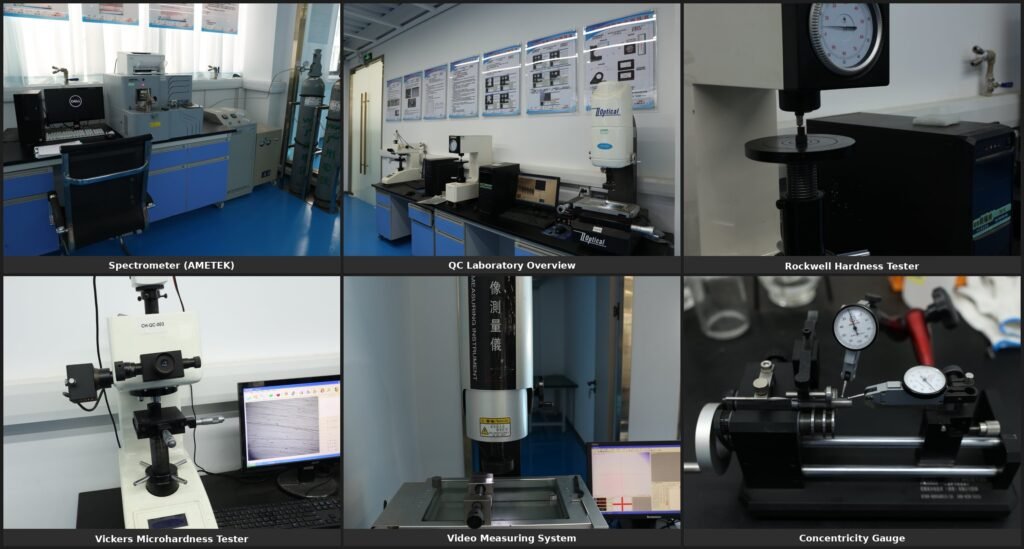
| Test | Method | Pass Criterion (Typical) | Equipment |
|---|---|---|---|
| Shear strength | Single or double shear in calibrated fixture | Per material spec (e.g., 2.8 kN for 5 mm A2) | Universal tensile tester + shear fixture |
| Prong bend-out | Bend prongs 90° each side, inspect for cracks | No visible cracking | Manual bend test + magnifier |
| Tensile strength (wire) | Pull-test on unformed wire stock | Per material spec | Tensile tester |
| Salt spray | ASTM B117, 5 % NaCl, 35 °C | 96–1,000 hr depending on coating | Salt spray cabinet |
| Hardness | Vickers or Rockwell B on cross-section | Per material spec | Hardness tester |
| Retention force (R-clip) | Axial pull from calibrated hole | ≥ 30 N | Tensile tester with pin grip |
| Dimensional layout | Optical comparator or CMM | Per DIN 94 / ISO 1234 tolerance | 2D video measuring, Mitutoyo gauges |
| Vibration endurance | Random vibration per SAE J1455 or OEM spec | No fracture or fallout | Vibration shaker |
Keyfix’s quality lab performs dimensional, hardness, thread-gauge and salt-spray checks in-house, with results documented in PPAP Level 3 packages for OEM programs; shear-strength testing per ASTM F606 is arranged through third-party testing laboratories. The combination of 2D video measuring at 0.001 mm optical resolution, salt-spray validation to 1,000+ hours on coated samples, and documented shear-strength results provides the quality history that automotive Tier 1 and Tier 2 audits demand.
What Should You Specify on a Custom Cotter Pin Drawing?
A complete cotter pin drawing prevents the misinterpretation that creates rejection rates above 1 % on incoming inspection. Here’s what belongs on every print.
| Drawing Call-Out | What to Specify | Why It Matters |
|---|---|---|
| Standard reference | DIN 94, ISO 1234, ASME B18.8.1, or custom | Anchors dimensional defaults |
| Nominal diameter | Wire diameter (e.g., 5 mm, 1/8″) | Drives material, strength, host hole size |
| Overall length | Tip-to-loop length with tolerance | Ensures fit through assembly |
| Prong-length differential | Long prong vs short prong (e.g., L + 4 mm) | Enables easy prong spreading |
| Material | Alloy designation (e.g., A2-70 stainless, 1010 steel) | Controls strength, corrosion, cost |
| Surface treatment | Type, thickness, salt-spray hours | Defines corrosion life |
| Quantity / packaging | Pieces per bag, bags per box, label info | Streamlines kitting and traceability |
| RoHS / REACH compliance | RoHS 3 (EU 2015/863) statement | Required for EU market access |
📋 Spec Tip: For OEM cotter pin sets where multiple SKUs ship together as a kit, specify the kitting format (blister pack, poly bag with header card, or compartmented box) on the drawing. Manufacturers handle kitting fundamentally differently than bulk shipments, and the choice affects unit cost by 5–15 %.
How Do You Qualify a China Cotter Pin Manufacturer?
Cotter pin suppliers span the full quality spectrum from commodity wire-bending workshops to IATF 16949–certified automotive Tier 1 producers. The audit checklist below separates qualified manufacturers from the rest.
| Audit Point | Minimum Requirement | Keyfix Status |
|---|---|---|
| Quality system | ISO 9001 minimum; IATF 16949 for automotive | IATF 16949 + ISO 9001 + ISO 14001 certified |
| Material verification | Mill certificate per lot; spot-check by XRF | SPECTRO (Germany) OES on 100 % of incoming heats |
| Dimensional control | Optical comparator + CMM available | 2D video measuring + Shining3D 3D scanning |
| Coating thickness verification | XRF on every coated lot | Thickness report on every coated lot |
| Salt spray capability | ASTM B117 salt spray chamber on-site | In-house; validated to 1,000+ hr |
| Shear strength testing | Universal tensile tester + shear fixture | Arranged through third-party testing laboratories |
| SPC implementation | Cpk ≥ 1.33 on critical dimensions | Cpk ≥ 1.67 maintained, real-time SPC |
| PPAP readiness | Level 3 minimum for automotive | Level 3–5 with digital traceability |
| Environmental compliance | RoHS, REACH, conflict minerals reporting | Full compliance documentation |
| Capacity for production runs | 100K+ pieces per month sustained | Multi-line wire forming, cold heading, CNC |
| Process integration | Forming + heat treat + coating + inspection in-house | Vertically integrated under one IATF 16949 system |
| Sample lead time | Prototypes typically within 7–14 business days | 10–14 business days standard |
Keyfix’s vertically integrated production campus covers every step from wire stock to finished, plated, packaged cotter pin under one IATF 16949 quality system — eliminating the coordination delays and traceability gaps that occur when fragmented supply chains handle each production step.
What’s Driving Change in Cotter Pin Specification?
Three industry shifts are reshaping how OEMs source custom cotter pin sets.
Galvanic compatibility in mixed-material assemblies — As structures increasingly mix aluminum, AHSS, and CFRP, cotter pin material selection now factors in galvanic compatibility with the parent structure. Stainless A4 or anodized aluminum cotter pins are increasingly specified for mixed-material applications.
Electrification weight-reduction targets — EV platforms apply aggressive weight-reduction targets to every BOM line. Aluminum and titanium cotter pins deliver 40–65 % weight reduction versus steel, justifying the higher unit cost when summed across hundreds of pins per vehicle.
Regulatory tightening on hexavalent chromium and cadmium — The shift from hexavalent chrome to trivalent chrome passivation, and the phase-out of cadmium plating in EU markets, has driven cotter pin coating selection toward zinc-nickel and Dacromet systems for RoHS 3 / REACH compliance.
Frequently Asked Questions
What’s the minimum order quantity (MOQ) for custom cotter pins?
Standard DIN 94 cotter pins start at 10,000 pieces per SKU. Custom geometries (special prong lengths, non-standard materials, custom plating) typically require 50,000 pieces for production-cost amortization. Prototype quantities of 100–500 pieces are available for design validation, usually within 10–14 business days.
What certifications does Keyfix hold for custom cotter pin production?
Keyfix holds IATF 16949, ISO 9001, and ISO 14001 certifications with full scope coverage of formed, machined, and stamped pin products. Full PPAP Level 3 documentation — including dimensional layout, material CoCs, plating thickness reports, salt-spray data, and shear-strength test results — is standard for every new part number.
Can Keyfix supply mixed cotter pin sets (kits with multiple SKUs)?
Yes. Keyfix produces kitted cotter pin sets in blister packs, poly bags with header cards, or compartmented boxes per customer specification. Mixed kits combining DIN 94 split pins, R-clips, threaded clevis pins, and aluminum safety pins ship as single SKU assemblies with consolidated CoC documentation.
What lead time should I expect for a custom cotter pin program?
Typical timeline: 48 hours for DFM review and quotation, 2–3 weeks for first articles after PO and PPAP approval, and 4–5 weeks for full production runs. Tooling costs for standard wire-formed cotter pins are minimal; cold-headed clevis pins require 2–3 weeks of dedicated tooling lead time amortized over the first production order.
Does Keyfix supply hot-dip galvanized cotter pins?
Yes. Hot-dip galvanization is available under Keyfix’s IATF 16949 traceability protocols. Coating thickness, salt-spray performance, and dimensional buildup are verified before shipment. A post-coating tumble cycle removes excess zinc from prong tips when required.
What plating options work best for marine applications?
For marine and coastal-exposure cotter pins, A4 stainless (316L) is the first-choice material since it requires no plating. If carbon steel is the cost-driven choice, hot-dip galvanization at 65–85 μm delivers the longest field life — typically 5–10 years in coastal environments versus 1–2 years for trivalent zinc plating.
Can Keyfix produce threaded clevis pins with anti-rotation features?
Yes. Threaded clevis pins with milled flats, square shoulders, or knurled bodies for anti-rotation are produced on Keyfix’s CNC lathes with ±0.005 mm positional accuracy, at production volumes from 5,000 to 500,000 pieces per variant.
What quality documentation ships with each cotter pin order?
Every lot includes a Certificate of Conformance covering material, dimensions, surface treatment, and visual inspection. PPAP packages add full dimensional layout, mill certificates, coating thickness reports, salt spray data, shear-strength test results, and material safety documentation (RoHS, REACH, IMDS for automotive programs).
If your next assembly calls for a custom cotter pin set — DIN 94 split pins, R-clips, threaded clevis pins, hot-dip galvanized field-service pins, or weight-optimized aluminum safety pins — send your drawing and quantity requirements to Keyfix’s application engineering team. You’ll get a free DFM review, the most cost-effective material-process-coating combination, and a detailed quotation within 48 hours. Contact sales@keyfixpro.com or visit www.keyfixpro.com to start the conversation.
Author: Keyfix Engineering Team Published: May 17, 2026 Last Updated: May 17, 2026