Stainless steel wheel hub flanges sit at the most tolerance-critical interface on the vehicle corner: the flat disc where the wheel, brake rotor, and hub assembly meet. Three geometries converge on this one part — the hub-centric pilot bore that centers the wheel, the PCD bolt circle that clamps it, and the flange face whose lateral runout feeds directly into brake-disc runout and pedal judder. Get any of the three wrong by a few hundredths of a millimeter and the result is vibration a driver feels at highway speed. This guide covers flange types, stainless grade selection, the dimensions that control fit and balance, and how to qualify a manufacturer.
TL;DR — Key Takeaways
- A hub flange joins three interfaces at once: pilot bore (centering), PCD bolt circle (clamping), and flange face (runout) — each with its own tolerance discipline.
- Flange face lateral runout should stay within 0.03–0.05 mm; every micron of flange runout stacks into rotor runout, and judder complaints typically begin near 0.08 mm installed.
- For load-bearing flanges, 17-4PH (H900) delivers ~1,170 MPa yield — over five times 304 stainless — while keeping stainless corrosion behavior.
- Hub-centric fit means the pilot bore carries wheel location (typically an H7-class bore); lug-centric seating alone invites vibration.
- A qualified supplier verifies chemistry by OES, measures runout and flatness optically, and documents outgoing quality below 25 PPM at AQL 0.4.
What Are Stainless Steel Wheel Hub Flanges?
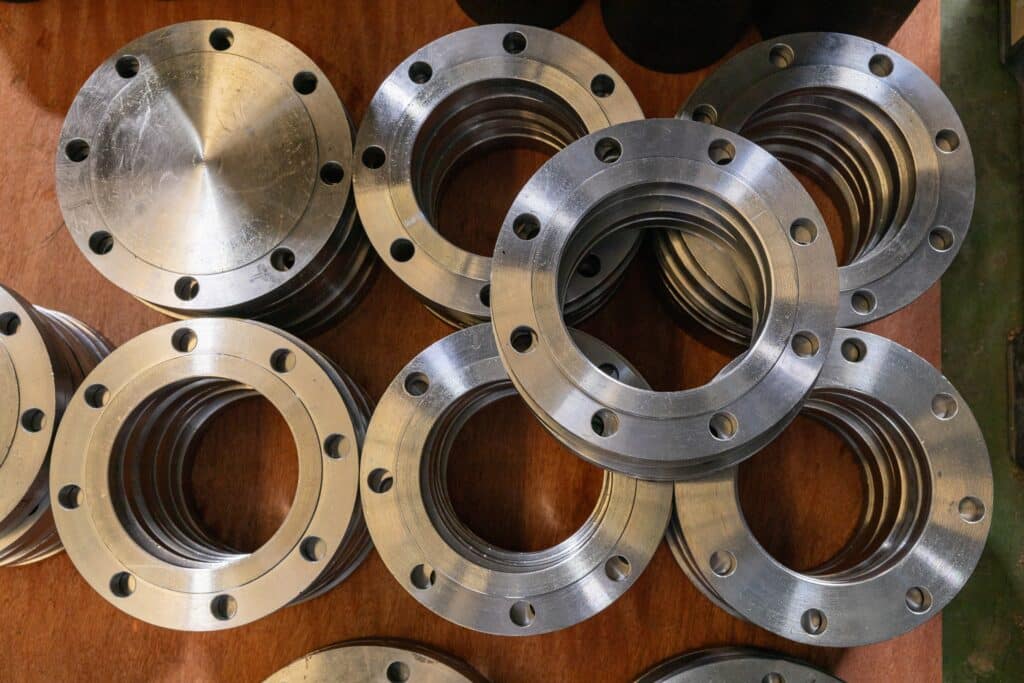
A wheel hub flange is the flat, disc-shaped interface that carries the wheel’s bolt circle and pilot diameter. On an OEM hub unit it is the forged face the rotor and wheel bolt against; in the custom and aftermarket world, the term also covers hub-centric rings, spacer flanges, adapter flanges, and trailer or specialty-vehicle hub flanges machined as standalone parts.
| Flange Type | Function | Typical Vehicle Use |
|---|---|---|
| Hub mounting flange | Wheel + rotor bolting face on the hub | Passenger cars, light trucks |
| Hub-centric ring | Fills wheel-bore-to-pilot gap | Aftermarket alloy wheels |
| Spacer / adapter flange | Offsets track or converts PCD | Motorsport, off-road |
| Trailer hub flange | Wheel face on trailer axles | Boat and utility trailers |
| Axle / drive flange | Couples axle shaft to hub | 4×4, kart, ATV |
All five share the same engineering logic — concentric bores, an accurate bolt circle, and two faces machined parallel — which is why they are natural CNC-turned parts. KeyFix machines the full family through its CNC machining capability, with both faces cut in a single chucking so parallelism comes from the machine, not from a second setup.
Why Choose Stainless Steel for a Hub Flange?
The wheel end is one of the most corrosive places on a vehicle: road salt spray, water immersion, abrasive brake dust, and heat cycles that crack conventional coatings. A plated carbon-steel flange protects only while its coating survives; a stainless flange has nothing to chip.
There is a second, quieter reason: galvanic pairing with aluminum wheels. A rusting steel flange face seizes to the alloy wheel and stains it; stainless keeps the interface clean and separable after years of service. KeyFix confirms every incoming stainless heat by SPECTRO optical emission spectrometry through its raw material control process.
| Material | Yield (MPa) | Corrosion | Relative Cost | Best Flange Use |
|---|---|---|---|---|
| 304 stainless (A2) | 215 | Excellent | 1.0× | Hub rings, light spacers |
| 316 stainless (A4) | 290 | Outstanding (chloride) | 1.3× | Marine trailer flanges |
| 17-4PH (H900) | ~1,170 | Very good | 2.2× | Load-bearing hub / adapter flanges |
| Carbon steel + zinc | 355–640 | Coating-dependent | 0.6× | Cost-driven, dry service |
💡 Engineer’s Note: Do not specify 304 for a flange that carries wheel loads through its bolt circle — its 215 MPa yield is a fraction of what the joint sees under cornering. The stainless answer for structural flanges is precipitation-hardened 17-4PH aged to H900, which reaches alloy-steel strength while staying corrosion-resistant. Reserve 304/316 for rings and low-load spacers.
Which Dimensions Control Fit and Balance?
Five dimensions decide whether a flange runs true or shakes the steering wheel.
| Dimension | Typical Tolerance | Failure If Out of Spec |
|---|---|---|
| Pilot bore (center bore) | H7-class fit to hub pilot | Oversize → wheel runs eccentric → speed-dependent vibration |
| PCD (bolt circle) | ±0.1 mm position | Stud bending, uneven clamp, hole elongation |
| Flange face lateral runout | ≤0.03–0.05 mm | Stacks into rotor runout → judder, DTV wear |
| Face flatness | ≤0.05 mm | Uneven rotor clamp → thermal distortion |
| Face parallelism | ≤0.05 mm | Wheel tilts → wobble at speed |
The runout chain is the one most buyers underestimate. The rotor registers on the flange face, and the wheel clamps the rotor to it — so flange runout passes straight into installed rotor runout. Once installed runout approaches 0.08 mm, each revolution wipes the pads against the high spot, developing disc thickness variation (DTV) and the pulsing pedal that follows. KeyFix verifies runout and flatness optically with 2D video measuring and Shining3D 3D scanning, documented under its inspection standards program, with process capability detailed on the technology overview.
⚠️ Common Pitfall: Ordering a flange or spacer with a clearance-fit center bore “because the lug seats will center it” trades hub-centric location for lug-centric hope. Conical lug seats can center a wheel only if every seat is perfect; in practice the assembly ends up a few tenths eccentric and vibrates. Specify the pilot bore as a locating fit and let the studs do only the clamping.
What PCD Patterns Cover Common Vehicles?
| PCD Pattern | Common Applications |
|---|---|
| 4 × 100 | Compact cars (many Honda, Toyota, VW models) |
| 5 × 100 | Subaru, older VW/Audi |
| 5 × 112 | VW, Audi, Mercedes-Benz |
| 5 × 114.3 | Honda, Toyota, Nissan, Hyundai/Kia |
| 5 × 120 | BMW, some Land Rover |
| 6 × 139.7 | Toyota/Nissan trucks and SUVs |
Custom flanges frequently carry two PCD patterns on one disc (an adapter) or a non-automotive pattern for trailers, karts, and AGVs. KeyFix machines any pattern to drawing across its CNC parts portfolio, including press-fit stud holes with knurl interference or 60° cone seats for lug bolts.
How Are Stainless Steel Wheel Hub Flanges Manufactured?
| Step | What Happens | KeyFix Capability |
|---|---|---|
| Material verification | Confirm grade by OES | SPECTRO (Germany), 100% of heats |
| Blank preparation | Saw bar or forge near-net blank | Cold forging for volume blanks |
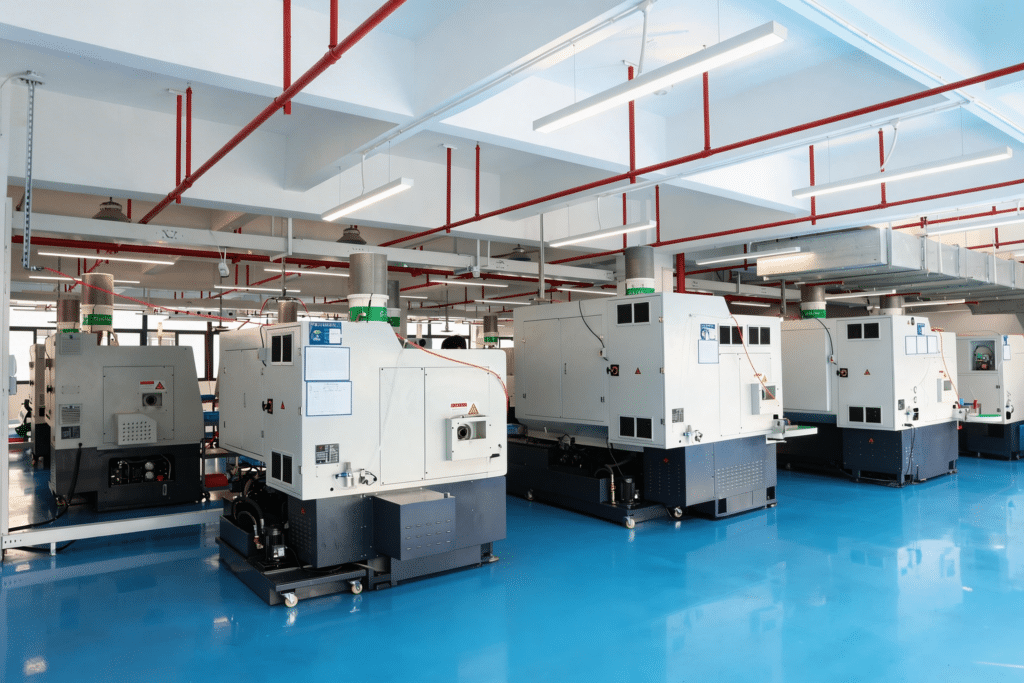
| CNC turning | Both faces + pilot bore in one chucking | 32 CNC machines incl. two 5-axis centers, ±0.005 mm |
| PCD drilling | Bolt circle on rotary index | ±0.1 mm true position |
| Heat treatment | H900 aging for 17-4PH | Controlled furnaces |
| Passivation | Restore chromium oxide layer | Per ASTM A967 practice |
| Inspection | Runout, flatness, bore, PCD | 2D video measuring + 3D scanning, 100% optical sorting |
Turning both faces and the pilot bore in a single chucking is the step that makes or breaks a flange — parallelism and bore concentricity then come from spindle geometry rather than refixturing luck. Aged 17-4PH parts are finish-turned after heat treatment so the H900 distortion never reaches the datum faces.
Need a quote on stainless hub flanges? Send your drawing or a sample part to KeyFix — DFM review and quotation within 48 hours. Get a quote or email sales@keyfixpro.com.
What Should You Specify on the Drawing?
| Call-Out | What to Specify | Why It Matters |
|---|---|---|
| Material + condition | e.g., 17-4PH H900, or 304 | Strength and corrosion |
| Pilot bore + fit | Diameter, H7-class, datum A | Hub-centric location |
| PCD | Pattern, hole size, true position | Clamp distribution |
| Runout to datum A | ≤0.03–0.05 mm on face | Brake judder control |
| Flatness / parallelism | ≤0.05 mm | Rotor clamp quality |
| Stud interface | Press-fit knurl or 60° cone | Retention method |
| Passivation | Per ASTM A967 | Corrosion performance |
📋 Spec Tip: Datum the pilot bore, not the outer diameter — the pilot is what the vehicle locates on. Then call runout and PCD position back to that datum, and your inspection report will predict on-car behavior instead of bench geometry.
How Do You Qualify a Hub Flange Manufacturer?
| Audit Point | Minimum Requirement | KeyFix Status |
|---|---|---|
| Quality system | ISO 9001 minimum | IATF 16949 + ISO 9001 + ISO 14001 |
| Single-chucking capability | Faces + bore in one setup | 32 CNC machines, two 5-axis |
| Material verification | OES on incoming stainless | SPECTRO OES, 100% of heats |
| Runout / flatness measurement | Optical, documented | 2D video measuring + 3D scanning |
| Heat-treat control | H900 aging records | Controlled, documented |
| Outgoing quality | Defect rate documented | <25 PPM at AQL 0.4 |
KeyFix runs the full chain — bar to passivated, inspected flange — under one IATF 16949 system, with pilot-bore fits held to ISO 286 tolerance classes and 17-4PH supplied per ASTM A564. Its project case studies, automotive fastener programs, and company background document the audit trail OEM and aftermarket buyers require.
What Are the Logistics and Shipping Terms?
KEYFIX manufactures in its own plant in Guangdong Province, near South China’s export ports.
| Term | Detail |
|---|---|
| Manufacturing location | Guangdong Province |
| Standard shipping term | FCA at our Guangdong plant |
| Sea freight term | FOB Shenzhen Yantian Port |
| Prototype lead time | 7–14 business days (air-expressed) |
| Production lead time | 4–6 weeks after sample approval |
The short inland haul from our Guangdong plant to Shenzhen Yantian Port keeps transit time and freight cost low for international buyers.
Frequently Asked Questions
What is the difference between hub-centric and lug-centric?
Hub-centric means the wheel (or flange) is located by its pilot bore on the hub pilot, and the studs only clamp. Lug-centric relies on the conical lug seats to center the wheel — workable at the factory, unreliable in the field. Specify a locating-fit pilot bore whenever geometry allows.
Is stainless steel strong enough for a load-bearing hub flange?
Austenitic grades (304/316) are not — their yield is around 215–290 MPa. Precipitation-hardened 17-4PH at H900 reaches roughly 1,170 MPa yield, matching alloy steel, and is the standard stainless choice for structural flanges and adapters.
What runout should I specify on the flange face?
Hold ≤0.03–0.05 mm lateral runout referenced to the pilot bore datum. Installed rotor runout should stay under about 0.05 mm; judder complaints typically appear near 0.08 mm.
What is the minimum order quantity?
CNC-machined flanges have no MOQ — from validation samples to production, with price breaks at higher tiers. Contact sales@keyfixpro.com for quotations.
What certifications does KeyFix hold?
IATF 16949, ISO 9001, and ISO 14001. Material certificates, heat-treat records, and dimensional inspection reports (runout, flatness, PCD position) ship with OEM orders.
What shipping terms apply for international orders?
Standard shipping is FCA at our Guangdong plant, with sea freight as FOB Shenzhen Yantian Port from our Guangdong production base. Production ships 4–6 weeks after sample approval.
If your next program needs stainless steel hub flanges — hub-centric rings, spacer or adapter flanges, trailer flanges, or load-bearing 17-4PH parts — send your drawing to KeyFix for a free DFM review and a quotation within 48 hours. Explore the product portfolio or contact KeyFix at sales@keyfixpro.com.
Author: KeyFix Engineering Team Published: July 3, 2026 Last Updated: July 3, 2026