
Stepped dowel pins are not simple pins with a bigger name — they are precision micro-shafts, and they demand shaft-making discipline that a single-diameter dowel never has to meet. Where a standard dowel pin holds one diameter to one fit class along its length, a stepped pin carries two, three, or more diameters on the same centreline, each doing a different job: locating in one bore, sliding in another, threading into a third. Every step adds a concentricity requirement the plain pin never had. This guide covers what separates a stepped pin from a standard dowel, the single-chucking discipline that makes multiple diameters run true, per-step fit and tolerance strategy, the stainless steel hardness trade-off, and how to specify and source custom parts.
TL;DR — Key Takeaways
- A stepped dowel pin carries multiple diameters on one centreline — each step can carry its own fit class, but all steps must share one axis.
- Concentricity between steps depends on single-chucking turning; refixturing to cut a second diameter is the leading cause of runout complaints.
- Standard austenitic stainless (303/304) cannot be through-hardened — for wear-critical or high-load steps, martensitic 440C or precipitation-hardened 17-7PH/17-4PH is the real answer.
- Each step needs its own tolerance class — typically m6 for a location press fit, h6 for a sliding fit — stated per diameter, not once for the whole pin.
- A qualified supplier verifies bar chemistry by OES, turns every diameter in one setup, and documents outgoing quality below 25 PPM at AQL 0.4.
What Is a Stepped Dowel Pin?
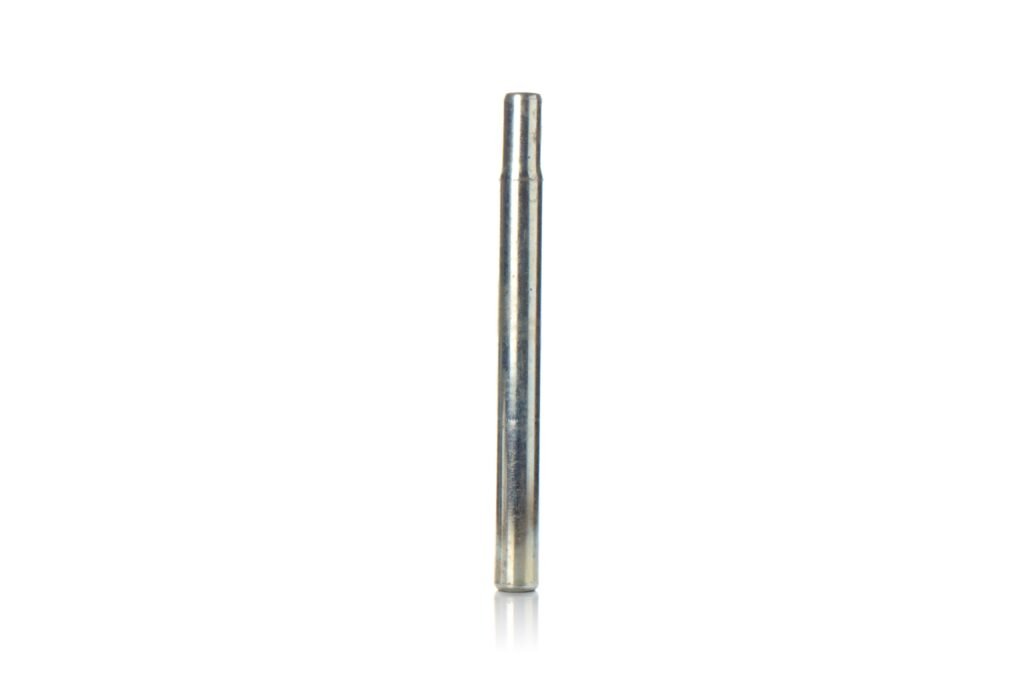
A standard dowel pin is a single-diameter cylinder held to a tight tolerance along its whole length — the ISO 8734 or DIN 6325 family most people picture. A stepped dowel pin breaks that single-diameter rule on purpose: the same part carries two or more distinct diameters, each machined for a different mating feature, joined by a shoulder or a smooth taper transition.
| Pin Type | Diameters | Typical Role |
|---|---|---|
| Standard dowel pin | One | Locates one bore to one fit class |
| Two-step dowel pin | Two | Locates one bore, slides or threads in a second |
| Multi-step (shaft-style) pin | Three or more | Combines locating, sliding, and threaded features |
| Tapered-step pin | Two, joined by a cone | Self-centring transition between fits |
| Flanged step pin | Step plus integral shoulder | Adds a positive depth stop |
The moment a pin carries more than one diameter, it stops being a commodity hardware item and becomes a small precision shaft. The design questions that follow — which surfaces must run concentric, which fit class applies where, whether the part needs hardening — are shaft-engineering questions, not catalogue lookups. KeyFix machines this family through its CNC production line, with related standard dowel and pin hardware across the CNC parts portfolio.
Why Does Single-Chucking Turning Matter So Much?
This is the single most important manufacturing fact about stepped pins, and it is invisible on a finished-part inspection report unless someone checks specifically for it.
A lathe holds a part on one axis — the spindle’s own axis — and every diameter cut while the part stays in that chuck shares that axis exactly, by the physics of the machine rather than by measurement skill. The moment the part is removed and re-clamped to cut a further diameter, the new setup introduces its own small axis error, and the two diameters are now concentric only to the accuracy of the fixturing — typically 0.01–0.03 mm worse than a single-setup part, sometimes far more on a careless second operation.
| Machining Approach | Typical Concentricity Between Steps | Risk |
|---|---|---|
| Single chucking, all diameters | 0.005 mm or better | Low — the standard for precision pins |
| Turned, then re-chucked for a feature | 0.01–0.03 mm | Moderate — acceptable for non-critical steps |
| Turned on two separate operations | 0.03–0.08 mm+ | High — binding, uneven bearing load |
| Ground after multi-setup turning | Recovers accuracy | Adds cost; masks a process problem |
For a pin doing double duty — locating in a reamed bore on one diameter while sliding in a bushing on another — that concentricity is the entire point of the part. A stepped pin turned in two setups can locate perfectly and still bind in its sliding bore, because the two diameters, each individually within tolerance, sit on two slightly different axes.
💡 Engineer’s Note: When you receive a stepped pin quote, ask one direct question: “are all diameters turned in a single chucking?” A supplier who cannot answer confidently is telling you the part will be machined in multiple setups — fine for loose-fit steps, a real risk for anything locating or sealing.
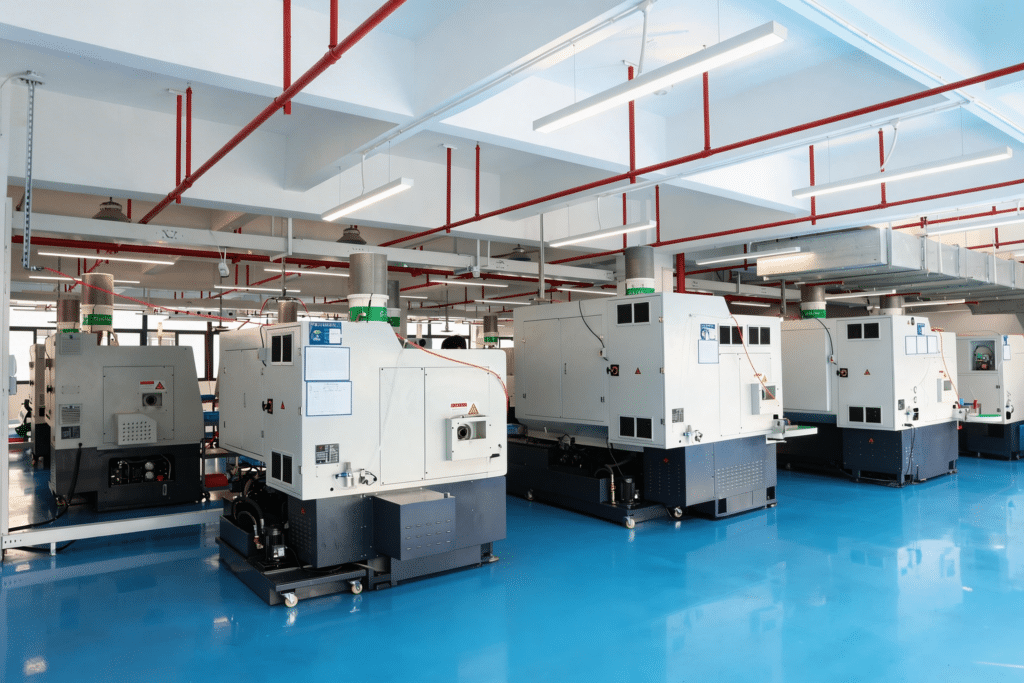
KeyFix turns stepped pins complete in one chucking across its 32-machine CNC line, holding ±0.005 mm on critical diameters with live-tool stations adding any cross features without a second setup; process detail sits on the technology overview.
How Do You Assign Fit Classes to Each Step?
Because each diameter serves a different function, each one needs its own fit class — a single tolerance note for “the pin” is almost never correct on a stepped part.
| Function of the Step | Typical Fit Class | Behaviour |
|---|---|---|
| Press-fit location (permanent) | m6 (shaft basis) | Light interference; installed and stays |
| Precision location (removable) | h6 with h7 bore | Slip fit; hand-removable, no play |
| Sliding / guiding diameter | g6 or h6 | Clearance fit; moves under load |
| Threaded step | 6g external thread | Standard thread tolerance |
| Bearing journal | h5 or h6, tighter form control | Depends on bearing type |
⚠️ Common Pitfall: Specifying one tolerance band — say “±0.005 mm” — for every diameter on the print because it seems like the safest, tightest option. The locating step may genuinely need that; the sliding step almost never does, and machining it to the same band adds cost without adding function, while sometimes making the fit tighter than the sliding feature was meant to be. Assign the fit class per step, based on what that diameter actually does.
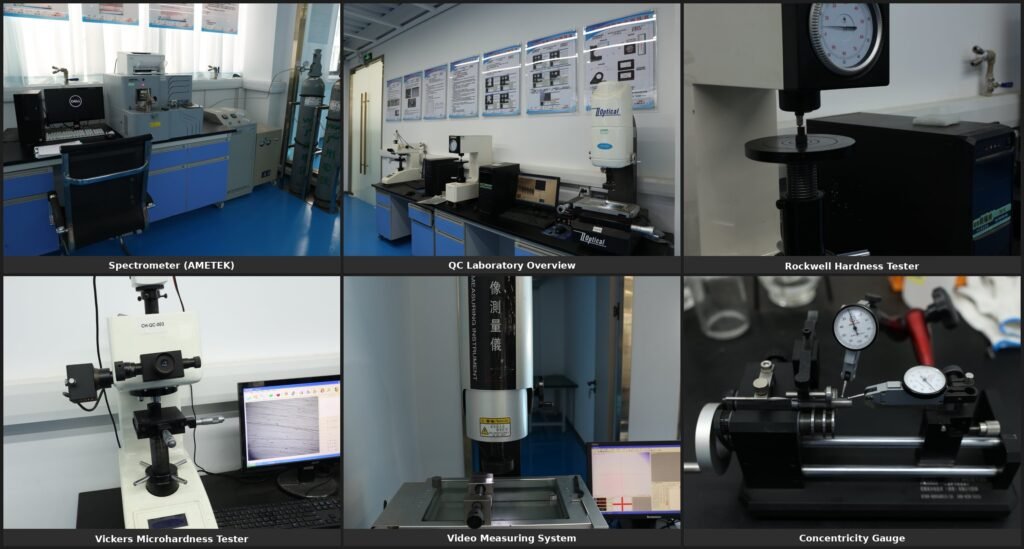
Each step’s diameter, form, and surface finish is verified individually by 2D video measuring and calibrated Mitutoyo gauges, with concentricity between steps confirmed by Shining3D 3D scanning where the geometry warrants it, documented under KeyFix’s inspection standards program.
Why Is Stainless Steel Hardness a Trade-Off Here?
Standard carbon steel dowel pins are through-hardened for wear resistance — that is why a plain dowel pin shrugs off repeated insertion cycles. Stainless steel changes that picture, and the change matters more on a stepped pin than almost anywhere else, because different steps often want different properties.
| Material | Hardenable? | Typical Hardness | Corrosion | Best Step Use |
|---|---|---|---|---|
| Alloy steel (1045, hardened) | Yes | HRC 55–60 | Poor — needs coating | Non-corrosive, high-wear applications |
| Stainless 303 / 304 | No (austenitic) | HRC ~20–25 max | Excellent | Corrosion-critical, low-wear steps |
| Stainless 440C | Yes — hardenable martensitic | HRC 55–60 | Good | High-wear, corrosion-resistant steps |
| Stainless 17-4PH (H900) | Yes — precipitation hardening | ~HRC 40–44 | Very good | Structural steps needing both properties |
| Stainless 17-7PH (CH900) | Yes — precipitation hardening | ~HRC 44–48 | Very good | High-strength, corrosion-resistant steps |
The trap is assuming “stainless steel dowel pin” automatically delivers wear resistance the way a hardened carbon-steel pin does. Plain 303 or 304 stays soft regardless of heat treatment, and a locating step in that condition will gall and wear in a bore that sees frequent insertion cycles. Where wear resistance matters, 440C is the direct stainless answer — a genuinely hardenable grade that reaches carbon-steel-class hardness while keeping real corrosion resistance. Where the application needs a lighter hardness with better toughness and weldability, 17-4PH or 17-7PH in an aged condition are the alternatives.
📋 Spec Tip: On a multi-material or multi-hardness stepped pin, state the material and hardness requirement per step if they differ — for example, “locating step: 440C, HRC 55–58; threaded step: 303, as-machined.” Writing one material callout for the whole part forces an unnecessary compromise on at least one step.
Bar chemistry is verified on every incoming lot by SPECTRO optical emission spectrometry through KeyFix’s raw material control process — the check that distinguishes a hardenable 440C bar from an unhardenable 304 twin before either reaches a spindle.
Which Chamfer and Transition Details Matter?
The features between steps are small but decide how the part installs and performs.
| Detail | Specification | Why It Matters |
|---|---|---|
| Lead-in chamfer | 0.3–0.5 mm × 15–20° on the entry end | Eases insertion, protects the bore edge |
| Step shoulder | Square or filleted, per function | Square for depth stop; fillet reduces stress concentration |
| Transition radius | Sized to the fillet the mating part allows | Prevents stress risers at diameter changes |
| Undercut (DIN 76-style) | At any step ending in a thread | Lets the tool clear without leaving an incomplete thread |
| Surface finish per step | Ra value stated per diameter | Sliding steps want finer finish than press-fit steps |
A sharp internal corner where two steps meet is a fatigue-crack initiation site on any pin that sees cyclic load, so the transition radius belongs on the drawing as deliberately as the diameters themselves.
How Are Custom Stepped Dowel Pins Manufactured?
| Step | What Happens | KeyFix Capability |
|---|---|---|
| Bar verification | Grade and hardenability confirmed by OES | SPECTRO (Germany), 100 % of heats |
| CNC turning, single chucking | All diameters, shoulders, chamfers cut together | 32 CNC machines incl. two 5-axis, ±0.005 mm |
| Live-tool features | Cross holes, flats where required | Same setup, concentricity preserved |
| Threading (if applicable) | Rolled or cut per specification | 22 thread-rolling machines available |
| Heat treatment | Hardening for 440C, 17-4PH, 17-7PH steps | Controlled-atmosphere furnaces |
| Grinding (as needed) | Precision diameters after hardening | Post-heat-treat finishing |
| Verification | Each diameter, concentricity, hardness | 2D video measuring + Shining3D scanning, Mitutoyo gauges, 100 % optical sorting |
Hardening after turning is standard practice for the martensitic and precipitation-hardening grades, because heat treatment can move a diameter by a few microns — critical steps are finish-ground afterward when the fit class demands it. KeyFix supports this full sequence in-house, with related turned-part capability across the CNC parts portfolio and delivered examples in the project case studies.
Need a quote on custom stepped dowel pins or precision shaft pins? Send your drawing or a sample to KeyFix — DFM review and quotation within 48 hours. Get a quote or email sales@keyfixpro.com.
[IMAGE SUGGESTION: CNC lathe machining a stepped stainless pin in a single chucking with multiple diameters visible, finished pins arranged by fit class on an inspection tray. Alt text: “CNC turning of custom stepped dowel pins with multiple diameters in one chucking”]
What Should the Drawing Specify?
| Call-Out | What to Specify | Why It Matters |
|---|---|---|
| Datum | The diameter or axis all others reference | Anchors concentricity requirements |
| Each diameter + tolerance | Individually, with fit class | Prevents one-size-fits-all tolerancing |
| Concentricity (TIR) | Between named steps, to the datum | The core stepped-pin requirement |
| Material + condition per step | State if it varies (440C vs 303, etc.) | Prevents unnecessary compromise |
| Hardness | HRC range where hardened | Confirms treatment was achieved |
| Chamfers and transitions | Angle, radius, undercut where threaded | Assembly and fatigue behaviour |
| Surface finish per step | Ra value where it differs | Matches function of each diameter |
How Do You Qualify a Stepped Pin Manufacturer?
| Audit Point | Minimum Requirement | KeyFix Status |
|---|---|---|
| Quality system | ISO 9001 minimum | IATF 16949 + ISO 9001 + ISO 14001 |
| Single-chucking capability | Multi-diameter parts in one setup | 32 CNC machines, two 5-axis |
| Material verification | OES per bar lot, hardenability confirmed | SPECTRO OES, 100 % of heats |
| Heat treatment control | Documented per grade | Controlled-atmosphere furnaces |
| Dimensional control | Per-step diameter and concentricity | 2D video measuring + 3D scanning, Mitutoyo gauges |
| Post-treat finishing | Grinding where fit class demands it | Available |
| Outgoing quality | Stated defect rate | <25 PPM at AQL 0.4 |
Stainless bar follows ASTM A582 and fits follow ISO 286 tolerance classes, under the quality system documented in KeyFix’s company background, with the wider range visible in the product portfolio and machinery hardware programs.
What Are the Logistics and Shipping Terms?
KeyFix manufactures in Huizhou, Guangdong, near South China’s export ports.
| Term | Detail |
|---|---|
| Manufacturing location | Huizhou, Guangdong Province |
| Standard shipping term | FCA Dongguan |
| Sea freight term | FOB Shenzhen Yantian Port |
| Prototype lead time | 7–14 business days (air-expressed) |
| Production lead time | 4–6 weeks after sample approval |
Frequently Asked Questions
What makes a stepped dowel pin different from a standard dowel pin?
A standard dowel pin holds one diameter to one fit class along its length. A stepped dowel pin carries two or more diameters on one centreline, each serving a different function — locating, sliding, or threading — which turns it into a small precision shaft rather than a simple pin.
Why does the manufacturing setup matter so much for stepped pins?
Diameters cut in one lathe chucking share the spindle’s axis exactly. Removing the part and re-clamping to cut a further diameter introduces axis error between the two — typically 0.01–0.03 mm or worse — which shows up as binding or uneven bearing load between the steps.
Can stainless steel dowel pins be hardened like carbon steel ones?
Not the common 303/304 grades — they are austenitic and cannot be through-hardened. For wear-critical steps needing hardness with corrosion resistance, specify martensitic 440C or precipitation-hardened 17-4PH/17-7PH instead.
Do all diameters on a stepped pin need the same tolerance?
No, and specifying one blanket tolerance usually adds cost without adding function. Assign the fit class per step based on its role — tighter for locating diameters, looser for sliding ones.
What is the minimum order quantity for custom stepped pins?
CNC-machined stepped pins typically start at 50–100 pieces for prototypes, scaling into the thousands with price breaks. Contact sales@keyfixpro.com for quotations.
What shipping terms apply for international orders?
Standard shipping is FCA Dongguan, with sea freight as FOB Shenzhen Yantian Port from the Huizhou production base.
If your next assembly needs custom stepped dowel pins or precision shaft-style pins — multi-diameter, hardened, or mixed-material designs — send your drawing to KeyFix for a free DFM review and a quotation within 48 hours. Explore the CNC parts portfolio or contact KeyFix at sales@keyfixpro.com.
Author: KeyFix Engineering Team Published: July 9, 2026 Last Updated: July 9, 2026