Introduction: The Most Safety-Critical Nut on the Vehicle
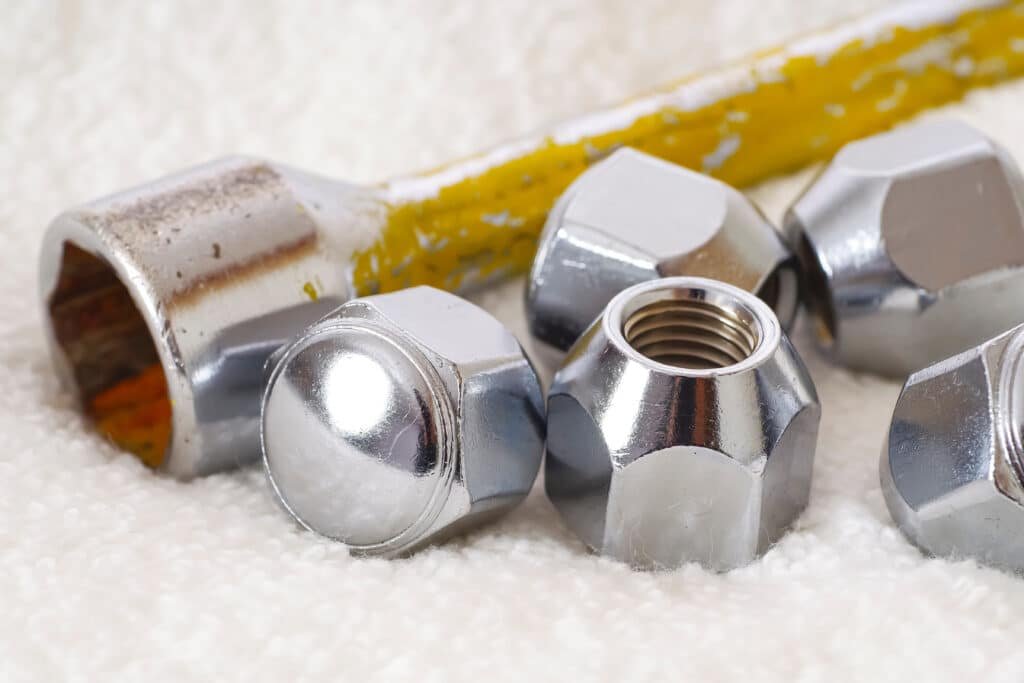
Automotive lug nuts china manufacturers produce the single fastener category where failure carries the most immediate catastrophic consequence: wheel separation at highway speed. Every other automotive nut allows some degree of degraded performance before total failure. A lug nut that fractures, strips, or loosens can release an 18 kg wheel-and-tire assembly into oncoming traffic within seconds.
This severity explains why lug nuts are governed by vehicle-specific OEM specifications rather than generic fastener standards. Thread size, seat geometry, clamp load, material hardness, and corrosion endurance must all match the exact requirements of the wheel hub, stud, and wheel bore — with zero tolerance for substitution error.
For procurement engineers evaluating automotive lug nuts china sources, the challenge is that the majority of Chinese production targets the aftermarket accessory segment, where visual appearance often outweighs engineering rigor. Identifying suppliers capable of OEM-grade seat geometry precision, controlled heat treatment, and validated torque-tension performance requires a technically grounded evaluation framework. This guide provides that framework.
Seat Geometry: The Interface That Determines Wheel Centering
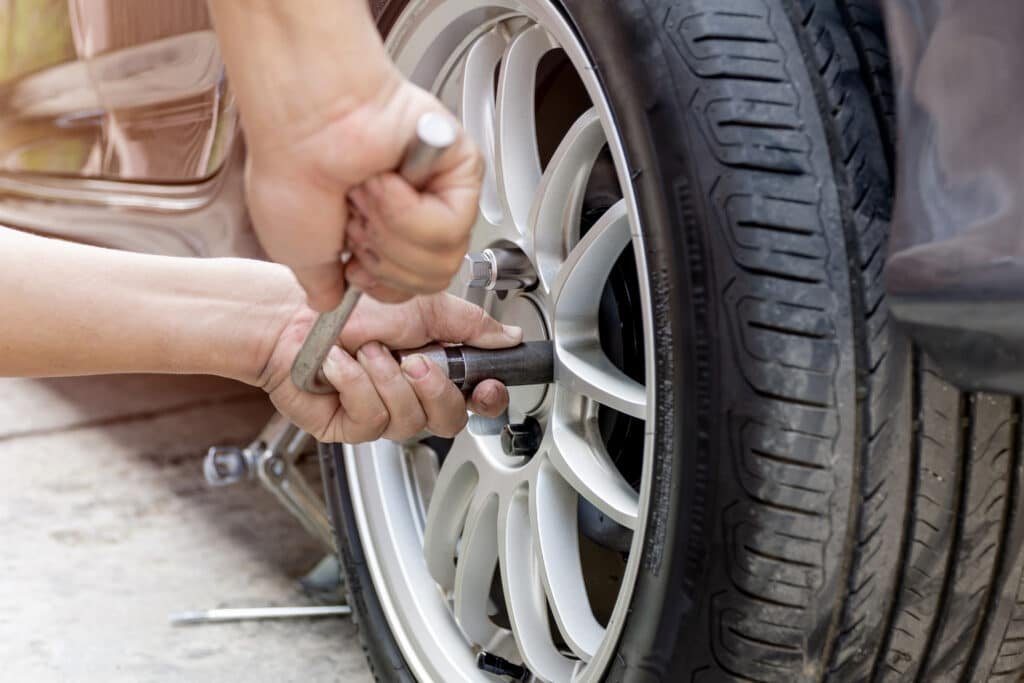
The seat is the conical, spherical, or flat surface at the base of the lug nut that contacts the wheel mounting hole. This interface centers the wheel on the hub and transfers the entire clamping force. A seat angle mismatch of even 5° concentrates stress at the contact edge, reducing effective clamp area by 60–80 %.
| Seat Type | Geometry | Contact Angle | Self-Centering | OEM Usage | Aftermarket Usage |
|---|---|---|---|---|---|
| 60° Conical (Acorn) | Tapered cone, 60° included | 60° | Excellent | Most Asian, US domestic OEMs | Universal aftermarket standard |
| 45° Conical | Wider taper, 45° included | 45° | Good | Some Ford truck platforms | Circle track, NASCAR racing |
| Spherical (Ball Seat) | Radiused sphere, ~13 mm R | Curved | Very Good | BMW, Mercedes, VW/Audi | European aftermarket |
| Flat Seat (Washer Face) | Flat bearing + separate washer | 0° (flat) | None (hub-centric) | Toyota (some), Lexus (some) | Limited |
| Mag / Shank Seat | Cylindrical shank + flat or cone | Varies | Moderate | Classic American mag wheels | Aftermarket mag-style |
| ET (Extended Thread) | 60° cone + short shank | 60° | Excellent | Retrofit applications | Stud-upgrade kits |
The 60° conical seat dominates global automotive lug nuts china production because it provides the best combination of self-centering action and broad compatibility. The cone geometry forces the nut into the center of the wheel bore as torque is applied, compensating for minor hole-to-stud clearance.
Critical rule: The lug nut seat angle must match the wheel seat angle exactly. A 60° nut on a spherical-seat wheel creates line contact instead of surface contact, reducing clamping effectiveness by 70 %+ and accelerating both nut and wheel wear.
Thread Specifications by Global Market
Lug nut thread size is determined by the wheel stud — not the wheel itself. Thread pitch, major diameter, and engagement length must match precisely.
| Thread Size | Pitch | Common Vehicles | Hex Size | Typical Torque |
|---|---|---|---|---|
| M12 × 1.25 | Fine | Nissan, Subaru, Suzuki, Mitsubishi, Infiniti | 17 mm, 19 mm, 21 mm | 80 – 110 Nm |
| M12 × 1.5 | Fine | Honda, Toyota, Mazda, Hyundai, Kia, Ford, GM | 17 mm, 19 mm, 21 mm | 80 – 120 Nm |
| M14 × 1.5 | Fine | GM full-size, Ford F-150+, Stellantis, BMW, Audi, VW | 19 mm, 21 mm, 22 mm | 120 – 190 Nm |
| M14 × 2.0 | Coarse | Select European commercial vehicles | 21 mm, 22 mm | 130 – 200 Nm |
| 7/16″ – 20 | UNF | Classic American (pre-1980s) | 3/4″ | 75 – 100 Nm |
| 1/2″ – 20 | UNF | Jeep Wrangler (some), classic American | 3/4″, 13/16″ | 100 – 140 Nm |
| 9/16″ – 18 | UNF | Dodge Ram (2002–2010), classic Mopar | 3/4″, 7/8″ | 110 – 150 Nm |
Fine-pitch threads (1.25 and 1.5 mm) dominate modern lug nuts because they provide higher tensile stress area, better vibration resistance due to lower helix angle, and more precise torque-to-clamp-load conversion. However, fine threads are less tolerant of cross-threading — a quality issue that directly traces to thread dimensional accuracy.
Material and Heat Treatment
Lug nuts endure repeated torque cycles, sustained clamp loads at brake-rotor temperatures (up to 300 °C at the hub), and aggressive corrosion.
| Material | Property Class | Hardness (HRC) | Tensile (MPa) | Max Temp | Cost | Application |
|---|---|---|---|---|---|---|
| Medium-Carbon Steel (1040, 1045) | 8.8 | 22 – 32 | 800 – 830 | 300 °C | 1.0× | Standard OEM passenger vehicle |
| Alloy Steel (4140, 40Cr) | 10.9 | 32 – 39 | 1,040 – 1,100 | 400 °C | 1.3× | SUV, light truck, performance |
| Chrome-Vanadium Steel | 10.9+ | 33 – 40 | 1,050 – 1,200 | 400 °C | 1.5× | Racing, high-performance street |
| Stainless Steel (304, 316) | A2-70 | 20 – 30 | 700 | 350 °C | 2.5× | Coastal fleet, corrosion-priority |
| Titanium (Ti-6Al-4V) | Grade 5 | 36 | 950 – 1,100 | 350 °C | 8.0× | Motorsport weight reduction |
Critical caution on aluminum lug nuts: 7075-T6 aluminum lug nuts must never be used on road-driven vehicles. Their continuous service limit (120 °C) falls well below brake-rotor proximity temperatures during normal driving (150–300 °C). Thermal creep progressively reduces preload, leading to wheel loosening without any visible warning.
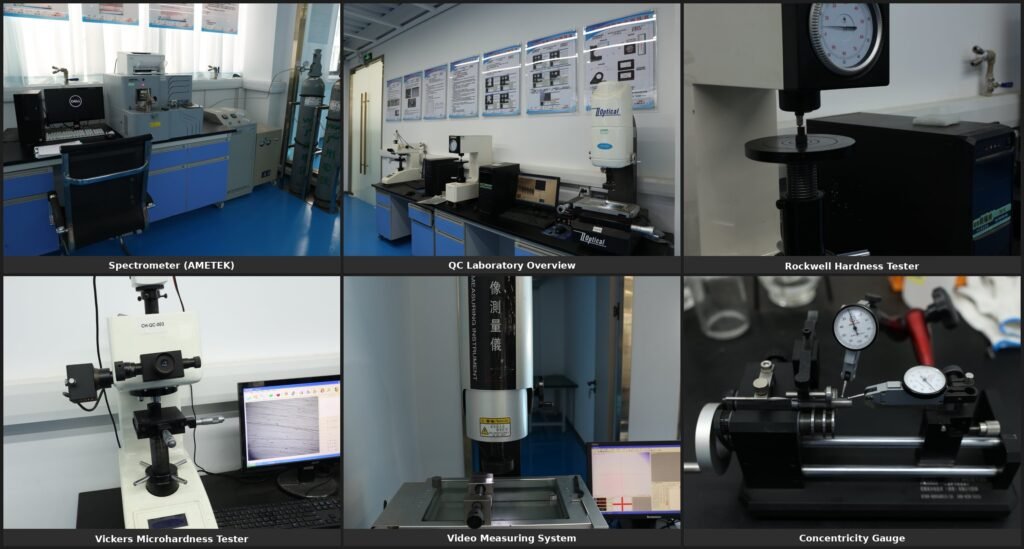
KEYFIX manufactures OEM-grade automotive lug nuts via cold forging — preserving continuous grain flow that elevates shear and fatigue resistance 40–60 % beyond machined equivalents. Heat treatment uses controlled-atmosphere Q&T furnaces at ±5 °C zone accuracy, with Rockwell hardness verified on every lot.
Surface Treatment and Durability
Lug nuts face brake dust, road salt, water immersion, and stone-chip impact. Simultaneously, plating buildup must not alter the seat geometry — any coating that shifts the 60° cone by more than 0.5° degrades wheel centering.
| Coating | Thickness (μm) | Salt Spray (hrs) | Seat Impact | Appearance | Suitability |
|---|---|---|---|---|---|
| Triple Chrome (Cu-Ni-Cr) | 20 – 35 | 200 – 400 | Moderate | Mirror chrome | Aftermarket show; limited life |
| Zinc-Nickel (12–15 % Ni) | 8 – 15 | 720 – 1,000+ | Minimal | Silver metallic | OEM structural grade |
| DACROMET / Geomet | 6 – 10 | 500 – 1,000 | Negligible | Matte silver-grey | Heavy truck, commercial fleet |
| Black Oxide + Sealant | 1 – 3 | 48 – 96 | None | Satin black | Dry-climate economy |
| E-Coat + Powder Coat | 60 – 100 | 500 – 750 | Significant | Custom colors | OEM color-matched (seat machined post-coat) |
Chrome plating introduces hydrogen into high-strength steel — creating delayed-fracture risk if post-plating baking is omitted. KEYFIX mandates baking at 190–230 °C within 4 hours of electroplating on all lug nuts exceeding class 8.8.
KEYFIX’s zinc-nickel and DACROMET coatings, are validated to 1,000+ hours neutral salt spray per ASTM B117.
Torque-Tension Relationship and Clamp Load
The purpose of specified lug nut torque is to generate target clamp load — the force pressing the wheel against the hub. Torque is merely a proxy, modulated by friction.
| Thread | Class | Torque (Nm) | Clamp Load (kN) at μ = 0.14 | Min Thread Engagement |
|---|---|---|---|---|
| M12 × 1.25 | 8.8 | 90 – 110 | 32 – 39 | 12 mm (1.0 D) |
| M12 × 1.5 | 8.8 | 100 – 120 | 34 – 41 | 12 mm (1.0 D) |
| M12 × 1.5 | 10.9 | 110 – 140 | 40 – 51 | 12 mm (1.0 D) |
| M14 × 1.5 | 10.9 | 140 – 190 | 47 – 63 | 14 mm (1.0 D) |
| 1/2″ – 20 | Grade 8 | 110 – 140 | 42 – 53 | 12.7 mm (1.0 D) |
Minimum engagement of 1.0 D (one full diameter) is the universal rule. If the stud extends less than one diameter past the wheel, the lug nut cannot develop full rated clamp load. KEYFIX’s ET-style lug nut variants add a 5–8 mm shank that enters the wheel bore before threads engage, recovering lost engagement on aftermarket spacer and oversized-wheel installations.
Dimensional Tolerances for OEM-Grade Quality
| Dimension | Aftermarket Typical | KEYFIX OEM-Grade | Safety Consequence |
|---|---|---|---|
| Seat Cone Angle | 60° ±2° | 60° ±0.5° | Off-angle → edge loading → loosening |
| Thread Pitch Diameter (6g) | ±0.04 mm | ±0.02 mm | Over-size → loose; under-size → cross-thread |
| Hex Across Flats | ±0.20 mm | ±0.08 mm | Over-size → socket wobble; under-size → rounding |
| Overall Height | ±0.30 mm | ±0.10 mm | Under-height → low engagement; over-height → bottoming |
| Seat Surface Finish | Ra ≤ 3.2 μm | Ra ≤ 1.6 μm | Rough → friction scatter → clamp load variation |
Seat cone angle is the most consequential dimension. A 2° deviation shifts contact toward the bore edge, reducing bearing area and initiating fatigue cracking in aluminum wheels. KEYFIX holds ±0.5° through precision cold-forging dies at ±0.02 mm clearance, with 100 % optical inspection verifying cone angle on every piece.
Lug Nut Failure Modes and Prevention
| Failure Mode | Root Cause | Field Consequence | Prevention |
|---|---|---|---|
| Vibration loosening | Under-torque or seat mismatch | Progressive preload loss → wheel wobble | Correct torque; verify seat match; re-torque at 100 km |
| Stud fracture | Over-torque or corroded stud | Sudden stud failure; wheel retention compromised | Torque wrench mandatory; replace corroded studs |
| Thread stripping | Cross-threading or over-torque | Nut spins freely; cannot develop clamp load | Hand-start before powered drive; verify thread class |
| Hydrogen embrittlement | Chrome plating without H₂ bake | Delayed fracture 24–72 hr post-installation | Post-plate bake per ASTM F1940 |
| Chrome peel / flaking | Poor plating adhesion | Debris lodges in seat → uneven contact | Triple-plate (Cu-Ni-Cr) with adhesion testing |
| Thermal creep (aluminum nuts) | Aluminum softens above 120 °C | Progressive clamp loss during normal driving | Never use aluminum on road vehicles |
Qualifying an Automotive Lug Nuts China Supplier
| Criterion | Minimum Requirement | KEYFIX Status |
|---|---|---|
| IATF 16949 Scope | Covers cold-forged wheel nuts | Certified — full scope |
| Cold Forging | Continuous grain flow; multi-station | Confirmed; near-net-shape forming (typically 95 %+ material utilization) |
| Heat Treatment | Controlled-atmosphere Q&T; ±5 °C | In-house; Jominy-verified |
| Seat Angle Inspection | 100 % at ±1° or tighter | 100 % optical; ±0.5° |
| Hardness Testing | Rockwell per lot; HRC band ≤ 5 | Every lot; SPC-monitored |
| H₂ Bake (if plated) | ≤ 4 hr post-plate, 190–230 °C | Mandatory for class ≥ 8.8 |
| Salt Spray | ASTM B117 per coated lot | 1,000+ hr on Zn-Ni |
| PPAP Level 3+ | Layout + Cpk ≥ 1.33 | Level 3–5; Cpk ≥ 1.67; AQL 0.4, target < 25 PPM |
Frequently Asked Questions
What happens if a 60° lug nut is used on a ball-seat wheel?
The conical surface contacts the spherical bore at a narrow ring rather than a full surface, reducing bearing area by approximately 70 %. This edge contact concentrates stress, damages both nut and wheel bore, and prevents target clamp load — leading to progressive loosening and potential wheel separation.
Why do lug nuts require specific torque values?
Over-torquing stretches the stud beyond its elastic limit, permanently deforming it and potentially warping brake rotors. Under-torquing leaves insufficient preload for vibration resistance. The OEM torque spec represents the precise balance between these failure modes.
Can KEYFIX produce both metric and SAE lug nuts?
Yes. KEYFIX maintains tooling for M12 × 1.25, M12 × 1.5, M14 × 1.5, 7/16″–20, 1/2″–20, and 9/16″–18 — covering virtually all passenger vehicle and light truck applications globally.
What minimum order applies?
Cold-forged prototypes start at 500 pieces. Production begins at 10,000 per variant, with cost reductions at 50K, 100K, and 500K+ tiers. Contact sales@keyfixpro.com for quotations.
KEYFIX — established in 2005, IATF 16949 / ISO 9001 / ISO 14001 certified — manufactures precision automotive lug nuts for OEM and Tier 1 programs worldwide. With 20+ years of cold-forging experience, ±0.5° seat-angle verification, heat treatment, and 2D video measuring at 0.001 mm optical resolution, KEYFIX delivers the wheel retention safety that vehicle manufacturers demand. Visit www.keyfixpro.com or contact sales@keyfixpro.com.