

Automotive Screws and Fasteners: Precision Engineering for Vehicle Assembly Excellence

Introduction: The Backbone of Vehicle Assembly
In modern automotive manufacturing, automotive screws and fasteners constitute the essential connecting elements holding together thousands of components throughout every vehicle system. The global automotive fastener sector reached $43.7 billion in 2023, with each passenger vehicle containing approximately 2,500-3,800 individual fastening components[^1]. These seemingly simple elements determine structural integrity, safety performance, assembly efficiency, and long-term reliability across powertrain assemblies, chassis frameworks, body structures, and interior installations.
[^1]: Automotive Fasteners Market Analysis 2023: https://www.grandviewresearch.com/
KeyFixPro, founded in 2000 as a specialized precision fastener manufacturer, serves international automotive clients across 20+ nations with IATF 16949:2016 certified operations. Our integrated capabilities—encompassing cold forging achieving 98% material efficiency, 5-axis CNC systems maintaining ±0.005mm tolerances, progressive stamping with 50-300 ton capacity, and comprehensive finishing technologies—address the complete spectrum of automotive fastening requirements from prototype development through high-volume production exceeding 10 million units monthly.
This technical analysis examines material science fundamentals, manufacturing methodologies, quality validation frameworks, and supplier evaluation criteria essential for procurement professionals and design engineers specifying automotive screws and fasteners in today’s demanding vehicle development environment.
Functional Classification Across Vehicle Systems
Contemporary automotive integrate highly specialized fastening solutions optimized for distinct operational environments—each vehicle system presents unique combinations of mechanical loading, thermal exposure, corrosion challenges, and aesthetic requirements.
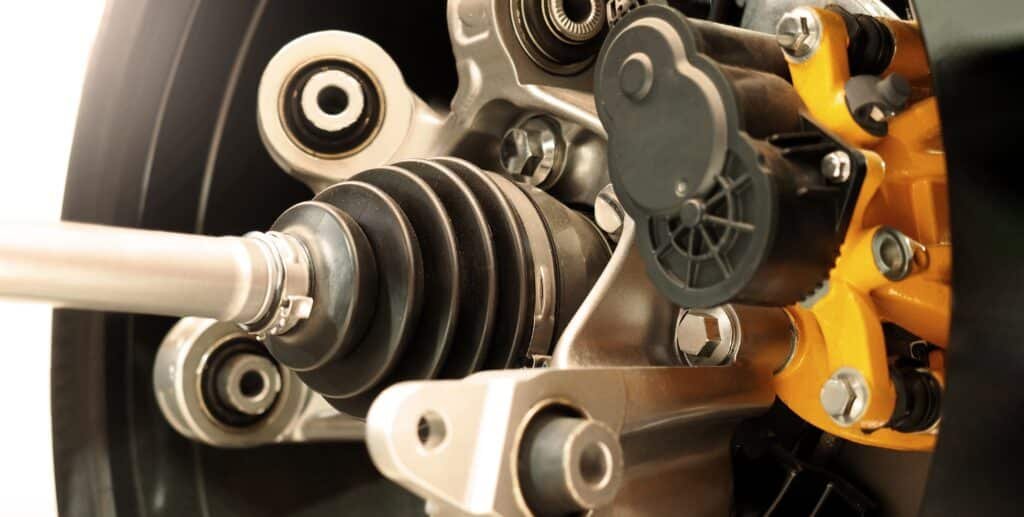
System-Specific Fastener Requirements
| Vehicle Assembly | Representative Fastener Types | Performance Priorities | Material Preferences | Typical Unit Count |
|---|---|---|---|---|
| Engine/Transmission | Connecting rod bolts, main bearing caps, head studs | Fatigue resistance, thermal cycling stability | Alloy steel 4140/4340, A286 stainless | 280-420 units |
| Suspension/Steering | Control arm pivots, strut mounts, stabilizer links | Shear strength, preload maintenance, corrosion defense | Grade 10.9 alloy with zinc-flake coating | 160-280 units |
| Frame/Unibody | Subframe attachments, cross-member connections | Ultimate tensile strength, crash energy absorption | High-strength steel, torque-to-yield specifications | 180-320 units |
| Body Panels/Closures | Fender attachment, hood hinges, door hardware | Weather sealing compatibility, paint-bake resistance | Stainless 304/316, coated carbon steel | 850-1,350 units |
| Interior Assembly | Dashboard mounting, seat frameworks, console fixtures | Vibration damping, aesthetic appearance, acoustic isolation | Carbon steel with decorative coating, engineered polymers | 450-750 units |
| Electrical Systems | ECU brackets, battery terminals, sensor mounts | EMI shielding, thermal management, non-magnetic properties | Brass alloys, austenitic stainless, specialized polymers | 180-280 units |
Powertrain Fastening Solutions operate in the harshest automotive environment—combustion chamber pressures approaching 2,500 psi combined with thermal excursions from -40°C cold starts to 250°C sustained operation create extreme demands. Cylinder head bolts frequently employ torque-to-yield (TTY) methodology where controlled plastic elongation produces precise clamping loads independent of friction coefficient variations. KeyFixPro manufactures TTY fasteners from premium alloy grades through cold-heading operations that refine grain structure, subsequently heat-treated to 10.9 or 12.9 property class per ISO 898-1 standards[^2].
[^2]: ISO 898-1:2013 Mechanical Properties Standard: https://www.iso.org/standard/60610.html
Chassis and Suspension Applications demand exceptional fatigue endurance—typical passenger vehicles experience 100+ million suspension loading cycles during 200,000 km service life. Safety-critical mounting locations specify minimum Grade 10.9 (1040 MPa ultimate tensile, 940 MPa yield) with mandatory proof load testing validating no permanent deformation under specified stress. KeyFixPro’s thread rolling processes generate 28-35% enhanced fatigue strength versus machined threads through work-hardening and continuous grain flow preservation—critical advantages for cyclically-loaded automotive joints.
Material Science and Alloy Selection
Material specification profoundly influences fastener performance across strength characteristics, environmental durability, weight optimization, thermal stability, and lifecycle economics—automotive applications span this complete material property spectrum.
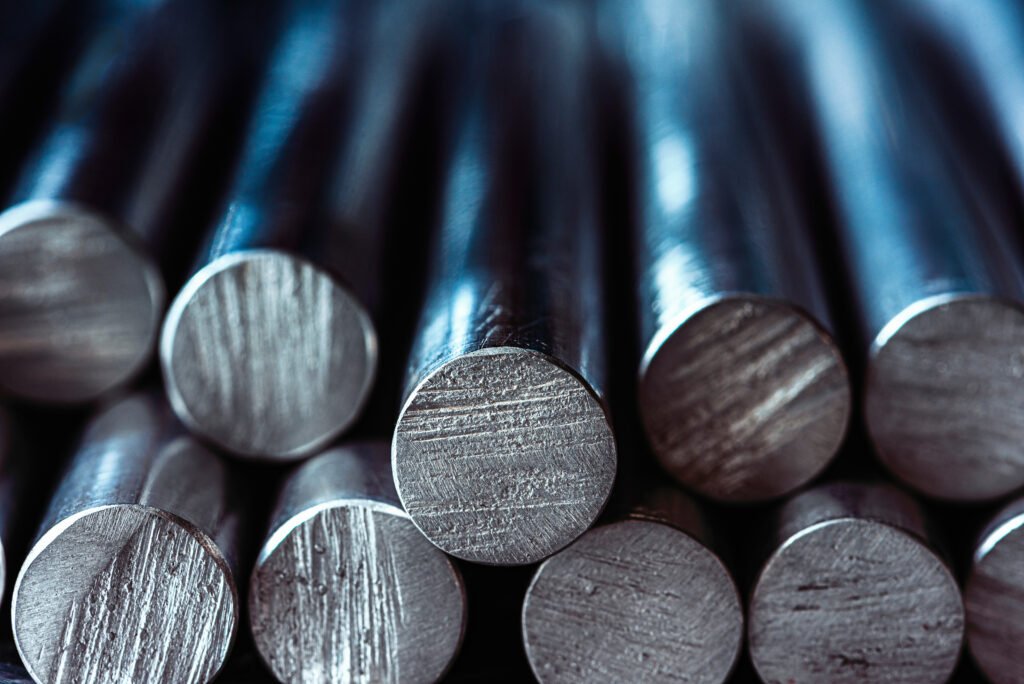
Comprehensive Material Comparison for Automotive Fasteners
| Material Family | Common Specifications | Strength Range (Tensile) | Distinctive Advantages | Surface Protection Methods | Cost Multiplier |
|---|---|---|---|---|---|
| Low-Carbon Steel | 1008, 1010, 1018 | 380-550 MPa (55-80 ksi) | Economic, excellent cold formability | Zinc electroplate, e-coating | 1.0× (baseline) |
| Medium-Carbon Steel | 1035, 1038, 1045 | 620-830 MPa (90-120 ksi) | Heat-treatable, moderate hardening depth | Phosphate conversion, zinc-nickel | 1.3× |
| Alloy Steel | 4140, 4340, 8620 case-hardening | 1040-1520 MPa (150-220 ksi) | Deep hardenability, fatigue optimization | DACROMET, zinc-flake systems | 1.8× |
| Austenitic Stainless | 304 (A2), 316 (A4), 321 high-temp | 520-620 MPa (75-90 ksi) | Superior corrosion immunity, non-magnetic | Passivation treatment, electropolish | 3.8× |
| Precipitation-Hardening Stainless | 17-4 PH (H1100), 15-5 PH | 1000-1310 MPa (145-190 ksi) | High strength with corrosion protection | Age-hardening heat treatment | 5.2× |
| Aluminum Alloys | 6061-T6, 7075-T6 aerospace | 310-570 MPa (45-83 ksi) | 65% mass reduction versus steel | Type II/III anodizing, chromate | 2.1× |
| Titanium Alloys | Grade 2 CP, Ti-6Al-4V (Grade 5) | 345-1000 MPa (50-145 ksi) | 43% density of steel, biocompatible | Anodizing, chemical passivation | 12.0× |
Heat Treatment Processing transforms medium-carbon and alloy steel mechanical properties—austenitizing at 1560-1650°F dissolves carbides into austenite matrix, rapid quenching (oil or polymer) forms martensitic structure with maximum hardness, subsequent tempering at 350-850°F develops optimal strength-ductility balance. KeyFixPro operates controlled-atmosphere heat treatment systems maintaining ±10°F temperature uniformity across furnace working zones, with comprehensive thermal profiling ensuring consistent microstructural development. Post-treatment hardness verification (Rockwell C-scale) validates achievement of specified property class—typically 32-39 HRC for Grade 10.9, 39-44 HRC for Grade 12.9.
Stainless Steel Selection addresses corrosion-critical applications where protective coatings prove inadequate or aesthetically unacceptable. Type 304 austenitic stainless (18% chromium, 8% nickel composition) offers excellent general corrosion resistance for interior visible fasteners, exterior trim attachments, and food-contact surfaces. Type 316 molybdenum addition (2-3% Mo) substantially elevates resistance against chloride-induced pitting and crevice corrosion per ASTM G48 accelerated testing[^3]—specified for coastal vehicle operation, road salt exposure, and marine applications. KeyFixPro provides ASTM A967 passivation treatment on all stainless fasteners, chemically removing surface iron contamination while enhancing chromium oxide film formation.
[^3]: ASTM G48 Pitting Corrosion Test Method: https://www.astm.org/g0048-11r20.html
Aluminum Integration for Electrification supports battery electric vehicle (BEV) range optimization—every 100 kg mass reduction yields approximately 0.5 kWh battery capacity savings or 8-10 km extended range. Aluminum fasteners contribute 1.8-3.2 kg weight reduction per vehicle when strategically replacing steel equivalents in non-structural applications. KeyFixPro manufactures aluminum automotive screws from 6061-T6 (moderate strength, excellent formability) and 7075-T6 (aerospace-grade strength) through precision CNC machining maintaining ±0.008mm tolerances despite material’s thermal expansion challenges.
Integrated Manufacturing Capabilities
KeyFixPro’s vertically-integrated production infrastructure eliminates multi-supplier coordination complexity while maintaining complete quality control throughout raw material transformation into finished automotive screws and fasteners.
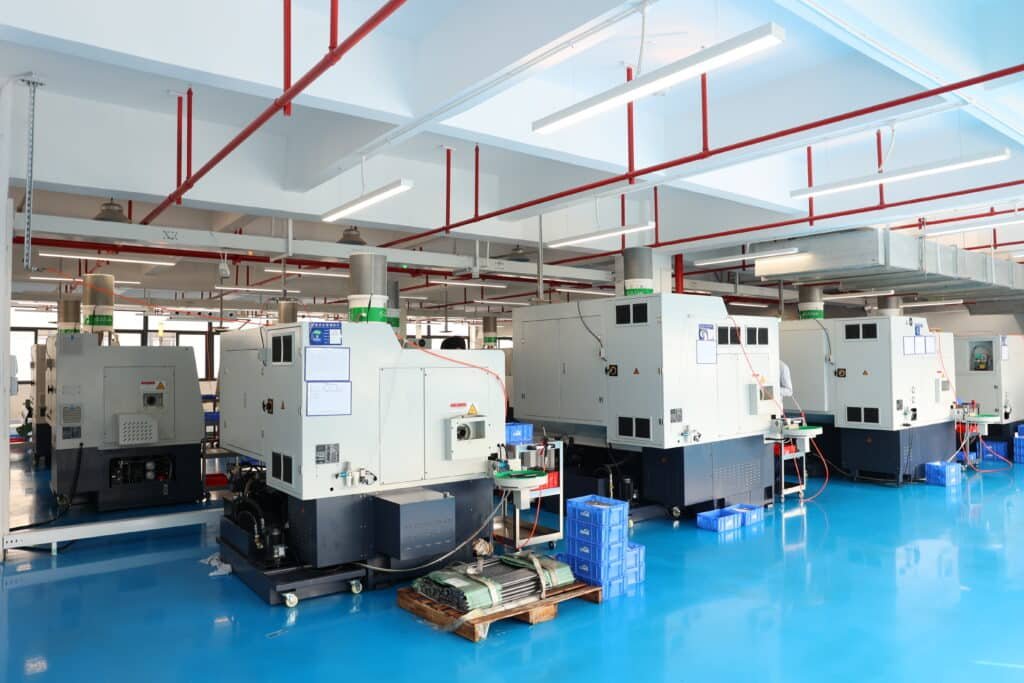
Manufacturing Process Technology Matrix
| Production Method | Equipment Portfolio | Dimensional Range | Output Velocity | Achievable Precision | Ideal Volume Threshold |
|---|---|---|---|---|---|
| Multi-Station Cold Heading | Progressive headers (Sakamura, National) | M3-M24 diameter range | 180-420 parts/minute | ±0.010mm on head features | 50,000+ annual volume |
| Swiss-Type CNC Turning | Citizen, Star sliding-head lathes | M2-M16 miniature precision | 8-25 parts/minute | ±0.003mm tolerance capability | 500-50,000 mixed volumes |
| 5-Axis Machining Centers | DMG Mori, Mazak multi-axis systems | M3-M48 complex geometries | 3-15 parts/minute | ±0.005mm positioning accuracy | Prototypes to 10,000 units |
| Progressive Die Stamping | Bruderer, Aida high-speed presses | Sheet components to 300mm | 120-350 strokes/minute | ±0.05mm dimensional control | 100,000+ annual production |
| Planetary Thread Rolling | Sakamura, Chun Zu forming systems | M3-M36 external threads | 50-140 parts/minute | Class 2A/3A ASME B1.1 | All volumes—superior strength |
| Controlled-Atmosphere Heat Treating | Batch and continuous furnaces | Unlimited sizing | 800-3,000 kg/batch | ±10°F thermal uniformity | Grade 8.8 through 12.9 properties |
| Automated Coating Application | Zinc-nickel, DACROMET, powder systems | All fastener configurations | Batch processing methodology | 8-15μm thickness control | Corrosion protection per OEM standards |
Cold Forging Methodology represents KeyFixPro’s foundation technology for high-volume automotive production—progressive die sequences incrementally redistribute material volume forming complex head geometries (hexagonal, 12-point, flanged configurations) while achieving 98% material utilization versus 55-65% typical for machining operations. Work-hardening during room-temperature deformation increases yield strength 35-55% and ultimate tensile 40-65% compared to annealed starting wire—metallurgical advantages particularly valuable for automotive structural fasteners. Real-time statistical process control monitors critical dimensions (head diameter ±0.010mm, concentricity ±0.015mm, length ±0.08mm) with automated rejection when parameters exceed control limits.
5-Axis CNC Capabilities address low-to-medium volume custom requirements, prototype development phases, or exotic materials unsuitable for cold-heading (titanium’s work-hardening characteristics, Inconel’s cutting resistance, precipitation-hardening stainless requiring post-machining heat treatment). KeyFixPro’s Mazak VARIAXIS and DMG Mori DMU series machining centers feature integrated tool management (80+ position carousels), through-spindle high-pressure coolant (1,500 psi) maintaining dimensional stability through thermal management, and touchprobe measurement cycles validating critical features before part release. Typical production economics favor CNC machining below 5,000-8,000 annual volume depending on part complexity and material cost.
Thread Rolling Operations produce all automotive screws and fasteners threads at KeyFixPro regardless of volume—cold-forming process generates 28-35% superior fatigue strength versus thread cutting through work-hardened surface layers and continuous grain flow preservation per ASM International technical literature[^4]. Planetary rolling systems gradually form threads through 8-12 die passes, ideal for stainless steel and harder alloy grades. Flat-die rolling handles larger diameters (M20-M48) through reciprocating die motion. Statistical thread inspection via pitch micrometers and optical comparators validates conformance to ASME B1.1 tolerance classes (2A standard, 3A precision applications).
[^4]: ASM International Thread Rolling Handbook: https://www.asminternational.org/
Rigorous Quality Validation Framework
Automotive applications demand Six Sigma quality levels (≤3.4 defects per million opportunities)—component failures create safety hazards, warranty expenses, and brand reputation consequences justifying comprehensive validation protocols.
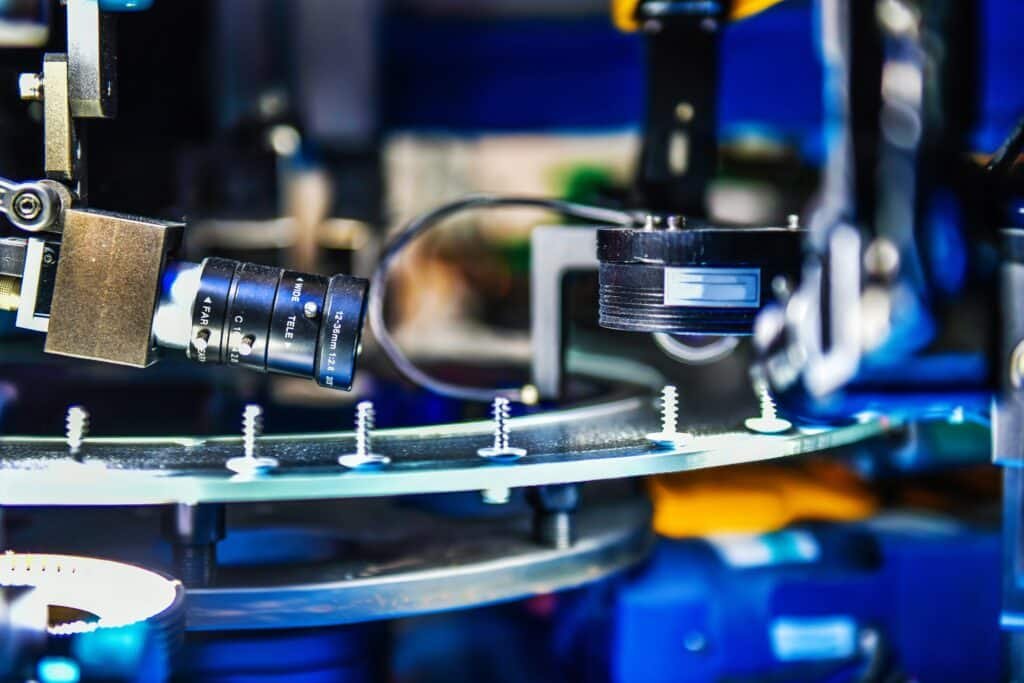
KeyFixPro Quality System Architecture
| Quality Element | Implementation Technology | Testing Standards | Inspection Frequency | Documentation Level |
|---|---|---|---|---|
| Incoming Material Authentication | AMETEK spark-OES spectroscopy | ASTM E415 elemental analysis | 100% lot verification | Mill certificates + confirmatory testing |
| Dimensional Conformance | Zeiss Contura CMM, Keyence vision | ISO 1101 GD&T, ASME Y14.5 | First article + hourly samples | Actual measurements vs. nominal |
| Mechanical Property Validation | Instron 5985 tensile system | ASTM F606, ISO 898-1 protocols | Per heat treatment batch (3+ samples) | Stress-strain curves, property certification |
| Thread Geometry Verification | Thread plug/ring gauges, comparators | ASME B1.1, ISO 965-1 standards | Setup validation + shift checks | GO/NO-GO results, pitch diameter data |
| Coating Thickness Measurement | Fischerscope X-ray fluorescence | ASTM B499, ISO 2064 methods | 5% statistical sampling | Thickness distribution histograms |
| Accelerated Corrosion Exposure | ASTM B117 salt fog chambers | Neutral/acetic/CASS variations | New process validation + periodic | Hours to red rust, coating failure modes |
| Installation Performance | Torque-angle analyzers, ultrasonic | Customer-specific requirements | First article + periodic sampling | Torque-tension curves, clamp load data |
| Statistical Process Monitoring | Real-time SPC software integration | Cpk ≥1.67 process capability target | Continuous during production | Control charts, capability indices |
IATF 16949:2016 Compliance demonstrates KeyFixPro’s organizational maturity meeting automotive industry’s most stringent quality management requirements—advanced product quality planning (APQP) methodology guides new fastener development from concept through launch, production part approval process (PPAP) provides comprehensive first-article validation before production authorization, failure mode and effects analysis (FMEA) systematically identifies potential defect mechanisms implementing preventive controls, and measurement system analysis (MSA) ensures inspection equipment contributes <10% variation to total measurement uncertainty. TÜV Rheinland conducts annual surveillance audits validating sustained compliance.
Automated Vision Inspection examines 100% of KeyFixPro production through Keyence CV-X series high-resolution imaging systems integrated directly into manufacturing cells—intelligent algorithms detect dimensional deviations (±0.008mm discrimination), surface anomalies (scratches, cracks, coating defects), damaged threads, and incorrect drive recess geometry at inspection rates matching 350+ parts/minute production velocities. Automatic rejection with defect image capture enables root-cause analysis when quality issues emerge, while statistical trending predicts tool wear before non-conforming production occurs.
Production Part Approval Process (PPAP) Documentation for automotive OEM customers encompasses: dimensional inspection reports documenting actual measurements versus drawing specifications with CMM data, material certifications from steel mills including complete chemistry and mechanical properties, coating performance validation with salt spray exposure results and cross-sectional metallography, installation torque-tension characterization establishing assembly parameters, process flow diagrams identifying all manufacturing operations with control plans specifying reaction strategies for out-of-control conditions, and process capability studies demonstrating Cpk ≥1.67 on critical characteristics confirming stable, capable processes.
Corrosion Protection Engineering
Automotive fasteners encounter diverse corrosive environments—underbody salt spray exposure, engine compartment elevated temperature with moisture condensation, and varying pH from road chemicals necessitate engineered coating systems balancing protection level against economic constraints.
Automotive Coating System Performance Comparison
| Protection Technology | Layer Thickness | Neutral Salt Spray Endurance | Temperature Capability | Relative Economics | Recommended Applications |
|---|---|---|---|---|---|
| Electrolytic Zinc | 5-12μm | 96-240 hours to red rust | 180°C maximum | 1.0× (reference) | Interior protected areas, low-severity |
| Zinc-Nickel Alloy (12-15% Ni) | 8-12μm | 720-1,000 hours performance | 300°C capability | 2.3× premium | Chassis components, moderate underbody |
| Zinc-Flake (GEOMET equivalent) | 8-15μm | 1,000-1,500 hours durability | 300°C operating range | 3.0× premium | Severe underbody, suspension fasteners |
| DACROMET System | 8-12μm | 1,000-1,500 hours resistance | 300°C tolerance | 3.1× premium | Structural chassis, exhaust periphery |
| Mechanical Zinc (Sherardizing) | 20-40μm | 500-800 hours protection | 375°C capability | 2.5× premium | Large fasteners, threaded rods |
| Black Oxide Conversion | <1μm molecular layer | 24-48 hours minimal | 425°C stable | 1.1× minimal | Interior aesthetic, supplementary protection |
| Electroless Nickel-Phosphorus | 12-25μm | 500-1,000 hours depending on P% | 400°C depending on alloy | 4.2× premium | Uniform coverage, complex geometries |
Zinc-Nickel Electroplating provides optimal protection-to-cost ratio for majority automotive applications—12-15% nickel content in zinc matrix elevates corrosion resistance approximately 3-5× versus pure zinc while maintaining good ductility for thread applications. Post-plating chromate conversion (trivalent chromium, RoHS-compliant) generates additional barrier layer plus characteristic silver or black appearance. KeyFixPro operates barrel and rack electroplating systems with real-time thickness monitoring ensuring 8-12μm uniform coverage, particularly critical on thread flanks and underhead radii where insufficient thickness accelerates corrosion initiation.
DACROMET and Equivalent Zinc-Flake Technologies serve extreme underbody applications—water-based coating containing zinc/aluminum flake particles in inorganic binder achieves 1,000-1,500 hour neutral salt spray resistance without hydrogen embrittlement concerns affecting high-strength fasteners (Grade 10.9+). Application via dip-spin or spray methodology ensures complete coverage including blind holes and recessed features. Curing at 300°C polymerizes binder forming ceramic-like matrix with exceptional chemical resistance to road deicing agents, battery acid, and hydraulic fluids. KeyFixPro maintains both DACROMET (original trademark coating) and GEOMET (alternative formulation) capabilities addressing diverse customer specifications.
Engineering Collaboration and Technical Support
KeyFixPro differentiates through value-added engineering services beyond transactional manufacturing—technical expertise accumulated across 100+ automotive programs enables collaborative problem-solving throughout product development lifecycles.
Customer Engineering Support Services
| Technical Service | Scope of Deliverables | Applied Methodology | Tangible Value Delivered |
|---|---|---|---|
| Design for Manufacturability Review | Cost optimization recommendations, process feasibility | Drawing analysis, capability assessment | Typical 12-25% cost reduction through material/process optimization |
| Material Selection Advisory | Optimal grade specification, environmental suitability | Application requirements analysis, exposure conditions | Prevent over-specification or inadequate durability |
| Joint Design Optimization | Torque requirements, preload calculations, thread depth | VDI 2230 guideline application, FEA simulation | Optimized clamp force, eliminate joint failures |
| Rapid Prototype Manufacturing | Functional test samples, assembly validation | CNC machining, small-batch tooling | 7-10 calendar day sample delivery |
| Performance Testing Validation | Tensile, installation torque, corrosion, vibration | ASTM/ISO/customer-specific protocols | Empirical confirmation before tooling investment |
| PPAP Development Support | Dimensional reports, capability studies, control plans | IATF 16949 PPAP requirements Level 3/4/5 | Streamlined OEM qualification process |
| Supply Chain Program Integration | Kanban systems, vendor-managed inventory, consignment | Customer-specific logistical requirements | Reduced customer inventory investment, improved cash flow |
Finite Element Analysis (FEA) Capabilities validate fastener and joint performance under representative loading—ANSYS Mechanical software models bolt-joint systems predicting stress distribution, preload consistency, and fatigue life based on material properties, geometry, and boundary conditions. This computational approach identifies potential failure modes (thread stripping, head-shank transition fatigue, insufficient clamp load) before physical prototyping, enabling design optimization iterations at minimal cost. KeyFixPro engineers provide FEA services for critical automotive applications as value-added technical support.
Torque-Tension Characterization Testing establishes assembly specifications ensuring reliable joint performance—relationship between installation torque and resulting clamp force depends on thread friction, underhead friction, and fastener stiffness. Experimental testing with calibrated load cells and ultrasonic bolt monitors generates torque-tension curves specific to material, coating, lubrication condition, and joint configuration. KeyFixPro conducts torque-tension validation during PPAP development, typically recommending torque specifications targeting 65-80% of fastener proof load for critical structural joints.
Supplier Evaluation Framework: KeyFixPro Competitive Position
Selecting an automotive screws and fasteners manufacturing partner requires systematic assessment across technical capabilities, quality management maturity, and automotive industry experience—commodity purchasing mentality risks supply disruptions, quality failures, and missed development timelines.
Comprehensive Supplier Assessment Criteria
| Evaluation Dimension | Industry Baseline | KeyFixPro Demonstrated Capability | Customer Advantage |
|---|---|---|---|
| Automotive Quality Certification | ISO 9001 minimum standard | IATF 16949:2016 + ISO 14001:2015 | OEM-approved supplier status, reduced audit burden |
| Manufacturing Precision | ±0.10mm typical capability | ±0.005mm CNC, ±0.01mm cold-heading | Automated assembly compatibility, minimal rework |
| Intellectual Property Portfolio | Limited or no patents | 50+ granted patents in fastener engineering | Proprietary solutions, continuous innovation |
| Production Volume Flexibility | 10,000+ minimum order quantity | 500-1,000 MOQ for custom development | Prototype-to-production scalability without supplier changes |
| Material Breadth | Steel and basic stainless only | Carbon/alloy steel, stainless, aluminum, titanium, brass | Complete material solution source |
| Lead Time Performance | 8-12 weeks production cycles | 4-6 weeks production, 7-10 days samples | Compressed development schedules, faster time-to-market |
| Engineering Collaboration | Order fulfillment only | DFM analysis, FEA, testing, PPAP support | Value engineering, technical problem-solving partnership |
| Global Project Experience | Regional supplier limitations | 100+ projects across 20+ countries with OEM references | Understanding international standards, export compliance |
IATF 16949:2016 Third-Party Certification validates KeyFixPro’s quality management system compliance with automotive industry’s globally-recognized standard—TÜV Rheinland annual surveillance audits confirm implementation of core tools including APQP (advanced product quality planning), PPAP (production part approval process), FMEA (failure mode and effects analysis), MSA (measurement system analysis), and SPC (statistical process control). This certification prerequisite for automotive OEM supply chain participation demonstrates organizational discipline, process maturity, and commitment to zero-defect quality objectives.
50+ Granted Patents in fastener engineering demonstrate KeyFixPro’s innovation culture—intellectual property portfolio encompasses specialized thread profiles optimizing vibration resistance, proprietary head configurations enabling tool-free installation, advanced coating formulations combining corrosion protection with controlled friction coefficients, and manufacturing process improvements enhancing productivity while maintaining precision. Patent-protected solutions provide customers competitive advantages through differentiated fastener technologies unavailable from commodity suppliers.
Conclusion: Strategic Partnership for Automotive Excellence
Automotive screws and fasteners represent critical components directly impacting vehicle safety, reliability, assembly efficiency, and customer satisfaction—yet procurement decisions frequently emphasize commodity pricing over strategic supplier capabilities. Contemporary vehicle complexity demands manufacturing partners combining precision engineering, comprehensive quality systems, material science expertise, and collaborative technical support throughout multi-year production programs.
KeyFixPro’s 24-year specialization in precision fastener manufacturing integrates IATF 16949 certified quality management, diversified production technologies (cold forging, 5-axis CNC, progressive stamping, automated finishing), extensive material capabilities across ferrous and non-ferrous alloys, and automotive engineering expertise serving global OEMs and tier suppliers. Our ±0.001mm inspection precision, 100% automated optical examination, 50+ engineering patents, and demonstrated capability across 100+ international projects provide foundation for successful long-term partnerships addressing evolving automotive requirements.
Engage KeyFixPro’s automotive engineering team to evaluate your fastening requirements—we provide complimentary design for manufacturability analysis identifying cost optimization opportunities, rapid prototype development validating fit and function within 7-10 days, comprehensive testing services confirming performance under representative conditions, and complete PPAP documentation supporting OEM qualification processes. Access our technical resource library featuring material selection guides, coating performance comparisons, torque specification calculators, and joint design recommendations based on VDI 2230 best practices.
Request sample evaluation demonstrating KeyFixPro precision manufacturing capabilities and finish quality options, review our automotive certification portfolio including IATF 16949 and customer approval documentation, or schedule virtual facility tours examining cold-heading operations, 5-axis machining centers, heat treatment systems, and quality laboratories equipped with Zeiss CMM, AMETEK spectrometry, and comprehensive mechanical testing infrastructure.