
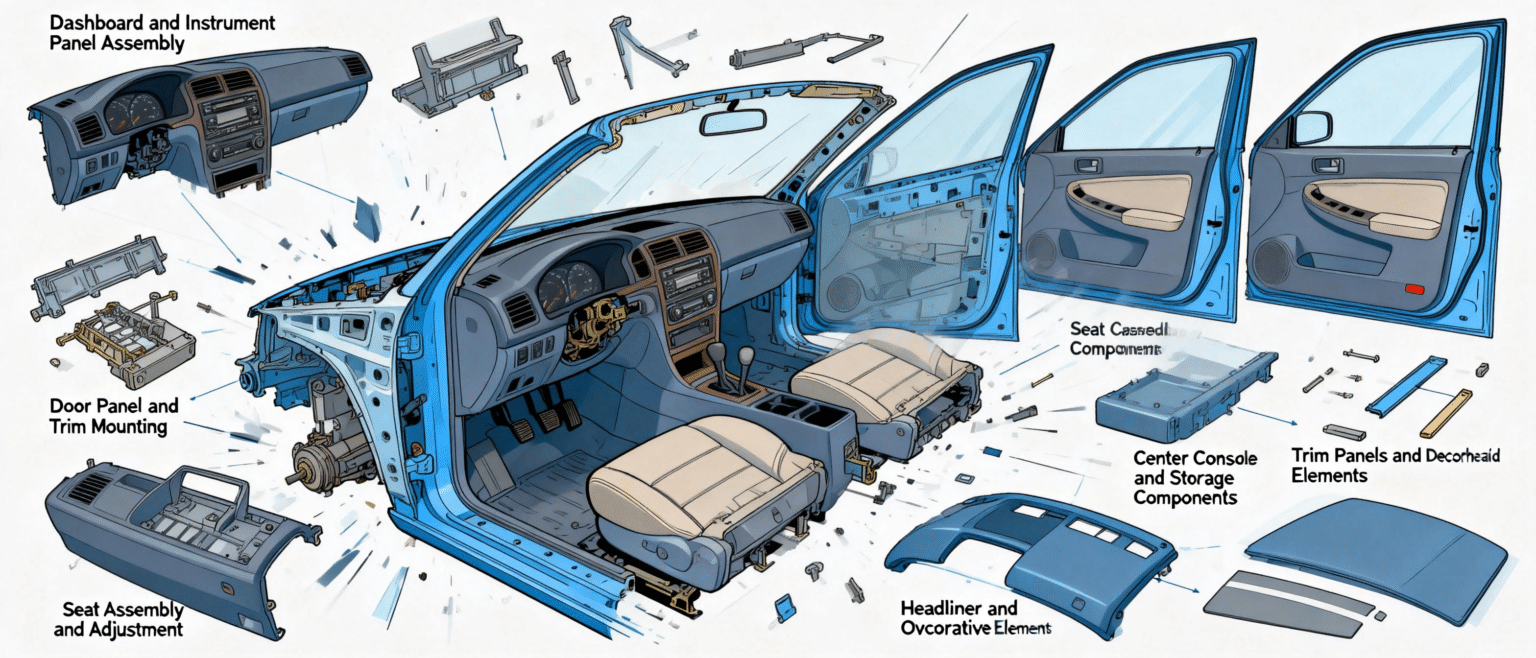
Automotive screws for plastic are specialized fasteners engineered specifically for secure assembly of plastic components in modern vehicles. With plastics comprising up to 50% of interior materials and increasing exterior applications, these screws must create reliable threads without cracking, provide strong pull-out resistance, and maintain secure connections throughout vehicle life. As an IATF 16949 certified China automotive screws manufacturer, Keyfix delivers precision screws optimized for plastic materials used across automotive applications.
Product Introduction: Automotive Screws for Plastic Explained
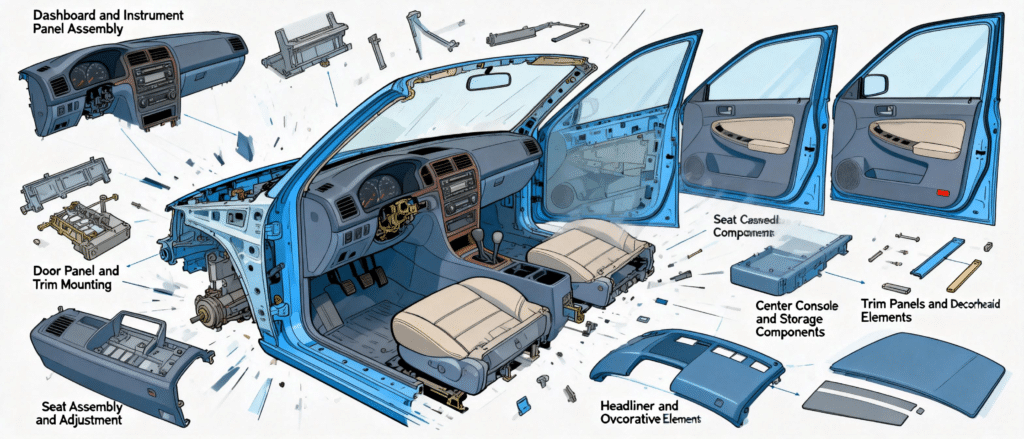
Understanding Plastic Fastening Challenges
Plastic materials present unique fastening challenges compared to metal. Automotive plastics including polypropylene (PP), acrylonitrile butadiene styrene (ABS), polycarbonate (PC), polyamide (nylon), and thermoplastic olefins (TPO) each have different properties affecting screw performance. Screws for plastic must address stress concentration preventing boss cracking, thermal expansion and contraction differences, material creep under sustained loading, lower strength compared to metal substrates, and brittle behavior in some thermoplastics.
Proper screw design optimized for plastic materials prevents field failures, reduces warranty claims, enables lighter vehicle construction, and supports automated assembly processes.
Why Choose Custom Automotive Screws for Plastic?
Standard screws often cause cracking, stripped threads, or inadequate holding strength in plastics. Custom manufacturing from a specialized China automotive factory allows you to specify thread designs engineered for specific plastic types, optimized point geometry for clean thread forming, precise thread pitch reducing installation stress, appropriate head styles distributing clamping load, materials and coatings compatible with plastics, and installation torque specifications preventing damage.
Modern vehicles increasingly utilize plastics for weight reduction and design flexibility. Custom screws ensure reliable assembly without component damage or performance degradation.
Manufacturing Technologies
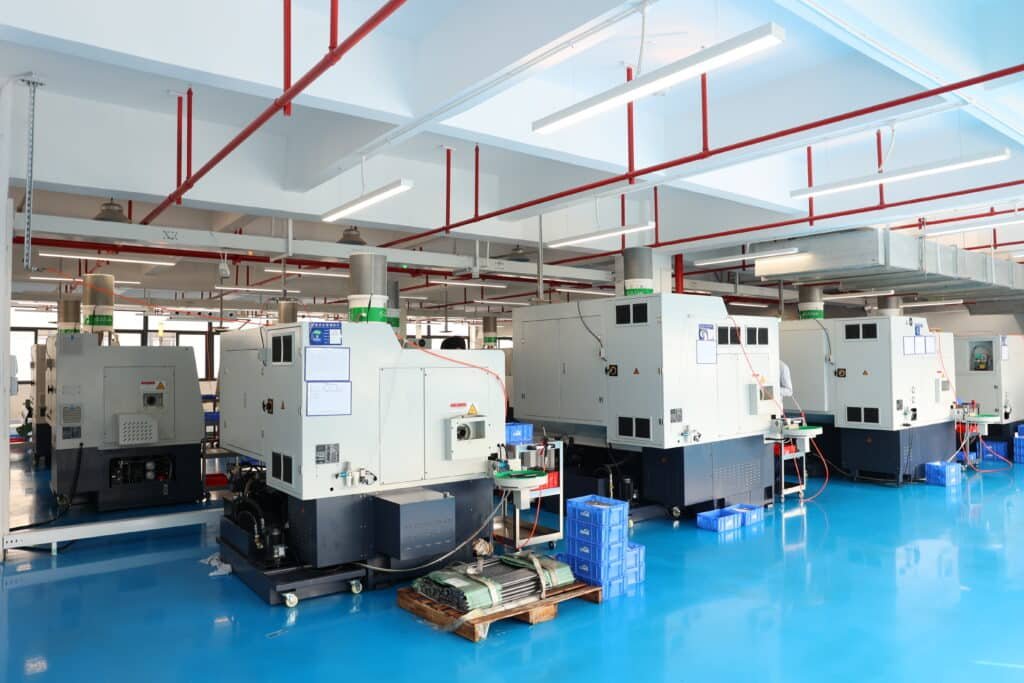
Cold Heading produces consistent thread geometry critical for plastic engagement, creating precise point angles for optimal thread forming, uniform head dimensions for load distribution, high-volume production capability, and cost-effectiveness for automotive volumes.
Thread Rolling creates smooth, work-hardened threads ideal for plastics, featuring rounded thread crests reducing stress concentration, precise thread dimensions for consistent performance, superior surface finish minimizing friction, and enhanced pull-out strength in plastic materials.
Heat Treatment optimizes screw hardness for forming threads in plastics without excessive brittleness, ensures consistent performance across production batches, and provides necessary strength for thread engagement while maintaining ductility preventing breakage.
Material Selection
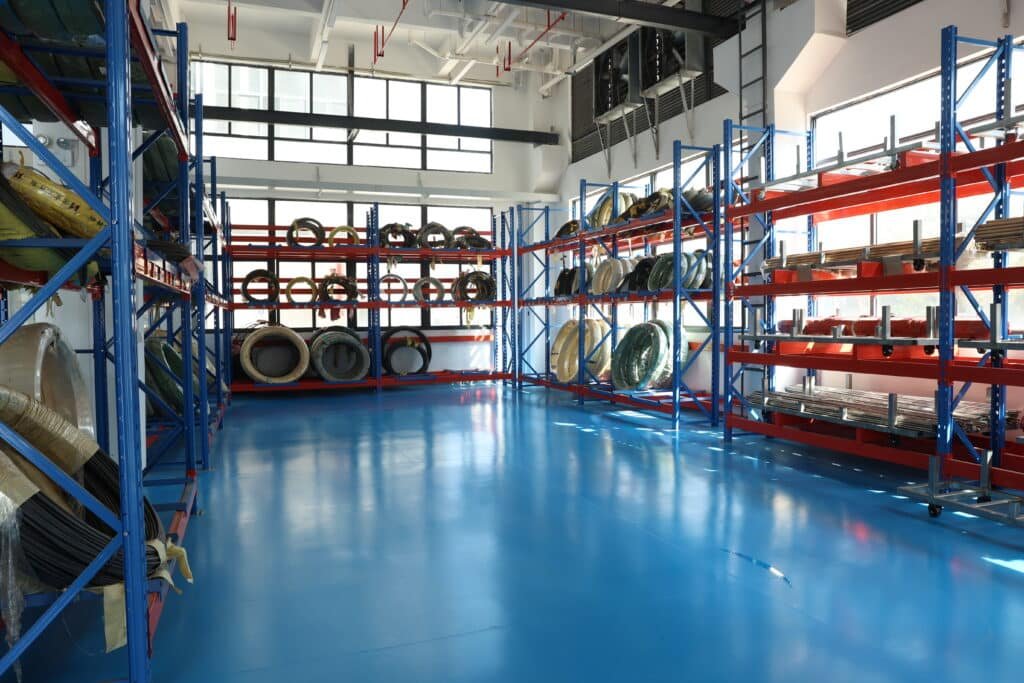
Hardened Carbon Steel provides optimal hardness (HRC 45-55) for thread forming in plastics, adequate ductility preventing screw breakage, cost-effectiveness for high-volume production, and compatibility with protective coatings. This is the standard material for most automotive plastic applications.
Stainless Steel (410, 304) offers corrosion resistance for long-term reliability, attractive appearance for visible applications, adequate hardness after heat treatment, and no coating requirements eliminating potential chemical compatibility issues with plastics.
Surface Treatments including zinc plating for corrosion protection, phosphate coating for lubricity reducing installation torque, and passivation for stainless steel maximizing corrosion resistance.
Popular Specifications for Automotive Screws for Plastic
Thread Types Optimized for Plastics
Type AB (Spaced Thread) features coarse, widely-spaced threads for soft plastics like PP and TPO, provides rapid installation with low driving torque, minimizes stress on plastic bosses, and offers good pull-out resistance. AB screws are ideal for flexible interior trim and soft plastic components.
Type B (Thread-Cutting) includes cutting edges for harder plastics, creates precise threads in materials like ABS and PC, allows some reassembly capability, and serves structural plastic components requiring higher strength.
Type T (Plastite/Trilobular) represents the optimal design for thermoplastics, featuring trilobular cross-section reducing stress by 50% compared to standard threads, rounded lobes rather than sharp peaks, superior pull-out strength in rigid plastics, and minimum risk of boss cracking. Type T screws are the preferred choice for modern automotive plastics.
Type PT (Thread-Forming for Thin Walls) designed specifically for thin-walled plastic bosses, features fine pitch for increased thread engagement, creates threads without cutting material, and provides reliable holding in limited boss thickness.
Common Sizes for Plastic Assembly
Automotive screws for plastic typically range from M2.9 to M6 (ST2.9 to ST6) for metric applications, #4 to #10 for imperial specifications, with lengths from 6mm to 40mm depending on boss depth and component thickness. Proper size selection based on boss design ensures optimal performance.
Point Styles for Thread Formation
Type 1 (Gimlet Point) provides gradual entry into plastic, reduces splitting risk during installation, suitable for soft to medium plastics, and standard for most applications.
Type 17 (Auger Point) features drilling capability for piercing thin walls, self-drilling action reducing assembly steps, and use in sheet applications.
Blunt Point minimizes stress concentration at entry, ideal for brittle plastics prone to cracking, and provides controlled thread forming.
Head Styles and Load Distribution
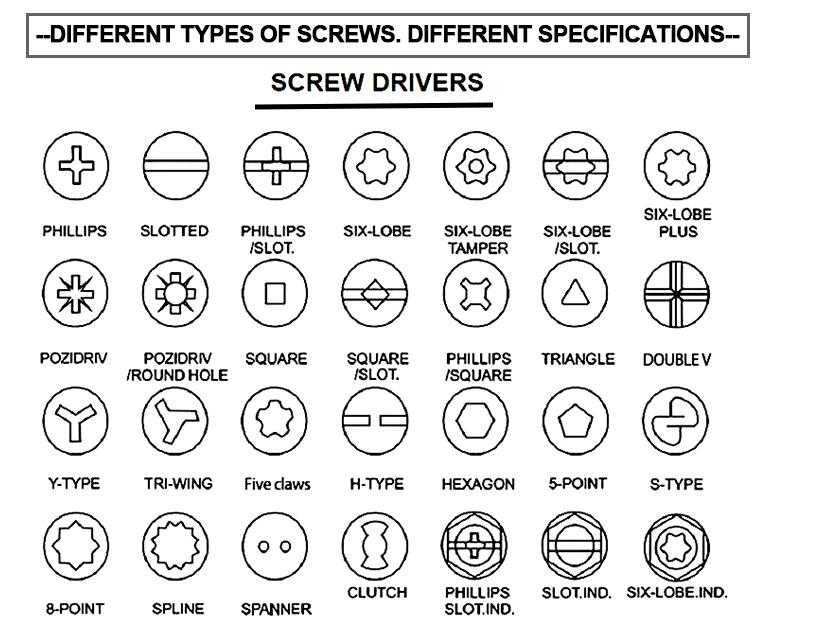
Pan Head offers large bearing surface distributing clamping load, reduces surface stress preventing pull-through, provides adequate torque capability, and serves general plastic assembly.
Truss Head features extra-wide bearing surface ideal for thin plastic sections, minimizes deformation risk, distributes load over maximum area, and prevents pull-through in soft materials.
Flat Head (Countersunk) allows flush mounting in plastic surfaces, requires properly formed countersink in component, provides smooth finished appearance, and serves aesthetic applications.
Hex Washer Head integrates washer for maximum bearing area, provides excellent load distribution, offers high torque capability, and reduces assembly steps eliminating separate washers.
Applications: Where Automotive Screws for Plastic Excel
Interior Dashboard and Console Assembly
Dashboard applications include instrument cluster mounting in plastic bezels, air vent assembly in PP housings, control panel attachment, glove box installation in ABS components, and center console assembly. Requirements emphasize thread designs preventing stress cracking, appropriate installation torque avoiding boss damage, long-term reliability under thermal cycling, and quiet operation without rattles.
Door Panel and Trim Components
Door applications serve interior panel mounting to plastic substrates, armrest attachment in PP or ABS, speaker grille installation, door handle assemblies in composite materials, and trim piece attachment. Requirements include secure holding through door operation cycles, vibration resistance in mobile environment, moisture resistance for door cavity exposure, and compatibility with sound deadening materials.
Engine Bay Plastic Components
Under-hood applications include air intake ducting assembly, engine cover mounting to plastic brackets, coolant reservoir attachment, washer fluid tank installation, and electrical component housing. Requirements demand heat resistance for engine bay temperatures, chemical resistance to automotive fluids, reliable performance in high-vibration environment, and long-term strength maintenance.
Exterior Plastic Assemblies
Exterior applications serve bumper cover attachment to plastic substrates, fender liner installation in TPO materials, grille assembly in ABS or PC, mirror housing attachment, and exterior trim mounting. Requirements prioritize corrosion resistance for weather exposure, UV stability maintaining strength, thermal cycling performance, and impact resistance.
Electrical and Electronic Housings
Electronic applications include ECU housing assembly in plastic enclosures, sensor mounting in nylon brackets, connector housing attachment, battery cover installation, and fuse box assembly. Requirements emphasize no damage to thin-walled electronic housings, reliable grounding when required, vibration resistance for electronic reliability, and compatibility with various engineering plastics.
Inspection Methods for Automotive Screws for Plastic
Dimensional Verification
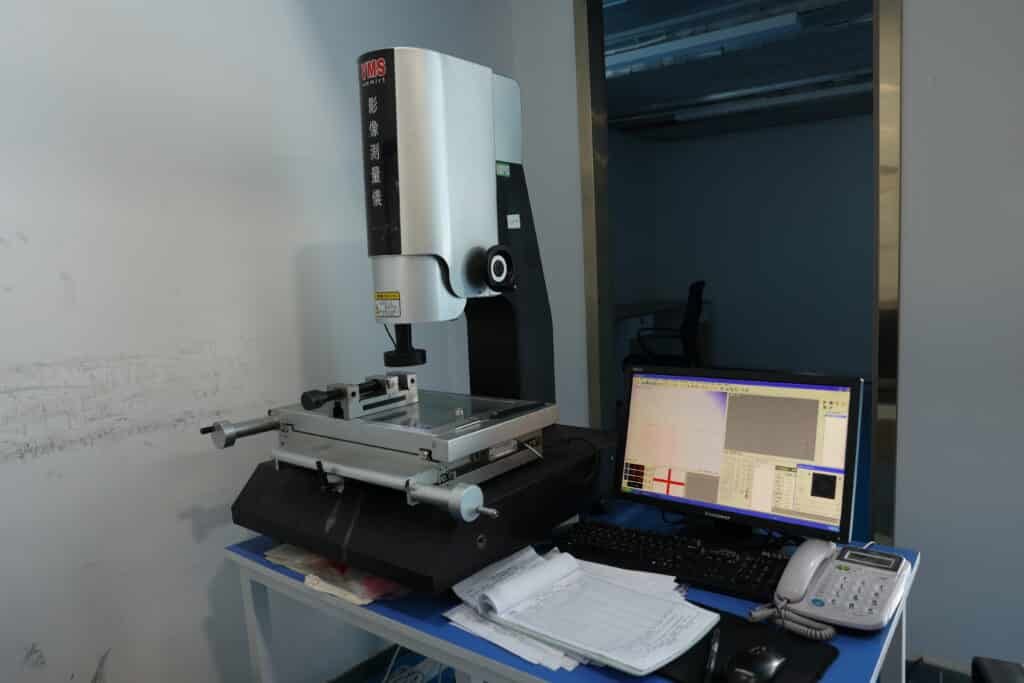
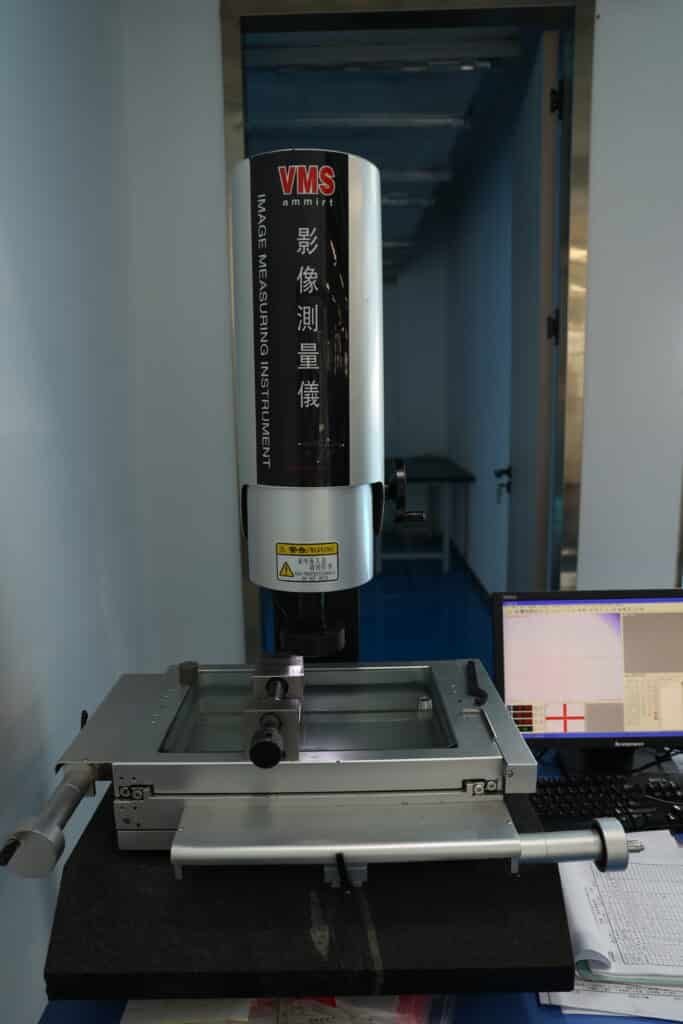
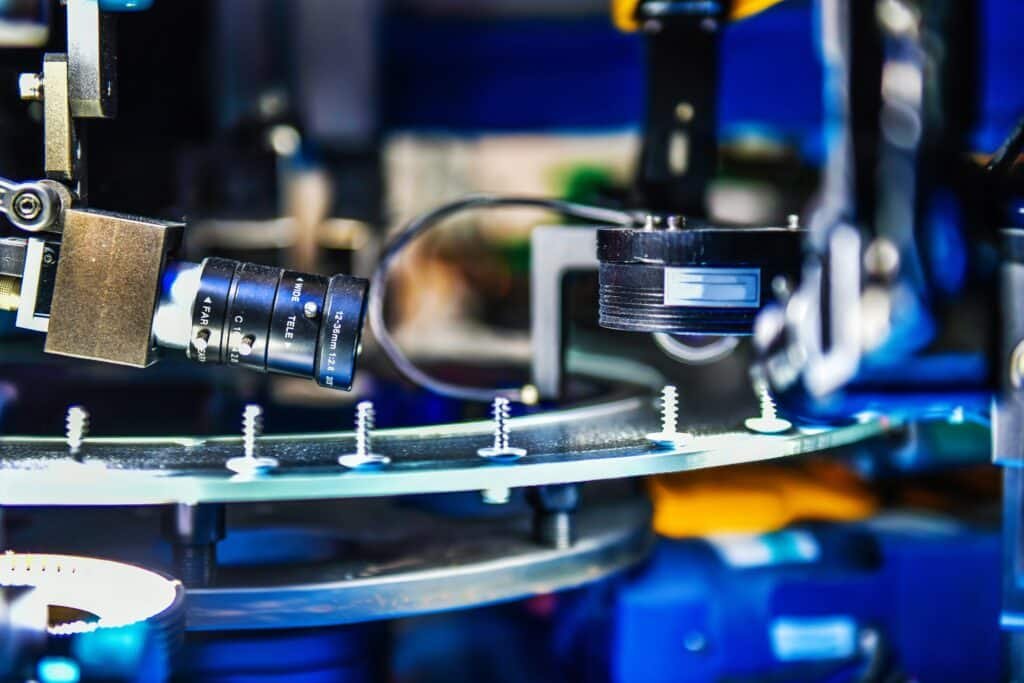
Thread Measurement using optical comparators verifies trilobular geometry for Type T screws, measures thread pitch and diameter to ±0.05mm, confirms point angle specifications, and ensures head dimensions for proper load distribution.
Installation and Pull-Out Testing
Torque Testing in Representative Plastics validates installation torque specifications, confirms no cracking at recommended torque, verifies consistent driving behavior, and ensures proper seating. Pull-Out Testing measures axial holding strength in customer-specified plastics, validates thread design performance, confirms pull-out strength meets requirements typically 500-2000N depending on size, and ensures long-term reliability through cyclic testing.
Material and Coating Analysis
Hardness Testing verifies heat treatment to specified HRC range (typically 45-55), ensures consistency across production batches, and confirms adequate hardness for thread forming without excessive brittleness. Chemical Composition Analysis using optical emission spectrometry (OES) verifies material grade specifications and ensures consistency.
Functional Assembly Testing
Boss Stress Analysis through strain gauge testing confirms stress levels remain below plastic yield strength, validates thread design minimizing stress concentration, and ensures no micro-cracking during installation. Thermal Cycling Testing simulates automotive temperature ranges (-40°C to +85°C), validates maintained clamping force, and confirms no loosening through expansion/contraction cycles.
Statistical Process Control
Real-time SPC monitoring tracks critical dimensions, identifies process variations, supports Cpk capability studies, and provides PPAP documentation for automotive programs.
Frequently Asked Questions
How do I select the correct screw type for my plastic material?
Selection depends on plastic type and properties. Type AB works well for soft, flexible plastics (PP, TPO) with low modulus. Type T (Plastite) is optimal for rigid thermoplastics (ABS, PC, nylon) providing maximum strength with minimal stress. Type B serves harder engineering plastics requiring cutting action. Provide your plastic material specification and boss design, and our engineering team will recommend the optimal screw type with supporting pull-out test data.
What causes plastic boss cracking and how is it prevented?
Boss cracking results from excessive hoop stress during installation. Prevention includes using Type T trilobular threads reducing stress by 50%, proper boss design with adequate wall thickness (typically 1.5-2x screw diameter), controlled installation torque below plastic yield point, appropriate thread pitch for boss depth, and optimized point geometry for gradual thread forming. We provide installation torque specifications based on testing in your specific plastic.
Can screws be removed and reinstalled in plastic components?
Limited reinstallation is possible depending on screw type and plastic. Type T thread-forming screws can typically withstand 2-3 assembly cycles in rigid thermoplastics. For components requiring frequent access, we recommend thread-cutting screws (Type B) or machine screws with brass threaded inserts molded into the plastic, providing unlimited assembly cycles without degradation.
What installation torque should be used for plastic assemblies?
Installation torque depends on screw size, plastic type, and boss design. General guidelines are 0.5-1.5 Nm for M3-M4 screws, 1.5-3.0 Nm for M5 screws, and 3.0-5.0 Nm for M6 screws. However, proper torque must be validated through testing in your specific plastic material and boss geometry. We conduct installation and pull-out testing in customer-provided materials to determine optimal torque specifications preventing damage while ensuring adequate clamping force.
Do you meet IATF 16949 requirements for automotive plastic fasteners?
Yes, Keyfix maintains IATF 16949 certification specifically for automotive manufacturing. Our quality system ensures rigorous process controls, complete traceability, PPAP documentation including dimensional reports and material certifications, installation torque and pull-out testing in customer-specified plastics, thermal cycling and stress analysis validation, and compliance with automotive OEM requirements.
How long does development take for custom screws for plastic applications?
For new applications, we conduct initial testing in 1-2 weeks including installation torque studies and pull-out testing in your plastic samples. Prototype screw production requires 2-3 weeks. Once design is validated, initial production runs take 3-4 weeks for tooling and quality validation. We work efficiently to support your development timeline while ensuring thorough testing and validation.
Keyfix: Your Trusted China Automotive Screws for Plastic Factory
IATF 16949 Certified Manufacturer Since 2007
Established in 2007, Keyfix specializes in automotive screws for plastic applications serving global OEMs and Tier 1 suppliers. Our China factory features advanced cold heading and thread rolling equipment, plastic material testing laboratory, comprehensive quality systems with IATF 16949 certification, and engineering expertise in plastic fastening technology. We deliver optimized screws with full PPAP support and application testing validation.
Start Your Automotive Screws for Plastic Project Today
Whether developing new plastic assemblies, resolving field issues, or requiring a qualified automotive supplier, Keyfix delivers expertise in plastic fastening technology. Contact us with your plastic material specifications and boss design for screw recommendations, installation testing, and comprehensive quotations.
Contact Keyfix today—your trusted IATF 16949 certified China automotive screws for plastic manufacturer.