
Custom Nuts Factory China | KeyFixPro Precision Manufacturer
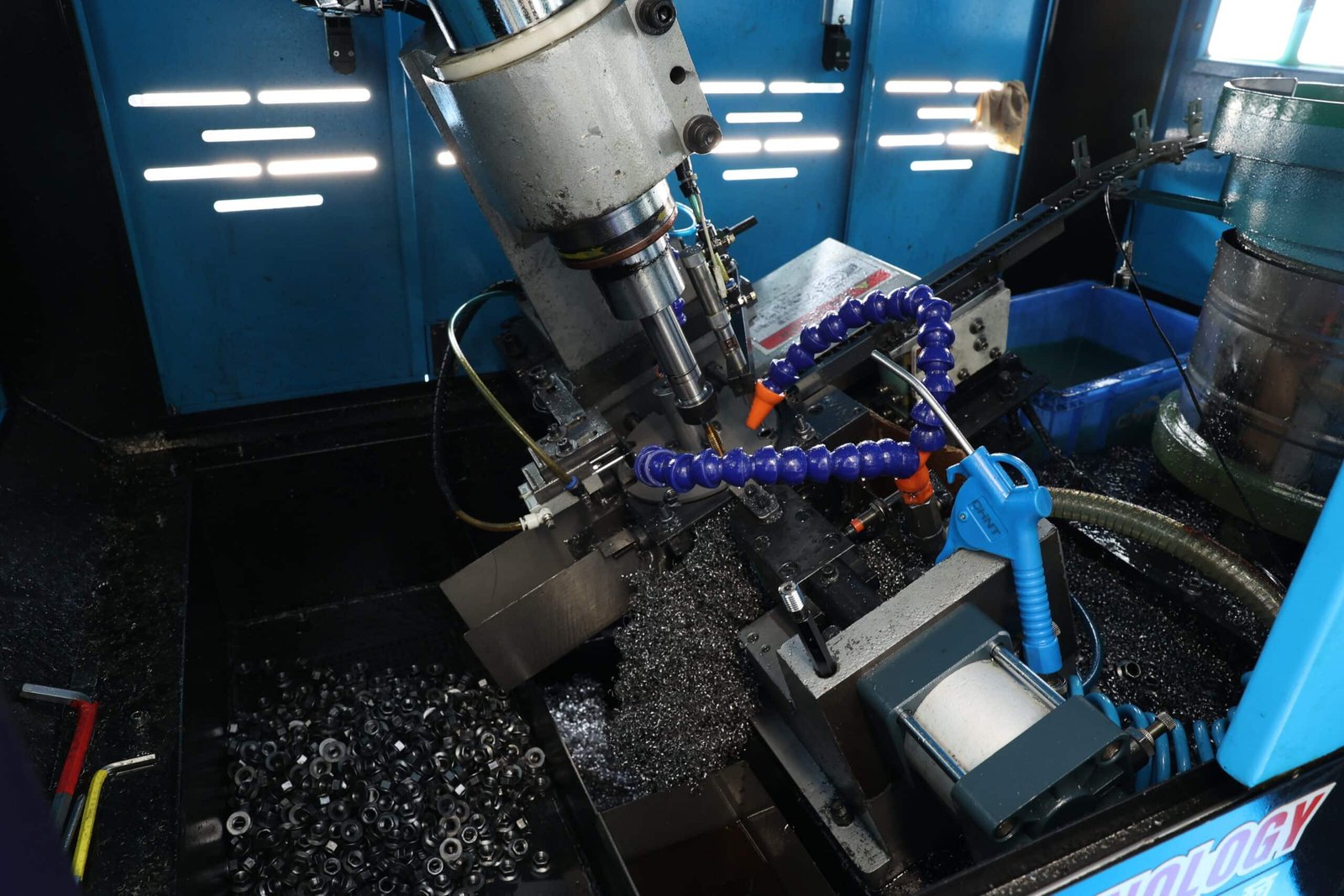
KeyFixPro, a leading custom fastener manufacturer in China, delivers precision-engineered threaded fasteners with advanced CNC and cold forging for global markets.
The fastener industry has undergone remarkable transformation as manufacturers shift from standardized components toward application-specific solutions. China’s industrial evolution positions it as a central hub for precision nut manufacturing, with investments exceeding $50 billion in advanced metalworking equipment since 2015[^1]. A china custom nuts factory like KeyFixPro leverages this infrastructure to produce specialized threaded fasteners meeting demanding specifications across automotive, renewable energy, aerospace, and heavy machinery sectors—applications where catalog components cannot fulfill engineering requirements.
[^1]: China Machine Tool Industry Association Data: http://www.cmtba.org.cn/
Unlike standard hex nuts produced in billions annually for general fastening, custom nuts address unique technical challenges: oversized dimensions for heavy equipment, specialized materials resisting chemical attack, integrated locking features preventing vibration loosening, or proprietary geometries interfacing with patented bolt designs. This article examines manufacturing technologies, quality protocols, and selection criteria distinguishing advanced custom nut producers from commodity suppliers.
Understanding Custom Nut Manufacturing
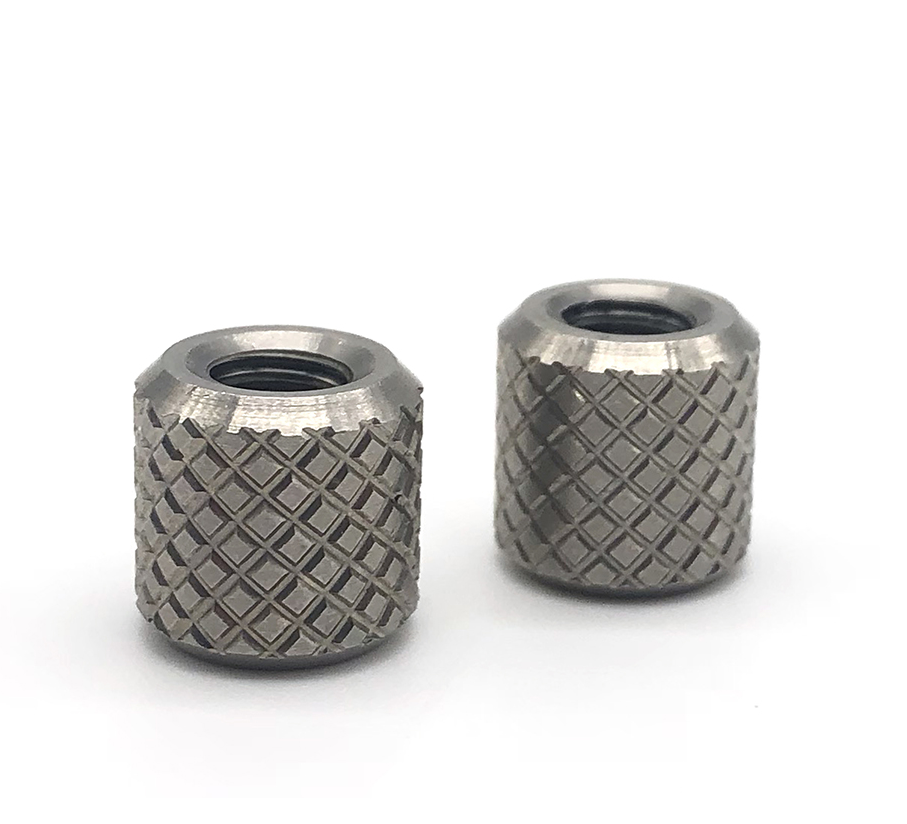
Custom nuts represent threaded fasteners designed beyond dimensional standards established by organizations like ISO (International Organization for Standardization), DIN (Deutsches Institut für Normung), or ANSI (American National Standards Institute). These specialized components incorporate modifications addressing specific engineering challenges: non-standard thread forms optimizing load distribution in composite materials, increased wrench flats accommodating limited access during assembly, captured washer designs eliminating separate components, or exotic alloy compositions withstanding extreme temperatures.
Manufacturing approaches vary dramatically from mass production methods. While standard nuts emerge from high-speed progressive dies producing 300-500 pieces per minute, custom variants often require CNC machining operations, precision casting with secondary machining, or specialized forging followed by multi-axis milling. KeyFixPro combines these capabilities, selecting optimal processes based on quantity requirements, material specifications, and geometric complexity.
Many of these manufacturing principles are also applied in the production of custom machined bolts, where precision CNC control and material selection are equally critical.
Custom vs. Standard Nut Comparison
| Characteristic | Standard Nuts | Custom Nuts |
|---|---|---|
| Design Basis | ISO/DIN/ANSI standards | Customer specifications |
| Production Method | Progressive die stamping | CNC machining, cold forging + machining |
| Typical Quantity | 10,000+ units | 50 – 50,000 units |
| Lead Time | Stock availability | 2-6 weeks including tooling |
| Material Options | Limited (carbon steel, basic stainless) | 40+ alloys including exotics |
| Tolerance Control | ±0.2mm typical | ±0.01mm achievable |
| Customization | None | Thread, geometry, material, coating |
Material selection profoundly impacts performance. Standard nuts predominantly use mild steel grades (Grade 2, Grade 5 per SAE J995), adequate for general applications but insufficient for specialized environments. Custom applications frequently specify stainless steel variants (303, 316, 321 for elevated temperatures, 2205 duplex for strength + corrosion resistance), aluminum alloys achieving weight reduction (2024-T4, 7075-T6), brass for electrical conductivity (C360, C464 naval brass), or titanium grades (commercially pure Grade 2, Ti-6Al-4V for aerospace). A china custom nuts manufacturer maintains diverse inventory enabling rapid prototyping without extended material procurement delays.
Thread specifications represent another critical customization area. While metric (M3-M64) and unified (UNC, UNF, UNEF) threads dominate standard applications, custom nuts might incorporate Acme threads for power transmission, BSPP/BSPT British pipe threads for fluid systems, proprietary pitches optimized for specific bolt materials, or left-hand threads preventing loosening in rotating assemblies. KeyFixPro engineers provide thread design consultation addressing engagement length requirements, tolerance class selection (ISO 6H, 7H classes), and anti-cross-threading features.
Advantages of Working with a China Custom Nuts Factory
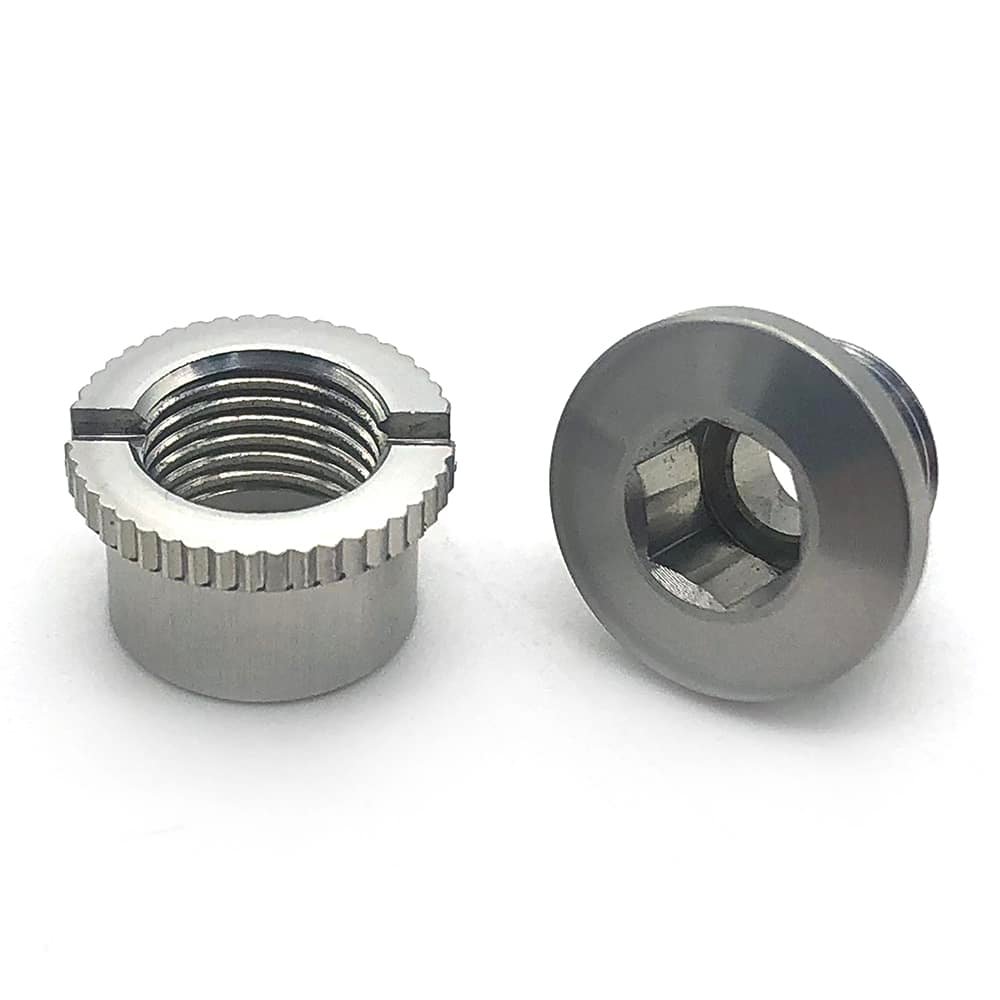
China’s emergence as precision fastener manufacturing center stems from strategic investments in technology, workforce development, and supply chain integration. According to the International Trade Centre, China exported $6.2 billion in threaded fasteners during 2022, representing 37% of global export volume[^2]—demonstrating scale and capability unmatched by other nations.
[^2]: International Trade Centre Trade Statistics: https://www.intracen.org/
Modern china custom nuts factory facilities operate equipment from established machine tool manufacturers: Swiss-type CNC lathes from Citizen and Star, machining centers from DMG Mori and Mazak, thread rolling systems from Sakamura and Chun Zu. This equipment investment—often exceeding $10 million for mid-sized operations—enables precision rivaling European or North American suppliers. KeyFixPro operates 24 CNC machining centers including 8 five-axis systems, 12 multi-spindle automatic lathes, and dedicated thread grinding equipment for precision tolerance threads.
Manufacturing Capability Overview
| Technology | Equipment | Capacity | Application |
|---|---|---|---|
| CNC Turning | Swiss-type multi-spindle | ±0.005mm tolerance | Complex geometries, exotic materials |
| Cold Forging | 4-station progressive headers | 150-300 parts/min | High-strength carbon/alloy steel |
| Thread Rolling | Planetary/cylindrical systems | Class 2A-3A precision | Superior fatigue resistance |
| CNC Milling | 3/4/5-axis machining centers | ±0.01mm on features | Non-standard geometries, slots |
| Thread Grinding | CNC thread grinders | Class 3A tolerance | Hardened materials, precision threads |
Cost competitiveness remains significant despite rising labor rates and automation investments. Vertical integration provides advantages: proximity to steel service centers reduces material costs 15-25%, established heat treatment networks offer competitive pricing, surface finishing clusters enable batch processing efficiency. For Western procurement teams, landed costs from Chinese suppliers typically run 25-45% below domestic alternatives when comparing equivalent quality levels, inspection documentation, and delivery reliability.
Production flexibility distinguishes leading Chinese manufacturers. Willingness to accommodate prototype quantities (25-100 pieces) without excessive setup fees enables engineering validation before production commitment. KeyFixPro maintains dedicated prototype machining cells separate from production lines, ensuring rapid turnaround (5-7 days typical) without disrupting volume manufacturing schedules.
Quality systems implementation has matured substantially. Top-tier suppliers maintain certifications including ISO 9001:2015 (quality management baseline), ISO 14001 (environmental management), and OHSAS 18001/ISO 45001 (occupational health and safety). Automotive suppliers hold IATF 16949, while aerospace-focused manufacturers pursue AS9100D certification. KeyFixPro’s quality management system encompasses all these standards, validated through annual surveillance audits by accredited registrars.
Manufacturing Technologies for Custom Nuts
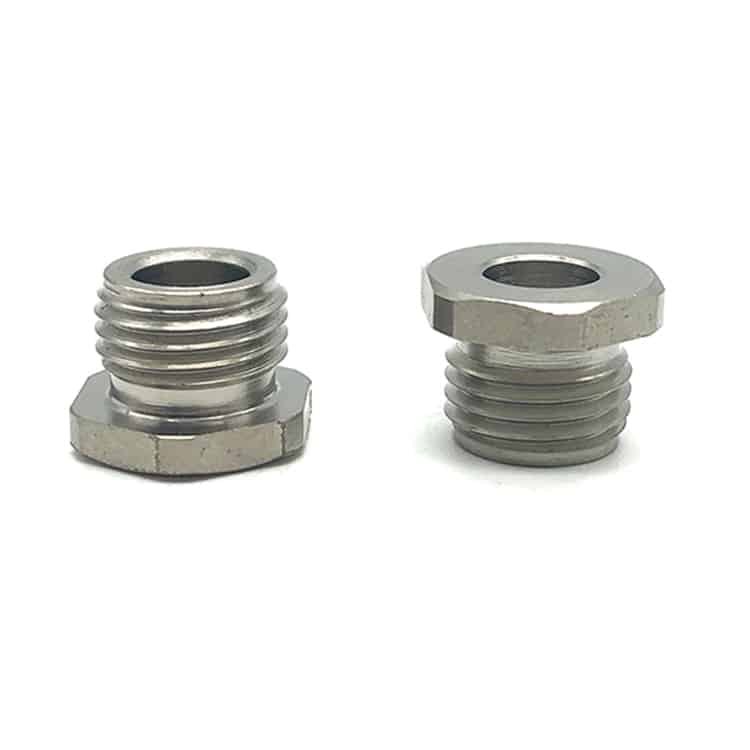
Precision nut production integrates multiple processes selected based on design requirements, material specifications, and economic considerations. Understanding these technologies provides insight into capability assessment when evaluating potential suppliers.For a broader view of our equipment and processes, you can explore our full CNC machining capability supporting complex custom fastener production.
CNC Precision Machining serves as the foundation for complex custom nut production. Modern CNC lathes equipped with live tooling, sub-spindles, and bar feeders perform complete machining in single setups—turning hexagonal external profiles, boring internal threads, drilling cross-holes for locking pins, and even milling slots or flats on specific faces. Swiss-type lathes excel at small-diameter nuts (M3-M16) requiring tight tolerances, maintaining ±0.005mm dimensional control even on challenging materials like precipitation-hardening stainless (17-4 PH, 15-5 PH) or nickel alloys (Inconel 600, 718).
Five-axis machining centers address non-standard geometries impossible on conventional equipment. Applications include custom nuts with integrated flanges featuring non-axisymmetric bolt patterns, internal pockets for O-ring seals, or asymmetric wrench engagement surfaces. The ability to maintain workpiece orientation throughout machining minimizes repositioning errors that accumulate through multiple setups.
Cold Forging Technology produces high-strength nut blanks with superior mechanical properties versus machined counterparts. The process involves placing wire or cut slugs into multi-station progressive dies, where controlled pressure redistributes material into nut geometry without cutting—preserving grain structure integrity. This work-hardening increases ultimate tensile strength 30-50% compared to annealed starting material, while material utilization reaches 95-98% versus 60-70% for fully machined nuts.
Cold-forged nuts require subsequent thread tapping or thread rolling operations. Thread tapping uses cutting taps removing material to form internal threads—suitable for softer materials and coarse pitches. Thread rolling employs hardened forming taps that displace material through plastic deformation, creating work-hardened thread roots with enhanced fatigue resistance. According to research published in the Journal of Materials Processing Technology, rolled internal threads exhibit 25-40% longer fatigue life than tapped threads in cyclic loading applications[^3].
[^3]: Journal of Materials Processing Technology: https://www.sciencedirect.com/journal/journal-of-materials-processing-technology
Secondary Machining Operations add features beyond forging or primary machining capabilities. CNC milling machines cut slots for lock wire installation (aviation applications), machine flats for torque wrenches, or create relief undercuts accommodating captured washer retention. EDM (Electrical Discharge Machining) creates fine details in hardened nuts where conventional cutting tools would fail—hexalobular (Torx) internal drives or small-diameter internal grooves for retaining rings.
Heat Treatment Processes modify material properties achieving specified hardness and strength. Through-hardening heat treats entire nut volume, typical for medium-carbon and alloy steels requiring uniform properties. Case-hardening (carburizing, nitriding) creates hard wear-resistant surfaces while maintaining tough ductile cores—ideal for applications involving repeated assembly/disassembly or abrasive environments. Stress-relieving heat treatments remove residual stresses from cold-working or machining, preventing dimensional instability during service.
Surface Engineering provides corrosion protection and functional enhancements. You can learn more about our available surface treatment options for different environmental and performance requirements.KeyFixPro offers comprehensive finishing:
Surface Treatment Options
| Treatment | Thickness | Corrosion Resistance | Application |
|---|---|---|---|
| Zinc Plating | 5-15μm | 96-240 hours NSS | General industrial use |
| Zinc-Nickel | 8-12μm | 720-1500 hours NSS | Automotive underbody |
| Hot-Dip Galvanizing | 45-85μm | 1500+ hours NSS | Outdoor/marine environments |
| Electroless Nickel | 10-25μm | 500-1000 hours NSS | Uniform coating complex geometries |
| Black Oxide | <1μm | Minimal (decorative) | Appearance, mild protection |
| PTFE/Xylan | 15-25μm | Chemical resistance | Lubricity, anti-galling |
(NSS = Neutral Salt Spray per ASTM B117)
Quality Verification Systems ensure dimensional accuracy, material integrity, and performance reliability. Incoming material inspection using optical emission spectroscopy (OES) confirms chemical composition—critical since material substitution represents a primary failure mode in fastener applications. KeyFixPro operates Thermo Fisher ARL spectrometers providing analysis of 20+ elements within 30 seconds, enabling 100% material verification before machining.
Thread inspection employs multiple techniques: thread plug gauges (go/no-go) verify functional size limits, thread micrometers measure pitch diameter precisely, optical comparators project magnified thread profiles for visual comparison against master standards. For critical aerospace applications, CMM (Coordinate Measuring Machine) inspection documents thread geometry comprehensively—pitch, flank angles, major/minor diameters—generating reports traceable to international measurement standards via NIST or equivalent national metrology institutes[^4].
[^4]: NIST Engineering Metrology: https://www.nist.gov/pml/engineering-laboratory
Applications Requiring Custom Nuts
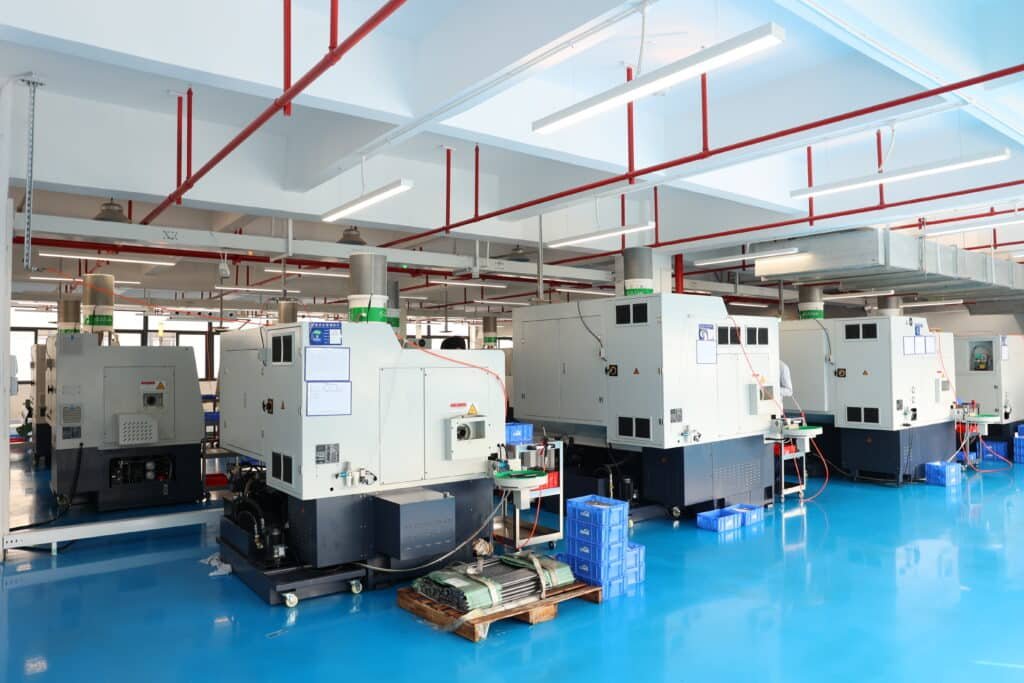
Custom nut applications span industries where standard components compromise performance, reliability, or assembly efficiency. Understanding these use cases illustrates engineering value beyond commodity fastener supply.
Automotive Powertrain Assembly requires specialized nuts withstanding extreme operating conditions. Exhaust manifold nuts experience thermal cycling from ambient to 900°C, necessitating austenitic stainless steel (321, 347 grades stabilized against sensitization) or Inconel alloys maintaining strength at elevated temperatures. These nuts often incorporate self-locking features—deformed threads, nylon inserts, or prevailing-torque designs—preventing loosening from vibration despite thermal expansion/contraction cycles. KeyFixPro produces exhaust nuts with integrated conical washers distributing clamping loads across irregular manifold surfaces, reducing gasket creep and retightening requirements.
Suspension components utilize castellated nuts with slots accommodating cotter pins—providing positive locking mechanisms for safety-critical joints like ball joints and tie rod ends. Material specifications typically require medium-carbon steel (1035, 1045) heat-treated to achieve 120-150 ksi tensile strength, with zinc-flake coating systems (GEOMET, MAGNI) providing 1000+ hour salt spray resistance for underbody exposure.
Wind Turbine Construction demands large-diameter custom nuts for tower section connections and nacelle mounting. According to the Global Wind Energy Council, average turbine capacity increased to 4.3 MW in 2022[^5], with larger units requiring M48, M56, even M64 nuts securing tower flanges. These massive components require fine-grain alloy steel forgings (42CrMo4, 34CrNiMo6) heat-treated to achieve 900-1100 MPa tensile strength while maintaining impact toughness at -20°C for cold climate installations.
[^5]: GWEC Global Wind Report: https://gwec.net/
Blade pitch system nuts operate in exposed nacelle environments, experiencing temperature extremes, moisture, and potential lightning strike effects. Stainless steel grades (A4-80 per ISO 3506) or duplex stainless (2205) provide corrosion resistance, while hot-dip galvanized carbon steel serves less critical applications. Thread specifications often require Class 6H tolerance (ISO 965-1) ensuring reliable engagement despite thermal expansion differentials between steel nuts and ductile iron or steel castings.
Aerospace Structural Assemblies impose stringent material traceability and inspection requirements. Every nut includes documentation traceable to raw material heat lots: chemical composition certificates, mechanical property test results (tensile, hardness, sometimes impact), and processing records (forging temperatures, heat treatment cycles, inspection results). KeyFixPro manufacturing maintains AS9100D-compliant quality systems addressing these requirements, with dedicated aerospace production cells segregated from commercial manufacturing.
Self-locking nuts represent common aerospace specifications—all-metal prevailing torque designs using thread deformation or elliptical geometry creating interference fit without inserts that might degrade during temperature cycling or vibration exposure. Aluminum alloy nuts (2024-T4, 7075-T6) provide weight reduction for non-structural applications, while titanium (Ti-6Al-4V) serves weight-critical structural joints requiring corrosion resistance.
Industry Application Summary
| Industry | Custom Nut Type | Material | Key Features |
|---|---|---|---|
| Automotive | Exhaust manifold, suspension | Stainless 321/347, alloy steel | High-temp resistance, locking features |
| Wind Energy | Tower flange, pitch system | 42CrMo4, duplex stainless | Large diameter (M48-M64), corrosion protection |
| Aerospace | Structural, engine | Titanium, Inconel, aluminum | Material traceability, self-locking |
| Oil & Gas | Pipeline flange | A194 Grade 2H/7/8 | Sour gas resistance, high strength |
| Heavy Machinery | Track pins, structural | 4140/4340 alloy steel | Wear resistance, high strength |
Oil & Gas Infrastructure utilizes custom nuts in pipeline flange connections, wellhead assemblies, and pressure vessel closures. Material specifications follow ASTM A194 covering carbon and alloy steel nuts for high-pressure/high-temperature service. Grade 2H (heavy hex) provides additional wrench bearing surface, Grade 7 (chromium-molybdenum alloy) serves elevated temperature applications to 540°C, Grade 8 (austenitic stainless) offers corrosion resistance in sour gas environments containing hydrogen sulfide.
Heavy Construction Equipment requires oversize custom nuts for track pin assemblies, boom connections, and structural pivot points. These applications demand nuts machined from alloy steel forgings (4140, 4340) heat-treated to 280-320 BHN hardness—balancing strength against brittleness while providing wear resistance during equipment service life often exceeding 20,000 operating hours.
Selecting a Reliable China Custom Nuts Manufacturer
Evaluating potential suppliers requires assessing technical capabilities, quality systems maturity, communication effectiveness, and supply chain stability beyond simple price comparisons.
Supplier Evaluation Framework
| Evaluation Area | Assessment Criteria | KeyFixPro Standard |
|---|---|---|
| Equipment | CNC turning, forging, thread grinding | 24 CNC centers, 12 Swiss lathes, thread grinders |
| Material Capability | Alloy inventory, exotic material sourcing | 40+ alloys stocked, 72-hour exotic procurement |
| Quality Certifications | ISO 9001, IATF 16949, AS9100D | All three + annual third-party audits |
| Inspection Equipment | OES, CMM, thread measurement | Thermo Fisher OES, Zeiss CMM (0.001mm) |
| Engineering Support | DFM analysis, material selection guidance | Complimentary review + 3D modeling |
| Production Scale | Prototype to production flexibility | 25-50,000 units without MOQ penalties |
| Lead Time | Prototype and production scheduling | 5-7 days prototype, 3-4 weeks production |
Manufacturing Technology Assessment begins with equipment inventory and condition evaluation. Modern CNC turning centers with live tooling, Y-axis capability, and sub-spindle transfer indicate serious production capability. Cold forging equipment should include multiple die stations enabling complex geometry development. Thread grinding machines—often overlooked but critical for precision tolerance threads in hardened materials—distinguish advanced suppliers from basic machining operations.
Equally important: equipment maintenance practices. Well-organized tool cribs with documented tool life tracking, preventive maintenance schedules displayed near equipment, and calibrated setup fixtures suggest disciplined manufacturing culture. Request evidence of machine capability studies (Cmk > 1.67 on critical dimensions) demonstrating equipment adequacy for specified tolerances.
Material Handling and Traceability prevents costly errors. Suppliers should maintain segregated storage with clear identification systems—bar coding or RFID tracking from receiving through finished goods inventory. Incoming material inspection procedures must include spectrographic analysis verifying chemistry before machining, dimensional verification of bar stock, and visual inspection for surface defects potentially affecting finished part quality.
Quality Management System Depth extends beyond certification plaques. Review actual quality manuals, inspection procedures, and corrective action processes. Statistical process control implementation—control charts updated in real-time near production equipment—indicates proactive quality management versus reactive inspection catching problems after accumulation. KeyFixPro’s quality system integrates automated alerts when process parameters drift toward specification limits, enabling preventive adjustment before non-conforming production occurs.
Measurement system analysis (MSA) studies following AIAG guidelines validate that inspection equipment and procedures provide reliable data. Gage R&R studies quantifying measurement variation ensure dimensional reports accurately reflect actual part dimensions rather than measurement noise.
Engineering Collaboration Capability differentiates manufacturing partners from order-taking suppliers. Experienced engineers provide Design for Manufacturability feedback—identifying thread specifications difficult to inspect reliably, suggesting corner radius modifications reducing tool breakage, or recommending alternative materials offering equivalent performance at lower cost. Thread design consultation addresses specialized applications: self-locking mechanisms, optimal engagement length, tolerance class selection balancing assemblability against vibration resistance.
Material selection guidance proves particularly valuable when specifications require exotic alloys unfamiliar to design engineers. Recommendations might suggest duplex stainless (2205, 2507) as alternatives to austenitic grades when strength and corrosion resistance both matter, or advise precipitation-hardening stainless (17-4 PH, 15-5 PH) for applications requiring heat treatment after machining.
Communication and Responsiveness significantly impact project success. Evaluate inquiry response times—suppliers consistently replying within 4-8 hours demonstrate organizational capability and customer focus. Technical English proficiency among engineering staff facilitates detailed specification discussions without language barriers causing misunderstandings. Video conferencing availability enables design reviews, first article inspections, and problem resolution without international travel expenses.
Supply Chain Stability and Ethical Compliance receive increasing attention from Western OEMs implementing responsible sourcing programs. Financial stability indicators include facility ownership structure (private versus public), years in operation (established suppliers weather economic downturns better), and capital investment trends (growing operations signal business health). Request customer references from companies in your industry, validating supplier claims about capabilities and performance.
Environmental and social compliance matters: responsible manufacturers operate wastewater treatment systems meeting discharge regulations, maintain safe working conditions documented through injury rate statistics, and compensate employees fairly. Third-party social compliance audits (BSCI, Sedex, SA8000) provide objective verification of ethical practices.
FAQ – China Custom Nuts Factory
What is a custom nut?
A custom nut is a threaded fastener manufactured according to specific engineering drawings rather than standard ISO, DIN, or ANSI dimensions. These nuts may feature non-standard shapes, special thread forms, integrated locking mechanisms, or unique materials to meet demanding performance requirements.
Why choose a China custom nuts factory?
A professional China custom nuts factory offers advanced CNC machining, cold forging capability, and cost-efficient production supported by a mature supply chain. This allows global buyers to obtain high-precision custom nuts with reliable quality, competitive pricing, and flexible order quantities.
What materials are used for custom nuts?
Custom nuts can be produced from a wide range of materials including carbon steel, alloy steel (4140, 4340), stainless steel (304, 316, 321, 2205), aluminum alloys (6061, 7075), brass, titanium (Grade 2, Grade 5), and high-performance alloys such as Inconel. Material selection depends on strength, corrosion resistance, weight, and operating temperature requirements.
What manufacturing processes are used for custom nuts?
Depending on the design and quantity, custom nuts may be produced through CNC machining, cold forging with secondary machining, precision casting, or thread grinding for high-accuracy applications. A qualified China custom nuts factory selects the optimal process to balance precision, strength, and cost.
What tolerances can a precision custom nut manufacturer achieve?
Modern CNC equipment allows precision custom nuts to be manufactured with tolerances as tight as ±0.01 mm, and even tighter for critical dimensions. Final tolerance capability depends on material, geometry, and inspection requirements.
How are custom nuts inspected for quality?
Quality control typically includes raw material verification using spectrometer testing, dimensional inspection with CMM or precision gauges, thread inspection with calibrated plug gauges, hardness testing after heat treatment, and surface coating verification such as salt spray corrosion testing. These procedures ensure consistency and compliance with customer specifications.
What certifications should a reliable custom nuts factory have?
A dependable supplier should operate under ISO 9001 quality management. For automotive applications, IATF 16949 is important. Aerospace projects often require AS9100 certification. These systems demonstrate process control, traceability, and strict documentation standards.
Conclusion
China’s transformation from commodity fastener source to precision custom nut manufacturer reflects systematic investment in technology, quality systems, and engineering capability. Leading china custom nuts factory operations now possess equipment, inspection capabilities, and quality management systems rivaling developed market suppliers—while maintaining cost advantages through vertical integration and economies of scale.
KeyFixPro exemplifies this evolution, combining 24 CNC machining centers (including 8 five-axis systems), dedicated thread grinding equipment, and comprehensive surface treatment facilities under ISO 9001/IATF 16949/AS9100D certified management systems. Thermo Fisher spectrometry ensures material integrity, Zeiss CMM technology documents dimensional accuracy to ±0.001mm, and automated optical inspection verifies thread geometry on 100% of production.
Whether your application requires titanium nuts for aerospace assemblies, high-strength alloy steel for wind turbine flanges, stainless variants for marine environments, or specialized geometries for proprietary bolt designs, KeyFixPro engineers provide technical consultation optimizing designs for manufacturability while meeting performance requirements. Our prototype machining cells deliver first articles within 5-7 days, enabling rapid design validation before production tooling commitment.
Contact our engineering team to discuss your custom nut specifications, review our quality documentation, or schedule video facility tours demonstrating manufacturing capabilities firsthand.