
Custom Wood Screws | KeyFixPro Precision Fastener Solutions
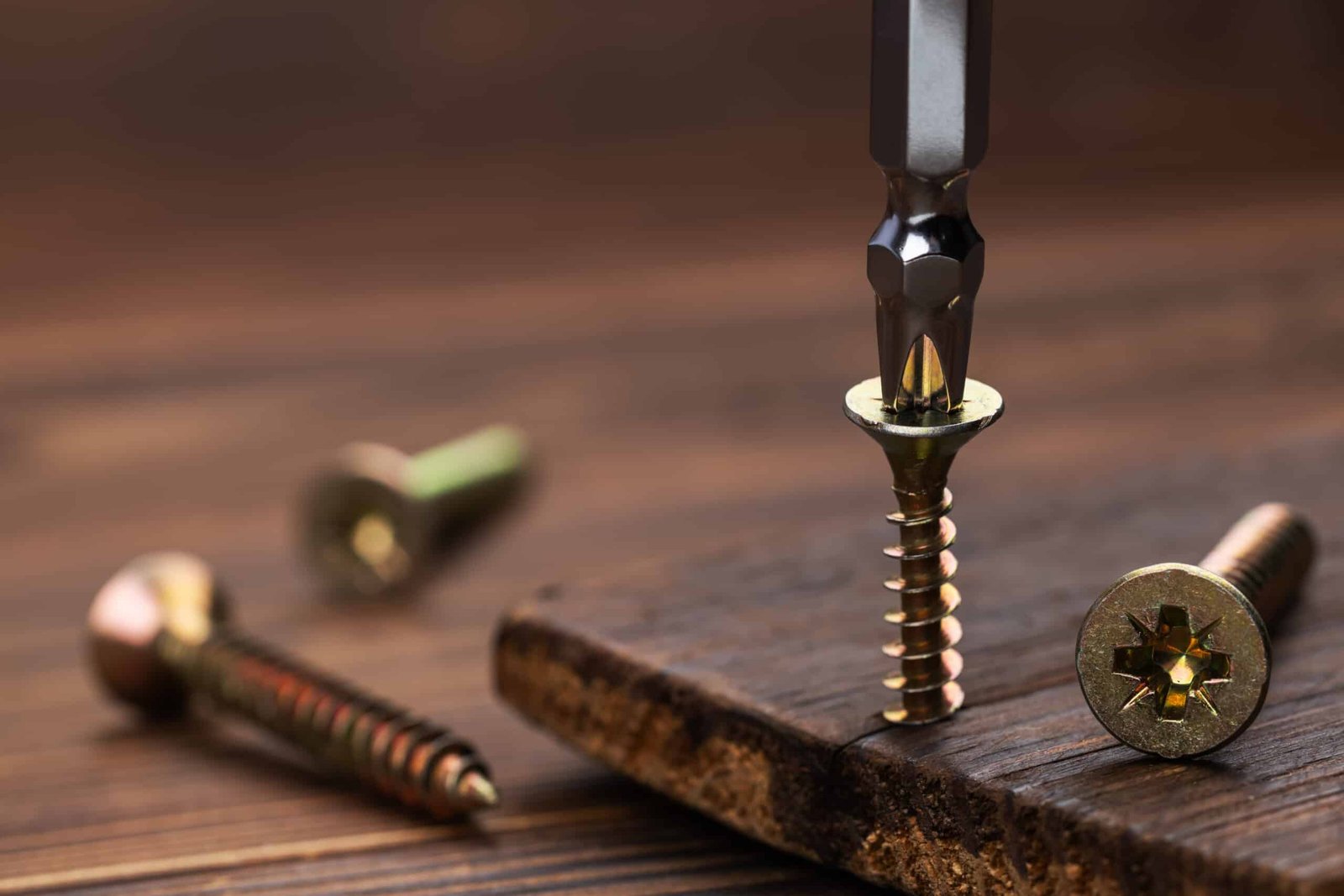
The woodworking fastener market has experienced significant evolution as manufacturers demand specialized solutions beyond catalog offerings. While global wood screw production exceeds 200 billion units annually[^1], growing segments require application-specific designs addressing unique material challenges, assembly constraints, or aesthetic requirements. Custom wood screws bridge this gap between mass-produced commodity hardware and engineering-grade fastening systems, enabling furniture manufacturers, construction contractors, and industrial fabricators to optimize assembly processes while improving product performance.
[^1]: Global Fastener Industry Market Report 2023: https://www.fastenerengineering.com/
KeyFixPro addresses this specialized market segment through integrated design and manufacturing capabilities spanning thread geometry optimization, head configuration development, drive system selection, and surface finishing—transforming conceptual fastening requirements into production-ready hardware. This article examines engineering considerations, manufacturing technologies, and material selections defining excellence in custom wood screw production.
Understanding Custom Wood Screws Applications
Custom wood screws represent threaded fasteners engineered for specific wood assembly applications requiring features unavailable in standard product lines. Unlike general-purpose screws manufactured to ASME B18.6.1 or ISO specifications, custom variants incorporate modifications addressing particular challenges: specialized thread forms maximizing holding power in engineered lumber products, proprietary head geometries achieving flush installation in laminated surfaces, corrosion-resistant coatings for exterior applications, or unique drive systems preventing unauthorized disassembly.
Manufacturing approaches differ substantially from high-volume standard production. While commodity screws emerge from progressive cold-heading operations producing 400-600 pieces per minute, custom variants typically involve precision thread rolling on CNC-controlled equipment, specialized pointing operations, secondary machining for non-standard features, and carefully controlled heat treatment cycles. KeyFixPro integrates these capabilities, selecting optimal processes based on quantity requirements (prototype through production volumes), material specifications, and geometric complexity.
Standard vs. Custom Wood Screw Comparison
| Characteristic | Standard Wood Screws | Custom Wood Screws |
|---|---|---|
| Thread Design | Type A (coarse) or Type AB (fine) | Application-optimized pitch/depth |
| Head Options | Flat, oval, round, pan | Proprietary profiles, integrated washers |
| Drive System | Phillips, slotted, square | Torx, hex socket, security, custom |
| Length Range | 1/4″ – 6″ typical | 1/4″ – 12″+ available |
| Material | Carbon steel (1018, 1022) | Stainless (304, 410), brass, specialty alloys |
| Coating | Zinc, black phosphate | Proprietary finishes matching wood tones |
| Lead Time | Stock availability | 3-5 weeks including tooling |
| Minimum Quantity | No minimum (stock items) | 1,000-5,000 pieces typical |
Thread geometry represents the most critical customization area. Standard Type A threads feature 60° included angles and coarse pitches (9-24 threads per inch depending on diameter) optimized for softwood species. Type AB threads incorporate sharper points and finer pitches suiting hardwood applications. Custom thread designs might specify asymmetric profiles with steeper leading flanks for easier insertion and shallower trailing flanks resisting withdrawal, variable pitch reducing splitting in dense materials, or dual-diameter threads combining self-tapping points with coarse body threads for maximum holding strength.
KeyFixPro engineers collaborate with customers during thread development, conducting pullout testing in target materials (solid wood, plywood, OSB, MDF, particleboard, composite lumber) to validate holding strength improvements. Finite element analysis simulates stress distribution during installation, identifying potential splitting risks before tooling investment.
Material Selection for Specialized Applications

Material selection profoundly impacts wood screw performance across installation ease, holding strength, corrosion resistance, and long-term durability. Understanding material characteristics enables informed specification decisions.
Carbon Steel Grades dominate standard production due to favorable cost, cold-heading characteristics, and adequate performance in interior applications. Grade 1018 (low carbon) provides excellent formability for cold-heading operations but limited strength—typically achieving 60,000-80,000 psi tensile after standard heat treatment. Grade 1022 (medium-low carbon) offers improved strength potential (90,000-110,000 psi) while maintaining reasonable formability. For applications requiring higher strength, Grade 1038 or 1045 (medium carbon) achieves 120,000-140,000 psi after quench-and-temper heat treatment, though cold-heading difficulty increases with carbon content.
Stainless Steel Variants address corrosion concerns in exterior applications, pressure-treated lumber assemblies (where copper-based preservatives accelerate carbon steel corrosion), or marine environments. Type 304 austenitic stainless (18-8 chromium-nickel composition) provides excellent general corrosion resistance and moderate strength (75,000-90,000 psi tensile). Type 316 incorporates molybdenum improving resistance to chloride attack—specified for coastal installations or direct saltwater exposure. Type 410 martensitic stainless offers higher strength potential (150,000-180,000 psi after heat treatment) with moderate corrosion resistance, suitable for applications prioritizing mechanical performance over maximum environmental protection.
According to research published in the Journal of Materials in Civil Engineering, stainless steel fasteners in treated lumber demonstrate 15-20 year service life advantages over carbon steel even with protective coatings[^2]. However, stainless screws cost 3-5× more than carbon steel equivalents—economic trade-offs requiring life-cycle analysis for long-term projects.
[^2]: Journal of Materials in Civil Engineering: https://ascelibrary.org/journal/jmcee7
Brass and Bronze Alloys serve specialized applications requiring non-magnetic properties, electrical conductivity, or aesthetic appearance matching hardware finishes. C360 brass (free-machining with 35% zinc) machines readily for custom head geometries or secondary features, though relatively soft (60,000-70,000 psi tensile) limits applications to decorative or light-duty fastening. Silicon bronze (C651, C655) provides higher strength (80,000-100,000 psi) and superior corrosion resistance for marine applications, though material costs exceed stainless steel.
Material Performance Comparison
| Material | Tensile Strength | Corrosion Resistance | Cost Factor | Primary Applications |
|---|---|---|---|---|
| Carbon Steel 1018 | 60-80 ksi | Low (requires coating) | 1.0× | Interior general purpose |
| Carbon Steel 1038 | 120-140 ksi | Low (requires coating) | 1.2× | High-strength interior |
| Stainless 304 | 75-90 ksi | Excellent | 3.5× | Exterior, treated lumber |
| Stainless 410 | 150-180 ksi | Good | 4.0× | High-strength exterior |
| Brass C360 | 60-70 ksi | Very good | 5.5× | Decorative, marine trim |
| Silicon Bronze | 80-100 ksi | Excellent | 6.0× | Marine structural |
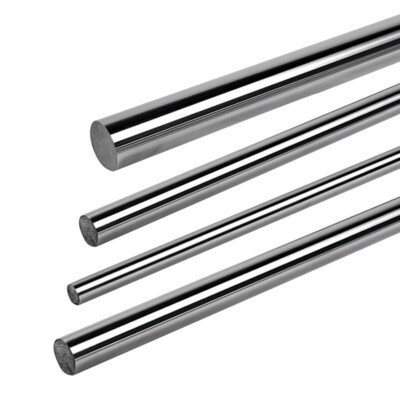
KeyFixPro maintains inventory of these materials in wire form (for cold-heading operations) and bar stock (for CNC machining when geometries exceed cold-heading capabilities), enabling rapid prototype turnaround without extended material procurement delays.
Advanced Manufacturing Technologies
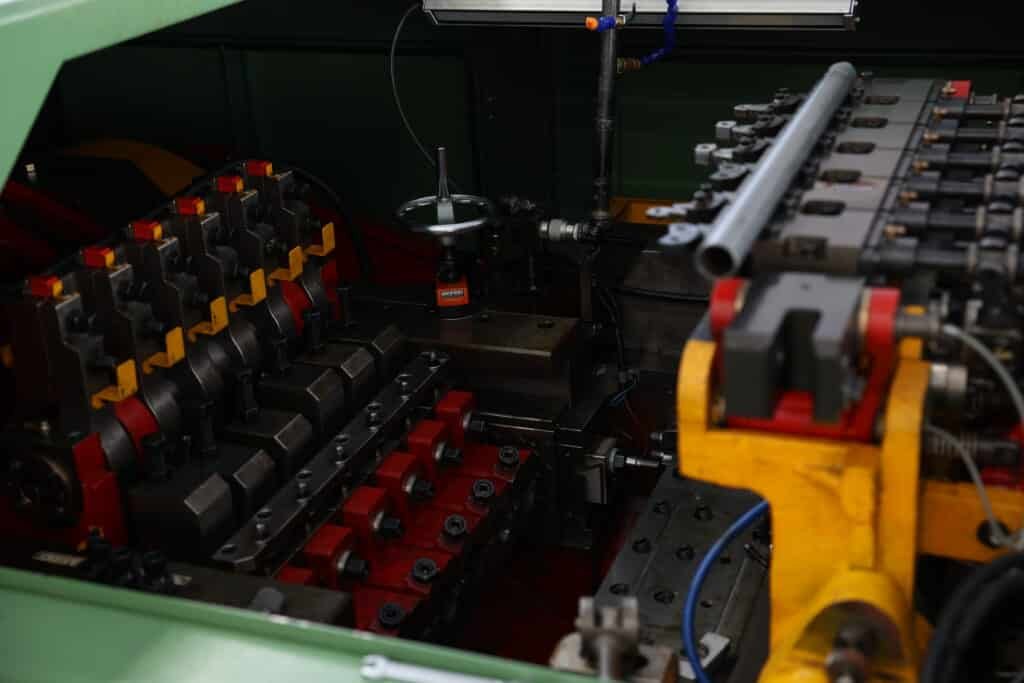
Producing custom wood screws requires integrated manufacturing capabilities spanning forming, machining, heat treatment, and surface finishing—each process contributing to final fastener performance characteristics.
Cold Heading and Thread Rolling form the foundation of volume production. Wire feeding systems deliver precisely cut blanks to multi-station progressive headers (typically 4-6 stations for wood screws) where sequential dies gradually upset material forming head geometry. Modern cold-headers from manufacturers like National Machinery or Sakamura achieve production rates of 200-400 pieces per minute with dimensional repeatability of ±0.005″ on critical features.
Following cold-heading, blanks undergo pointing operations creating the self-drilling tip geometry. Standard gimlet points feature simple cone angles (typically 45-50°), while Type 17 auger points incorporate cutting edges and material evacuation flutes enabling self-drilling through steel substrates up to 0.060″ thick before entering wood. Custom point geometries might combine features: aggressive cutting edges for initial penetration, transitioning to thread-forming geometry preventing material displacement that causes splitting.
Thread rolling operations employ cylindrical or flat dies progressively displacing material into thread form. Unlike thread cutting which removes material and interrupts grain flow, rolling work-hardens thread surfaces improving strength and fatigue resistance. KeyFixPro operates CNC-controlled thread rolling equipment enabling precise control of thread depth, pitch accuracy, and surface finish—critical parameters affecting installation torque and holding strength.
CNC Secondary Machining adds features beyond cold-heading capabilities. Five-axis machining centers mill complex head geometries (countersunk profiles with integrated nibs preventing over-driving, decorative patterns, or company logos), drill cross-holes for wire locking applications, or machine flats for hex wrenches when standard drive systems prove inadequate. Swiss-type CNC lathes produce small-diameter custom screws (under #6 size) or components requiring extremely tight tolerances (±0.002″ on critical dimensions).
Heat Treatment Processing modifies material properties achieving specified hardness and strength levels. Through-hardening heats entire screw to austenitizing temperature (typically 1550-1650°F for medium carbon steels), rapidly quenches in oil or polymer solutions forming martensitic structure, then tempers at 400-800°F developing optimal strength-ductility balance. Case-hardening (carburizing) diffuses carbon into surface layers creating hard wear-resistant threads while maintaining tough ductile cores resisting brittle failure—specified when screws must withstand repeated installation/removal cycles without thread damage.
Heat treatment parameters require careful control. According to SAE J429 specifications governing mechanical fastener properties[^3], Grade 5 fasteners (common for structural wood screws) require minimum 120,000 psi tensile strength and 92,000 psi yield strength—achieved through controlled quenching rates and tempering temperatures. KeyFixPro’s heat treatment department operates computer-controlled batch furnaces with ±10°F temperature uniformity and recorded thermal profiles ensuring process consistency.
[^3]: SAE J429 Mechanical and Material Requirements: https://www.sae.org/standards/content/j429_202101/
Manufacturing Process Overview
| Process Stage | Technology | Precision | Key Output |
|---|---|---|---|
| Wire Preparation | Automated cut-off systems | ±0.010″ length | Consistent blank weight |
| Cold Heading | 4-6 station progressives | ±0.005″ head dimensions | Formed head geometry |
| Pointing | Rotary or stationary pointers | ±2° point angle | Self-drilling capability |
| Thread Rolling | CNC cylindrical/flat dies | ±0.002″ pitch diameter | Precise thread form |
| Heat Treatment | Batch or continuous furnaces | ±10°F temperature | Target hardness (HRC 25-45) |
| Surface Finishing | Barrel, rack, or spray systems | 5-25μm coating thickness | Corrosion protection |
Surface Engineering and Coating provides corrosion protection while sometimes enabling functional enhancements. Electroplated zinc (clear, yellow, or black chromate) offers economical protection for interior applications—96-240 hours salt spray resistance per ASTM B117 depending on coating thickness. Zinc-flake coatings (GEOMET, DELTA-PROTEKT) provide superior protection (720-1500 hours) without hydrogen embrittlement risk affecting high-strength fasteners.
For custom wood screws in exterior applications, proprietary coating systems might match wood tones—bronze, brown, or green finishes blending with decking, siding, or fencing materials. Powder coating provides thick durable finishes in custom colors, though application requires post-coating thread chasing to remove coating buildup potentially interfering with installation. KeyFixPro engineers assist with coating selection based on environmental exposure (interior, exterior sheltered, direct weather, marine), aesthetic requirements, and budget constraints.
Specialized Drive Systems and Head Configurations
Drive system selection significantly impacts installation efficiency, tool wear, fastener aesthetics, and potential for unauthorized removal. Standard options (slotted, Phillips, square) serve general applications adequately, but specialized requirements often demand alternatives.
Torx Drive Systems (six-lobe internal pattern) provide superior torque transmission with reduced camout compared to Phillips—particularly valuable when installing screws with impact drivers where sudden torque spikes challenge driver-fastener engagement. Torx designs follow standardized sizes (T10, T15, T20, T25, T30) enabling tool interchangeability, though proprietary variations exist. Security Torx incorporates center pins requiring special drivers, preventing casual disassembly of assembled products.
Hex Socket Drives (Allen pattern) suit applications requiring flush installation where protruding drive features are unacceptable. Socket depths must provide adequate engagement length (minimum 1.5× across-flats dimension) preventing driver camout under high installation torque. KeyFixPro manufactures hex socket wood screws in sizes #6 through 1/2″ diameter, with socket depths optimized balancing engagement length against head thickness maintaining structural integrity.
Combination Drive Systems incorporate multiple patterns (Phillips/slotted, square/slotted) providing installation flexibility when different tools are available. However, combination drives sacrifice some performance versus dedicated single-drive systems—material removal for multiple patterns reduces available engagement area.
Proprietary Drive Systems prevent unauthorized disassembly or enable brand differentiation. Custom patterns require coordinating driver bit production—KeyFixPro collaborates with tool manufacturers ensuring adequate driver availability before finalizing fastener production. Typical minimum quantities for proprietary drives start at 50,000 pieces, amortizing tooling investment across production volume.
Drive System Selection Guide
| Drive Type | Torque Capacity | Camout Resistance | Tool Availability | Best Applications |
|---|---|---|---|---|
| Slotted | Low | Poor | Universal | Decorative, light-duty |
| Phillips | Medium | Fair | Universal | General purpose interior |
| Square (Robertson) | High | Good | Common (North America) | Construction framing |
| Torx | Very High | Excellent | Widely available | Impact driving, hardwoods |
| Hex Socket | High | Excellent | Common | Furniture, flush installation |
| Security | Medium-High | Good | Restricted | Anti-tamper applications |
Head configurations extend beyond drive system selection. Countersunk (flat) heads install flush in pre-drilled pilot holes or self-countersink in softwoods, creating smooth surfaces for subsequent finishing. Bugle heads (common in drywall and decking screws) feature trumpet-shaped profiles self-countersinking without pre-drilling, though finish quality in hardwoods may require secondary sanding. Pan heads provide maximum bearing area distributing clamping loads, specified when fastening thin materials or applications where pullthrough resistance matters.
Custom head geometries might incorporate integrated washers (eliminating separate components), decorative patterns matching furniture hardware finishes, or company logos serving branding purposes. Low-profile designs minimize protrusion when complete flush installation proves impossible due to material constraints or assembly sequence limitations.
Application-Specific Engineering Considerations
Different wood assembly applications impose distinct requirements affecting custom wood screw specifications—understanding these considerations enables optimal fastener selection.
Furniture Manufacturing demands fasteners balancing holding strength, aesthetic appearance, and assembly efficiency. Case goods (cabinets, dressers, bookcases) utilize confirmat screws—large-diameter (typically 7mm) fasteners with coarse threads and large pan heads designed specifically for particle board and MDF edge-grain applications. Thread geometry features steep helix angles and deep threads maximizing mechanical interlock in low-density substrates. KeyFixPro produces confirmat-style screws in custom lengths (40-80mm), head colors matching furniture finishes, and drive systems preventing consumer disassembly.
Upholstered furniture frame assembly requires screws penetrating hardwood frames without splitting—typically demanding pilot holes and controlled-depth installation preventing protrusion through visible surfaces. Custom solutions might incorporate depth-limiting features (shoulders or transition diameters) or specify reduced shank diameters minimizing material displacement during installation.
Construction and Structural Applications prioritize holding strength, weather resistance, and installation speed. Deck screws for pressure-treated lumber require corrosion-resistant materials (stainless steel or heavily coated carbon steel) withstanding preservative chemicals and outdoor exposure. Composite decking manufacturers often specify proprietary screw designs with color-matched heads, reverse-thread tips preventing board surface damage during installation, and thread geometries optimized for specific composite formulations.
According to the American Wood Council’s National Design Specification for Wood Construction[^4], lateral load capacity of wood screws depends on specific gravity of wood species, fastener diameter, embedment length, and yield strength. Custom screws for engineered lumber products (LVL, LSL, PSL) might incorporate longer thread lengths maximizing embedment in dense materials, larger diameters increasing lateral capacity, or washer heads distributing loads preventing embedment under service loads.
[^4]: AWC National Design Specification: https://awc.org/publications/2018-nds/
Marine and Exterior Applications impose severe corrosion challenges requiring careful material and coating selection. Silicon bronze fasteners provide maximum corrosion resistance for structural applications in direct saltwater exposure, though material costs (6× carbon steel) limit use to critical connections. Type 316 stainless steel offers more economical alternatives for above-waterline applications experiencing salt spray but not immersion. KeyFixPro engineers recommend accelerated corrosion testing (ASTM B117 salt spray, 1000-2000 hours) validating coating system performance before specifying for long-term exterior applications.
Application-Specific Requirements Matrix
| Application | Critical Parameters | Typical Specifications | Common Issues |
|---|---|---|---|
| Furniture (Hardwood) | Splitting resistance, appearance | Stainless or zinc, Torx drive, pilot holes | Over-torque splitting |
| Furniture (Composite) | Holding in low-density material | Large diameter, deep threads, pan head | Pullout in particle board |
| Decking (Wood) | Corrosion, countersinking | Stainless 304/316, reverse-thread tip | Surface tearing during install |
| Decking (Composite) | Material compatibility | Color-matched, optimized thread | Mushrooming, over-torque |
| Structural Framing | Shear strength, code compliance | Large diameter, hex head, galvanized | Insufficient embedment |
| Marine | Maximum corrosion resistance | Silicon bronze or 316SS | Galvanic corrosion dissimilar metals |
Architectural Millwork requires fasteners invisible after installation or matching surrounding aesthetics. Pocket hole screws feature washer heads, coarse threads, and self-tapping points enabling concealed joinery in face frames, cabinet construction, and furniture assembly. Trim screws utilize small heads (typically #6-#8 diameter), fine threads suiting hardwood moldings, and lengths sufficient for engagement in framing lumber behind finish materials. Custom wood screws for millwork might incorporate color-matched heads blending with wood species, low-profile designs minimizing filler requirements, or square drives providing better control during delicate installation.
Quality Standards and Testing Protocols
Ensuring custom wood screws meet performance requirements demands comprehensive testing protocols validating dimensional accuracy, mechanical properties, coating integrity, and functional performance.
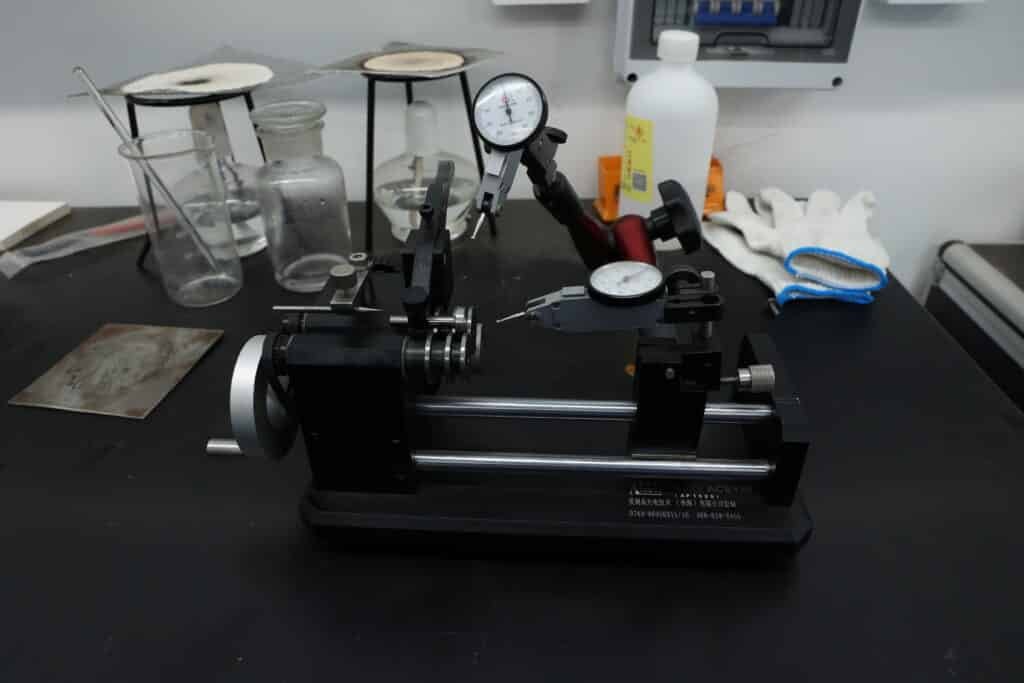
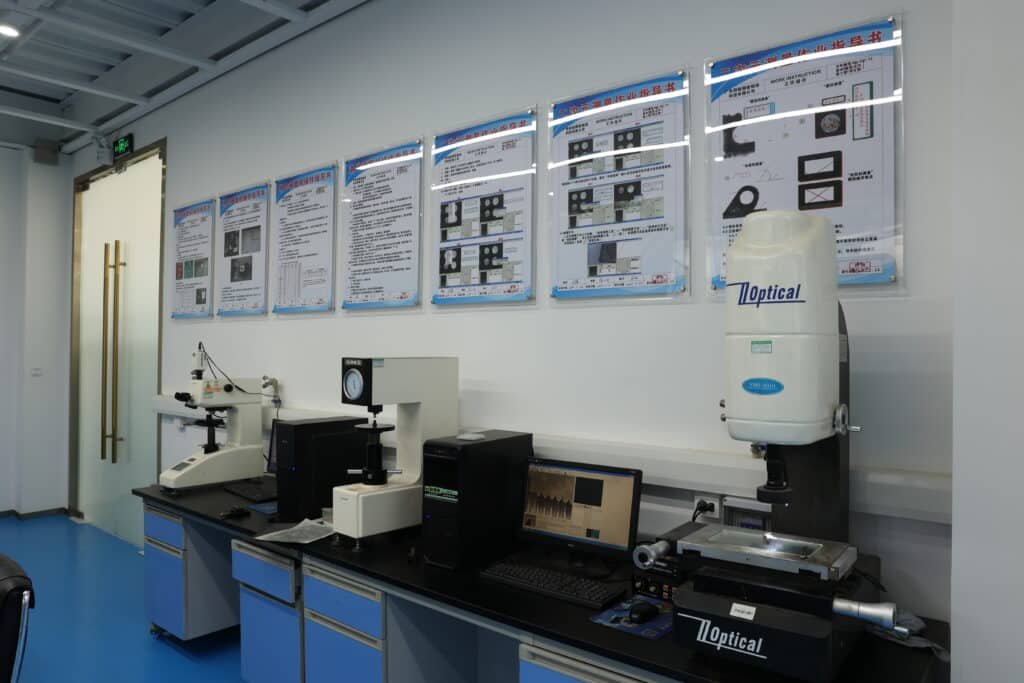
Dimensional Verification employs multiple measurement techniques depending on feature criticality. Thread geometry inspection uses optical comparators projecting magnified profiles (typically 20-50× magnification) against overlay standards, measuring pitch diameter, thread depth, flank angles, and point geometry. Automated vision systems inspect 100% of production for head dimensions, drive recess depth, and overall length—rejecting non-conforming parts before packaging.
Mechanical Property Testing validates heat treatment effectiveness and material strength. Tensile testing following ASTM F606 procedures determines ultimate tensile strength, yield strength, and elongation—confirming compliance with specified grade requirements (typically SAE J429 for carbon steel, ASTM F593 for stainless). Hardness testing (Rockwell C-scale for case-hardened threads, Rockwell B-scale for heads/shanks) verifies heat treatment achieved target properties throughout fastener.
Torque-Tension Testing characterizes relationship between installation torque and resulting clamping force—critical data for assembly process development and quality control. Testing involves driving screws into representative materials at various torques, then measuring clamping force or applying tensile loads determining holding strength. Variables include wood species and moisture content, pilot hole diameter (if used), driver speed and type (manual, drill, impact), and fastener coating/lubrication affecting friction.
Withdrawal Strength Testing measures maximum axial load before fastener pulls free from wood substrate. Test methods following ASTM D1761 specify wood species, moisture content, pilot hole dimensions, embedment length, and loading rate. KeyFixPro conducts comparative withdrawal testing during custom thread development, documenting performance improvements versus standard thread forms. Results guide thread specification optimization balancing installation ease (reduced insertion torque) against holding strength (increased withdrawal resistance).
Quality Validation Testing Summary
| Test Type | Standard | Measured Parameters | Frequency |
|---|---|---|---|
| Dimensional Inspection | Customer drawing | Thread pitch diameter, head dimensions | First article + statistical sampling |
| Tensile Testing | ASTM F606 | Ultimate strength, yield, elongation | Per heat lot, minimum 3 samples |
| Hardness Testing | ASTM E18 | Rockwell hardness (HRC/HRB) | First article + 1% production |
| Coating Thickness | ASTM B499 | Coating thickness (μm) | 5% of production batches |
| Salt Spray | ASTM B117 | Hours to red rust appearance | New coating processes |
| Withdrawal Strength | ASTM D1761 | Peak load (lbf) per inch embedment | Thread design validation |
Coating Performance Evaluation employs accelerated corrosion testing simulating years of environmental exposure within days or weeks. Neutral salt spray testing (ASTM B117) exposes coated fasteners to 5% sodium chloride fog at 95°F, recording time until red rust appearance. Target performance varies by application: 96-240 hours for interior use, 500-1000 hours for exterior sheltered, 1000+ hours for direct weather exposure. Cyclic corrosion testing (SAE J2334, GMW 14872) alternates salt spray, humidity, and ambient conditions more accurately simulating real-world exposure than continuous salt spray.
Prototype and Sample Capabilities enable design validation before production commitment. Suppliers willing to produce small sample quantities (100-500 pieces) demonstrate customer focus and process flexibility. KeyFixPro maintains dedicated prototype production cells separate from volume manufacturing, ensuring rapid turnaround (7-10 days typical) without disrupting scheduled production. Prototype pricing reflects actual costs without excessive setup penalties, encouraging iterative development optimizing designs before tooling investment.
FAQ – Custom Wood Screws Manufacturing
What is a custom wood screw?
A custom wood screw is a fastener engineered for specific wood assembly requirements rather than standard catalog dimensions. It may feature optimized thread geometry, special head shapes, unique drive systems, or application-specific coatings to improve performance in particular wood materials.
Why choose custom wood screws instead of standard screws?
Standard screws are designed for general use, while custom wood screws are optimized for specific materials such as hardwood, MDF, plywood, composite decking, or structural lumber. Custom designs can improve holding strength, reduce splitting, enhance corrosion resistance, and improve installation efficiency.
What materials are used for custom wood screws?
Common materials include carbon steel, stainless steel (304, 316, 410), brass, and silicon bronze. Material choice depends on strength requirements, corrosion exposure, and environmental conditions such as outdoor or marine applications.
How are custom wood screws manufactured?
Production typically involves cold heading, precision thread rolling, point forming, controlled heat treatment, and surface finishing. For complex geometries, CNC machining may be used to create specialized head designs or additional features.
What coatings are available for exterior wood screws?
Exterior screws may use zinc plating, zinc-flake coatings, ceramic coatings, hot-dip galvanizing, or proprietary finishes. Coating selection depends on exposure conditions, required corrosion resistance, and aesthetic requirements.
Can custom wood screws be tested before full production?
Yes. Prototype and sample runs are commonly produced for validation. Testing may include withdrawal strength testing, torque testing, corrosion testing, and dimensional inspection to ensure the design performs as expected.
What information is needed to develop a custom wood screw?
Providing application details such as wood type, load requirements, environmental exposure, head style preferences, and installation method helps engineers design the optimal fastener solution.
Conclusion
The custom wood screws market continues expanding as manufacturers recognize limitations of catalog fasteners for specialized applications. Leading suppliers combine advanced manufacturing technologies—precision cold-heading, CNC thread rolling, controlled heat treatment, and proprietary coating systems—with engineering expertise optimizing thread geometry, drive systems, and material selections for specific assembly challenges.
KeyFixPro exemplifies this engineering-focused approach, operating integrated manufacturing facilities producing custom wood screws from #2 through 5/8″ diameter in lengths exceeding 12″. Our equipment portfolio—18 cold-heading machines, 12 thread rolling systems, 6 heat treatment furnaces, and comprehensive coating capabilities—enables complete in-house production ensuring quality control and delivery reliability. ISO 9001 and IATF 16949 certified quality management systems provide framework for consistent excellence, while dedicated engineering staff collaborates with customers optimizing designs for manufacturability and performance.
Whether your application involves furniture assembly in engineered lumber, exterior decking in composite materials, structural framing requiring code-compliant fasteners, or marine construction demanding maximum corrosion resistance, KeyFixPro engineers provide technical consultation addressing material selection, thread geometry optimization, coating specification, and testing validation. Our prototype capabilities deliver sample quantities within 7-10 days, enabling design validation before production tooling commitment.
Contact our engineering team discussing your custom wood screws requirements—we’ll analyze your application, recommend optimal specifications, conduct comparative testing in your target materials, and develop fastening solutions enhancing product performance while improving assembly efficiency. In competitive markets where product quality and manufacturing efficiency determine success, the right fastener partner provides strategic advantages extending well beyond component supply.