
Autobatterieanschlüsse aus Messing und Aluminium bilden das elektrische Rückgrat jedes 12-V- und 48-V-Kfz-Systems. Sie tragen Einschaltstrom 500–1000 A während des Anlassvorgangs des Motors die Temperaturen unter der Motorhaube überstehen −40 °C bis +125 °C, und müssen Schwefelsäuredämpfen aus Blei-Säure-Batterien standhalten – und das alles bei einem Kontaktwiderstand unter 100 %. 0,1 mΩ. Ob Sie OEM-Anschlüsse für eine neue Fahrzeugplattform spezifizieren oder Ersatzstecker für Nachrüstsätze beschaffen – die Materialwahl zwischen Messing und Aluminium bestimmt Leitfähigkeit, Korrosionsbeständigkeit, Gewicht und Stückkosten. Dieser Leitfaden erläutert Ihnen die Entscheidung anhand der Spezifikationen, die Sie für die Erstellung einer Zeichnung und die Auswahl eines Lieferanten benötigen.
TL;DR – Wichtigste Erkenntnisse
- Messing (C36000, C26000) liefert 28–30 % IACS-Leitfähigkeit und ist ohne Beschichtung beständig gegen Schwefelsäuredampf; Aluminium (6061-T6, 1100) spart 60–65 % Gewicht erfordert jedoch eine Zinn- oder Nickelbeschichtung, um galvanische Korrosion an Kupferkabeln zu verhindern.
- SAE J13 und SAE J14 definieren die Abmessungen der konischen Anschlüsse für nordamerikanische Batteriepole: positiv 17,5 mm oberer Durchmesser, negativ 15,9 mm.
- Durch Kaltstauchverfahren werden Messingösen erzeugt bei 2- bis 3-fache Geschwindigkeit durch CNC-Bearbeitung mit kontinuierlichem Faserverlauf, der die Dauerfestigkeit am Übergang zwischen Kabel und Crimpverbindung verbessert.
- Kontaktwiderstand über 0,5 mΩ An der Schnittstelle zwischen Klemme und Pol entsteht beim Anlassen ein messbarer Spannungsabfall, der bei kaltem Wetter ausreicht, um ein Nichtstarten zu verhindern.
- IATF 16949-zertifizierte Hersteller wie Keyfix bieten PPAP Stufe 3 Dokumentation, Salzsprühnebelprüfung gemäß ASTM B117 und Leitfähigkeitsprüfung jeder Charge.
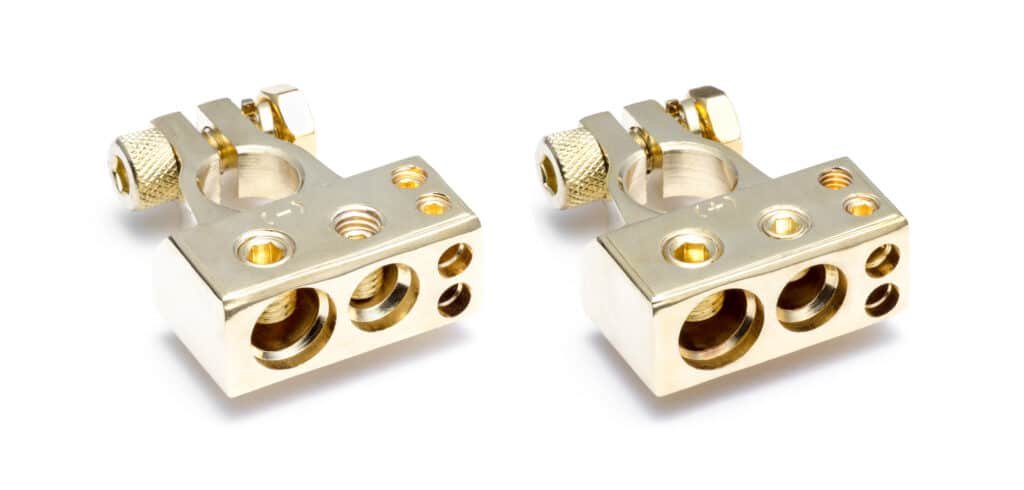
Warum Material Welches Material eignet sich für Batterieanschlüsse: Messing oder Aluminium?
Letztendlich kommt es auf drei gegenläufige Anforderungen an: elektrische Leitfähigkeit, Korrosionsbeständigkeit, Und Kosten pro Terminal. Messing punktet bei den ersten beiden Punkten. Aluminium ist leichter und günstiger im Rohmaterial. Keines der beiden Materialien ist generell besser – die richtige Wahl hängt vom Anwendungsfall ab.
Messinglegierungen (Automatenmessing C36000, Patronenmessing C26000) leiten Strom bei 28–30 % IACS Die Leitfähigkeit von Kohlenstoffstahl ist etwa doppelt so hoch wie die von reinem Kupfer, beträgt aber nur ein Viertel der von reinem Kupfer. Das reicht vollkommen aus, um einen Batteriepol mit Anlassstrom zu versorgen. 3–5 Sekunden jeweils einmal, da die thermische Masse einer massiven Messingklemme die I²R-Erwärmung ohne signifikanten Temperaturanstieg aufnimmt.
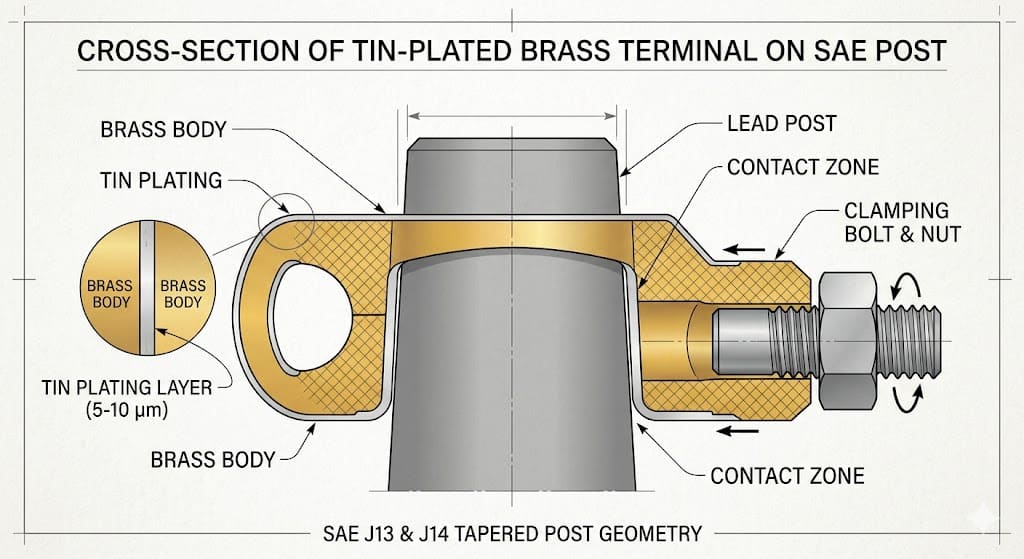
Aluminiumlegierungen (6061-T6, 1100-H14) leiten bei 40–62 % IACS – tatsächlich höher als bei Messing, bezogen auf die Masse. Aber die Achillesferse von Aluminium ist galvanische Korrosion. Wenn ein unbeschichteter Aluminiumanschluss in Gegenwart von Elektrolyt (Batteriesäurenebel, Streusalzfeuchtigkeit) mit einer Kupferkabelöse in Kontakt kommt, wird das Aluminium zur Opferanode und korrodiert schnell. Die Lösung: Zinnplattierung (5–10 μm) oder Nickelplattierung (8–15 μm) auf allen Kontaktflächen.
| Eigentum | Messing C36000 | Messing C26000 | Aluminium 6061-T6 | Aluminium 1100-H14 |
|---|---|---|---|---|
| Elektrische Leitfähigkeit (% IACS) | 26 | 28 | 40 | 59 |
| Wärmeleitfähigkeit (W/m·K) | 115 | 120 | 167 | 222 |
| Dichte (g/cm³) | 8.50 | 8.53 | 2.70 | 2.71 |
| Streckgrenze (MPa) | 310 | 95–340 | 276 | 117 |
| Bearbeitbarkeitsbewertung | 100 (Referenzwert) | 30 | 70–80 | 50 |
| Korrosion in sauren Dämpfen | Beständig | Beständig | Anfällig (muss beschichtet werden) | Anfällig (muss beschichtet werden) |
| Relative Materialkosten | 1,0× | 1,1× | 0,4× | 0,3× |
💡 Anmerkung des Ingenieurs: Wenn Sie ein 48-V-Mild-Hybrid-System für Elektrofahrzeuge suchen, bei dem das Terminal … 10–15 A kontinuierlich (nicht bei Anlassimpulsen von 500 A), wird Aluminium viel attraktiver – die thermische Dauerbelastung ist vernachlässigbar, und die Gewichtsersparnis ist für die Effizienzziele des Fahrzeugs von Bedeutung.
Welches Terminal? Standards Anwendung auf Kfz-Batterieanschlüsse?
SAE J13 Und SAE J14 Sie sind die maßgeblichen Normen für nordamerikanische Kfz-Batteriepole und Kabelanschlüsse. Sie definieren die konische Geometrie, die einen gleichmäßigen Anpressdruck gewährleistet und eine Verpolung beim Einbau verhindert.
| Standard | Umfang | Wichtigste Abmessungen |
|---|---|---|
| SAE J13 | Batteriekabel-Anschlussklemmen | Positive Bohrung: 17,5 mm Durchmesser, Kegelverhältnis ~1:9; Negative Bohrung: 15,9 mm Durchmesser |
| SAE J14 | Abmessungen der Batteriepole (an der Batterie) | Positiver Pol: 17,5 mm oberer Durchmesser, 19,5 mm Basisdurchmesser; Negativer Pol: 15,9 mm oberer Durchmesser, 17,9 mm Basisdurchmesser |
| JIS D 5301 | Abmessungen der japanischen Batteriepole (kleiner als SAE) | Positiv: 14,7 mm oben; Negativ: 13,1 mm oben |
| DIN 72311 | Europäische Batteriepole | Pol- und Klemmenabmessungen für DIN-Batterien |
| SAE J1171 | Marine-Batterieanschlüsse | Korrosionsbeständige Materialien, Edelstahlbeschläge |
| IEC 60254-1 | Traktionsbatterieanschlüsse (Gabelstapler, Elektrofahrzeuge) | Schraubklemmen, M8–M10-Gewindebolzen |
Wenn Ihr Produkt sowohl in den nordamerikanischen als auch in den japanischen Markt geliefert wird, benötigen Sie Terminals, die dies ermöglichen. sowohl SAE- als auch JIS-Pfostengrößen — entweder durch verstellbare Klemmkonstruktionen oder separate Artikelnummern. Der Größenunterschied ist gering (2,8 mm am positiven PolEine SAE-Klemme an einem JIS-Pfosten erreicht jedoch nicht den für eine zuverlässige Leitfähigkeit erforderlichen Kontaktdruck.
⚠️ Häufige Fehlerquelle: Die Verwendung einer einzigen “universellen” Klemme für SAE- und JIS-Gewindebolzen führt häufig zu einem lockeren Sitz am kleineren JIS-Gewindebolzen. Der Kontaktwiderstand steigt dadurch. 0,1 mΩ bis 1,0+ mΩ, Dies kann zu Spannungsabfällen und potenziellen Startproblemen führen. Separate Plus- und Minusklemmen gemäß Norm sind die technisch sicherere Lösung.
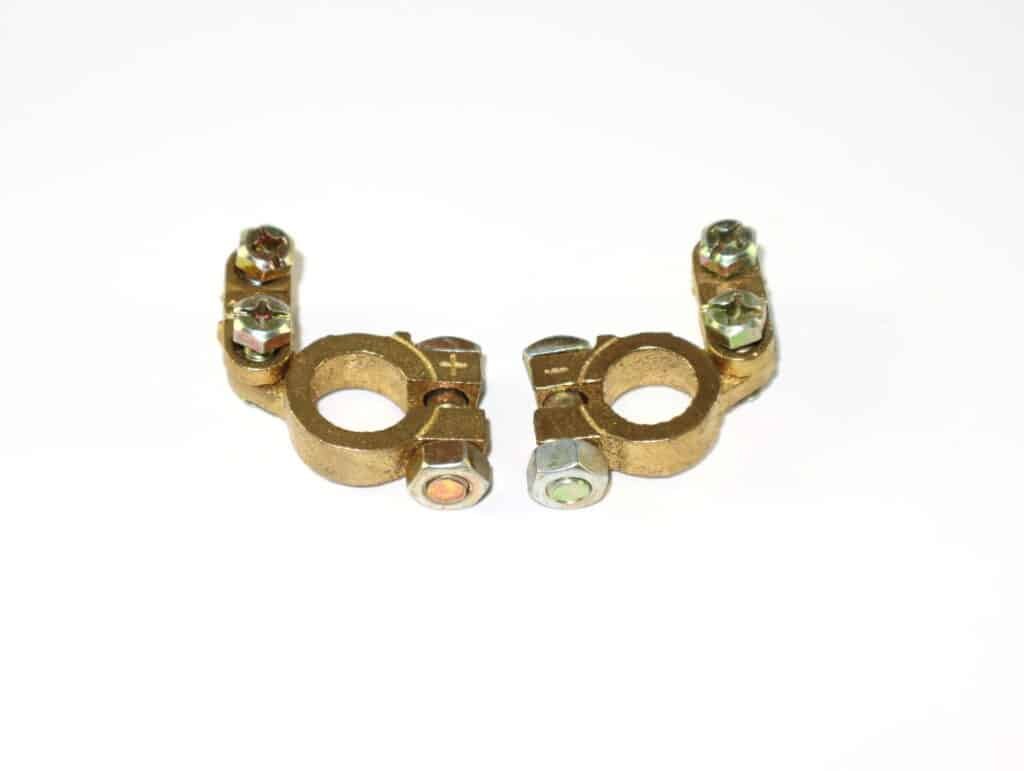
Wie werden Batteriepole aus Messing und Aluminium hergestellt?
Drei Hauptverfahren werden zur Herstellung von Autobatterieanschlüssen eingesetzt, wobei jedes Verfahren auf unterschiedliche Geometrien, Volumina und Toleranzanforderungen zugeschnitten ist.
Kaltstauchverfahren (Kaltschmieden) Die Klemmenkörper werden aus Messing- oder Aluminiumdraht in einem mehrstufigen, progressiven Stauchkopf geformt. Das Material fließt unter Druck bei Raumtemperatur und erzeugt so einen kontinuierlichen Materialfluss durch die Kabelklemmen und den Klemmbereich. Diese kontinuierliche Materialrichtung ist wichtig – sie ist der Grund für die Widerstandsfähigkeit kaltgeformter Klemmen. Ermüdungsrissbildung am Übergang zwischen den Quetschverbindungen besser als bearbeitete Pendants. Kaltumformen verbraucht zudem fast kein Material: Die typische Ausnutzung beträgt 95–98 %, gegenüber 40–60 % für die CNC-Bearbeitung der gleichen Geometrie aus Stangenmaterial.
CNC-Bearbeitung Schneidet Anschlusskörper aus Messing- oder Aluminiumstangen auf Langdrehmaschinen oder Dreh-Fräs-Zentren. Es ist das richtige Verfahren für Kleinserien (unter 5.000 Stück), CNC-Terminals können komplexe interne Geometrien oder Prototypen aufnehmen. ±0,005 mm bei kritischen Bohrungsabmessungen – enger als beim Kaltumformen üblicherweise ohne Nachbearbeitung erreicht wird.
Stanzen und Umformen Produziert Flachsteckverbinder (Ringkabelschuhe, Flachsteckverbinder, Stromschienen) aus Messing- oder Aluminiumband. Die Stanzung erfolgt in mehreren Schritten. 100–300 Hübe pro Minute, Dadurch ist es das schnellste Verfahren zur Herstellung von Dünnquerschnittsverbindern. So werden die meisten Ringkabelschuhe und Kabelschuhe für die Verbindung von Batterie und Anlasser gefertigt.
| Herstellungsprozess | Optimaler Terminaltyp | Typisches Volumen | Toleranz | Materialnutzung | Zykluszeit |
|---|---|---|---|---|---|
| Kalte Richtung | Klemmen-Pfostenklemmen, Schraubklemmen | 10.000 – 1.000.000+ | ±0,05 mm (wie abgebildet); ±0,02 mm mit sekundärer CNC-Bearbeitung | 95–98 % | 60–120 Stück/min |
| CNC-Bearbeitung (Schweizer Typ) | Komplexe Bohrungsprofile, Prototyp, Kleinserie | 1 – 10.000 | ±0,005 mm | 40–60 % | 2–5 min/Stück |
| Progressives Stempeln | Ringklemmen, Flachsammelschienen, Flaggenklemmen | 50.000 – 5.000.000+ | ±0,10 mm | 75–85 % (mit Trägerstreifenabfall) | 100–300 Stück/min |
| Druckguss (Zink oder Aluminium) | Dekorative Klemmgehäuse, Nachrüstabdeckungen | 5.000 – 500.000 | ±0,10 mm | 85–90 % | 15–30 Sek./Zyklus |
Keyfix bedient Mehrstationen-Kaltumper, STS C-Serie 5-Achs-CNC-Zentren (Halterung) ±0,005 mm) und 50–300 Tonnen schwere Folgeverbundpressen – und decken damit das gesamte Prozessspektrum von Prototypen-Einzelteilen bis hin zu Serienfertigungen von Millionen Stück ab. Die bei Keyfix hergestellten kaltgeformten Messinganschlüsse profitieren von einem kontinuierlichen Faserfluss, der Folgendes ermöglicht: 40–60 % höhere Scherfestigkeit bei den Kabelklemmenösen im Vergleich zu maschinell gefertigten Pendants.
🔧 Keyfix in der Praxis: Für ein kürzlich durchgeführtes OEM-Programm, das Folgendes erfordert 250.000 SAE-Klemmklemmen aus Messing pro Jahr, Das Ingenieurteam von Keyfix empfahl das Kaltumformen des Klemmkörpers mit anschließendem CNC-Bohrvorgang, um die Kegeltoleranz von ±0,02 mm einzuhalten. Dieser Hybridansatz senkte die Stückkosten um 35 % im Vergleich zur vollständigen CNC-Fertigung, wobei die Kontaktwiderstandsspezifikation unter 0,1 mΩ eingehalten wird.
Welche Oberflächenbehandlungen schützen Batteriepolanschlüsse?
Die Bedingungen unter der Motorhaube sind extrem schädlich für elektrische Kontakte: Schwefelsäuredampf von Blei-Säure-Batterien, Streusalznebel aus den Radkästen, Kühlmittelspray, und thermischer Belastung. Die Oberflächenbehandlung muss vor Korrosion schützen, ohne die elektrische Leitfähigkeit an der Kontaktfläche zu beeinträchtigen.
| Behandlung | Grundmaterial | Dicke (μm) | Kontaktwiderstandsschlag | Lebensdauer im Salzsprühnebel (Std.) | Hauptvorteil |
|---|---|---|---|---|---|
| Verzinnung (galvanisch) | Messing, Aluminium | 5–10 | Minimale Steigerung | 200–500 | Lötbarkeit, galvanische Barriere |
| Vernickelung (stromlos) | Messing, Aluminium, Stahl | 10–25 | Geringfügiger Anstieg (0,02–0,05 mΩ) | 500–1.000 | Verschleißfestigkeit, Säurebeständigkeit |
| Zinn-Nickel-Legierung | Messing | 5–15 | Minimal | 500–750 | Kombination aus Lötstellen und Verschleiß |
| Feuerverzinnung | Kupfer, Messing | 15–40 | Minimal | 300–600 | Dicke Barriere, selbstheilend |
| Zink-Nickel (12–15 % Ni) | Stahlbeschläge (Schrauben, Muttern) | 8–15 | Nicht zutreffend (kontaktlose Oberfläche) | 720–1.000+ | Befestigungsschutz |
| Chromat-Umwandlung | Aluminium | 0,5–2 | Minimal | 96–336 | Leitfähigkeitserhaltung |
| Versilberung | Messing, Kupfer | 3–8 | Verbesserung (niedrigerer μΩ-Wert) | Niedrig (läuft an) | Maximale Leitfähigkeit für Stromschienen von Elektrofahrzeugen |
Für Messinganschlüsse, Zinnplattierung bei 5–10 μm ist die gängigste OEM-Spezifikation. Sie ist RoHS-konform (im Gegensatz zu den bleihaltigen Zinn-Blei-Loten, die in einigen Nachrüstanschlüssen noch verwendet werden), bietet eine lötbare Oberfläche und bildet eine galvanische Barriere zwischen dem Messinggehäuse und dem Bleibatteriepol.
Für Aluminiumklemmen, Nickelplattierung bei 10–15 μm Dies ist unerlässlich, wenn der Anschluss Kupferkabelschuhe berührt. Ohne diese Barriere beginnt innerhalb weniger Sekunden galvanische Korrosion zwischen Aluminium (−1,66 V) und Kupfer (−0,34 V) in der galvanischen Reihe. 48–72 Stunden in einer salzhaltigen Sprühnebelumgebung.
Keyfix Die hauseigenen Oberflächenbehandlungsanlagen liefern Verzinnungs- und Vernickelung mit verifizierter Dicke durch Röntgenfluoreszenz (RFA) Bei jeder Produktionscharge werden Zink-Nickel-Beschichtungen auf Stahlbauteilen (Anschlussschrauben, Flügelmuttern) geprüft und validiert. Mehr als 1000 Stunden neutraler Salzsprühnebel gemäß ASTM B117.
Wie testet man die Leistung von Batteriepolen?
Vier Tests legen fest, ob ein Batteriestecker die OEM-Anforderungen erfüllt. Kann Ihr Lieferant nicht für alle vier Tests Daten liefern, reichen die Informationen für die Freigabe des Bauteils nicht aus.
Kontaktwiderstandsprüfung — Misst den Spannungsabfall an der Klemmen-zu-Anschlussstelle bei einem bestimmten Strom (typischerweise 100 A GleichstromAkzeptabler Bereich: ≤ 0,1 mΩ für neue Terminals, ≤ 0,5 mΩ nach umweltbedingter Alterung.
Abreißkrafttest — Misst die axiale Kraft, die erforderlich ist, um die Klemme vom Batteriepol zu trennen. SAE-Klemmklemmen sollten dieser Kraft widerstehen. ≥ 100 N Abreißkraft bei Anziehen mit dem angegebenen Drehmoment.
Thermischer Zyklentest — Unterzieht die montierte Endpfostenverbindung Zyklen von −40 °C bis +125 °C (typischerweise 500–1000 Zyklen) und misst den Kontaktwiderstand erneut. Ein Kriterium für das Bestehen: Anstieg des Kontaktwiderstands ≤ 50 % vom Anfangswert.
Salzsprühtest (ASTM B117) — Setzt den beschichteten Anschluss frei 5 % NaCl-Nebel bei 35 °C für die angegebene Dauer. Typische OEM-Anforderung für Anschlüsse im Motorraum: 480–1.000 Stunden ohne Rotrost an Stahlbauteilen oder weiße Korrosionsprodukte an Aluminium.
| Prüfen | Verfahren | Bestehenskriterium | Messgeräte |
|---|---|---|---|
| Kontaktwiderstand | 4-Leiter-Kelvin-Messung bei 100 A Gleichstrom | ≤ 0,1 mΩ anfänglich; ≤ 0,5 mΩ nach der Alterung | Mikro-Ohmmeter + Gleichstromversorgung |
| Ablösekraft | Axialer Zugversuch an montiertem Klemmenpfosten | ≥ 100 N (SAE-Klemmentyp) | Universeller Zugprüfer |
| Thermische Zyklen | −40 °C / +125 °C, 500–1000 Zyklen | ΔR ≤ 50 % des Anfangswerts | Klimakammer + Mikro-Ohmmeter |
| Salznebel | ASTM B117, 5 % NaCl, 35 °C | Kein roter Rost nach 480–1000 Stunden | Salzsprühschrank |
| Crimp-Auszug | Zugkraft an der gecrimpten Kabel-zu-Anschlussklemme | ≥ Nennzugkraft pro Kabelquerschnitt (z. B. ≥ 2,5 kN für 4 AWG) | Zugprüfgerät mit Kabelklemme |
| Vibrationsbeständigkeit | Zufällige Vibrationen gemäß SAE J2380 oder OEM-Spezifikation | Keine Fraktur, ΔR ≤ 25 % nach dem Test | Vibrationsschüttler + Beschleunigungsmesser |
Benötigen Sie Hilfe bei der Entscheidung zwischen Messing und Aluminium für Ihr Programm?
Senden Sie Ihre Terminalzeichnung an Keyfix's Anwendungsingenieure Sie führen eine DFM-Prüfung durch und kennzeichnen die Material-, Prozess- und Beschichtungskombination, die Ihre Ziele hinsichtlich Leitfähigkeit, Korrosion und Kosten erfüllt. Die Bearbeitungszeit beträgt in der Regel 48 Stunden. E-Mail: sales@keyfixpro.com
Worin bestehen die Unterschiede zwischen Original- und Nachrüst-Batterieanschlüssen?
Dieser Unterschied ist wichtiger, als den meisten Käufern bewusst ist. OEM-Anschlüsse sind so spezifiziert, dass sie die elektrischen, thermischen und Vibrationsanforderungen des Fahrzeugherstellers erfüllen. 15 Jahre / 250.000 km Lebensdauer. Nachrüst-Terminals sind oft auf eine bestimmte Lebensdauer ausgelegt. Preis, keine Leistungsspezifikation.
| Attribut | Anschluss in Erstausrüsterqualität | Nachrüst-Terminal |
|---|---|---|
| Materialrückverfolgbarkeit | Vollständig: Werkszertifikat bis Chargennummer | Teilweise oder gar nicht |
| Maßtoleranz (Bohrung) | ±0,02–0,05 mm | ±0,10–0,30 mm |
| Kontaktwiderstand (neu) | ≤ 0,1 mΩ verifiziert | Wird in der Regel nicht getestet |
| Plattierungsdicke | Kontrolliert ±1 μm, Röntgenfluoreszenz-verifiziert | Nur Sichtprüfung |
| Salzsprühvalidierung | 480–1.000 Std. gemäß ASTM B117 | 96–200 Std. (falls getestet) |
| PPAP-Dokumentation | Stufe 3 mit Cpk-Studien | Nicht verfügbar |
| Lebensdauerziel | 15 Jahre / 250.000 km | 2–5 Jahre typisch |
| Stückkosten (M6 Messingklemme) | $0,80–$1,50 | $0.15–$0.40 |
Die Kostendifferenz ist real – Nachrüst-Terminals können 5-mal günstiger. Doch bei OEM-Programmen, bei denen ein Feldausfall Garantieansprüche, Rückrufe oder Sicherheitsuntersuchungen auslöst, amortisiert sich der spezifikationsgeprüfte Anschluss um ein Vielfaches. Das Beschaffungsrisiko bei Anschlüssen in Aftermarket-Qualität für OEM-Anwendungen liegt nicht im Preisunterschied des $0.50 – sondern in der $50.000+ Rückrufkosten pro Fahrzeug wenn korrodierte Anschlüsse elektrische Ausfälle im Feld verursachen.
📋 Technischer Tipp: Bei der Erstellung einer Zeichnung für Batterieanschlüsse zur Erstausrüstung (OEM) sollten Kontaktwiderstand (≤ 0,1 mΩ bei 100 A), Schichtdicke mit Toleranz (z. B. Sn 8 ±2 μm) und Anforderungen an den Salzsprühtest (z. B. 720 h gemäß ASTM B117) direkt in der Zeichnung angegeben werden. Allgemeine Hinweise wie “muss korrosionsbeständig sein” lassen zu viel Interpretationsspielraum.
Welche Batteriestecker-Bauform eignet sich für Ihre Anwendung?
Die Auslegung des Anschlusses hängt vom Batterietyp, der Kabelanschlussmethode und davon ab, ob der Endbenutzer ihn im Betrieb installiert oder entfernt.
| Designtyp | Kabelbefestigung | Postkompatibilität | Benötigtes Werkzeug | Beste Anwendung |
|---|---|---|---|---|
| Obere Pfostenklemme (Schraubentyp) | Kabeldurchführung mit Schraubverschluss | SAE/JIS-Kegelbolzen | 10-mm-Schlüssel | Standard-Pkw-OEM |
| Obere Pfostenklemme (Schnellverschluss) | Hebel- oder Flügelmutter-Kompression | SAE/JIS-Kegelbolzen | Keine (handbetrieben) | Aftermarket-, Schiffs- und Flottenservice |
| Seitenpfostenbolzen | M8-Schraube in versenktes Gewinde | GM-Seitenpolbatterie | 5/16″- oder 8-mm-Steckschlüssel | GM-Fahrzeuge, einige Nutzfahrzeuge |
| Ringkabelschuh (gecrimpt) | Crimphülse an Litzenkabel | Gewindebolzen (M6, M8, M10) | Drehmomentschlüssel | Industrie-, Elektro-, Schwerlastwagen |
| Flaggenanschluss (rechtwinklig) | Lascheneinführung oder Verschraubung | Flache Lasche oder Bolzen | Schraubenschlüssel oder Steckverbindung | Kompakte Räume, Motorrad |
| Sammelschienenverbinder | Verschraubte Mehrfachständer | Prismatische Zellterminale | Drehmomentschlüssel | EV-Batteriemodul-Verbindungen |
Für die Verbindungen von EV-Batteriemodulen – ein aufstrebendes Segment, das den Markt für Batterieverbinder umgestaltet – Aluminium-Stromschienen mit Nickelbeschichtung Sie werden zunehmend so spezifiziert, dass das Gewicht der Akkus reduziert wird. Diese Stromschienen verbinden prismatische Zellen in Reihe und übertragen die Ladung. kontinuierliche Ströme von 100–300 A bei 400 V oder 800 V. Die Toleranzanforderungen sind enger als bei herkömmlichen 12-V-Anschlüssen: ±0,05 mm an den Schraubenlochpositionen und Ebenheit innerhalb 0,10 mm auf 200 mm Länge.
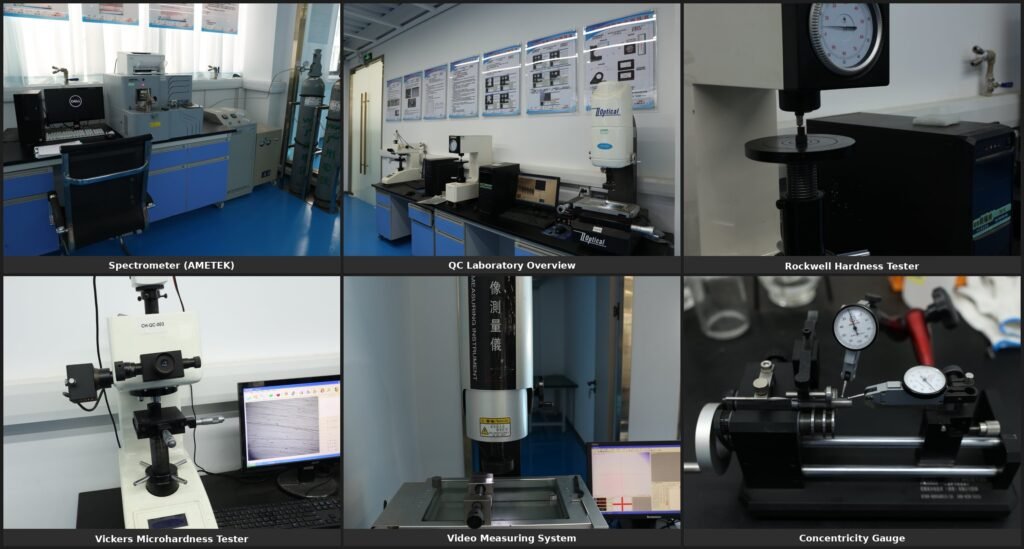
Keyfix produziert Sowohl herkömmliche 12-V-Batterieanschlüsse als auch Steckverbinder für Elektrofahrzeug-Stromschienen werden mithilfe der kombinierten Kaltumformungs-, CNC- und Stanzkapazitäten hergestellt. Die gesamte Prozesskette – von der eingehenden Messing- oder Aluminiumspule bis hin zur Überprüfung durch AMETEK OES durch fertige, verzinnte Anschlüsse, die von geprüft wurden CMM bei ±0,001 mm — bleibt unter einem nach IATF 16949 zertifizierten Dach.
Was sollten Sie in Ihrer Zeichnung der Batterieanschlüsse angeben?
Eine gut erstellte Zeichnung beugt Missverständnissen zwischen Ihrem Entwicklungsteam und dem Hersteller vor. Folgendes sollte auf jeder Zeichnung der Batteriepole enthalten sein.
| Zeichnungsaufruf | Was anzugeben ist | Warum es wichtig ist |
|---|---|---|
| Material | Legierungsbezeichnung (z. B. Messing C36000, Aluminium 6061-T6) | Steuert Leitfähigkeit, Bearbeitbarkeit und Korrosionsverhalten |
| Bohrungsabmessungen | Innendurchmesser + Kegelwinkel, mit Toleranz | Bestimmt den Passungs- und Kontaktdruck |
| Überzug | Typ, Dicke ± Toleranz, Abdeckungsbereich | Kontrolliert die Korrosionslebensdauer und den Kontaktwiderstand |
| Kontaktwiderstand | Maximaler Widerstand in mΩ bei vorgegebenem Strom (z. B. ≤ 0,1 mΩ bei 100 A) | Gewährleistet die elektrische Leistung |
| Salznebel | Stunden und Standard (z. B. 720 Std. gemäß ASTM B117) | Bestätigt den Korrosionsschutz |
| Drehmomentspezifikation | Anzugsmoment für Schrauben/Muttern in Nm | Gewährleistet Klemmkraft ohne Überkompression |
| Kabelquerschnittsbereich | AWG- oder mm²-Bereich, den die Crimpverbindung aufnimmt | Gewährleistet Feldkompatibilität |
| RoHS-Konformität | RoHS 3 (EU 2015/863) und spezifische Stoffbeschränkungen | Erforderlich für den EU-Marktzugang |
⚠️ Häufige Fehlerquelle: Wird der Kabelquerschnitt in der Zeichnung weggelassen, führt dies zu Klemmen, die zwar perfekt auf den Batteriepol passen, aber nicht das vom Installateur verwendete Kabel aufnehmen können. Geben Sie den Querschnitt an. minimaler und maximaler Drahtquerschnitt (z. B. 16–50 mm² oder 6–1/0 AWG), um Reklamationen bei der Montage vor Ort zu vermeiden.
Wie macht man Qualifizieren ein Hersteller von Batterieklemmen in China?
Die Qualifizierung von Lieferanten für Kfz-Batterieanschlüsse erfolgt nach denselben Prüfkriterien wie bei allen sicherheitskritischen elektrischen Bauteilen. Hier ist die Checkliste, die OEM-fähige Hersteller von Standardlieferanten unterscheidet.
| Prüfpunkt | Mindestanforderung | Keyfix-Status |
|---|---|---|
| Qualitätssystem | IATF 16949 (Automobilindustrie) oder ISO 9001 | IATF 16949 + ISO 9001 zertifiziert |
| Materialprüfung | OES oder XRF an eingehenden Messing-/Aluminiumchargen | AMETEK OES auf 100 % von Wärmemengen |
| Dimensionskontrolle | Koordinatenmessgerät mit einer Genauigkeit von ±0,001 mm | Dedizierte Koordinatenmessmaschine in temperaturkontrolliertem Messraum |
| Überprüfung der Beschichtung | Röntgenfluoreszenz-Dickenmessung pro Charge | Interne Röntgenfluoreszenzanalyse jeder beschichteten Charge |
| Kontaktwiderstandsprüfung | Mikro-Ohmmeter + Gleichstromquelle, ≤ 0,1 mΩ pro Charge | Verfügbar auf Produktions- und PPAP-Mustern |
| Salzsprühbeständigkeit | ASTM B117-Kammer vor Ort | Intern entwickelt; validiert bis über 1.000 Stunden |
| SPC-Implementierung | Cpk ≥ 1,33 bei kritischen Bohrungsabmessungen | Cpk ≥ 1,67 aufrechterhalten, Echtzeit-SPC |
| PPAP-Bereitschaft | Mindestens Stufe 3 | Stufe 3–5 mit digitaler Rückverfolgbarkeit |
| Einhaltung von Umweltauflagen | RoHS 3, REACH, Berichterstattung über Konfliktmineralien | Vollständige Konformitätsdokumentation |
| Kapazität für Automobilvolumina | Nachhaltig über 100.000 Terminals pro Monat | Mehrlinien-Kaltumformen + CNC + Stanzen |
Der vertikal integrierte Standort von Keyfix deckt alle Produktionsschritte von der Rohspule bis zum fertigen, beschichteten Anschluss ab – Kaltumformung, CNC-Nachbearbeitung, Wärmebehandlung, Verzinnung/Vernickelung und automatisierte optische Inspektion – alles unter einem einheitlichen Qualitätsmanagementsystem gemäß IATF 16949. Diese Integration beseitigt Koordinationsverzögerungen und Lücken in der Rückverfolgbarkeit, die entstehen, wenn mehrere Zulieferer unterschiedliche Produktionsstufen bearbeiten.
Was treibt den Wandel im Design von Batteriepolen an?
Drei Marktveränderungen verändern die Erwartungen von OEMs und Tier-1-Zulieferern an Hersteller von Batteriesteckverbindern.
48-V-Mild-Hybrid-Systeme Sie finden immer häufiger Verwendung in europäischen und asiatischen Fahrzeugplattformen. Diese Systeme ergänzen die herkömmliche 12-V-Bleiakkumulatorbatterie um eine zweite Batterie (Lithium-Ionen, typischerweise 0,5–1,0 kWh). Der 48-V-Anschluss muss die Spannung bewältigen. niedrigere Anlassströme Aber höhere Dauerströme als eine herkömmliche 12-V-Klemme – und sie muss den folgenden Anforderungen entsprechen: LV 148 Automobilstandard für Kriech- und Luftstrecken bei 48 V Gleichstrom.
Bleifreie Vorschriften Diese Entwicklungen drängen die Branche von herkömmlichen Bleiakkumulatoren hin zu verzinnten Messing- oder Kupferpolen. Diese Umstellung wirkt sich auch auf die Polkonstruktion aus: Der Kontakt zwischen zwei Bleiakkumulatoren (traditionell) weist ganz andere Reibungs- und Verformungseigenschaften auf als der Kontakt zwischen Messing und Messing oder Messing und Zinn. Daher sind neu gestaltete Klemmprofile erforderlich, um einen vergleichbaren Anpressdruck zu erzielen.
Architekturen von EV-Batteriepacks treiben die Nachfrage nach Aluminium-Stromschienenverbindern an, die prismatische Zellen innerhalb von Modulen miteinander verbinden. Diese Verbinder tragen 100–300 A kontinuierlich bei 400–800 V, wodurch neue Anforderungen entstehen für elektrische Isolationsbeschichtungen, drehmomentgesteuerte Schraubverbindungen, Und lasergeschweißte Verbindungen Das gab es in der 12-Volt-Welt nicht.
Für Hersteller, die sowohl Fahrzeuge mit Verbrennungsmotor als auch Fahrzeuge mit alternativen Antrieben beliefern, ist die praktische Konsequenz klar: Ein einziger Lieferant von Batterieklemmen benötigt nun Kompetenzen in den Bereichen Kaltumformung von Messing (12 V), CNC-Bearbeitung von Aluminium (48 V) und Präzisionsstanzen von Aluminium (Stromschienen für Elektrofahrzeuge). Keyfix verfügt über eine vertikal integrierte Produktionskette, die alle drei Prozesse gemäß IATF 16949 abdeckt und somit OEMs beim Übergang zu anderen Antriebsarchitekturen unterstützt, ohne deren Zulieferbasis zu fragmentieren.
Häufig gestellte Fragen
Wie hoch ist die Mindestbestellmenge (MOQ) für kundenspezifische Batterieklemmen?
Für CNC-gefräste Messing- oder Aluminiumklemmen beginnt die Mindestbestellmenge von Keyfix bei 500 Stück zur Prototypenvalidierung. Kaltstart-Produktionsläufe beginnen bei 10.000 Stück Die Kosten variieren je nach Variante, mit Kostenreduzierungen ab 50.000, 100.000 und 500.000+ Einheiten. Die Werkzeugkosten für das Kaltumformen werden üblicherweise über den ersten Produktionsauftrag amortisiert.
Welche Zertifizierungen besitzt Keyfix für die Herstellung von Kfz-Batteriesteckverbindern?
Keyfix hält IATF 16949 Und ISO 9001 Die Zertifizierungen umfassen kaltgeformte, CNC-gefräste und gestanzte elektrische Klemmen und Befestigungselemente. Eine vollständige PPAP-Level-3-Dokumentation – inklusive Maßzeichnung, Materialzertifikaten, Schichtdickenberichten und Cpk-Studien – ist für jede neue Artikelnummer Standard.
Kann Keyfix sowohl Messing- als auch Aluminium-Batterieanschlüsse auf derselben Produktionslinie herstellen?
Ja. Die Kaltumform- und CNC-Anlagen von Keyfix verarbeiten sowohl Messinglegierungen (C36000, C26000) als auch Aluminiumlegierungen (6061, 1100) mit speziellen Werkzeugsätzen. Der Materialwechsel umfasst eine vollständige Reinigung und Erstmusterprüfung, um Kreuzkontaminationen zu vermeiden. Das eingehende Material beider Legierungsgruppen wird geprüft. AMETEK OES vor Produktionsbeginn.
Mit welcher Lieferzeit muss ich für ein neues, kundenspezifisches Terminalprogramm rechnen?
Typischer Zeitablauf: 2–3 Wochen für DFM-Prüfung und Angebot, 3–4 Wochen für Prototypenwerkzeuge und Erstmuster, und 4–6 Wochen Für die Produktion nach PPAP-Genehmigung. Der beschleunigte Prototypenservice kann erste Muster in Kürze liefern. 10 Werktage. Für dringende Lieferungen steht Luftfracht zur Verfügung.
Stellt Keyfix Dokumentationen zur RoHS- und REACH-Konformität bereit?
Ja. Alle Anschlussmaterialien aus Messing und Aluminium sind RoHS 3-konform (EU-Richtlinie 2015/863) und Keyfix bietet vollständige Materialangaben gemäß IMDS-Format (International Material Data System) für OEM-Programme. Die REACH-SVHC-Berichterstattung (Besonders besorgniserregende Stoffe) wird jährlich aktualisiert.
Welche Beschichtungsoptionen gibt es für Batteriepole aus Messing?
Standardoptionen: Zinn (5–10 μm), Nickel (10–25 μm), Und Zinn-Nickel-Legierung (5–15 μm). Für Anwendungen in Elektrofahrzeugen, die maximale Leitfähigkeit erfordern, ist eine Silberbeschichtung (3–8 μm) erhältlich. Alle Beschichtungsdicken werden geprüft durch Röntgenfluoreszenzanalyse (RFA) bei jeder Produktionscharge, mit Zertifikaten, die in den PPAP-Paketen enthalten sind.
Kann Keyfix vormontierte Klemmen-plus-Kabel-Einheiten liefern?
Keyfix fertigt die Anschlusskomponenten; die Kabelkonfektionierung (Crimpen, Schrumpfen, Umspritzen) erfolgt über etablierte Zulieferer innerhalb der Keyfix-Lieferkette. Konfektionierte und geprüfte Kabelanschlussbaugruppen können als Komplettpaket mit vollständiger Rückverfolgbarkeit vom Schmieden der Anschlüsse bis zur Zugfestigkeitsprüfung der Kabelverpressung versendet werden.
Welche Inspektionsberichte werden jeder Bestellung beigefügt?
Jede Produktionscharge wird mit einem Konformitätsbescheinigung (CoC) Die Dokumentation umfasst Abmessungen, Material, Schichtdicke und Sichtprüfung. Für PPAP-Programme beinhaltet sie zusätzlich Maßzeichnungen (Koordinatenmessbericht), Cpk/SPC-Daten, Werkszeugnisse, Röntgenfluoreszenzanalysen der Beschichtung, Kontaktwiderstandsmessungen und Ergebnisse von Salzsprühnebeltests.
Wenn Ihr nächstes Projekt Batterieanschlüsse aus Messing oder Aluminium beinhaltet – egal ob es sich um eine 12-V-SAE-Klemme, einen 48-V-Anschluss oder eine Sammelschiene für Elektrofahrzeuge handelt – senden Sie Ihre Zeichnung an Keyfix's Anwendungsentwicklungsteam. Sie führen eine kostenlose DFM-Analyse durch, empfehlen die optimale Material-, Prozess- und Beschichtungskombination und senden Ihnen innerhalb von 48 Stunden ein detailliertes Angebot zu. Kontaktieren Sie uns. sales@keyfixpro.com oder besuchen Sie www.keyfixpro.com um das Gespräch zu beginnen.
Autor: Keyfix-Entwicklungsteam Veröffentlicht: 17. Mai 2026 Letzte Aktualisierung: 17. Mai 2026