
ANSI and DIN black hex socket cap head screws — commonly called Allen screws or socket head cap screws (SHCS) — are the precision fastener of choice wherever high clamping force, compact head profile, and clean appearance matter at once. The cylindrical head with a recessed hexagonal drive applies higher torque in tighter spaces than any external-drive screw, while the black finish delivers a uniform matte appearance and corrosion protection. This guide compares the ANSI (inch) and DIN/ISO (metric) systems, decodes black-finish options, and lays out the metallurgy and sourcing criteria.
TL;DR — Key Takeaways
- Socket head cap screws follow two dimensional systems: ANSI/ASME B18.3 (inch) and DIN 912 / ISO 4762 (metric) — dimensionally distinct and not interchangeable.
- The “black” finish is usually black oxide (1–2 μm, mild protection) or black zinc (5–12 μm, better corrosion) — both deliver the signature matte appearance.
- Grade 12.9 alloy steel is the SHCS workhorse, with 1,220 MPa tensile strength — the highest common property class for socket screws.
- The hex socket drive applies torque across six broad faces, enabling clamp loads that cam-out-prone Phillips and slot drives cannot reach.
- Verified material traceability via OES, thread gauging, and documented Cpk separate OEM-grade suppliers from commodity hardware.
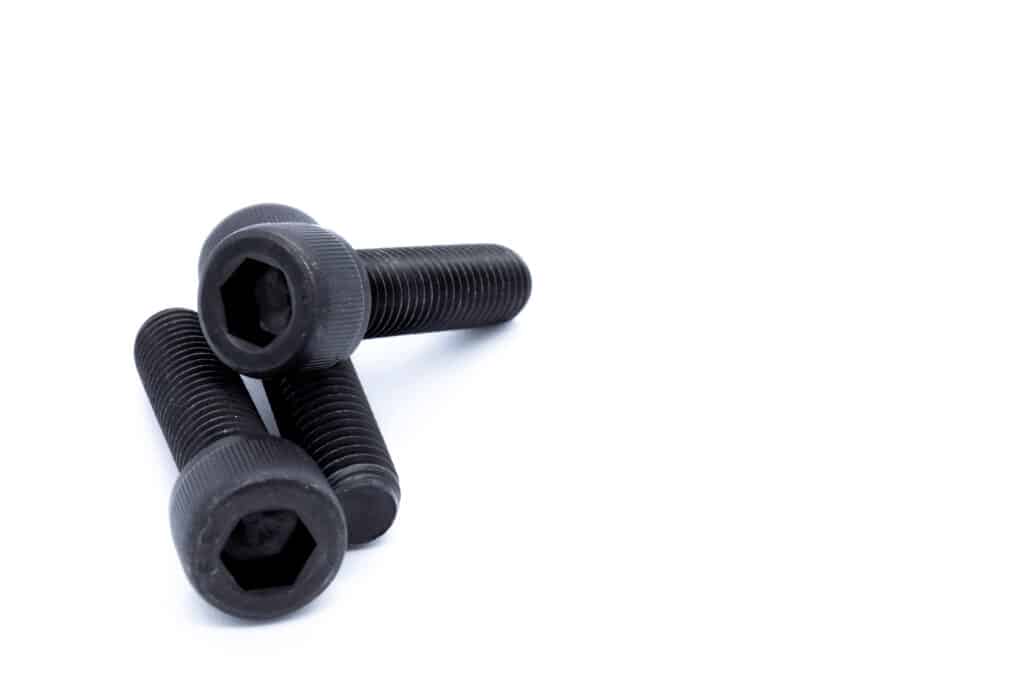
What Is a Hex Socket Cap Head Screw?
A socket head cap screw is a fastener with a cylindrical head and a recessed internal hexagonal drive, tightened with a hex key (Allen wrench). The “cap” refers to the cylindrical head; the “socket” to the internal hex recess; “Allen screw” is the shop name derived from the wrench used to drive it.
The recessed hex drive is the defining engineering feature. By transmitting torque through six broad internal faces, it resists the cam-out that limits Phillips and slotted drives — letting the screw reach the high clamp loads its alloy-steel body is capable of. The compact head also seats into a counterbore, leaving a flush surface ideal for tooling, jigs, and machinery where protruding heads would obstruct.
| Feature | Socket Head Cap Screw | Hex Head Bolt | Button Head Socket |
|---|---|---|---|
| Drive type | Internal hex (Allen) | External hex | Internal hex (Allen) |
| Head profile | Cylindrical, tall | Hexagonal, external | Domed, low |
| Torque capacity | Very high | Very high | Moderate |
| Counterbore seating | Yes (flush possible) | No | Partial |
| Best application | Machinery, tooling, dies | General structural | Cosmetic, low-clearance |
KeyFix manufactures socket head cap screws and other precision threaded fasteners through its CNC machining capability and combined cold-heading processes, covering both inch and metric standards.
ANSI vs DIN: Which Standard Applies?
Socket head cap screws exist in two parallel dimensional systems that share the same basic geometry but differ in diameter, thread pitch, and head proportions. Specifying the wrong system is the most common SHCS procurement error.
| Standard | System | Scope | Thread Series | Head Diameter Rule |
|---|---|---|---|---|
| ASME/ANSI B18.3 | Inch (US) | Socket head cap screws, inch | UNC / UNF | ≈ 1.5 × nominal diameter |
| DIN 912 | Metric (legacy German) | Socket head cap screws, metric | Metric coarse/fine | ≈ 1.5 × nominal diameter |
| ISO 4762 | Metric (international) | Socket head cap screws (≈ DIN 912) | Metric coarse/fine | ≈ 1.5 × nominal diameter |
| DIN 6912 | Metric (low head) | Thin-head socket cap screws | Metric | Reduced head height |
| ISO 14579 | Metric (Torx socket) | Hexalobular socket cap screws | Metric | Torx drive variant |
DIN 912 and ISO 4762 are dimensionally near-identical — a part to DIN 912 satisfies an ISO 4762 callout in virtually all cases. The critical distinction is between the metric (DIN/ISO) and inch (ANSI) systems: an M6 metric socket screw and a ¼” inch socket screw are close in size but have different thread pitches and are not interchangeable.
| Metric Size (DIN 912) | Nearest Inch Size (ANSI) | Metric Thread Pitch | Inch Thread (UNC) |
|---|---|---|---|
| M5 | #10 | 0.80 mm | 24 TPI |
| M6 | ¼” | 1.00 mm | 20 TPI |
| M8 | 5/16″ | 1.25 mm | 18 TPI |
| M10 | 3/8″ | 1.50 mm | 16 TPI |
| M12 | ½” | 1.75 mm | 13 TPI |
💡 Engineer’s Note: When sourcing replacement socket screws for existing machinery, identify the standard before ordering — measure the thread pitch with a gauge. A metric M6×1.0 will start to thread into an imperial ¼”-20 hole and then bind, stripping both the screw and the tapped hole. The two systems look similar but are mechanically incompatible.
What Does “Black” Finish Mean on Socket Screws?
The black appearance of most socket head cap screws comes from one of several surface treatments, each with distinct corrosion performance. The “black” look is partly functional (corrosion protection) and partly aesthetic (uniform matte finish that hides tool marks).
| Black Finish | Process | Thickness (μm) | Salt Spray (hrs) | Appearance | Best Use |
|---|---|---|---|---|---|
| Black Oxide | Hot alkaline conversion | 1–2 | 24–96 (with oil) | Deep matte black | Indoor machinery, tooling |
| Black Zinc | Zinc plate + black passivate | 5–12 | 96–240 | Glossy-matte black | Mild outdoor, general use |
| Black Zinc-Nickel | Zn-Ni plate + black seal | 8–15 | 480–720 | Satin black | Automotive, harsh service |
| Black Phosphate | Manganese phosphate + oil | 3–8 | 48–96 | Matte grey-black | Anti-galling, lubricated joints |
| Black DLC | Diamond-like carbon | 1–3 | Outstanding | Deep black, hard | Premium, high-wear |
| Thermal Black Oxide (stainless) | High-temp oxidation | <1 | Inherent (stainless) | Black on stainless | Corrosion + appearance |
The most common specification is black oxide on grade 12.9 alloy steel — the deep black appearance is the visual signature of high-strength socket screws. But black oxide provides only mild corrosion protection (it must be oil-sealed), so for outdoor or humid service, black zinc or black zinc-nickel is the better choice.
KeyFix applies black oxide, black zinc, and zinc-nickel finishes with thickness verified by XRF, documented through its raw material and surface treatment process. In-house zinc-nickel lines deliver 480–720 hour salt-spray performance.
⚠️ Common Pitfall: Specifying “black socket cap screws” for an outdoor or washdown application without naming the finish often results in black-oxide screws that rust within weeks once the protective oil wears off. Black oxide is an indoor finish — for corrosion-exposed service, specify black zinc-nickel or stainless with thermal black oxide.
What Materials and Grades Apply to Socket Cap Screws?
Socket head cap screws are predominantly high-strength alloy steel, but stainless and other materials serve specific environments.
| Material | Property Class | Tensile (MPa) | Corrosion | Best Application |
|---|---|---|---|---|
| Alloy Steel (SCM435 / 10.9) | 10.9 | 1,040 | Poor (needs finish) | General high-strength machinery |
| Alloy Steel (SCM435 / 12.9) | 12.9 | 1,220 | Poor (needs finish) | Maximum-strength tooling, dies |
| Stainless A2 (304) | A2-70 | 700 | Excellent | Food, medical, mild outdoor |
| Stainless A4 (316) | A4-70 | 700 | Outstanding (chloride) | Marine, chemical, coastal |
| Carbon Steel (lower grade) | 8.8 | 800 | Poor (needs finish) | Economy applications |
| Titanium (Grade 5) | — | 900–1,100 | Outstanding | Aerospace, weight-critical |
Grade 12.9 is the defining grade for socket head cap screws — its 1,220 MPa tensile is the highest common property class, and the socket screw geometry (thick cylindrical head, deep hex socket) is engineered to transmit the torque needed to develop that strength. The “12.9” head marking with black oxide is the universal signature of a high-strength Allen screw.
KeyFix machines socket cap screws from alloy steel, stainless, and titanium, verifying incoming material chemistry via AMETEK OES on 100 % of heats — part of the quality system detailed in its inspection standards documentation.
How Are Black Socket Cap Screws Manufactured?
Two routes produce socket head cap screws, selected by volume, size, and tolerance.
| Process | Best For | Volume | Tolerance | KeyFix Capability |
|---|---|---|---|---|
| Cold heading + thread rolling | Standard sizes, high volume | 10,000+ | ±0.05 mm | Multi-station headers |
| Full CNC machining | Complex, oversized, prototype | 100–10,000 | ±0.005 mm | STS C-series + Swiss lathes |
| Cold heading + CNC secondary | Headed screws with precision features | 5,000+ | ±0.02 mm | Hybrid production cells |
Cold heading dominates standard socket cap screw production — it forms the cylindrical head and broaches the hex socket at high speed, with continuous grain flow that increases tensile strength 40–60 % versus machined equivalents and 98 % material utilization. For oversized or low-volume socket screws, full CNC machining holds ±0.005 mm. KeyFix runs both routes — its cold forging and precision machining capabilities cover the complete size and volume spectrum.
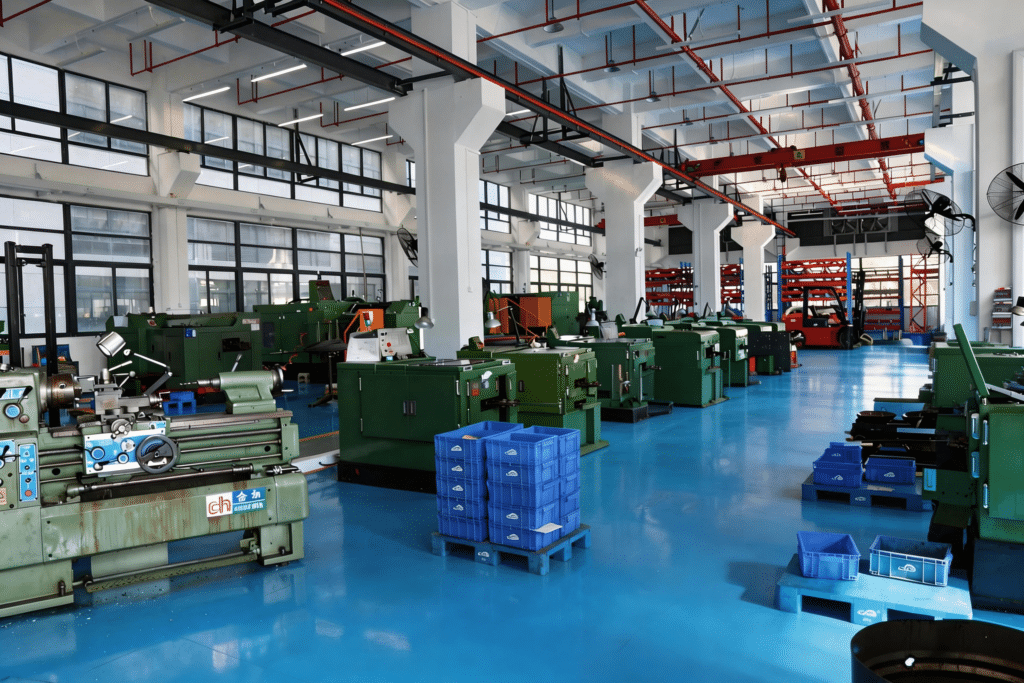
After forming, the hex socket is go/no-go gauged for across-flats dimension, and threads are checked with ring gauges to the relevant class (6g metric or 2A/3A inch).
Need a quote on ANSI or DIN black socket cap screws? Send your drawing or specification to KeyFix engineers — you’ll get a DFM review and quotation within 48 hours. Get a quote here or email sales@keyfixpro.com.
What Should You Specify on a Socket Cap Screw Drawing?
| Drawing Call-Out | What to Specify | Why It Matters |
|---|---|---|
| Standard | ANSI B18.3, DIN 912, or ISO 4762 | Anchors inch vs metric system |
| Size + thread | e.g., M8×1.25 or 5/16″-18 | Defines diameter and pitch |
| Length | Under-head length with tolerance | Ensures correct engagement |
| Property class | 10.9, 12.9, A2-70, A4-70 | Drives strength and material |
| Finish | Black oxide, black zinc, Zn-Ni | Defines corrosion + appearance |
| Hex socket size | Across-flats per standard | Ensures correct hex key fit |
| Thread length | Full or partial thread | Affects grip and clamp behavior |
KeyFix machines socket cap screws across machinery, automotive, electronics, and tooling sectors — its full CNC parts portfolio and machinery fastener programs demonstrate the range delivered to OEM specification.
How Do You Qualify a Socket Cap Screw Manufacturer?
| Audit Point | Minimum Requirement | KeyFix Status |
|---|---|---|
| Quality system | ISO 9001 minimum | IATF 16949 + ISO 9001 + ISO 14001 |
| Cold heading + CNC | Both routes available | Multi-station headers + 5-axis CNC |
| Material verification | OES on incoming alloy | AMETEK OES on 100 % of heats |
| Thread gauging | Ring/plug gauges per class | 100 % gauging on production |
| Hex socket inspection | Go/no-go across-flats | 100 % verification |
| Finish thickness | XRF on coated lots | In-house XRF |
| SPC implementation | Cpk ≥ 1.33 on critical dims | Cpk ≥ 1.67, real-time SPC |
| Traceability | Per-lot to material heat | Digital per-lot traceability |
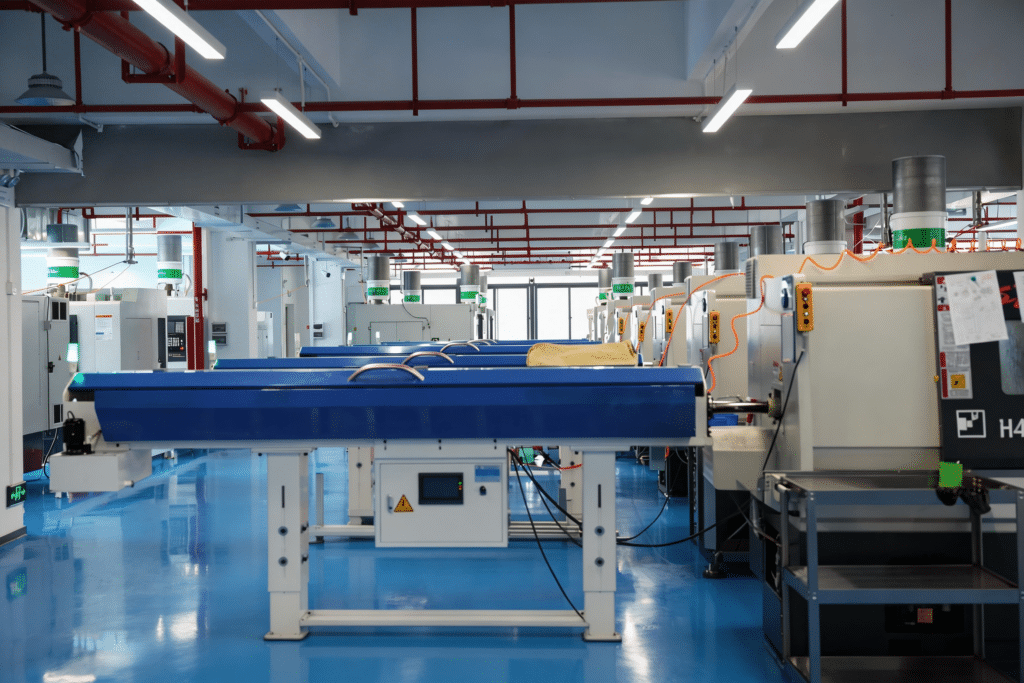
KeyFix’s vertically integrated campus combines precision machining and cold forging under a single IATF 16949 quality system, supporting a 0 PPM defect record across 100+ programs in 20+ countries.
What Are the Logistics and Shipping Terms?
KeyFix manufactures in Huizhou, Guangdong, close to South China’s export ports.
| Term | Detail |
|---|---|
| Manufacturing location | Huizhou, Guangdong Province |
| Standard shipping term | FCA Dongguan |
| Sea freight term | FOB Shenzhen Yantian Port |
| Prototype lead time | 7–14 business days (air-expressed) |
| Production lead time | 4–6 weeks after sample approval |
The short inland haul from Huizhou to Dongguan and Shenzhen Yantian Port reduces transit time and freight cost for international buyers of socket cap screws.
Frequently Asked Questions
What’s the difference between a socket cap screw and an Allen screw?
They are the same fastener. “Socket head cap screw” (SHCS) is the technical name; “Allen screw” is the shop term from the Allen wrench (hex key) used to drive the recessed hex socket.
Are ANSI and DIN socket cap screws interchangeable?
No. ANSI (inch) and DIN/ISO (metric) socket screws have different diameters and thread pitches. An M6 and a ¼” screw are close in size but mechanically incompatible. DIN 912 and ISO 4762 (both metric) are dimensionally near-identical and interchangeable.
What does the “black” finish on socket screws provide?
Usually black oxide (mild indoor corrosion protection, deep matte appearance) or black zinc/zinc-nickel (better corrosion resistance for outdoor service). The black look is the visual signature of high-strength grade 12.9 socket screws.
What grade are most black socket cap screws?
Grade 12.9 alloy steel, with 1,220 MPa tensile — the highest common property class for socket screws. Black oxide plus a “12.9” head marking is the universal identifier of high-strength Allen screws.
What certifications does KeyFix hold?
KeyFix holds IATF 16949, ISO 9001, and ISO 14001 certifications. Full thread gauging, material certificates, finish XRF reports, and PPAP Level 3 documentation are standard.
What shipping terms apply for international orders?
Standard shipping is FCA Dongguan, with sea freight as FOB Shenzhen Yantian Port from the Huizhou production base. Production ships 4–6 weeks after sample approval.
If your next project needs ANSI or DIN black hex socket cap head screws (Allen screws) in alloy steel, stainless, or titanium, send your drawing to KeyFix’s engineering team for a free DFM review and quotation within 48 hours. Explore the full product portfolio or contact KeyFix at sales@keyfixpro.com.
Author: KeyFix Engineering Team Published: May 31, 2026 Last Updated: May 31, 2026