Choosing an IATF 16949 fastener supplier with PPAP capability comes down to one question: can they hand you a complete, defensible Level 3 PPAP package on the day your customer demands it? IATF 16949 is the automotive quality management standard built on ISO 9001 — and it makes PPAP submission a baseline expectation, not a bonus. This guide walks through what the certification actually requires, what a real PPAP package contains, and how to qualify a supplier before you sign the PO.
TL;DR — Key Takeaways
- IATF 16949 is the automotive QMS standard built on ISO 9001; it integrates the AIAG core tools — APQP, PPAP, FMEA, MSA, SPC — into a single system.
- A complete Level 3 PPAP submission contains 18 elements, from design records and FMEA to dimensional results, IMDS, and the Part Submission Warrant.
- Most automotive OEMs default to Level 3 PPAP; safety-critical fasteners almost always require it.
- Typical PPAP preparation runs 2–4 weeks after tooling qualification; customer review adds another 1–4 weeks.
- Over 65,000 suppliers worldwide hold IATF 16949 certification — but only a fraction can produce custom fasteners and deliver full PPAP packages without rework.
What Defines an IATF 16949 Fastener Supplier with PPAP Capability?
A qualified IATF 16949 fastener supplier with PPAP capability is one that operates a certified automotive QMS and can produce all 18 PPAP elements as live, traceable documents — not boilerplate forms reused across customers.
The certification itself is governed by the International Automotive Task Force and audited by IATF-recognized certification bodies. It’s awarded to a specific manufacturing site, not to a parent company. Always verify the certificate against the specific facility producing your parts.
PPAP capability layers on top. A supplier that only holds the IATF certificate but outsources FMEA preparation, has no in-house metallurgical lab, or cannot pull SPC data on request is technically certified but practically incomplete.
| Requirement | What It Means |
|---|---|
| IATF 16949 certificate | Automotive QMS audited every 12 months by an IATF-recognized CB |
| AIAG core tools competency | APQP, PPAP, FMEA, MSA, SPC integrated into operations |
| Testing access | Hardness, dimensional and salt spray in-house; tensile and proof load through third-party labs |
| PPAP Level 3 fluency | Can produce all 18 elements on demand |
| IMDS / conflict minerals | Material data submission for automotive customers |
| Customer-specific requirements | Handles Ford, GM, Stellantis, VW, Toyota CSRs |
Why Is PPAP Capability Non-Negotiable for Automotive Fastener Programs?
PPAP is the formal proof that a supplier’s production process can produce parts that meet drawing specs consistently, at production rate. Without that proof, your customer cannot release the part for serial production.
Here’s the chain of logic. IATF 16949 clause 8.3.4.4 requires a documented product approval process. PPAP, governed by the AIAG PPAP Manual 4th Edition, is the de facto product approval process across the global automotive industry. Skip PPAP and you violate IATF — and your customer’s IATF auditor will find it.
For your BOM, the procurement risk looks like this: a non-PPAP-capable supplier might quote 15% lower than a certified one, but every program launch with that supplier costs you 2–4 weeks of corrective action, plus the risk of a line stoppage if defects surface during PPAP run.
⚠️ Common Pitfall: Accepting a “PPAP-ready” claim on a supplier capability sheet without asking for a sample PPAP package from a recent program. The phrase is unregulated. Ask to see a redacted PSW, control plan, and capability study from a real program — not a template.
What’s Inside a Level 3 PPAP Submission for Fasteners?
Level 3 is the automotive default and what most OEMs require for new custom fasteners. It includes all 18 PPAP elements as defined by AIAG, packaged into a single submission with the Part Submission Warrant (PSW) on top.
| # | PPAP Element | Why It Matters for Fasteners |
|---|---|---|
| 1 | Design records | Ballooned drawing with every feature ID’d |
| 2 | Engineering change documents | Latest revision, no unreleased changes |
| 3 | Customer engineering approval | Where required (e.g., DV/PV signoff) |
| 4 | Design FMEA (DFMEA) | If supplier owns design |
| 5 | Process flow diagram | Wire → heading → thread roll → heat treat → plate → inspect |
| 6 | Process FMEA (PFMEA) | Failure modes for each process step |
| 7 | Control plan | Critical-to-quality features and SPC plan |
| 8 | MSA studies | Gauge R&R on critical measurements |
| 9 | Dimensional results | Layout report on all ballooned features |
| 10 | Material/performance test results | 3.1 MTR, tensile, hardness per ISO 898-1 |
| 11 | Initial process studies (Cpk) | Capability ≥1.33 typical |
| 12 | Qualified laboratory documentation | Lab scope and accreditation |
| 13 | Appearance approval report | Where applicable |
| 14 | Sample production parts | Typically 6+ pieces |
| 15 | Master sample | Retained at supplier |
| 16 | Checking aids | Custom fixtures, gauges |
| 17 | Customer-specific requirements | Ford CSR, GM CSR, etc. |
| 18 | Part Submission Warrant (PSW) | Cover sheet with supplier signoff |
For a single fastener part number with an existing quality system, a complete Level 3 PPAP typically takes 2–4 weeks to prepare after tooling qualification, plus 1–4 weeks for customer review. Complex parts or new tooling extend that.

How Do You Audit an IATF 16949 Fastener Supplier with PPAP Capability?
A practical second-party audit — what you’d run before issuing a long-term agreement — focuses on five evidence areas, not generic ISO checkbox items.
1. Certificate verification. Pull the supplier’s certificate, confirm the issuing CB is IATF-recognized, check the validity date, and verify the scope covers fastener manufacturing at the specific site producing your parts.
2. Live PPAP package review. Ask to see two recent submissions from current customers (redacted is fine). Look for hand-pulled SPC charts with real Cpk values, not templates with “TBD” cells.
3. Process flow walk-through. Trace one fastener from incoming wire receipt through final pack-out. Ask to see the lot-traceability tag at each station. A break in traceability is a Major nonconformity under IATF and a deal-breaker for safety-critical parts.
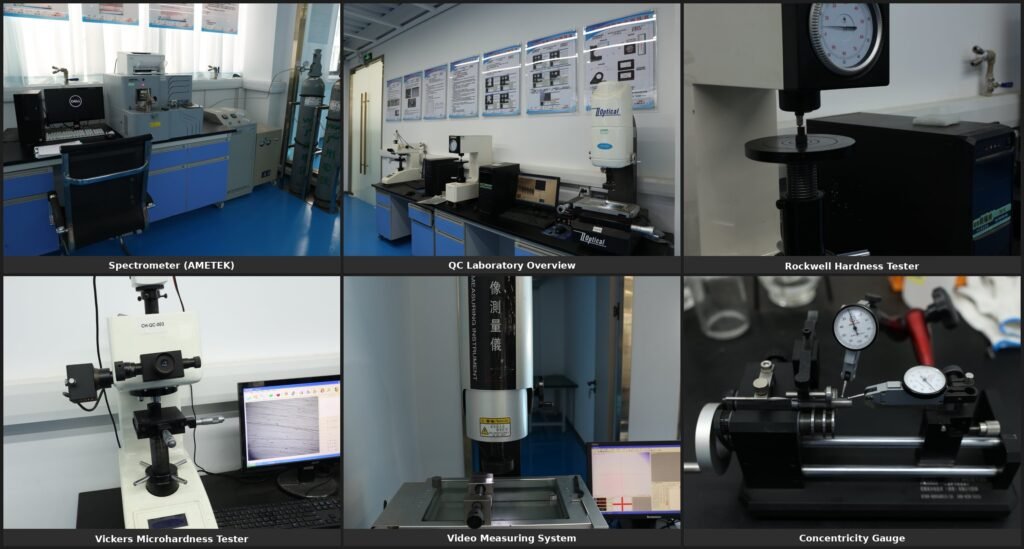
4. Lab capability. Confirm in-house tensile testers, Rockwell hardness, projection gauges, and salt-spray cabinets. Ask whether thread go/no-go gauges are calibrated against a master and recorded in the MSA.
5. Customer-specific requirements (CSRs). Verify the supplier maintains the latest CSR documents for the OEMs your customer serves. Ford, GM, Stellantis, Mercedes-Benz, Renault, Geely, BYD, and IVECO all publish CSRs through the IATF; the supplier should know the current version.
🔧 Keyfix in Practice: Every Keyfix custom fastener program runs a parallel APQP track from RFQ acceptance — DFMEA and PFMEA are drafted before the first die is cut, and SPC data on critical features is collected during the tooling trial. This means PPAP submission can ship within 2 weeks of T1 sample approval, instead of the typical 4-week lag.
Need help deciding? Send your fastener drawing to Keyfix engineers and we’ll quote tooling, samples, and a full PPAP plan in one package — usually within 48 hours.
What’s the Difference Between ISO 9001 and IATF 16949 for Fasteners?
ISO 9001 is the general-purpose QMS standard; IATF 16949 is ISO 9001 plus automotive-specific requirements. You cannot hold IATF 16949 without first implementing ISO 9001.
The key practical differences for fastener procurement:
| Topic | ISO 9001 | IATF 16949 |
|---|---|---|
| Scope | Any industry | Automotive supply chain only |
| Customer focus | General customer satisfaction | Customer-specific requirements (CSRs) |
| Core tools | Not required | APQP, PPAP, FMEA, MSA, SPC mandatory |
| PPAP | Not required | Required for product approval |
| Audit frequency | Often 3-year cycle | Annual surveillance + 3-year recert |
| Special process audit | Not required | Required (heat treat, plating, welding) |
| Defect target | Continuous improvement | Customer-defined (often 0–25 PPM) |
For a non-automotive program — industrial machinery, agricultural equipment, general construction — ISO 9001 alone is often sufficient. For any vehicle program serialized under a VIN, IATF 16949 is the floor.
💡 Engineer’s Note: Some Tier 2 fastener suppliers hold IATF 16949 certificates of conformance (issued by the customer, not a third-party CB) under the AIAG MAQMSR sub-tier program. These are not equivalent to full IATF 16949 certification and carry less weight on a supplier audit. Always ask for the third-party certificate.
How Do PPAP Submission Levels Apply to Fastener Suppliers?
The five PPAP submission levels define what documents go to the customer versus what’s retained at the supplier site. The supplier still produces all 18 elements regardless of level — the level only governs what gets shipped to the customer with the submission.
| Level | What Customer Receives | When Used |
|---|---|---|
| Level 1 | PSW only | Standard catalog parts, low-risk |
| Level 2 | PSW + samples + limited data | Minor changes to qualified parts |
| Level 3 | PSW + samples + full 18-element package | Automotive default |
| Level 4 | PSW + customer-defined elements | Custom requirements |
| Level 5 | Full package reviewed at supplier site | On-site audit, often safety-critical |
Most automotive OEMs default to Level 3 for new fastener part numbers. Level 5 is reserved for safety-critical applications — wheel bolts, airbag fasteners, brake caliper bolts, EV battery clamps with thermal-runaway implications.
If you’re sourcing for an EV battery program, expect Level 3 or Level 5 plus full IMDS material declaration, REACH and RoHS compliance, conflict minerals reporting, and lot-level traceability for the entire program lifecycle.
What Customer-Specific Requirements Should the Supplier Handle?
Customer-specific requirements (CSRs) are the OEM-by-OEM overlays that sit on top of base IATF 16949. A capable supplier maintains the current version of each CSR for the OEMs they serve, and routes them into APQP and PPAP planning automatically.
The major OEM CSRs published through the IATF as of 2026 include:
| OEM | CSR Status |
|---|---|
| Ford | Effective 6 February 2025 (PPAP 4th Edition) |
| General Motors | Effective 30 October 2025 |
| Stellantis (FCA) | Maintained per IATF |
| Mercedes-Benz | February 2022 |
| Renault Group | April 2026 |
| Geely Holding | June 2025 |
| IVECO Group | November 2025 |
| BYD | Now an IATF member (2026) |
A supplier serving multiple OEMs must reconcile differences in PPAP submission preferences, FMEA format (AIAG vs AIAG-VDA), and gauge R&R requirements. Ford accepted the AIAG-VDA FMEA Handbook format effective 30 September 2024 — a recent example of how CSRs evolve and why the supplier’s documentation library has to stay current.

What Should You Demand on the First Production Order?
When you place the first PO with a new IATF 16949 fastener supplier, your purchase order should call out — not assume — every quality deliverable. Suppliers will deliver what’s specified, no more.
A defensible PO checklist for a custom automotive fastener:
- PPAP submission level (Level 3 default unless otherwise stated)
- PPAP target date (typically 2 weeks after tooling sign-off)
- Material specification with grade and applicable standard (e.g., SCM435H per JIS G4105)
- Property class per ISO 898-1 (8.8, 10.9, 12.9)
- Surface treatment with thickness in microns (e.g., zinc-nickel 8 μm + topcoat)
- IMDS submission requirement with target ID
- Capability target (Cpk ≥1.33 on critical-to-quality features)
- Defect target in PPM (often 25 or lower for automotive)
- Lot traceability requirement back to wire heat number
- Packaging spec (VCI bags, returnable totes, etc.)
- Incoterms and delivery point
📋 Spec Tip: For automotive flange bolts, a single line on the PO that reads “Submit PPAP Level 3 per AIAG PPAP 4th Edition, including IMDS submission and 3.1 MTR, within 14 days of T1 sample approval” eliminates 80% of the back-and-forth you’d otherwise have on the schedule.
Frequently Asked Questions
What’s the typical MOQ for a custom fastener PPAP program?
For cold-headed automotive parts, MOQs typically start at 5,000–10,000 pieces to amortize tooling and PPAP run costs. CNC-machined samples for design validation have no MOQ. Once PPAP is approved, repeat orders run at standard cold-heading economics with no PPAP overhead until a change is triggered.
How long does PPAP take from tooling approval to customer signoff?
PPAP package preparation runs 2–4 weeks after T1 sample approval. Customer review adds 1–4 weeks depending on the OEM’s quality team backlog. Plan for 4–8 weeks total. Interim PPAP approval can shorten this to 2–3 weeks for limited shipping if your customer’s CSR allows it — common at Ford, GM, and Stellantis.
Does Keyfix carry IATF 16949 certification at the production site?
Yes. Keyfix operates under IATF 16949 and ISO 9001 at our manufacturing facility, with certificates issued by an IATF-recognized certification body. Surveillance audits run annually, and full recertification runs on a 3-year cycle. Certificate copies are available on request and accompany every PPAP submission as part of element 12 (qualified lab documentation).
What documentation comes with each shipment?
Standard documentation per shipment includes a Certificate of Conformance, 3.1 Mill Test Report on the wire stock, dimensional inspection records on critical features, hardness and tensile test results per ISO 898-1, plating thickness measurements, and lot traceability tags. PPAP submissions include the full 18-element package with PSW for Level 3.
Can you handle Customer-Specific Requirements for multiple OEMs?
Yes. Keyfix works to the current CSR documents of the OEM your program serves — for example Ford, GM, Stellantis, Mercedes-Benz, Renault, Geely or BYD — with the latest revisions tracked through the IATF Global Oversight site. Each program is mapped against the relevant CSR during APQP, and PPAP submission format follows the customer’s specific requirements.
Do you support IMDS and conflict minerals reporting?
Yes. IMDS material data submission is included as part of standard PPAP scope at no additional charge for automotive customers. Conflict minerals reporting follows the RMI CMRT template and is available on request. REACH and RoHS compliance documentation is maintained for all standard fastener materials and surface treatments.
What Incoterms do you support beyond FOB?
FOB is the default for most automotive customers. CIF, CIP, and DDP are available on request. For Tier 1 customers running JIT production, Keyfix supports consignment stock and bonded warehouse arrangements at major North American and European ports. Air freight is available for first-article shipments to compress launch timelines.
Send your drawing and program requirements to the Keyfix engineering team. We’ll quote tooling, samples, and a complete IATF 16949 / Level 3 PPAP plan in one package — usually within 48 hours — so your launch schedule starts on dates that hold instead of dates that slip.
Author: Keyfix Engineering Team Published: April 25, 2026 Last Updated: April 27, 2026