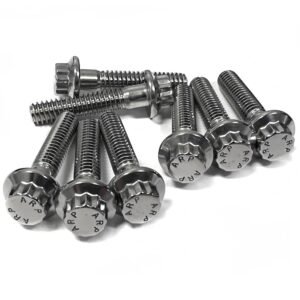
Brass threaded inserts give a plastic part a metal thread, and that thread survives assembly, service, and repeated disassembly in a way a thread formed in the plastic itself cannot. A self-tapping screw driven straight into an ABS or nylon boss works well the first time. It then loses holding power each time it is removed, and it slowly loses clamp load as the plastic creeps under stress. A knurled brass insert moves the thread into metal and spreads the load into the plastic through its knurl. Whether it holds depends on four decisions: installation method, knurl pattern, boss and hole geometry, and the resin itself. This guide covers each, along with retention testing, material choice, CNC production, and sourcing.
Threaded inserts are one family within KeyFix’s range of custom brass parts and fasteners.
TL;DR — Key Takeaways
- A thread formed directly in plastic typically tolerates only a handful of assembly cycles before stripping. A brass insert supports repeated reuse.
- Four installation routes dominate: heat-set, ultrasonic, press-in, and molded-in. Each suits different resins, volumes, and capital budgets.
- The knurl pattern decides the failure mode. Straight knurls resist torque-out, while opposed helical or diamond knurls with a groove resist both torque-out and pull-out.
- Boss geometry matters as much as the insert. A boss outside diameter of roughly 2× the insert diameter is a common starting point.
- Heat-set and ultrasonic installation work in thermoplastics only. Thermosets need press-in, expansion, or molded-in inserts.

Why Does Plastic Need a Metal Thread?
Plastic can hold a thread. It holds that thread poorly over time and over repeated use. The problems are mechanical and time-dependent, and brass addresses both.
| Behaviour | Screw Directly Into Plastic | Brass Insert |
|---|---|---|
| Reuse cycles | Few — each reinsertion damages the formed thread | Many — metal thread does not wear |
| Clamp load retention | Falls as plastic creeps under stress | Load spread by knurl; far lower creep at the thread |
| Strip torque margin | Narrow and resin-dependent | Wide; governed by the metal thread |
| Cross-threading risk | High on reassembly | Low; clean machined thread |
| Machine screw compatibility | No — needs thread-forming screw | Yes — standard metric machine screw |
| Field serviceability | Poor | Good |
Creep is the less obvious problem and often the more damaging one. Thermoplastics deform slowly under sustained stress, particularly as temperature rises. A thread-forming screw holds its clamp load by stressing the plastic directly around the thread, so that stress relaxes over weeks and months and the joint loosens without anyone touching it. A brass insert carries the screw load in metal and passes it to the plastic over the full knurled surface. That lowers local stress and slows relaxation.
KeyFix produces custom brass inserts across its CNC parts portfolio and wider product portfolio, made to customer drawings for electronics, appliance, and automotive interior applications.
Which Installation Method Should You Use?
Installation method is the first decision. It sets which resins, volumes, and insert designs are possible.
| Method | How It Works | Resins | Cycle Time | Capital Cost | Retention |
|---|---|---|---|---|---|
| Heat-set (thermal) | Heated insert pressed in; plastic melts and reflows into knurl | Thermoplastics | Seconds | Low–moderate | High |
| Ultrasonic | Vibration heats plastic at the interface | Thermoplastics | Fastest | Moderate–high | High |
| Press-in (cold) | Pressed into slightly undersized hole | Thermoplastics, some thermosets | Fast | Lowest | Moderate |
| Molded-in | Insert placed in the mold; plastic forms around it | Thermoplastics and thermosets | Adds to mold cycle | Mold complexity | Highest |
| Self-expanding | Insert expands against hole wall when screw is driven | Wide range | Fast | Low | Moderate |
Heat-set installation is the most common general-purpose route. Melted plastic flows into the knurl and solidifies around it, giving strong mechanical interlock with modest equipment. Ultrasonic installation achieves similar results faster and suits high-volume automated lines, but tooling and process setup are more involved. Press-in is the low-cost option for lighter loads. Molded-in inserts give the highest retention because the plastic forms completely around the insert, at the cost of loading inserts into the mold every cycle and protecting the thread from resin.
💡 Engineer’s Note: Choose the installation method before finalising the insert drawing, not after. A heat-set insert typically has a tapered body to guide it into a tapered hole. A molded-in insert needs a sealed thread and often a closed end to keep resin out. A press-in insert relies on interference rather than melt flow. One insert design rarely performs well across all three.
How Does Knurl Pattern Control Retention?
The knurl is the interface between metal and plastic. Its geometry decides which load the insert resists best, and therefore how it fails.
| Knurl Pattern | Resists Torque-Out | Resists Pull-Out | Typical Use |
|---|---|---|---|
| Straight (axial) | Excellent | Poor | Joints loaded mainly in rotation |
| Diamond | Good | Good | General purpose |
| Opposed helical (left and right bands) | Excellent | Excellent | High-performance heat-set and ultrasonic |
| Helical, single direction | Good in one direction | Good | Directional torque applications |
| Knurl with circumferential groove | Adds pull-out resistance | Strong improvement | Combined with any pattern |
The underlying logic is geometric. Straight knurl teeth run parallel to the insert axis, so they lock against rotation but give the plastic nothing to grip axially. A tensile load simply slides the insert out along its own teeth. A circumferential groove, or helices running in opposite directions, creates undercuts that the reflowed plastic locks behind. That is why most high-retention designs combine opposed helical bands with a central groove.
Knurl depth and pitch matter too. A deeper knurl displaces and captures more plastic but needs more heat or force to install and can crack a thin boss. A finer knurl suits small inserts and brittle resins. These parameters are tuned to the resin rather than chosen once and reused everywhere.
How Should the Boss and Hole Be Designed?
The insert can only perform as well as the boss that holds it. The same insert pulls out easily from a poorly designed boss and holds well in a good one.
| Design Parameter | Guideline | Why |
|---|---|---|
| Boss outside diameter | ~2× insert outside diameter as a starting point | Enough wall to resist hoop stress and cracking |
| Hole diameter | Per insert maker’s specification for the resin | Too small overfills; too large starves the knurl |
| Hole taper | Matched to a tapered heat-set insert | Guides alignment; controls melt flow |
| Hole depth | Insert length plus clearance | Displaced plastic needs somewhere to go |
| Lead-in chamfer | Small chamfer at hole mouth | Centers the insert; reduces surface lift |
| Draft | Applied to the boss outside, not the hole | Preserves hole geometry |
| Glass-filled resin | Revalidate hole size | Fiber content changes flow and retention |
Hole diameter and depth decide most outcomes in production. The insert displaces a fixed volume of plastic, and that volume has to go somewhere. In an undersized or too-shallow hole it flows forward into the insert’s thread or bulges up around the surface as a raised lip. In an oversized hole there is too little plastic to fill the knurl, and retention drops sharply.
⚠️ Common Pitfall: Making the hole depth equal to the insert length. Displaced plastic then has nowhere to go but upward into the thread or outward as a raised collar at the surface. The screw binds on melted plastic in the thread, or the mating part cannot sit flat against the boss. Allow extra depth below the insert as a reservoir for displaced material, and check that the thread is clean on the first-article parts.
Boss wall thickness is the other common failure. A boss too thin for the insert cracks during installation, especially in glass-filled or low-ductility resins, or later under hoop stress from the knurl. Where space is tight, a smaller insert in a properly proportioned boss usually outperforms a larger insert in a marginal one.
Which Plastics Suit Which Methods?
Resin type decides whether thermal installation works at all, and how much retention to expect.
| Resin | Type | Heat-Set / Ultrasonic | Notes |
|---|---|---|---|
| ABS | Amorphous thermoplastic | Excellent | The easiest resin for inserts |
| Polycarbonate (PC) | Amorphous thermoplastic | Excellent | Watch for stress cracking near the insert |
| Nylon PA6 / PA66 | Semi-crystalline | Good | Moisture content affects results; glass-filled grades hold well |
| PBT | Semi-crystalline | Good | Common in electrical housings |
| POM (acetal) | Semi-crystalline | Fair | Low friction reduces retention |
| Polypropylene (PP) | Semi-crystalline | Fair–poor | Low surface energy and creep limit retention |
| PEEK | High-performance | Good at high temperature | Needs high installation temperature |
| Phenolic, epoxy | Thermoset | Not possible | Will not remelt — use press-in or molded-in |
The thermoplastic-versus-thermoset split is absolute. A thermoplastic softens when heated and reflows around the knurl. A thermoset has cured irreversibly and will not melt again, so a heated insert pressed into it only scorches the material. For phenolic, epoxy, and similar resins, inserts are molded in or installed by press-in or expansion methods.
Semi-crystalline resins such as nylon and PBT need slightly more care than amorphous ones like ABS. They have a sharper melting transition and a narrower installation window, and nylon’s moisture content changes how it flows and bonds. Parts molded and then left to absorb moisture can behave differently from parts inserted straight from the press.
Which Insert Materials and Finishes Apply?
| Insert Material | Strength | Conductivity | Corrosion | Best Use |
|---|---|---|---|---|
| Brass C36000 | Good | Good | Good | The general standard |
| Lead-free brass | Good | Good | Good | Regulatory or customer lead restrictions |
| Stainless 303 / 316 | Higher | Low | Excellent | Higher loads, corrosive or hygienic settings |
| Aluminum | Moderate | Good | Good (anodised) | Weight-critical parts |
| Steel, plated | High | Moderate | Coating-dependent | Maximum thread strength |
Brass dominates for good reasons. It machines very cleanly at high speed, which keeps both the thread and the knurl accurate. It conducts heat well, which helps heat-set installation, and it resists corrosion without a coating. Its moderate strength is rarely the limit, because in a well-designed joint the plastic fails long before the brass thread does.
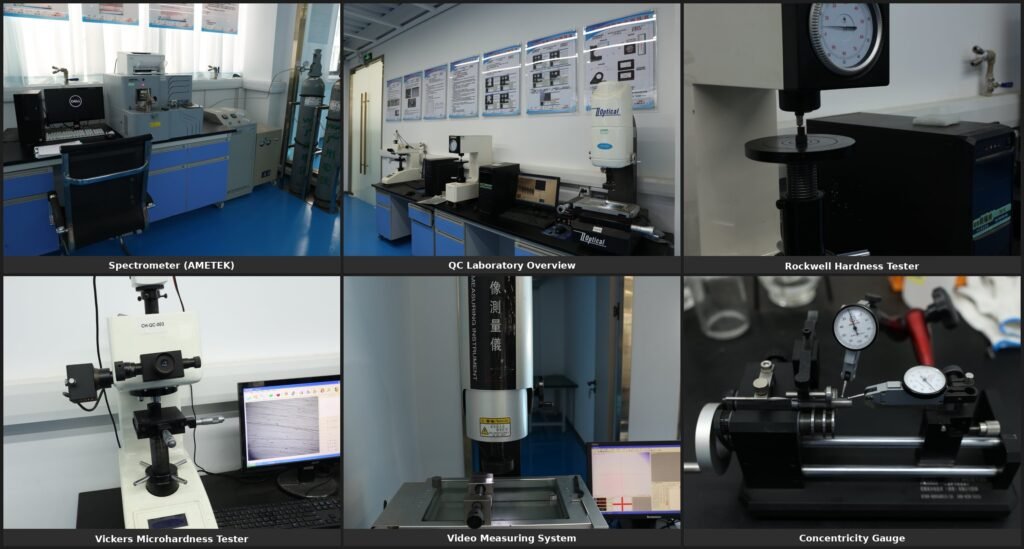
Lead content deserves a check at the specification stage. Free-cutting brass contains lead, and electronics sold into regulated markets are subject to restricted-substance rules. Leaded copper alloys have historically been allowed under a specific exemption for copper alloys, but exemptions are time-limited and reviewed. Many OEMs now specify lead-free brass outright to avoid the question, so state your requirement on the drawing. KeyFix verifies alloy chemistry, including lead content, on every incoming bar lot by SPECTRO optical emission spectrometry through its raw material control process.
| Finish | Purpose |
|---|---|
| Plain (natural brass) | Standard; no added cost |
| Nickel plated | Appearance, tarnish resistance, conductivity at contact |
| Tin plated | Solderability, electrical contact |
| Passivated (stainless) | Restores corrosion resistance |
How Is Retention Tested?
Datasheet values for inserts are measured in a specific resin under specific conditions. Retention in your part depends on your resin, boss, hole, and installation process, so testing in the real component is what counts.
| Test | What It Measures | Governed By |
|---|---|---|
| Pull-out | Axial force to extract the insert | Knurl undercuts, groove, hole size |
| Torque-out | Torque to spin the insert in the boss | Knurl tooth engagement, melt fill |
| Jack-out | Screw tightened from the opposite face lifting the insert | Pull-out resistance plus boss design |
| Push-out | Force pushing the insert through the part | Hole depth, closed-end design |
| Thread strip | Torque to strip the insert’s own thread | Thread engagement length, material |
Jack-out is the test most often missed. When a screw passes through a mating part and is tightened into an insert from the far side, the tightening torque pulls the insert up toward the screw head. A joint that passes a simple pull-out test can still jack out in assembly if the knurl’s axial resistance is marginal. That is why high-performance inserts combine a groove with opposed helical knurls.
📋 Spec Tip: State retention requirements on the drawing as tests in the production resin and part, for example minimum torque-out and pull-out values measured on molded parts after installation, with the resin grade named. Values copied from a catalogue were measured in a different resin and boss, and they tell you little about your own assembly.
Why Do Brass Threaded Inserts Fail in Service?
When brass threaded inserts fail in the field, the insert itself is rarely the cause. The failure usually traces back to the installation process or the boss, and each failure mode points to a specific fix.
| Symptom | Likely Cause | Fix |
|---|---|---|
| Insert spins when screw is tightened | Incomplete melt fill, oversized hole, straight knurl too shallow | Correct hole size; raise install temperature; deeper knurl |
| Insert lifts toward screw head (jack-out) | Weak axial retention | Add groove or opposed helical knurl |
| Screw binds or cross-threads | Plastic in thread; insert tilted on install | Deeper hole; alignment fixture; slower press speed |
| Boss cracks at install or later | Wall too thin; excess interference; brittle resin | Larger boss OD; smaller knurl; revalidate for resin |
| Raised ring at the surface | Displaced plastic with no reservoir | Extra hole depth; lead-in chamfer |
| Loosening over months | Creep in plastic around a small insert | Larger insert or flanged version to spread load |
The pattern worth noting is that most of these are process settings or geometry, not part defects. Installation temperature that is slightly too low leaves the knurl only partly filled. Pressing too fast tilts the insert before the plastic has softened. A first-article check that sections one installed insert and examines melt fill around the knurl catches most of these before production starts.
How Are Brass Threaded Inserts Manufactured?
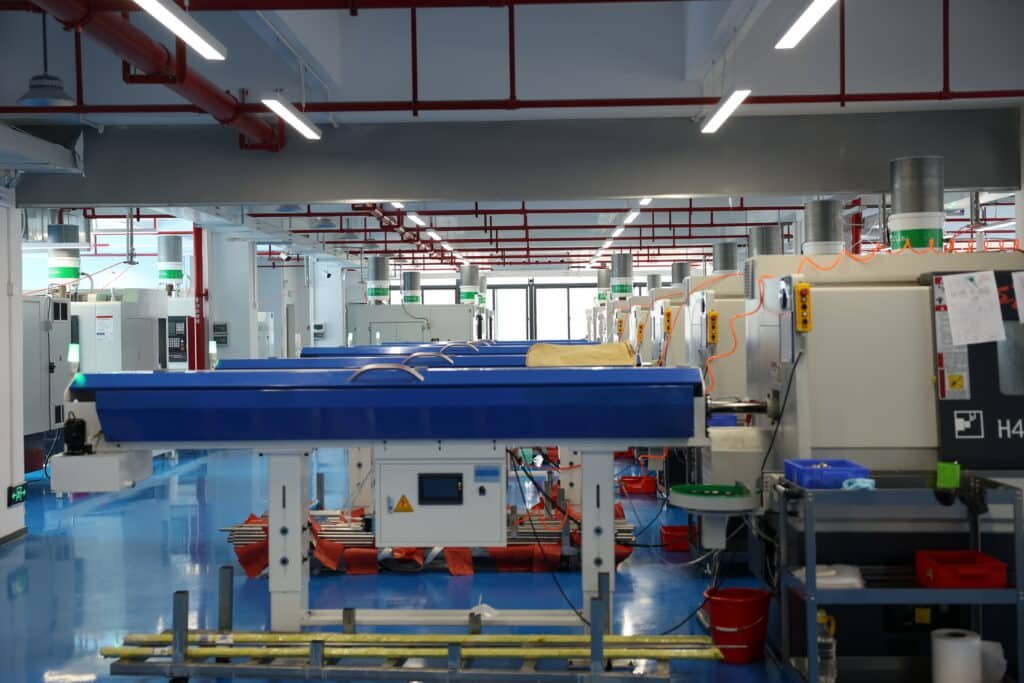
Inserts are small precision turned parts, produced at high volume from bar stock, with the knurl and thread both held to tight tolerances.
| Step | What Happens | KeyFix Capability |
|---|---|---|
| Bar verification | Alloy and lead content confirmed | SPECTRO (Germany), 100 % of heats |
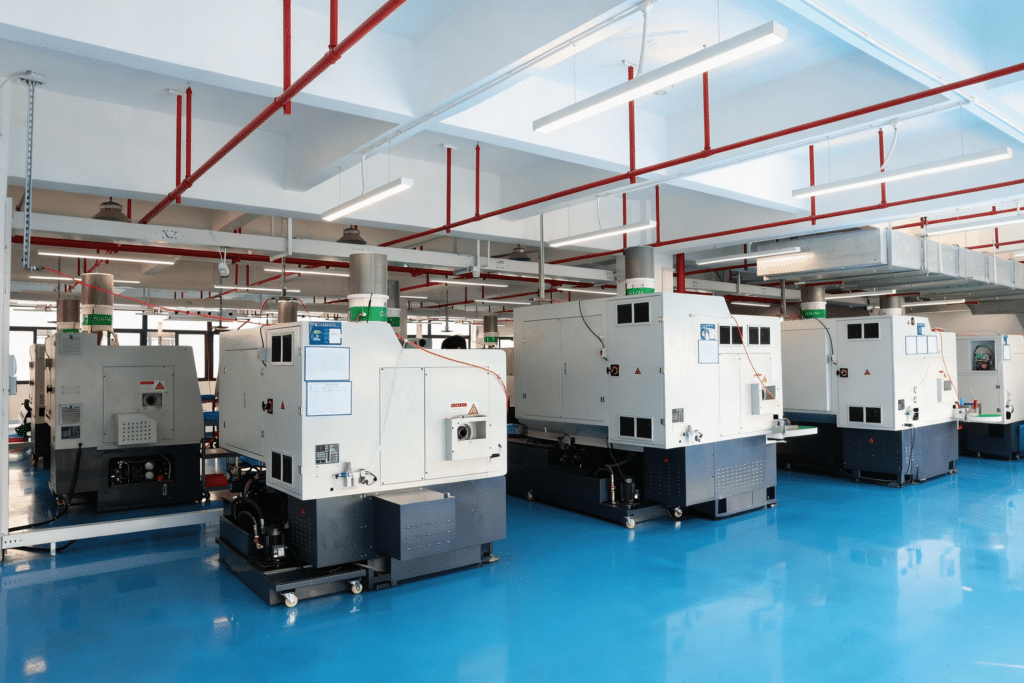
| CNC turning | Body, taper, flange, and bore in one chucking | 32 CNC machines incl. two 5-axis, ±0.005 mm |
| Knurling | Straight, diamond, or helical pattern formed | Same setup — pattern concentric to thread |
| Threading | Internal thread tapped to class | 10 dedicated nut tapping machines |
| Deburr and clean | Thread and knurl free of chips | Controlled — chips cause cross-threading |
| Finishing | Plain, nickel, or tin | Controlled finishing process |
| Verification | Thread gauging, OD, knurl, length | 2D video measuring + Mitutoyo gauges, 100 % optical sorting |
Concentricity between knurl and thread matters more than it first appears. An insert whose thread runs off-axis relative to its body installs straight but presents a tilted thread to the screw, which cross-threads or binds. Turning, knurling, and threading from one chucking keeps the thread centred in the body. Process detail sits on the CNC production and technology pages, and dimensional conformance is documented under the inspection standards programme. Flanged or headed inserts at high volume can start from near-net blanks produced on the cold forging line.
Need a quote on custom brass threaded inserts? Send your drawing, the resin grade, and the installation method to KeyFix. You’ll get a DFM review and quotation within 48 hours. Get a quote or email sales@keyfixpro.com.
What Should the Drawing and RFQ Specify?
| Call-Out | What to Specify | Why It Matters |
|---|---|---|
| Thread | e.g., M3 × 0.5, 6H | Mating screw fit |
| Outside diameter and length | With tolerance | Fixes hole and boss design |
| Body form | Tapered, straight, flanged, closed-end | Matches installation method |
| Knurl pattern | Straight, diamond, opposed helical, groove | Sets which failure mode it resists |
| Installation method | Heat-set, ultrasonic, press-in, molded-in | Drives the whole insert design |
| Resin grade | e.g., PA66-GF30, ABS, PC | Determines hole size and retention |
| Material | Brass C36000, lead-free brass, stainless | Strength, compliance, cost |
| Lead restriction | State if lead-free is required | Regulatory compliance |
| Finish | Plain, nickel, tin | Appearance and electrical function |
| Retention requirements | Pull-out, torque-out, jack-out in the real part | Real-world performance |
How Do You Qualify an Insert Supplier?
| Audit Point | Minimum Requirement | KeyFix Status |
|---|---|---|
| Quality system | ISO 9001 minimum; IATF 16949 for automotive | IATF 16949 + ISO 9001 + ISO 14001 |
| Turning capability | Knurl and thread concentric in one setup | 32 CNC machines with live tooling |
| Tapping capacity | Dedicated internal threading | 10 nut tapping machines |
| Material verification | OES per bar lot, lead content confirmed | SPECTRO OES, 100 % of heats |
| Thread gauging | Go/no-go per class | 100 % gauging |
| Cleanliness | Chip-free threads documented | Controlled deburr and wash |
| Outgoing quality | Stated defect rate | <25 PPM at AQL 0.4 |
Brass bar follows ASTM B16 and threads follow ISO 965 tolerance classes, under the quality system documented in KeyFix’s company background. Delivered programmes appear in the project case studies and machinery hardware programmes, with related automotive work in the automotive CNC screw guide.
What Are the Logistics and Shipping Terms?
KEYFIX manufactures in its own plant in Guangdong Province, near South China’s export ports.
| Term | Detail |
|---|---|
| Manufacturing location | Guangdong Province |
| Standard shipping term | FCA at our Guangdong plant |
| Sea freight term | FOB Shenzhen Yantian Port |
| Prototype lead time | 7–14 business days (air-expressed) |
| Production lead time | 4–6 weeks after sample approval |
Frequently Asked Questions
What is the difference between heat-set and ultrasonic inserts?
Both melt the thermoplastic so it reflows around the knurl. Heat-set installation uses a heated tip to warm the insert. Ultrasonic installation uses high-frequency vibration to heat the plastic at the interface. Ultrasonic is faster and suits high-volume automation, while heat-set equipment is simpler and cheaper. Insert designs for the two methods are similar and often interchangeable.
Which knurl pattern gives the best retention?
Opposed helical knurls with a circumferential groove resist both torque-out and pull-out, so they are the high-performance choice. Straight knurls resist rotation well but pull out easily, which suits joints loaded mainly in torsion.
What hole size should I use?
Use the insert manufacturer’s specified hole diameter for your resin, and allow extra depth below the insert for displaced plastic. An undersized or shallow hole pushes plastic into the thread; an oversized hole starves the knurl and cuts retention.
Can heat-set inserts be used in thermoset plastics?
No. Thermosets such as phenolic and epoxy cannot be remelted, so heat-set and ultrasonic installation will not work. Use molded-in, press-in, or self-expanding inserts instead.
Do brass inserts need to be lead-free?
It depends on the market and the customer. Free-cutting brass contains lead, and restricted-substance rules for electronics have relied on a time-limited exemption for copper alloys. Many OEMs now specify lead-free brass to avoid compliance risk, so state the requirement on the drawing.
What is the minimum order quantity?
CNC-turned brass inserts have no MOQ — from validation prototypes to production runs, with price breaks at higher volumes. Contact sales@keyfixpro.com for quotations.
What certifications and shipping terms apply?
KeyFix holds IATF 16949, ISO 9001, and ISO 14001. Standard shipping is FCA at our Guangdong plant, with sea freight as FOB Shenzhen Yantian Port from our Guangdong production base.
If your next plastic housing, enclosure, or interior component needs brass threaded inserts matched to your resin and installation method, send your drawing to KeyFix for a free DFM review and a quotation within 48 hours. Explore the product portfolio or contact KeyFix at sales@keyfixpro.com.
Author: KeyFix Engineering Team Published: September 28, 2026 Last Updated: September 28, 2026