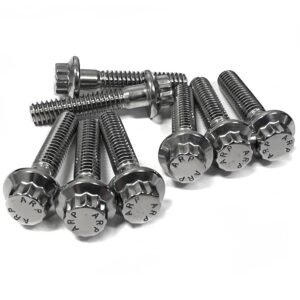
The realistic custom fastener tooling lead time in China runs 4–10 weeks for cold-heading dies, plus another 2–4 weeks for sample validation and PPAP. Total elapsed time from signed PO to first production shipment usually lands at 10–16 weeks for a typical automotive program. Anything shorter than that should make you suspicious; anything longer means the supplier is overloaded or the design is fighting the process. This guide breaks down what drives the timeline so OEM engineers and procurement managers can plan accurately.
TL;DR — Key Takeaways
- Cold-heading tooling lead time in China typically runs 4–10 weeks, depending on station count, head complexity, and material grade.
- First production shipment usually lands 10–16 weeks after PO when full PPAP Level 3 is required.
- CNC-machined custom fasteners can ship samples in 1–3 weeks because no forming dies are needed.
- Standard cold-heading dies use tungsten carbide (G30/G40/G50) or SKD61; carbide tooling adds 2–3 weeks but lasts 10–20× longer.
- The biggest schedule killers are late drawing changes, missing material specs, and incomplete plating callouts — fix these before issuing the RFQ.
What’s a Realistic Custom Fastener Tooling Lead Time in China?
The honest answer depends on three variables: process route, part complexity, and the supplier’s tool-room loading. Below is what experienced buyers see when sourcing from established Chinese fastener tool rooms in 2026.
| Tooling Type | Typical Lead Time | What It Covers |
|---|---|---|
| Standard 2-station cold heading die | 3–5 weeks | Simple hex bolts, socket caps |
| Multi-station progressive (4–6 stations) | 5–8 weeks | Flange bolts, stepped studs, complex heads |
| Complex multi-station (7+ stations) | 8–12 weeks | Sensor mounts, internal-drive bolts, cross-holed parts |
| Thread rolling dies (flat or cylindrical) | 2–4 weeks | Always paired with heading dies |
| Stamping progressive die (washers, brackets) | 6–10 weeks | Flat washers, lock washers, clip retainers |
| CNC fixturing only (no forming dies) | 1–2 weeks | Low-volume custom bolts |
💡 Engineer’s Note: A 5-station cold-heading die set for a Grade 10.9 flange bolt is the median custom fastener tooling job out of China — plan 6 weeks for tooling, 2 weeks for trial and samples, 3 weeks for PPAP review. That’s 11 weeks to production approval, before the first shipping container leaves Ningbo.
If a quote from a Chinese supplier shows tooling delivered in 2 weeks, ask whether the dies are being recut from existing inventory or made from recycled tungsten carbide — both shortcuts shift cost from week one to week fifty.
What Factors Stretch the Custom Fastener Tooling Lead Time?
Five factors account for nearly every schedule slip on a custom fastener tooling program in China.
1. Number of forming stations. Each additional station adds 3–7 days of tool-making time. A simple upset-and-trim die runs 3 weeks; a 6-station progressive for a flange bolt with a serrated underside, an under-head fillet, and a recessed drive runs 8–10 weeks.
2. Tooling material. Tungsten carbide dies (G40/G50 grade) take longer to grind and EDM than tool-steel dies, but deliver 10–20× the tool life. SKD61 or H13 tool steel ships faster but wears out at 50,000–200,000 cycles.
3. Heat treatment of the production part. Grade 12.9 and higher property classes need quench-and-temper qualification on the new tooling, plus a hydrogen-relief baking validation. Add 1–2 weeks to the schedule.
4. Surface treatment qualification. Dacromet, zinc-nickel, and hot-dip galvanizing each have their own approval cycles with the plating subcontractor. Salt spray testing alone takes 480–1,000 hours — 20–40 days running in the lab before you have a result.
5. PPAP level. Level 1 (PSW only) is fast. Level 3 — the automotive default — adds 2–4 weeks of run-data, capability studies, dimensional reports, and IMDS submission on top of physical sample production.
⚠️ Common Pitfall: Issuing the PO before the surface treatment is finalized. The supplier cuts tooling assuming zinc plating, then your customer’s joint-coefficient spec calls out Dacromet — and the bake parameters, friction coefficient, and dimensional growth all need re-validation. Add 2–3 weeks to the program when this happens.
How Does Cold Heading vs CNC Affect Tooling Lead Time?
Cold heading and CNC machining sit at opposite ends of the tooling-lead-time spectrum.
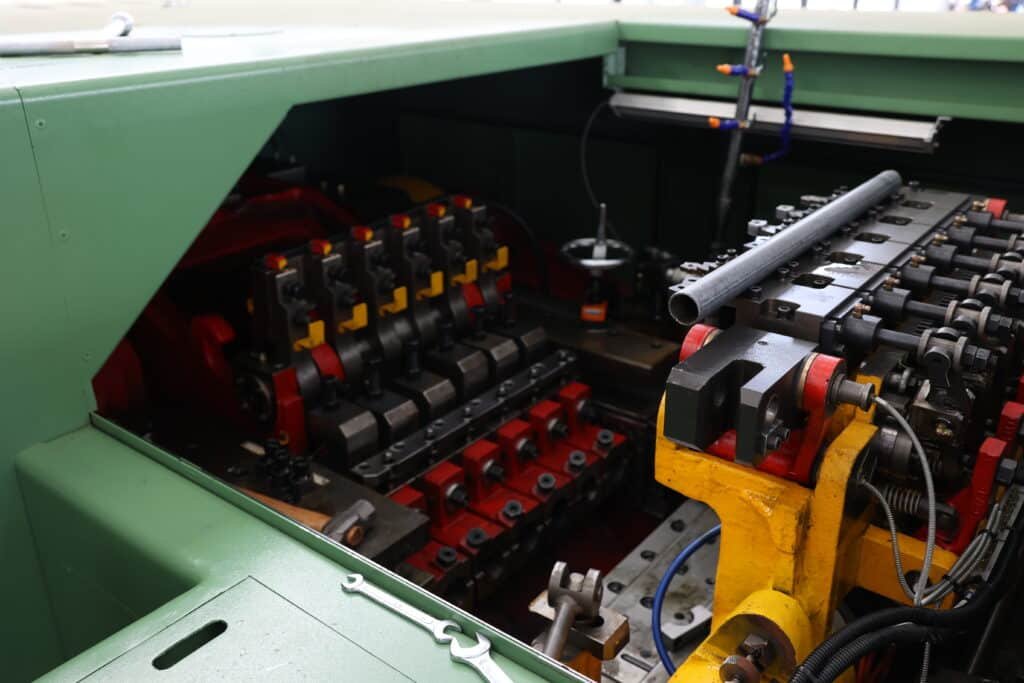
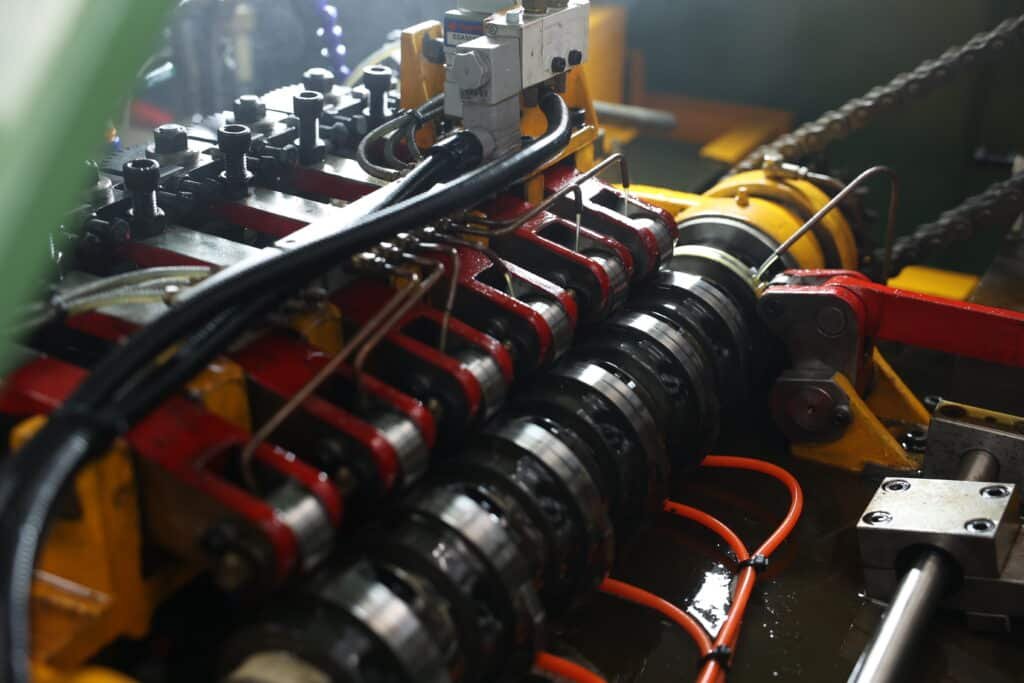
Cold heading is tooling-heavy and time-consuming up front. You’re building a custom multi-station die set tuned to one specific part geometry. Once that’s built, the process runs at 100–200 parts per minute with virtually no per-part labor.
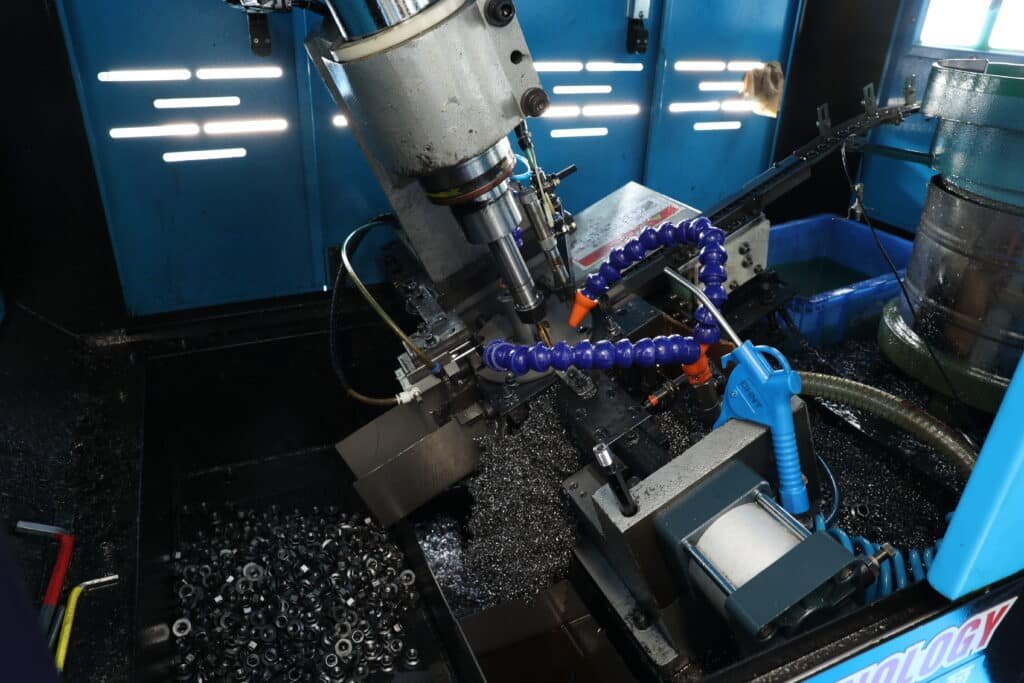
CNC machining is tooling-light. Programming a CNC lathe with live tooling for a custom bolt takes 1–3 days, and standard fixtures cover most geometries. First samples can ship in 1–2 weeks — faster than any forming process.
| Process | Tooling Lead Time | Sample Lead Time | Production Rate |
|---|---|---|---|
| Cold heading (custom dies) | 4–10 weeks | +1–2 weeks after tooling | 100–200/min |
| CNC machining only | 3–7 days | 1–2 weeks total | 1–5/min |
| Hybrid (cold heading + CNC) | 4–10 weeks | +2–3 weeks | 50–100/min |
| Stamping (progressive die) | 6–10 weeks | +1–2 weeks | 200–400/min |
For your BOM, the cost impact looks like this: CNC samples for 200 pieces cost roughly $4–$15 per part with no tooling charge. Cold-heading samples cost $0.20–$1.50 per part but require $4,000–$30,000 in tooling investment first.
How Does PPAP Add to Custom Fastener Lead Time in China?
PPAP — the Production Part Approval Process governed by AIAG PPAP Manual 4th Edition — is the structured submission that lets a Tier 1 customer sign off on serial production. It is not optional for automotive programs.
A typical Level 3 PPAP submission takes 2–4 weeks to prepare after tooling is qualified, plus 1–4 weeks for the customer’s quality team to review. That’s 3–8 weeks of calendar time you have to bake into the program.
| PPAP Level | Submission Content | Typical Calendar Time |
|---|---|---|
| Level 1 | PSW only | 3–5 days |
| Level 2 | PSW + samples + limited data | 1–2 weeks |
| Level 3 (automotive default) | PSW + samples + full 18-element package | 2–4 weeks prep + customer review |
| Level 4 | Customer-defined elements | Varies |
| Level 5 | Full package reviewed at supplier site | 3–5 weeks + on-site audit |
The 18 PPAP elements include design records, FMEA, process flow, control plan, MSA, dimensional results, material certs, performance test results, IMDS submission, and the Part Submission Warrant (PSW). Each requires data from real production runs — you cannot shortcut this with paperwork alone.
🔧 Keyfix in Practice: All Keyfix custom fastener programs run a parallel PPAP track during tooling qualification — IMDS data is registered, FMEA is drafted, and the control plan is built before the first sample bolt is headed. This compresses the post-tooling PPAP window from 4 weeks to about 2 weeks for repeat customers under our IATF 16949 system.
Need help deciding? Send your fastener drawing to Keyfix engineers and we’ll quote tooling, samples, and a realistic PPAP timeline in one DFM package — usually within 48 hours.
How Can You Compress Custom Fastener Tooling Lead Time?
You can shave 2–4 weeks off a typical program if you make the right moves before the PO is issued. None of these are tricks; they’re standard practices in mature automotive supply chains.
Lock the drawing before quoting. Late changes after tooling is cut are the #1 cause of schedule slips. Run your DFM review with the supplier first, freeze the print, then issue the PO.
Specify materials by exact wire grade. “10.9 alloy steel” leaves the supplier guessing between SCM435, 35CrMo, and 4140. Call out SCM435H per JIS G4105 or the equivalent on your print and the wire is on a 1-week stocking program at most Chinese mills.
Pre-approve the surface treatment. If your spec allows zinc plating or zinc-nickel, pick one before tooling starts. The bake-cycle validation, salt-spray hours, and friction coefficient testing are different routings.
Authorize sample production before PPAP completes. Many automotive customers allow interim PPAP approval — limited-quantity production while the full Level 3 package is finalized. This unlocks shipping 2–3 weeks earlier without violating IATF 16949.
Accept overseas air freight on first shipment. Sea freight from Shanghai to Los Angeles or Hamburg adds 25–35 days in transit. Air freight the first 5,000 pieces while sea freight catches up for production volumes, then transition to standard FOB sea freight.
| Compression Tactic | Time Saved |
|---|---|
| DFM review before tooling | 1–3 weeks |
| Pre-locked material spec | 3–7 days |
| Pre-locked surface treatment | 1–2 weeks |
| Interim PPAP approval | 2–3 weeks |
| Air freight first shipment | 3–5 weeks |
📋 Spec Tip: The fastest-routing drawing for a Chinese supplier includes: ISO 898-1 property class, exact wire grade with JIS or DIN reference, head dimensional standard (DIN 6921 for hex flange, DIN 912 for socket cap, etc.), thread spec with 6g class, surface treatment with thickness in microns, and IMDS material code. Anything missing forces a clarification email cycle.
What Lead Time Should You Expect for Specific Fastener Types?
Different fastener families carry different baseline lead times. Here’s what to plan for on a typical custom program from China.
| Fastener Type | Tooling Lead Time | Total to First Shipment* |
|---|---|---|
| Custom hex bolt (Grade 8.8/10.9) | 4–6 weeks | 9–12 weeks |
| Custom flange bolt (Grade 10.9/12.9) | 6–8 weeks | 11–14 weeks |
| Socket cap screw (Grade 12.9) | 5–7 weeks | 10–13 weeks |
| Wheel bolt / lug bolt | 6–8 weeks | 12–15 weeks |
| Weld stud / weld bolt | 4–6 weeks | 9–12 weeks |
| Custom shoulder bolt (hybrid CH+CNC) | 6–9 weeks | 11–14 weeks |
| Stamped bracket / clip | 6–10 weeks | 11–15 weeks |
| Micro-fastener (M1.6–M3) | 8–12 weeks | 13–17 weeks |
*Assumes Level 3 PPAP and FOB Shanghai/Ningbo to first vessel.
If you’re sourcing for an EV battery pack program, plan on the longer end — battery clamp bolts typically need full PPAP, IMDS, conflict minerals reporting, and traceability documentation that adds 1–2 weeks beyond automotive standard.
If you’re sourcing for wind energy (e.g., tower flange bolts under EN 14399), the tooling itself is straightforward, but third-party lab testing for hardness, tensile, and Charpy impact adds 2–3 weeks because the tests must be conducted by accredited labs with formal report turnaround.
How Do You Build Realistic Schedules into Your Program?
The single biggest mistake we see in OEM scheduling is assuming Chinese suppliers can compress what is fundamentally a physics-and-paperwork process. Tooling has to be cut. Samples have to be tested. Customer reviews have to clock through.
A defensible program schedule for a new custom fastener part from China looks like this:
| Week | Milestone |
|---|---|
| 0 | PO issued, design frozen, materials specified |
| 1–2 | Tooling design, DFM signoff, raw wire on order |
| 3–8 | Tooling cut, ground, polished, EDM finishing |
| 9 | Tooling trial, T1 samples |
| 10 | Sample inspection, dimensional reports, lab tests |
| 11–13 | PPAP package compilation and submission |
| 14 | Customer review and PPAP signoff |
| 15 | Production run starts |
| 16–18 | First container ships FOB Shanghai/Ningbo |
| 19–22 | Sea freight transit to North America/Europe |
| 23 | Goods on dock, ready for line |
Total: roughly 23 weeks from PO to dock for a standard automotive program. Air freight on the first shipment can pull this to ~17 weeks; existing tooling at the supplier (re-runs of qualified parts) can drop it to ~6 weeks.
Frequently Asked Questions
What’s the fastest possible custom fastener tooling lead time in China?
The realistic floor is about 3 weeks for a simple 2-station cold-heading die on a non-critical commercial part — no PPAP, standard zinc plating, samples by air freight. For a serialized automotive program with Level 3 PPAP, the floor is closer to 9–10 weeks. Anything shorter usually means the supplier is recutting existing tooling rather than building a true custom die set.
How much does custom cold-heading tooling cost in China?
Tooling cost ranges from roughly $2,000 for a simple 2-station die to $30,000+ for a complex 7-station progressive with secondary thread-rolling dies. Carbide tooling adds 30–50% over tool-steel equivalents but lasts 10–20× longer. Most Chinese suppliers amortize tooling cost over the first production order rather than charging it as a separate line item.
Can Chinese suppliers handle full Level 3 PPAP submissions?
Yes — IATF 16949-certified Chinese suppliers like Keyfix routinely deliver full Level 3 PPAP packages including PSW, FMEA, control plan, MSA, dimensional layout, capability studies, IMDS material registration, and 3.1 mill test reports. Plan 2–4 weeks for the PPAP package after tooling qualification, then customer review time on top.
What’s the typical MOQ tied to a new tooling program?
MOQs typically start at 5,000–10,000 pieces to amortize cold-heading tooling cost. For prototype validation before tooling commitment, CNC-machined samples have no MOQ. Once tooling is qualified, repeat orders run at standard cold-heading economics with no MOQ concerns above the production minimum.
Do you ship under Incoterms beyond FOB?
Yes — FOB is the default, but CIF, CIP, and DDP are all available. For Tier 1 customers running JIT production lines, Keyfix supports consignment stock and bonded warehouse arrangements at major ports in North America and Europe. Sea freight transit is 25–35 days; air freight is 3–7 days.
What documentation comes with each tooling-and-production program?
Standard documentation includes the tooling DFM report, T1 sample inspection report, 3.1 mill test report on wire stock, dimensional layout per ballooned drawing, hardness and tensile test results per ISO 898-1, surface treatment thickness measurements, plating-bake records, and the full PPAP Level 3 package with PSW. IMDS submission and conflict minerals declarations are available on request.
How do you protect proprietary designs during tooling production?
NDAs are standard and signed before drawings are released. Tooling drawings, fixturing, and proprietary head markings are held under controlled-document procedures per IATF 16949. Custom punch engraving for proprietary head marks is included in the tooling package and stored in a secured tool crib that’s part of the lot-traceability system.
Send your drawing and target volumes to the Keyfix engineering team. We’ll quote tooling lead time, sample lead time, and a realistic PPAP plan in one DFM package — usually within 48 hours — so you can plan your program with dates that hold instead of dates that slip.
Author: Keyfix Engineering Team Published: April 25, 2026 Last Updated: April 25, 2026