
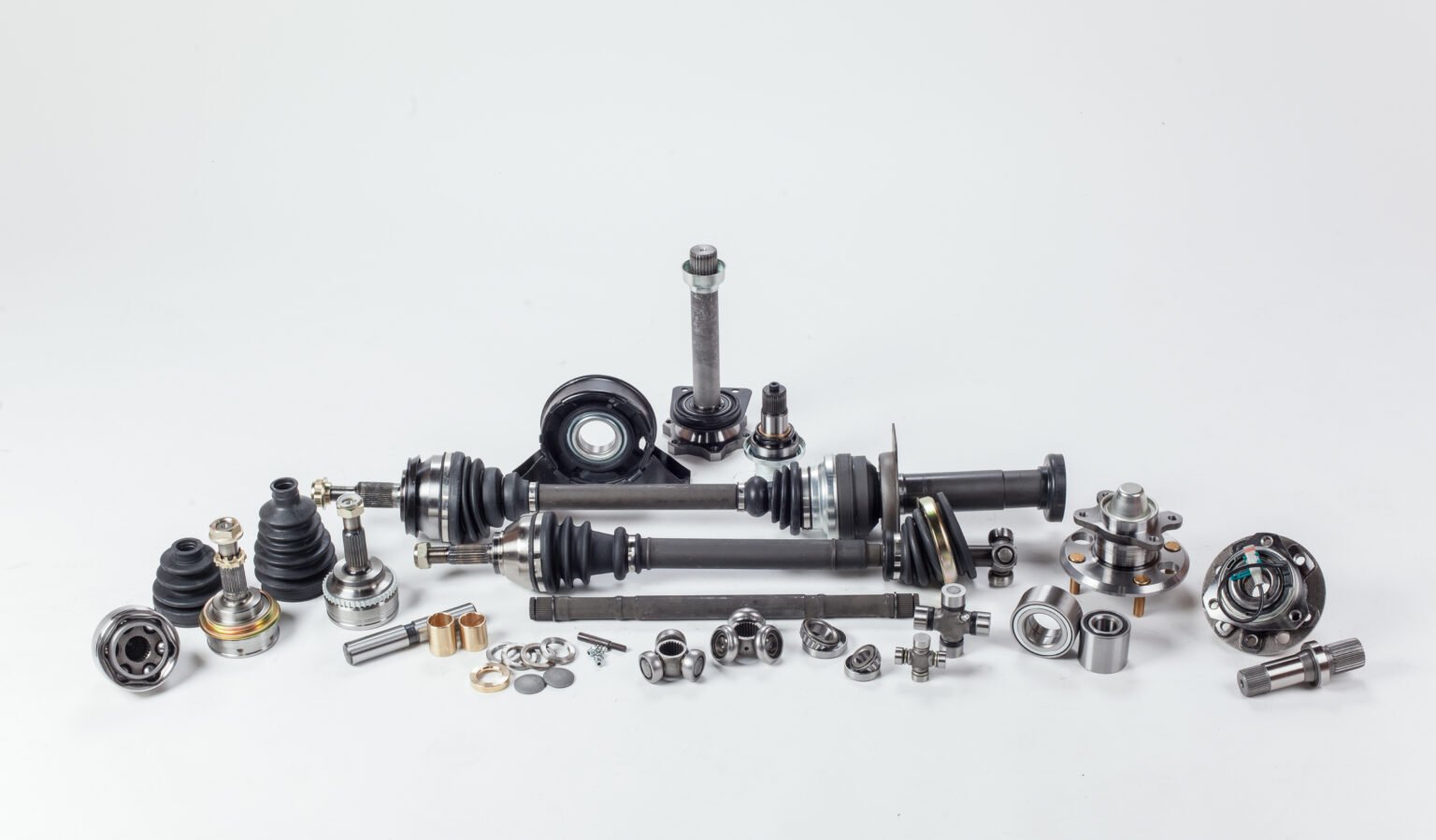
Custom CNC lathe parts are the rotational backbone of mechanical hardware — standoffs, shafts, couplings, fittings, knurled knobs, and threaded bosses whose function depends on one property above all: concentricity. A lathe generates every diameter around the same spindle axis, so features turned in a single chucking are concentric by physics, not by inspection luck. This guide covers the hardware-part families that belong on a lathe, the workholding logic that sets length-to-diameter limits, the turned-feature vocabulary (grooves, knurls, thread reliefs) that separates a clean drawing from a costly one, and how to verify the result.
TL;DR — Key Takeaways
- Turned features cut in one chucking are concentric by machine geometry; KeyFix holds ±0.005 mm on critical diameters across a 32-machine CNC line.
- Workholding sets the slenderness limit: chuck ≈ 3:1 L/D, tailstock support ≈ 10:1, Swiss guide bushing ≈ 30:1.
- Groove, knurl, and relief callouts have standards — DIN 471/472 (retaining rings), DIN 82 (knurls), DIN 76 (thread undercuts) — that make drawings quotable in one pass.
- Rolled threads on turned parts add 40–60 % fatigue strength over single-point cut threads at high volume.
- A qualified supplier verifies bar chemistry by OES and documents outgoing quality below 25 PPM at AQL 0.4.
What Are Custom CNC Lathe Parts?
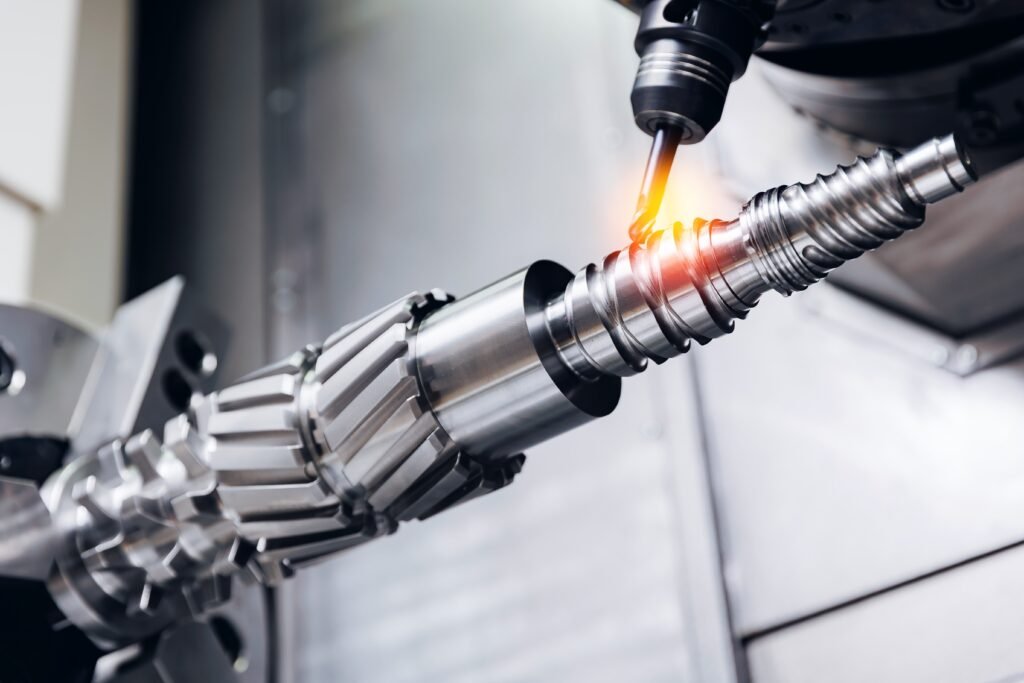
A lathe part is any component whose primary geometry is a solid of revolution: the stock rotates, the tool traverses, and diameters, faces, tapers, grooves, and threads emerge around one axis. Live-tooling lathes add cross-drilled holes, flats, and milled slots without moving the part to a second machine — which is exactly what most mechanical hardware needs.
| Hardware Family | Defining Feature | Typical Material |
|---|---|---|
| Standoffs / spacers | Length control, hex or round OD, internal thread | Brass C36000, 6061, 303 |
| Shafts / pins with features | Steps, grooves, center holes | 1045, 4140, 303 |
| Couplings / adapters | Concentric bores both ends | 6061, 303, 1045 |
| Fittings / nozzles | Sealing faces, tapered threads | Brass, 316 |
| Threaded bosses / inserts | External or internal thread + shoulder | 303, brass, Ti Gr 5 |
| Knurled knobs / thumbscrews | Grip knurl + thread | 303, 6061, brass |
KeyFix machines this full family across its CNC parts portfolio — from single prototypes to bar-fed production — with finished examples in the product portfolio.
Which Workholding Suits Which Geometry?
The length-to-diameter ratio decides the machine before the tolerance does. Cutting force deflects an unsupported bar as the cube of its stick-out, so slender parts need support at the cut, not just at the chuck.
| Workholding | Practical L/D Limit | Runout Capability | Best For |
|---|---|---|---|
| 3-jaw chuck | ~3:1 | 0.02–0.05 mm | Short, larger-diameter parts |
| Collet | ~4:1 | 0.005–0.02 mm | Precision small-diameter work |
| Chuck + tailstock | ~10:1 | 0.01–0.03 mm | Long shafts with center holes |
| Swiss guide bushing | ~30:1 | ≤0.01 mm at the cut | Slender pins, long standoffs |
💡 Engineer’s Note: If your part is under Ø32 mm and longer than ten diameters, quote it as a Swiss-type job from the start. The guide bushing supports the bar millimeters from the tool, so slenderness stops being a tolerance risk — and cycle time usually drops too.
KeyFix runs chucker, collet, and Swiss-type configurations across its CNC machining capability, with machine-level detail on the technology overview.
Which Turned Features Define Hardware Parts?
Most lathe-part drawings fail at the small features, not the big diameters. Each has a standard that removes ambiguity:
| Feature | Governing Standard | What to Specify |
|---|---|---|
| Retaining-ring groove | DIN 471 (external) / 472 (internal) | Ring size — groove dims follow |
| O-ring gland | ISO 3601-2 practice | Cord Ø + compression class |
| Knurl | DIN 82 (RAA straight, RGE diamond) | Pattern, pitch, pre/post-knurl Ø |
| Thread relief / undercut | DIN 76 | Form A or B by thread size |
| Center holes | DIN 332 | Type A/B/R for between-centers work |
⚠️ Common Pitfall: Threading up to a shoulder without a DIN 76 relief leaves the last 1–2 threads incomplete, and the mating nut jams before the joint seats. The undercut costs nothing on a lathe; the assembly-line stoppage it prevents costs plenty. Call the relief on every shoulder thread.
Groove widths, knurl pitch, and relief geometry are verified optically — 2D video measuring reads these small features far faster than touch probing — under KeyFix’s inspection standards program.
Rolled or Cut Threads on Turned Parts?
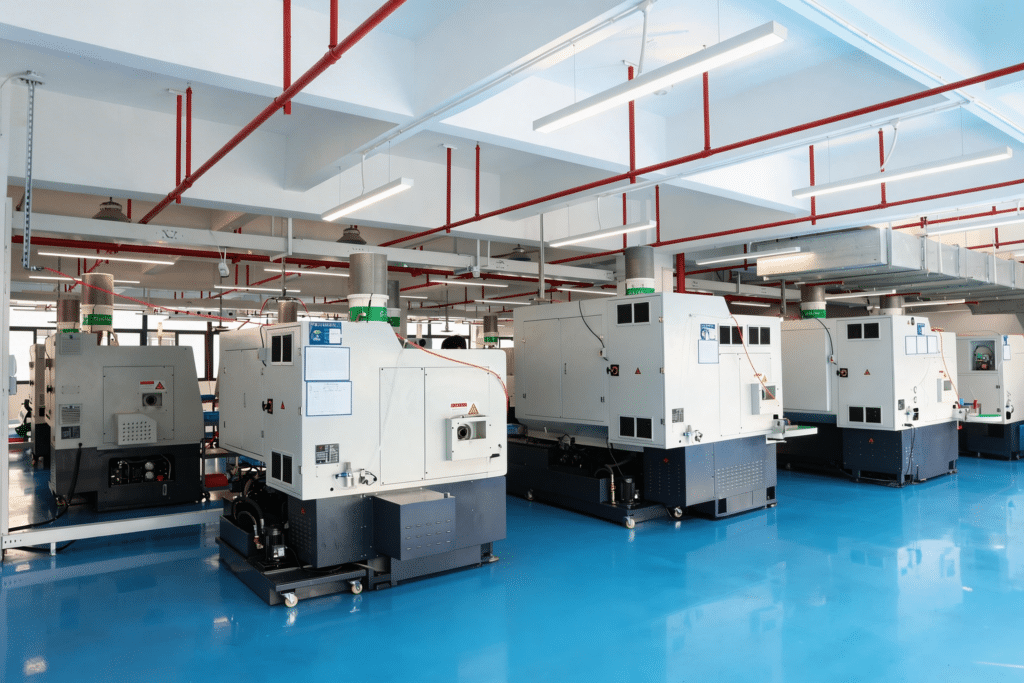
A lathe can single-point any thread, but at volume KeyFix moves external threads to its 22 thread-rolling machines: the rolled flank keeps continuous grain flow, adding 40–60 % fatigue strength, and cycle time falls from a threading pass to a second-long squeeze. Cut threads stay right for prototypes, internal threads, large diameters, and left-hand or multi-start forms. For headed hardware at high volume, cold forging supplies near-net blanks so the lathe only finishes what forging cannot form.
Which Materials Machine Best on a Lathe?
| Material | Machinability | Why It Turns Well (or Not) | Typical Hardware Use |
|---|---|---|---|
| Brass C36000 | Excellent (reference) | Free-cutting, chips break | Fittings, standoffs, knobs |
| Stainless 303 | Very good | Sulfur-added 304 twin | The default turning stainless |
| Stainless 304/316 | Fair | Gummy, work-hardens | Only when 303 corrosion isn’t enough |
| Steel 1045 / 4140 | Good | Predictable, heat-treatable | Shafts, pins |
| Aluminum 6061-T6 | Excellent | Fast, light | Spacers, couplings |
| Titanium Gr 2 / Gr 5 | Poor–fair | Low conductivity, slow speeds | Weight-critical hardware |
Every incoming bar lot is verified by SPECTRO optical emission spectrometry before it reaches a spindle, through KeyFix’s raw material control process — the step that catches a 304 bar sold as 303 before it wrecks a production schedule.
How Are Custom CNC Lathe Parts Produced and Verified?
| Step | What Happens | KeyFix Capability |
|---|---|---|
| Bar verification | Grade confirmed by OES | SPECTRO (Germany), 100% of heats |
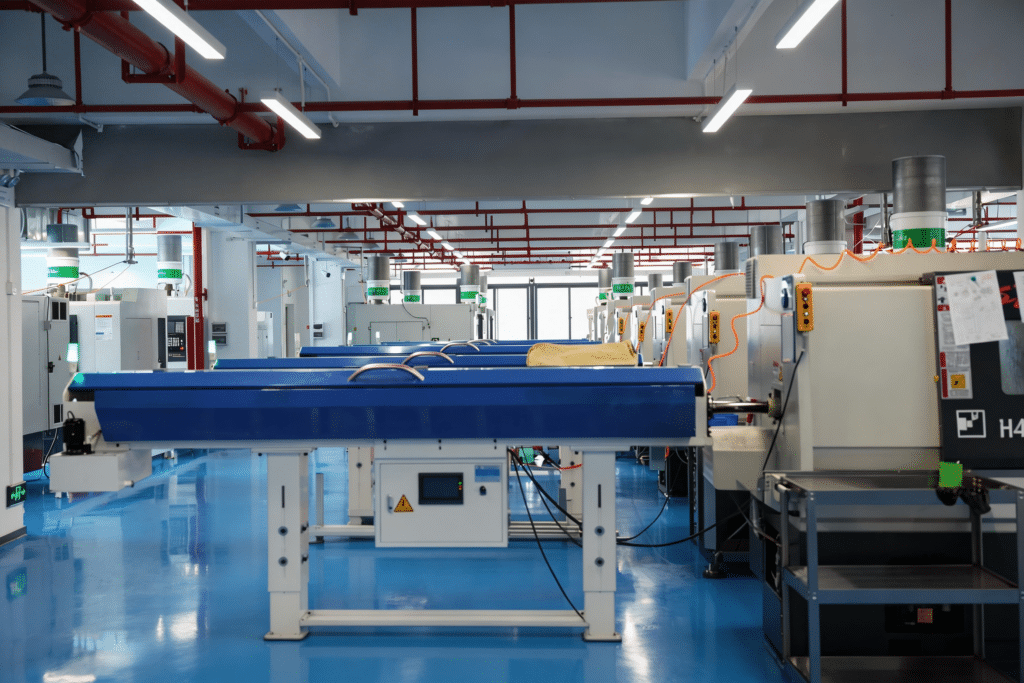
| Turning | Diameters, faces, grooves in one chucking | 32 CNC machines incl. two 5-axis, ±0.005 mm |
| Live-tool features | Cross holes, flats, slots | Same setup — concentricity preserved |
| Thread rolling | External threads at volume | 22 thread-rolling machines |
| Finishing | Zinc-nickel / DACROMET on steel; passivation on stainless | In-house coating lines, 1,000+ hr salt spray |
| Verification | Diameters, grooves, runout | 2D video measuring + Shining3D 3D scanning, 100% optical sorting |
Need a quote on turned hardware parts? Send your drawing or STEP file to KeyFix — DFM review and quotation within 48 hours. Get a quote or email sales@keyfixpro.com.
What Should the Drawing Specify?
| Call-Out | What to Specify | Why It Matters |
|---|---|---|
| Datum | The OD turned in the primary chucking | Concentricity comes free |
| Runout (TIR) | Per functional diameter, to that datum | Predicts on-machine behavior |
| Grooves / reliefs | By DIN number, not sketched dims | One-pass quoting |
| Knurl | DIN 82 pattern + pitch + finished Ø | Grip and fit both controlled |
| Thread | Size, class (6g/6H), relief per DIN 76 | Assembly without jams |
| Surface finish | Ra per functional face only | Cost lives here |
| Material + condition | e.g., 303, 4140 Q&T, 6061-T6 | Machinability and strength |
📋 Spec Tip: One datum, stated once — “Datum A = Ø12 h7 OD” — then reference every runout and position to it. Drawings with three competing datums get quoted with three setups, and you pay for all of them.
KeyFix applies these rules across machinery hardware programs, with delivered examples in the project case studies; fits follow ISO 286 tolerance classes and general tolerances per ISO 2768, with stainless bar per ASTM A582. The company background documents the IATF 16949 / ISO 9001 / ISO 14001 system behind every order, at an outgoing quality level below 25 PPM at AQL 0.4.
What Are the Logistics and Shipping Terms?
KeyFix manufactures in Huizhou, Guangdong, near South China’s export ports.
| Term | Detail |
|---|---|
| Manufacturing location | Huizhou, Guangdong Province |
| Standard shipping term | FCA Dongguan |
| Sea freight term | FOB Shenzhen Yantian Port |
| Prototype lead time | 7–14 business days (air-expressed) |
| Production lead time | 4–6 weeks after sample approval |
Frequently Asked Questions
When should a hardware part be turned instead of milled?
When its primary geometry is round. A lathe produces concentric diameters in one chucking that a mill can only approximate across setups, and bar-fed turning beats milling on cost from roughly 100 pieces upward for round parts.
What is the maximum length-to-diameter ratio for turned parts?
About 3:1 in a plain chuck, 10:1 with tailstock support, and 30:1 on a Swiss-type lathe whose guide bushing supports the bar at the cut. Beyond that, discuss steady rests or a design change.
Why choose rolled threads on a turned part?
Rolling cold-forms the flank with unbroken grain, adding 40–60 % fatigue strength over cutting, and takes about a second per part at volume. Cut threads remain the choice for internal, oversized, or low-volume threads.
What is the minimum order quantity?
Prototypes start at 1–100 pieces; bar-fed production becomes efficient from 500–1,000 pieces, with price breaks at higher tiers. Contact sales@keyfixpro.com for quotations.
What certifications and quality documentation apply?
IATF 16949, ISO 9001, and ISO 14001. Orders ship with material certificates, dimensional reports from video measuring or 3D scanning, and coating records where applicable.
What shipping terms apply for international orders?
Standard shipping is FCA Dongguan, with sea freight as FOB Shenzhen Yantian Port from the Huizhou production base.
If your next program needs custom-turned hardware parts — standoffs, shafts, couplings, fittings, or knurled hardware, prototype through bar-fed volume — send your drawing to KeyFix for a free DFM review and a quotation within 48 hours. Explore the product portfolio or contact KeyFix at sales@keyfixpro.com.
Author: KeyFix Engineering Team Published: July 5, 2026 Last Updated: July 5, 2026