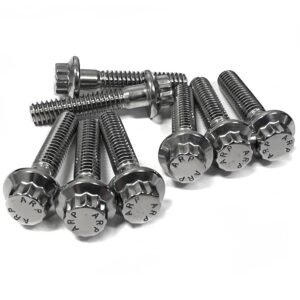
Zinc plated Torx head screws pair the highest-efficiency drive geometry in common fastener use with the most cost-effective corrosion coating in the industry. The six-lobe (hexalobular) recess transfers torque almost tangentially, so the bit does not cam out even at high tightening torque — while the zinc layer, specified by thickness class and passivate color, delivers 24–200+ hours of salt-spray protection at a fraction of the cost of stainless. This guide covers the drive geometry, T-size selection, ASTM B633 plating classes, hydrogen-embrittlement control, and supplier qualification you need to specify these screws correctly on a drawing and an RFQ. If you are looking for quality and durability, consider the Hot Sale Zinc Plated Thread Torx Head Screws.
TL;DR — Key Takeaways
- The Torx (hexalobular, ISO 10664) recess drives at roughly a 15° contact angle versus 60° for a hex socket — near-zero cam-out, lower end-load, and 2–5× longer bit life.
- T-sizes map to thread diameters: T10↔M3, T20↔M4, T25↔M5, T30↔M6, T40↔M8, T50↔M10.
- Zinc plating follows ASTM B633 / ISO 4042 thickness classes (Fe/Zn 5, 8, 12 μm); trivalent chromate passivates have replaced hexavalent yellow for RoHS compliance.
- Screws of property class 10.9 and above must be baked at 190–220 °C within 4 hours of plating to relieve hydrogen embrittlement.
- A qualified manufacturer verifies steel chemistry by OES, gauges threads after plating, and documents outgoing quality below 25 PPM at AQL 0.4.
What Are Zinc Plated Torx Head Screws?
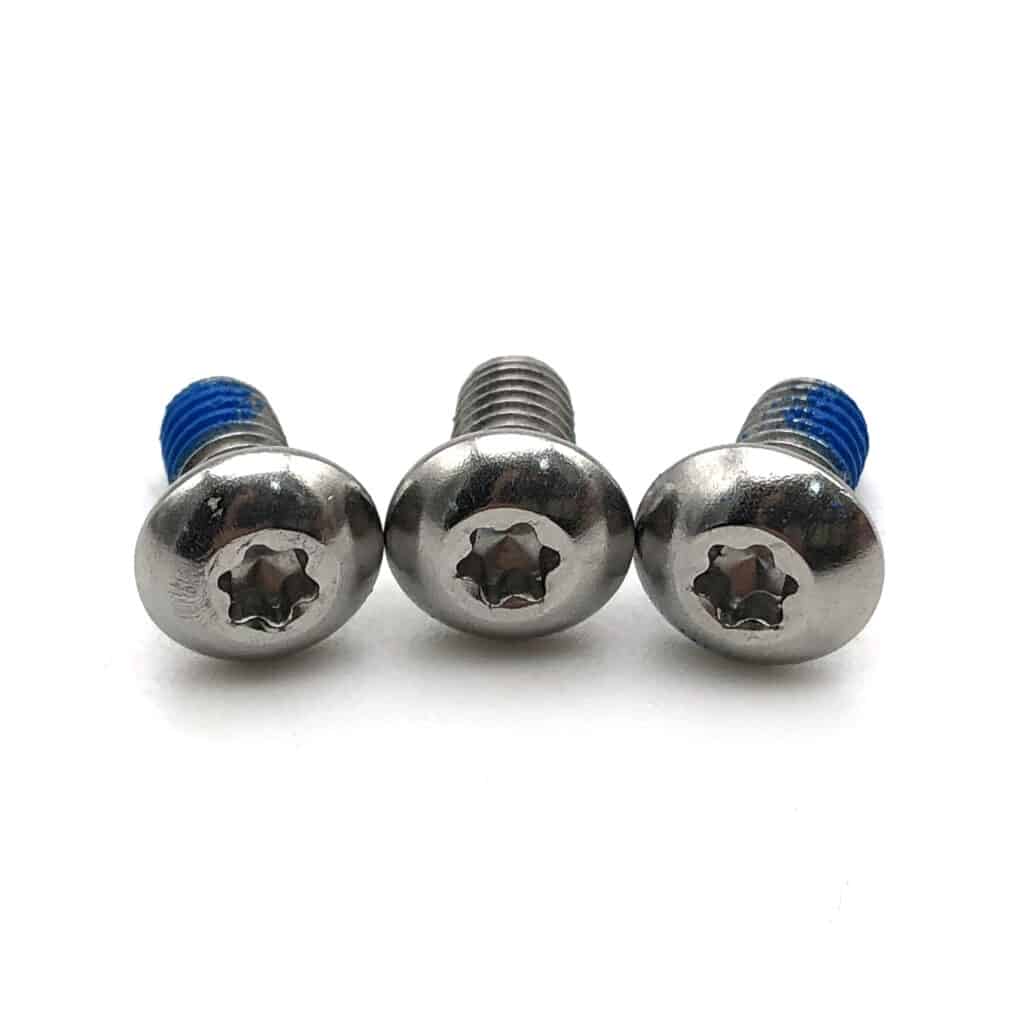
A Torx head screw carries a six-lobe internal recess — standardized as the hexalobular drive in ISO 10664 — instead of a slot, Phillips cross, or hex socket. “Torx” is the original trade name; “star drive” and “6-lobe” describe the same geometry, sized T6 through T100. The zinc plating is an electrodeposited sacrificial layer that corrodes before the steel does, then is sealed by a chromate passivate that sets both color and corrosion life.
The combination dominates machinery, automotive trim, electronics enclosures, and appliance assembly because it solves two production problems at once: the recess survives automated high-torque driving without stripping, and the coating survives shipping, storage, and indoor service without rusting.
| Head Style | Standard | Profile | Typical Use |
|---|---|---|---|
| Pan head | ISO 14583 | Domed, flat bearing face | General machinery, sheet joints |
| Countersunk (flat) | ISO 14581 | Flush, 90° cone | Panels, flush surfaces |
| Button head | ISO 7380-style | Low dome | Guards, trim, low-clearance |
| Cheese head | DIN 84-style | Tall cylindrical | Electronics, deep counterbores |
KeyFix produces all four head styles through its cold forging lines, forming the hexalobular recess directly in the heading die so the lobes carry continuous grain flow rather than machined-away fibers.
Why Does the Torx Drive Outperform Phillips and Hex?
The answer is contact geometry. A Phillips recess is designed to cam out — the tapered wings push the bit axially outward as torque rises, which protected hand-driven screws in the 1930s but wastes torque and chews recesses under power tools. A hex socket engages at a 60° wall angle, converting part of the torque into a radial bursting force that rounds corners as the key wears.
The Torx lobe engages at roughly 15°, so nearly all applied torque becomes useful rotation. The practical results: minimal axial end-load on the operator or spindle, no designed cam-out, and drive surfaces that wear evenly instead of rounding.
| Drive | Contact Angle | Cam-Out Tendency | Torque Transfer | Bit Life |
|---|---|---|---|---|
| Slotted | Line contact | Severe | Poor | Short |
| Phillips | Tapered wings | By design | Moderate | Short–moderate |
| Hex socket (Allen) | ~60° | Low–moderate (wear-driven) | Good | Moderate |
| Torx (hexalobular) | ~15° | Near zero | Excellent | 2–5× hex |
💡 Engineer’s Note: On automated assembly lines, the Torx advantage shows up in the maintenance log, not the datasheet. Because the bit does not need axial pressure to stay seated, spindle wear, recess damage, and mid-shift bit changes all drop — a real cost saving at 100,000+ drives per shift that never appears on the per-screw price.
Which Torx Size Matches Which Thread Diameter?
Each thread size pairs with a standard T-size that fills the head with the largest recess the geometry allows. Specifying a smaller-than-standard recess sacrifices torque capacity; a larger one thins the head walls.
| Thread | Torx Size | Guideline Torque (class 8.8, μ = 0.14) |
|---|---|---|
| M3 | T10 | 1.0–1.3 Nm |
| M4 | T20 | 2.6–3.0 Nm |
| M5 | T25 | 5.2–6.0 Nm |
| M6 | T30 | 9.0–10.5 Nm |
| M8 | T40 | 22–25 Nm |
| M10 | T50 | 44–48 Nm |
The CNC parts portfolio and machinery fastener programs at KeyFix cover this full range, with custom lengths, shoulder features, and captive-washer (SEMS) variants available to drawing.
What Do Zinc Plating Classes and Colors Mean?
“Zinc plated” alone is an incomplete specification. The coating is defined by thickness class (per ASTM B633 or ISO 4042) and passivate type, which together set the salt-spray life and the color you see.
| Class (ASTM B633) | Thickness | Passivate / Color | Typical Salt Spray (to white corrosion) | Service |
|---|---|---|---|---|
| SC1 (Fe/Zn 5) | 5 μm | Trivalent clear / blue | 24–48 hr | Dry indoor |
| SC2 (Fe/Zn 8) | 8 μm | Trivalent clear or iridescent | 72–120 hr | Indoor, mild humidity |
| SC3 (Fe/Zn 12) | 12 μm | Thick-film trivalent “yellow” | 96–200 hr | Sheltered outdoor |
| SC4 (Fe/Zn 25) | 25 μm | Trivalent + topcoat | 200+ hr | Harsh, unsheltered |
| Legacy yellow | 5–12 μm | Hexavalent chromate | 96–200 hr | Restricted (RoHS/ELV) |
Two points matter for procurement. First, the yellow color of old hexavalent chromate is now reproduced by RoHS-compliant thick-film trivalent passivates — specify “trivalent, RoHS 3” explicitly rather than a color alone. Second, coating thickness consumes thread clearance: a 6g external thread plated at 8–12 μm can jam its gauge, so ISO 4042 requires the thread allowance and gauging after plating to be agreed up front.
KeyFix documents plating thickness on every lot and verifies base-steel chemistry with a German SPECTRO optical emission spectrometer on incoming wire through its raw material control process.
⚠️ Common Pitfall: Ordering class 10.9 or 12.9 Torx screws zinc plated without specifying a hydrogen-relief bake invites delayed fracture — heads pop off 24–72 hours after installation with no warning. Electroplating charges high-strength steel with hydrogen; baking at 190–220 °C within 4 hours of plating (per ASTM B850 practice) drives it out. Put the bake on the drawing for any screw at or above 10.9.
How Are Zinc Plated Torx Head Screws Manufactured?
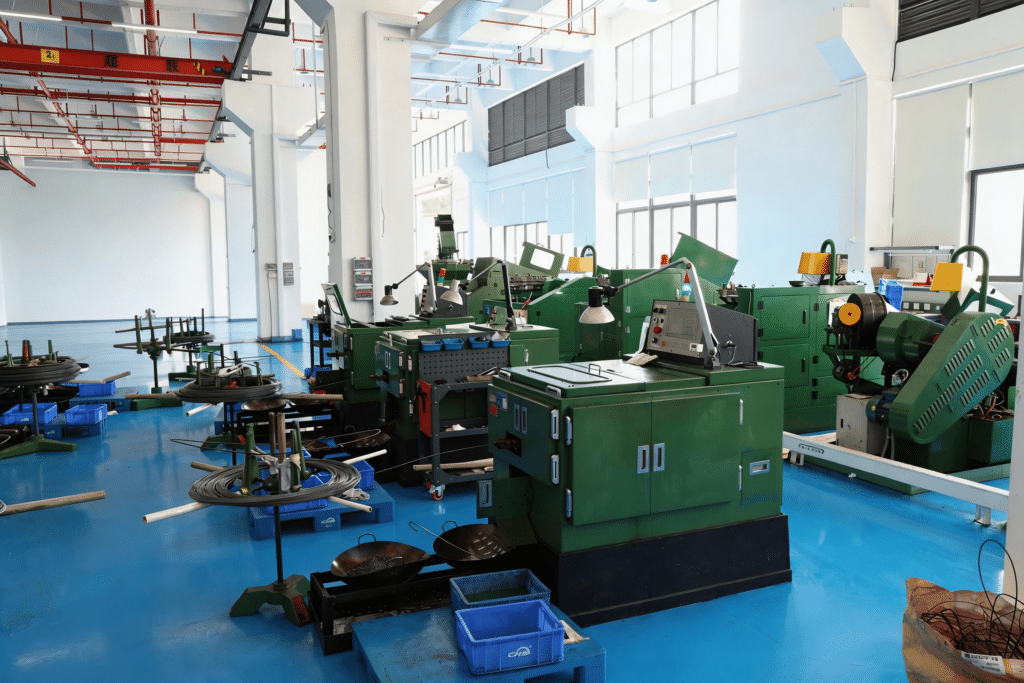
The production chain is cold forming end to end — no cutting on the functional surfaces.
| Step | What Happens | KeyFix Capability |
|---|---|---|
| Wire verification | Confirm steel grade by OES | SPECTRO (Germany), 100% of heats |
| Cold heading | Form head + hexalobular recess in-die | 25 multi-station cold headers |
| Thread rolling | Roll 6g thread, continuous grain | 22 thread rolling machines |
| Heat treatment | Quench + temper to 8.8 / 10.9 / 12.9 | Controlled-atmosphere furnaces |
| Zinc plating + passivate | Deposit class thickness, trivalent seal | Verified per lot |
| H₂ relief bake | 190–220 °C ≤ 4 hr (class ≥ 10.9) | Mandatory, documented |
| Inspection | Recess gauging, thread gauging after plating | 2D video measuring + Shining3D 3D scanning, 100% optical sorting |
Forming the Torx recess in the heading die — rather than broaching it afterward — leaves the lobe flanks work-hardened with unbroken grain flow, which is why cold-headed recesses resist rounding 40–60% longer than machined ones. Thread rolling adds the same benefit on the thread flanks. The full process logic is outlined on KeyFix’s technology overview and machining capability pages, and dimensional conformance is documented under the inspection standards program.
Need a quote on zinc plated Torx screws? Send your drawing or sample to KeyFix — DFM review and quotation within 48 hours. Get a quote or email sales@keyfixpro.com.
What Should You Specify on the Drawing?
| Call-Out | What to Specify | Why It Matters |
|---|---|---|
| Standard + head style | e.g., ISO 14583 pan head | Anchors all default dimensions |
| Thread × length | e.g., M5 × 16, 6g | Fit and engagement |
| Torx size | Standard T-size for the thread | Torque capacity |
| Property class | 8.8, 10.9, 12.9 | Strength; triggers bake rule |
| Plating class + passivate | e.g., Fe/Zn 8, trivalent clear | Corrosion life, RoHS |
| H₂ relief bake | Required for ≥ 10.9 | Prevents delayed fracture |
| Gauging after plating | Per ISO 4042 | Thread fit with coating |
📋 Spec Tip: Write the plating as a class, not a color — “Fe/Zn 8, trivalent clear, per ASTM B633 SC2” is enforceable at incoming inspection; “blue zinc” is not. Add “thread gauged after plating” and the recess-fit dispute disappears with it.
How Do You Qualify a Torx Screw Manufacturer?
| Audit Point | Minimum Requirement | KeyFix Status |
|---|---|---|
| Quality system | ISO 9001 minimum | IATF 16949 + ISO 9001 + ISO 14001 |
| Recess forming | In-die hexalobular forming | 25 cold headers, in-die recess |
| Thread production | Rolled, not cut | 22 thread rolling machines |
| Material verification | OES on incoming wire | SPECTRO OES, 100% of heats |
| Dimensional control | Documented measurement system | 2D video measuring + 3D scanning |
| Plating verification | Thickness per lot; bake records | Verified + documented |
| Outgoing quality | Defect rate documented | <25 PPM at AQL 0.4 |
KeyFix runs the entire chain — wire to plated, baked, sorted screw — under one IATF 16949 system; its project case studies and company background document the audit trail that OEM buyers require, with thread tolerances held to ISO metric standards.
What Are the Logistics and Shipping Terms?
KEYFIX manufactures in its own plant in Guangdong Province, near South China’s export ports.
| Term | Detail |
|---|---|
| Manufacturing location | Guangdong Province |
| Standard shipping term | FCA at our Guangdong plant |
| Sea freight term | FOB Shenzhen Yantian Port |
| Prototype lead time | 7–14 business days (air-expressed) |
| Production lead time | 4–6 weeks after sample approval |
The short inland haul from our Guangdong plant to Shenzhen Yantian Port keeps transit time and freight cost low for international buyers.
Frequently Asked Questions
Is a “star drive” screw the same as a Torx screw?
Yes. Torx is the original trade name for the hexalobular drive standardized in ISO 10664; “star drive” and “6-lobe” describe the same recess. Bits are interchangeable within the same T-size.
Does zinc plating affect the Torx recess or thread fit?
It can. Plating adds 5–12 μm per surface, which tightens both the recess and a 6g thread. Specify gauging after plating per ISO 4042, and the manufacturer will adjust the pre-plate thread allowance so the finished screw gauges correctly.
Why do class 10.9 zinc plated screws need baking?
Electroplating introduces hydrogen into high-strength steel, which causes delayed fracture under load. Baking at 190–220 °C within 4 hours of plating drives the hydrogen out. It is mandatory for property class 10.9 and above.
What is the minimum order quantity?
Cold-headed Torx screws start at 10,000 pieces per size for production; prototype and sample lots of 500–1,000 pieces are available for validation. Contact sales@keyfixpro.com for quotations.
What certifications does KeyFix hold?
IATF 16949, ISO 9001, and ISO 14001. Material certificates, plating thickness reports, bake records, and dimensional inspection documentation ship with OEM orders.
What shipping terms apply for international orders?
Standard shipping is FCA at our Guangdong plant, with sea freight as FOB Shenzhen Yantian Port from our Guangdong production base. Production ships 4–6 weeks after sample approval.
If your next program needs zinc plated Torx screws — pan, countersunk, button, or custom geometry, in class 8.8 through 12.9 — send your drawing to KeyFix for a free DFM review and a quotation within 48 hours. Explore the product portfolio or contact KeyFix at sales@keyfixpro.com.
Author: KeyFix Engineering Team Published: July 2, 2026 Last Updated: July 2, 2026