IATF 16949 is the global quality management standard for automotive production. For any component that ends up in a vehicle — including the screws, bolts, nuts and machined parts that hold it together — it is the benchmark that separates a qualified automotive supplier from a general manufacturer. This guide explains what IATF 16949 is, how it relates to ISO 9001, the core tools it requires, its current status in 2026, and what it means in practice when you source fasteners for an automotive programme.
What Is IATF 16949?
IATF 16949 is a technical specification for a quality management system (QMS) specific to the automotive industry. Its current title is IATF 16949:2016 — “Quality management system requirements for automotive production and relevant service parts organizations.” It is published and maintained by the International Automotive Task Force (IATF), a body made up of major vehicle manufacturers (including BMW, Ford, General Motors, Mercedes-Benz, Stellantis, Volkswagen, Renault) and their national automotive trade associations, working alongside ISO.
Crucially, IATF 16949 is not a standalone standard. It is applied together with ISO 9001: the IATF document carries the automotive-specific supplemental requirements and must be read alongside ISO 9001’s general QMS requirements. An organization certified to IATF 16949 therefore satisfies ISO 9001 plus a substantial additional layer of automotive discipline.
From ISO/TS 16949 to IATF 16949:2016 — and What Comes Next
The standard evolved from ISO/TS 16949, first issued in 1999 to harmonise the fragmented automotive quality requirements of the time — QS-9000 in North America, VDA 6.1 in Germany, EAQF in France and AVSQ in Italy — into one global specification. In October 2016, the IATF replaced ISO/TS 16949 with IATF 16949:2016, strengthening requirements around risk, product safety and supply-chain management.
As of 2026, IATF 16949:2016 remains the operative standard. Certification is governed by the “Rules for achieving and maintaining IATF recognition,” whose 6th Edition took effect on 1 January 2025 — tightening audit discipline, for example a 15-day deadline to respond to a major nonconformity, stricter limits on audit duration, and the removal of pre-assessment audits. A revision of the standard itself is in development and is expected to align with the next ISO 9001 revision, with publication anticipated around late 2026 to early 2027; transition timelines will be announced after it is published.
How IATF 16949 Goes Beyond ISO 9001
ISO 9001 establishes a sound general quality system: customer focus, the process approach, risk-based thinking and continual improvement. IATF 16949 keeps all of that and adds the requirements that automotive production cannot run without.
| Area | What IATF 16949 Adds on Top of ISO 9001 |
|---|---|
| Customer-Specific Requirements (CSRs) | Each automaker publishes its own CSRs; the supplier must identify, implement and audit against every applicable one |
| Product safety | Formal identification and control of safety-related parts and characteristics, with defined responsibilities and traceability |
| Traceability | Tracing material, process and inspection records back from a finished part — essential for containment and recall |
| Contingency planning | Documented plans to maintain supply through equipment failure, labour or utility interruption, field returns and cyber events |
| Defect prevention | Mandatory use of the core tools, a zero-defect mindset, and error-proofing (poka-yoke) |
| Supplier management | Formal development and monitoring of the sub-supply chain, including a path to the sub-supplier’s own certification |
| Embedded software | Where parts contain software, quality assurance over the software development process |
The Five Core Tools of IATF 16949
A certified supplier is expected to apply the AIAG/VDA “core tools” throughout product and process development. These are the working methods behind the standard:
- APQP (Advanced Product Quality Planning) — a structured, phase-gated process for taking a part from concept to production, ensuring the right checks happen at the right stage.
- PPAP (Production Part Approval Process) — the evidence package a supplier submits to prove a part is ready for serial production: typically the drawing, process flow, PFMEA, control plan, measurement studies, dimensional results, material and performance test results, and the Part Submission Warrant (PSW). PPAP is the gatekeeper between development and mass production.
- FMEA (Failure Mode and Effects Analysis) — a systematic risk analysis of a design (DFMEA) or process (PFMEA), used to find and reduce failure risk before it reaches the customer.
- MSA (Measurement Systems Analysis) — studies such as Gage R&R that confirm the measurement equipment itself is accurate and repeatable enough to trust the data it produces.
- SPC (Statistical Process Control) — control charts and capability indices (Cp, Cpk, Pp, Ppk) that monitor a process, prove it is stable, and keep it centred within tolerance.
Together these tools turn “we inspect our parts” into “we control the process that makes our parts” — the shift that defines automotive quality.
Why IATF 16949 Matters Specifically for Fasteners
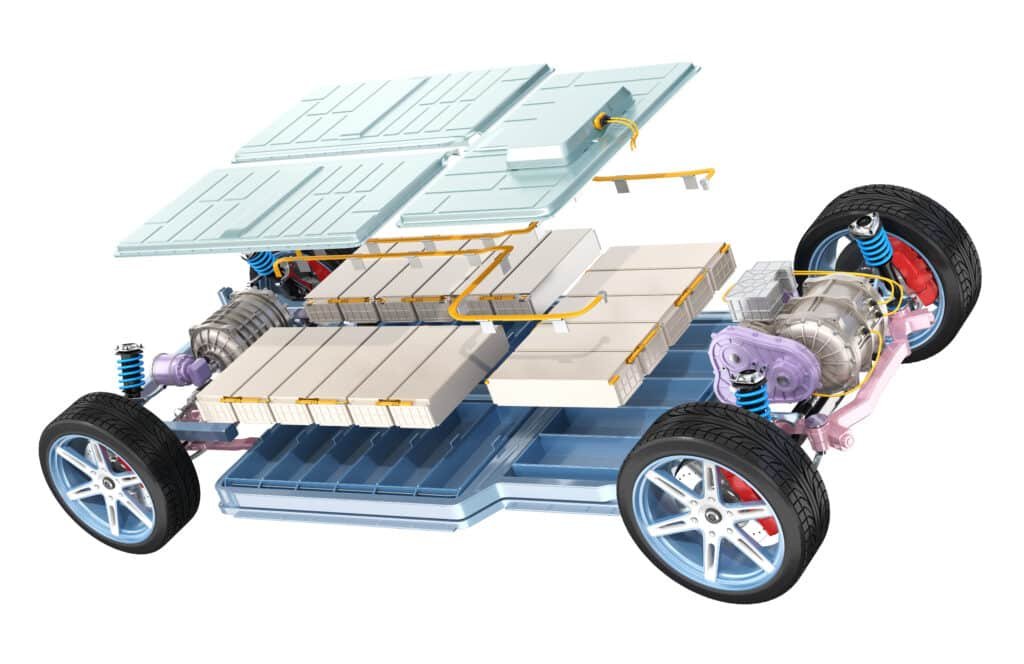
It is tempting to treat a screw or bolt as a commodity. In an automotive assembly it is anything but. Fasteners hold together safety-critical joints — suspension, steering, seats, airbags, brakes, battery packs — where a single failed part can trigger a field action. That is why automotive fastener programmes almost always require an IATF 16949-certified source, and why the standard’s disciplines map so directly onto fastener manufacturing:
- Traceability from wire rod to finished part, by heat and lot, so any material issue can be contained precisely.
- PPAP submission before a part is approved for volume — proving capability rather than promising it.
- Statistical capability (Cpk) on critical characteristics — thread, head dimensions, mechanical properties — rather than end-of-line sampling alone.
- Low, measured defect rates, expressed in PPM (parts per million), with containment and corrective action when a deviation occurs.
- Control of special characteristics — the dimensions and properties that affect safety or function — flagged on the drawing and watched throughout production.
For a buyer, an IATF 16949 certificate is shorthand for one thing: this supplier can document, not just assert, that its parts meet specification batch after batch.
What Certification Actually Involves
IATF 16949 certification is not self-declared. An organization is audited by a certification body accredited through an IATF-recognised scheme. Certification follows a defined cycle: a two-stage initial audit, then surveillance audits (typically annually) and a recertification audit every three years. Nonconformities must be corrected within strict deadlines, and under the 6th Edition Rules a missed major-nonconformity deadline can lead to withdrawal of the certificate. Certification is therefore a continuous obligation, not a one-time plaque on the wall.
How KEYFIX Applies IATF 16949
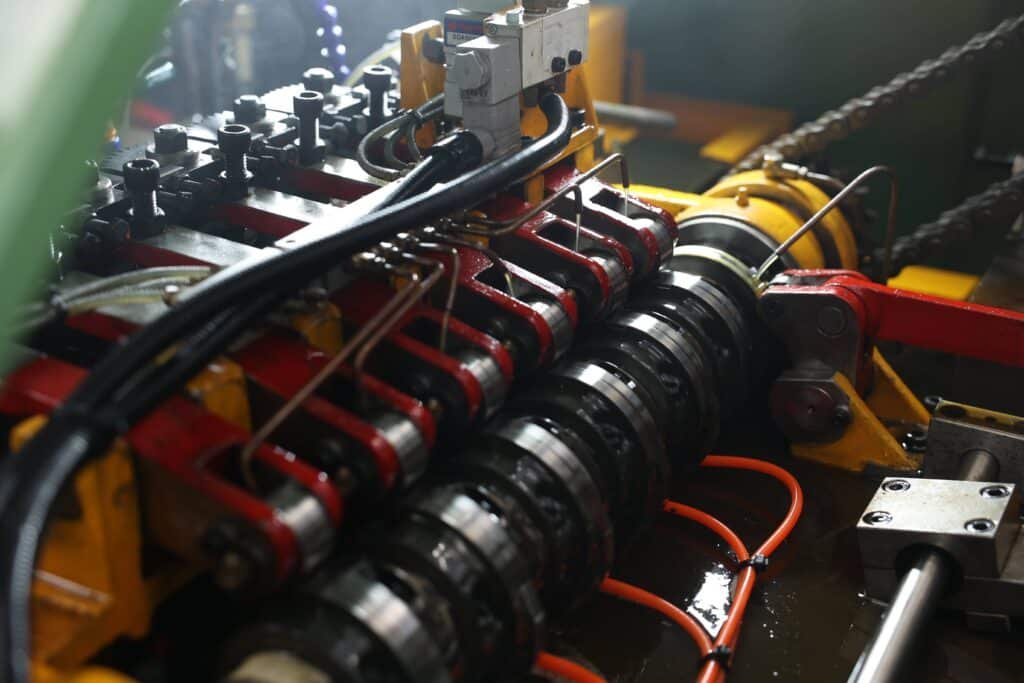
At KEYFIX the standard is built into the production flow rather than bolted on for audits:
- Material control: incoming bar and wire rod is verified by SPECTRO optical emission spectrometry on our raw material line, with mill certificates retained by heat for full traceability.
- Process capability: cold forging and CNC machining run to documented control plans, holding ±0.01 mm on cold-forged and ±0.005 mm on CNC-machined critical features.
- Inspection and measurement: 2D video measuring, 3D scanning, calibrated gauges and automated optical sorting under our inspection standards, with measurement systems controlled so the data can be trusted.
- Outgoing quality: AQL 0.4 outgoing inspection with a target below 25 PPM, and full dimensional reporting with shipments.
- PPAP capability: for automotive programmes we provide the full PPAP package — process flow, PFMEA, control plan, measurement studies, dimensional and material results, and the PSW — so parts are approved on evidence. See our note on being an IATF 16949 fastener supplier with PPAP capability.
Certification to IATF 16949, ISO 9001 and ISO 14001 is maintained as part of this system, documented in our company background.
If your automotive programme needs an IATF 16949-certified fastener supplier with full traceability and PPAP documentation, send your drawing and requirements to the KEYFIX engineering team for a DFM review and quotation, usually within 48 hours.
Frequently Asked Questions
Is IATF 16949 the same as ISO 9001?
No. IATF 16949 is applied together with ISO 9001 and adds automotive-specific requirements on top of it — customer-specific requirements, product safety, traceability, contingency planning and the core quality tools. An IATF 16949-certified supplier meets ISO 9001 and considerably more.
Is ISO/TS 16949 still valid?
No. ISO/TS 16949 was replaced by IATF 16949:2016 in 2016, and all certified suppliers transitioned to the new standard. A certificate still referencing ISO/TS 16949 is out of date.
What is PPAP and why does it matter for fasteners?
PPAP (Production Part Approval Process) is the documented evidence package proving a part is ready for serial production. For fasteners it ties together the material certificate, process flow, PFMEA, control plan, measurement studies and dimensional and mechanical results, so the customer approves the part on verified data rather than a promise.
Does IATF 16949 guarantee zero defects?
No certification guarantees zero defects, but IATF 16949 drives a defect-prevention system — process control, error-proofing, measured PPM and corrective action — designed to make defects rare and, when they occur, contained quickly and traceably.
Is IATF 16949:2016 still the current version in 2026?
Yes. IATF 16949:2016 remains the operative standard in 2026. The certification Rules reached their 6th Edition on 1 January 2025, and a revision of the standard is expected around late 2026 to early 2027, aligned with the next ISO 9001 revision; transition timelines will follow its publication.
This article is general information about the IATF 16949 standard and does not constitute certification or audit advice. Confirm current requirements with your certification body or the official IATF publications.