Zinc flake coating fasteners are the default choice for high-strength automotive bolts and screws because the coating protects against corrosion without adding hydrogen to hardened steel. A zinc flake system is a dispersion of zinc and aluminum flakes in a binder, applied by dip-spin or spray and cured in an oven, usually with a topcoat that sets the friction coefficient. This guide explains what ISO 10683:2018 specifies, when zinc flake should replace electroplating, and what to write on the drawing.
Key Takeaways
- Zinc flake coatings are applied without electrolysis, so they add no hydrogen to the steel. For parts at 320 HV and above, that removes the main embrittlement risk of electroplated zinc.
- ISO 10683:2018 makes neutral salt spray (NSS) performance the acceptance criterion. Coating thickness is only a reference value: about 4 µm for 240 h up to about 10 µm for 960 h without red rust.
- The topcoat, with or without integral lubricant, sets the friction coefficient. Specify a window such as 0.10–0.16 tested to ISO 16047, and treat any topcoat change as a new torque validation.
- Cure temperature, up to about 320 °C for many systems, must stay below the fastener’s tempering temperature.
- Dip-spin can fill fine threads and recesses. Small threads, Torx drives and internal threads need a process and thickness limit agreed at the RFQ stage.
Contents
- What is zinc flake coating?
- Zinc flake vs electroplating: when is zinc flake required?
- What does ISO 10683:2018 specify?
- How do you control the friction coefficient?
- Dip-spin or rack spray: which application method?
- What are common defects in zinc flake coating fasteners?
- How does KEYFIX supply zinc flake coated fasteners?
- What should the drawing or RFQ specify?
- Frequently Asked Questions
What is zinc flake coating?
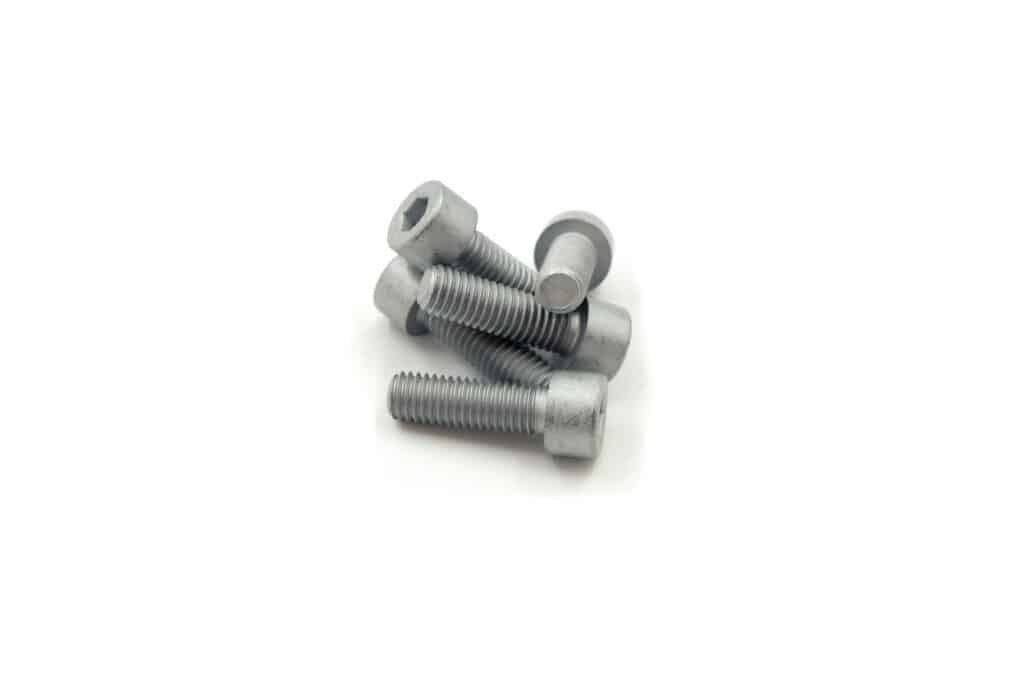
Zinc flake coating is a non-electrolytically applied coating made of overlapping zinc and aluminum flakes held in an inorganic or organic binder. The part is cleaned, coated by dipping and spinning or by spraying, then cured at high temperature. Typical systems use one or two base coats and an optional topcoat.
The flakes protect steel in two ways. The layered structure is a barrier, and the zinc corrodes sacrificially before the steel. Older systems contained hexavalent chromium (Cr(VI)), sold under trade names such as Dacromet. Automotive programs now specify Cr(VI)-free systems, which ISO 10683 designates “nc” (the Cr(VI)-containing type is “yc”).
| Property | Zinc flake (ISO 10683) | Electroplated zinc or zinc-nickel (ISO 4042) |
|---|---|---|
| Application | Dip-spin or spray, oven cured | Electrolytic plating bath |
| Hydrogen added to steel | None from the process | Yes; baking needed for hardened parts |
| Typical thickness | About 4–15 µm | About 5–12 µm |
| Corrosion (NSS, no red rust) | 480–1,000 h+ depending on system | Depends on alloy, thickness and passivation |
| Friction control | Topcoat with or without lubricant | Sealer or top coat |
| Conductivity | Limited; topcoats often insulate | Conductive |
| Thread fill risk | Higher on fine threads and recesses | Lower |
Zinc flake vs electroplating: when is zinc flake required?
For zinc flake coating fasteners versus plated ones, the rule is simple: zinc flake is the safer choice for any fastener hardened to 320 HV or above, which includes property class 10.9 and 12.9 bolts and most case-hardened screws. Electroplating releases hydrogen at the steel surface. In hardened steel, absorbed hydrogen can cause delayed fracture hours or days after tightening.
ISO 4042:2022, the standard for electroplated fasteners, manages this with baking: typically at 200–230 °C, started within 4 hours of plating and preferably within 1 hour, for durations that are often 8 hours or more. It also warns against acid cleaning for parts at 385 HV or property class 12.9. Baking reduces the risk but does not remove it.
Use these rules of thumb for coating selection:
- Property class 12.9 bolts, and other parts at 385 HV and above: zinc flake is the default. Many OEM standards restrict electroplating at this hardness.
- Property class 10.9 bolts and case-hardened screws: zinc flake is preferred. Electroplating needs documented baking and embrittlement testing.
- Property class 8.8 and below, and nuts: electroplated zinc or zinc-nickel is common and usually cheaper.
- Grounding studs, earth points and contact surfaces: plating usually wins, because many zinc flake topcoats are poor conductors.
For the steel side of the decision, see our guide to why steel microstructure matters for fasteners and the Grade 12.9 flange bolt guide.
What does ISO 10683:2018 specify?
ISO 10683:2018 covers non-electrolytically applied zinc flake coatings for steel fasteners. It defines the coating types, the designation system, the corrosion test and the friction requirements, and it leaves product-specific values to the purchaser.
The core point is that corrosion resistance in neutral salt spray to ISO 9227, not thickness, is the acceptance criterion. Thickness and coating weight are reference values for process control. The reference values in the standard are:
| NSS duration without red rust | Reference minimum thickness |
|---|---|
| 240 h | 4 µm |
| 480 h | 5 µm |
| 600 h | 6 µm |
| 720 h | 8 µm |
| 960 h | 10 µm |
The standard also covers coating behavior after heat. Parts are held for 3 hours at 150 °C and must still meet the corrosion requirement, which matters for fasteners near engines, exhausts and power electronics.
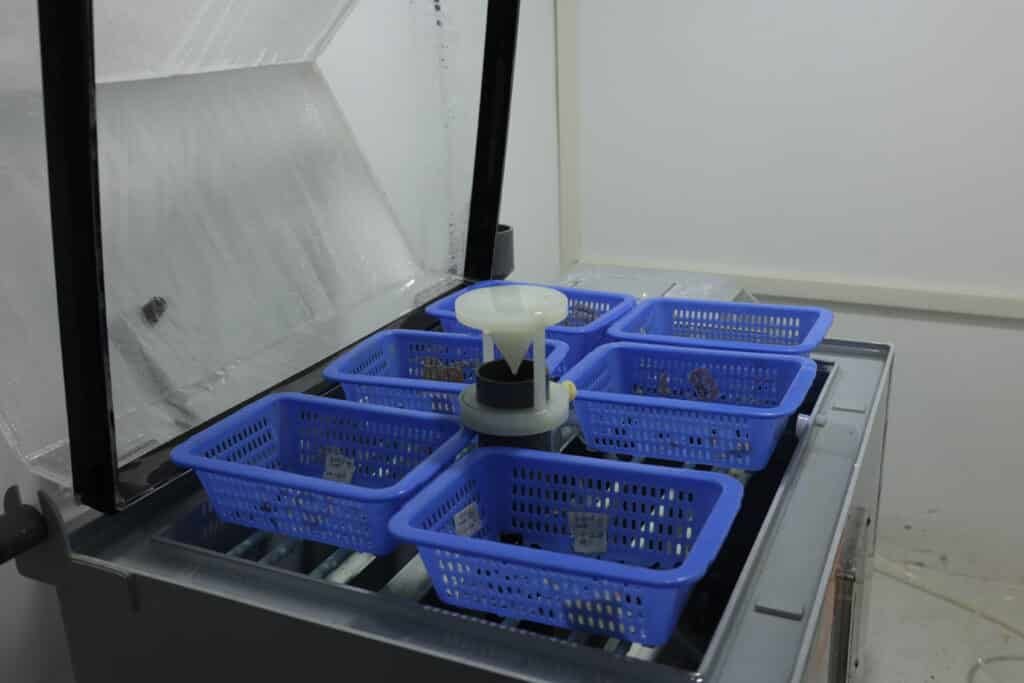
Engineer’s Note: Salt spray hours are a quality-control check, not a prediction of service life. Specify NSS hours for lot acceptance, and use cyclic corrosion tests from the OEM standard when you need to compare coating systems.
How do you control the friction coefficient?
Control friction on zinc flake coating fasteners by specifying the topcoat and a total friction coefficient window measured to ISO 16047. The base coat provides corrosion protection. The topcoat, with or without integral lubricant, sets how much of the tightening torque becomes clamp load.
ISO 10683 lets the purchaser state a friction window at the order, for example 0.10–0.20 or 0.17 ± 0.03, with the test conditions: the mating part, its surface and whether the bearing face is coated. A bolt tightened to the same torque can reach very different clamp loads if the friction moves from 0.10 to 0.18.
| Friction-related item | What to specify |
|---|---|
| Total friction coefficient (µtot) | A window, for example 0.10–0.16 |
| Test method | ISO 16047, with the test washer or nut and its surface |
| Repeat tightening | Number of tightenings to test, if the joint is serviced |
| Topcoat | Named system, with or without integral lubricant |
| Change control | No topcoat or supplier change without re-validation |
Common Pitfall: Buyers sometimes approve a coating on corrosion results and leave friction open. The joint then passes salt spray but loses clamp load, or bolts yield at the production torque. Put both on the drawing.
Dip-spin or rack spray: which application method?
Dip-spin suits most bulk fasteners. Rack or spray application suits large, long or delicate parts where thread fill or surface damage must be avoided.
- Dip-spin: parts are loaded into a basket, dipped in the coating and spun to throw off the excess. It is efficient for screws, bolts and nuts, but coating can collect in recesses, under heads and on fine threads, and parts touch each other during curing.
- Rack dip-spin or spray: parts are fixed individually. It costs more but gives more even coverage, which suits long bolts, flanged parts, small threads and drives such as Torx T10.
Coating build-up affects threads. A 6g external thread has a small fundamental deviation, and zinc flake at 10 µm or more can push it outside the gauge. Agree on gauging after coating and, if needed, a thinner system or thread size adjustment before production starts.
Cr(VI)-free systems have little self-healing. Coating damaged during bulk handling, sorting and feeding does not repair itself, so packaging and automatic feeders matter.
What are common defects in zinc flake coating fasteners?
Most problems with zinc flake coating fasteners come from thickness distribution, curing or handling rather than the coating chemistry.
| Defect | Likely cause | Prevention |
|---|---|---|
| Thread gauge fails after coating | Excess coating in the thread root | Spin settings, number of coats, rack coating for fine threads |
| Recess filled (Torx, hex socket) | Coating trapped in the drive | Spin and orientation control; recess check gauge |
| Early red rust at edges | Thin coating on sharp edges and thread crests | Edge radius, coat count, NSS check on edges |
| Friction outside window | Topcoat thickness or cure variation | Lot friction test to ISO 16047 |
| Coating damage | Bulk handling, feeders, packaging | Limit drop heights; specify packaging |
| Poor adhesion | Inadequate cleaning or shot blasting before coating | Pre-treatment checks per lot |
How does KEYFIX supply zinc flake coated fasteners?
KEYFIX supplies zinc flake coating fasteners made on 25 cold heading machines, with threads rolled from M1.2 on 22 thread rolling machines. Heat treatment covers quench and temper, case hardening and carbonitriding within HRC 28–62. Surface options include zinc flake with salt spray performance of 1,000 h+ and zinc-nickel, each applied to your specification.
Coated lots are checked with full thread go/no-go gauges from M1.2 to M30, Rockwell and Vickers hardness testers and a salt spray chamber. Outgoing inspection runs at AQL 0.4 against a target below 25 PPM, under IATF 16949 (audited by NQA). Friction coefficient and torque–tension tests to ISO 16047 are arranged through third-party testing laboratories. See our cold forged parts and inspection standards pages.
What should the drawing or RFQ specify?
A complete RFQ for zinc flake coating fasteners includes:
- Fastener standard or drawing, size, property class or hardness.
- Coating standard: ISO 10683:2018, or the OEM standard it replaces.
- Coating system and type: Cr(VI)-free (nc), base coat and topcoat by name if fixed.
- Corrosion requirement: NSS hours without red rust to ISO 9227, and any cyclic test.
- Friction coefficient window, test method and mating test parts.
- Areas to keep free of coating or with limited thickness: threads, recesses, bearing faces.
- Application method if it matters: bulk dip-spin or rack.
- Packaging limits to protect the coating, and annual volume per size.
Frequently Asked Questions
What is zinc flake coating on fasteners?
Zinc flake coating is a non-electrolytically applied coating of zinc and aluminum flakes in a binder, cured in an oven and usually finished with a topcoat. It protects steel fasteners by barrier and sacrificial action and adds no hydrogen to the steel.
Is zinc flake the same as Dacromet?
Dacromet is a trade name for an early zinc flake system that contained hexavalent chromium. Current automotive zinc flake systems are Cr(VI)-free and are designated “nc” in ISO 10683:2018.
How many hours of salt spray does zinc flake coating pass?
It depends on the system and thickness. ISO 10683:2018 gives reference thicknesses from about 4 µm for 240 hours to about 10 µm for 960 hours in neutral salt spray without red rust. Many automotive systems are specified at 720 hours or more.
Does zinc flake coating cause hydrogen embrittlement?
No. The coating is applied without electrolysis and without acid pickling when the surface is mechanically cleaned, so the process adds no hydrogen to the steel. That is why it is preferred for property class 10.9 and 12.9 bolts.
Why does the friction coefficient matter for zinc flake coated bolts?
The friction coefficient decides how much of the tightening torque becomes clamp load. Specify a window such as 0.10–0.16 to ISO 16047 so that the same torque gives a consistent clamp load from lot to lot.
What is the minimum order quantity for zinc flake coated fasteners?
At KEYFIX, cold-headed fasteners typically start at 5,000–10,000 pieces per size. Samples typically take 7–14 business days, and production typically takes 4–6 weeks after sample approval.
Send your drawing and coating specification to KEYFIX. We usually return a quotation and DFM feedback within 48 hours of receiving a complete drawing.