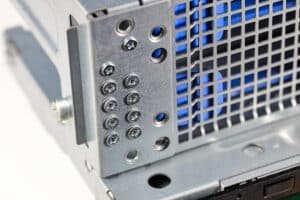
Automotive grounding studs connect wiring harness ground terminals, battery cables and high-voltage equipment to the vehicle body or chassis. They look like ordinary studs, but their job is electrical: a low, stable contact resistance for the life of the vehicle, through paint shops, corrosion and vibration. This guide covers how grounding studs are attached, how the contact surface is kept paint-free, which coatings work, and what to specify for EV bonding points.
Key Takeaways
- A grounding stud must carry current through a clean metal contact. Paint, sealer or an insulating topcoat on the contact face is the most common cause of a high-resistance ground.
- Welded studs to ISO 13918 are the usual choice on steel bodies. Clinch studs and threaded or riveted studs suit aluminum, coated sheet and parts added after paint.
- For electric vehicles, UN Regulation No. 100 requires the resistance between exposed conductive parts and the electrical chassis to be below 0.1 Ω at a test current of at least 0.2 A.
- Zinc-nickel electroplate is a common grounding stud finish because it is conductive. Many zinc flake topcoats are not, so contact areas need a conductive system or masking.
- Ground nuts with a prevailing-torque or paint-cutting thread clean paint from the stud thread during assembly, and a paint-free washer face gives the terminal its contact area.
Contents
- What is an automotive grounding stud?
- How are grounding studs attached to the body?
- How do you keep the contact surface paint-free?
- Which coatings work for grounding studs?
- What are the grounding requirements for EVs?
- Why do ground connections fail?
- What should the drawing or RFQ specify?
- Frequently Asked Questions
What is an automotive grounding stud?
An automotive grounding stud is a threaded stud fixed to the body, frame or a bracket to give the electrical system a common return path. A ring terminal goes over the stud and a nut clamps it against a conductive face. The current then passes from the terminal into the stud, the body and back to the battery negative.
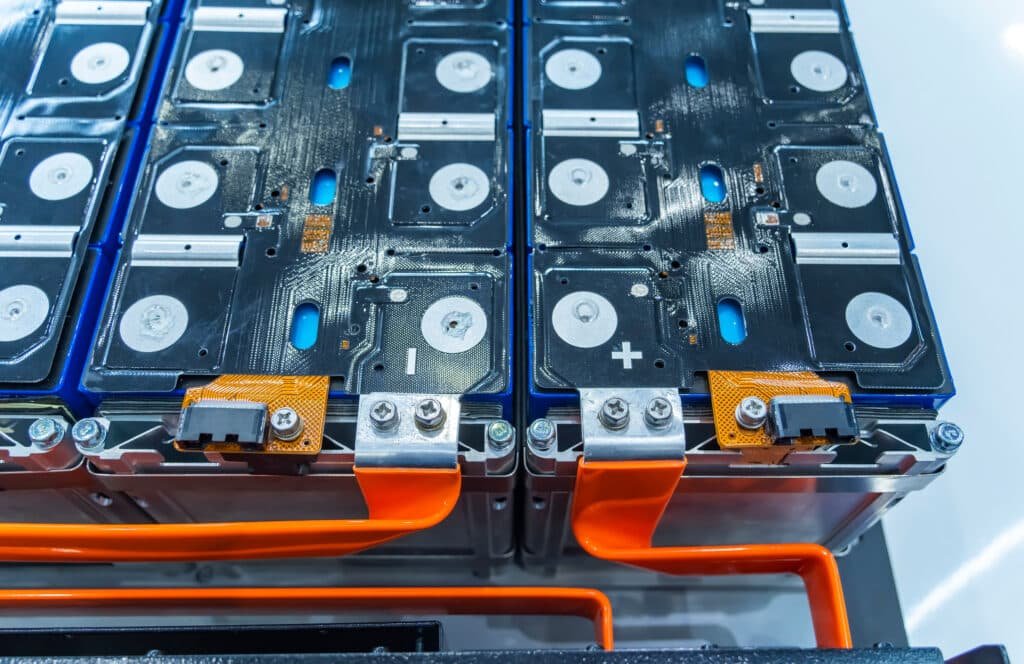
A vehicle can have dozens of ground points: battery and engine grounds, body grounds for lighting and control modules, shield grounds for sensors, and in EVs, bonding points for the battery pack, inverter, motor and charging inlet. Their size ranges from M5 and M6 for signal and module grounds to M8 and M10 for battery and high-current cables.
| Ground point | Typical stud size | Main requirement |
|---|---|---|
| Battery negative to body | M8–M10 | High current, low resistance |
| Body ground for modules and lighting | M6 | Many terminals, paint-free contact |
| Sensor and shield ground | M5–M6 | Stable resistance for EMC |
| EV equipotential bonding | M6–M8 | Resistance below 0.1 Ω to chassis |
How are grounding studs attached to the body?
Automotive grounding studs are attached in one of three ways: welded to the sheet, clinched or pressed into it, or fixed as a threaded or riveted stud. The choice depends on the body material, the paint process and whether the stud is fitted before or after paint.
| Attachment | Body material | Fitted before or after paint | Electrical contact | Notes |
|---|---|---|---|---|
| Welded stud (ISO 13918, e.g. type PT) | Steel, some aluminum | Before paint | Metallurgical bond to the sheet | Highest volume; needs paint control on threads and face |
| Clinch stud (self-clinching) | Steel, aluminum, coated sheet | Usually before paint | Through the clinched interface | No welding; needs a punched hole and sheet thickness control |
| Threaded or riveted stud | Aluminum, castings, composites with inserts | After paint possible | Through threads and head contact | Useful for repairs and late-added grounds |
Welded studs are common on steel bodies because the weld is also the electrical joint. UN Regulation No. 100 accepts welding as one way to show compliance for EV bonding connections. Clinch studs, like the self-clinching nuts for electronics enclosures, suit aluminum panels and pre-coated sheet. Threaded studs into tapped bosses suit castings such as motor and inverter housings, see our guide to custom threaded studs.
How do you keep the contact surface paint-free?
Keep the ground contact paint-free with three measures: a masking cap or ground nut fitted before paint, a thread that cleans itself during assembly, and a defined contact face under the terminal.
- Masking before paint: a cap or a nut is fitted on the welded stud before e-coat and paint, and removed or tightened at final assembly. The face under it stays bare metal.
- Paint-cutting or prevailing-torque thread: the ground nut has a distorted or cutting thread that scrapes e-coat and paint from the stud thread as it runs down. This keeps the run-down torque consistent and exposes clean metal.
- Contact face design: a flange or shoulder on the stud, or a serrated washer face on the nut, gives a defined area where the terminal sits on clean metal.

Engineer’s Note: Check where the current actually flows. If the terminal sits on painted sheet and touches only the stud thread, resistance depends on thread contact and rises as the joint relaxes. Design for terminal-to-face contact, not terminal-to-thread.
Which coatings work for automotive grounding studs?
For automotive grounding studs, use a conductive finish on the contact areas. Zinc-nickel electroplate to ISO 19598:2016 is a common choice because it is conductive and resists corrosion well. Tin and zinc finishes are also used where corrosion exposure is low.
| Finish | Conductivity at contact | Corrosion | Notes |
|---|---|---|---|
| Zinc-nickel electroplate | Good | Good | Common on body and chassis grounds |
| Zinc electroplate | Good | Moderate | Interior and dry areas |
| Tin plating | Very good | Moderate | Terminals and contact faces |
| Zinc flake with sealing topcoat | Often poor | Very good | Mask contact faces or choose a conductive system |
| Bare steel | Good when new | Poor | Not suitable in service |
Zinc flake coatings protect high-strength bolts without hydrogen, see our guide to zinc flake coating fasteners. Many of their topcoats are insulating, though, so do not specify them on ground contact faces unless the system is proven conductive.
Copper and brass grounding parts need extra care on aluminum bodies, because the potential difference drives galvanic corrosion. Tin plating, sealing and a coated washer help. For terminal and connector materials, see brass and aluminum car battery connectors.
What are the grounding requirements for EVs?
Electric vehicles need equipotential bonding: every exposed conductive part of the high-voltage system, such as battery pack housings, inverter and motor cases, and charging inlet frames, must be connected to the electrical chassis. If insulation fails, the fault current then has a low-resistance path and touch voltage stays low.
UN Regulation No. 100 (02 series), paragraph 5.1.2.2, sets the requirement: the resistance between all exposed conductive parts and the electrical chassis shall be lower than 0.1 Ω at a current flow of at least 0.2 A. ISO 6469-3:2021 covers electrical safety of high-voltage systems in road vehicles. OEM standards add their own values and test methods, so confirm the limit for each program.
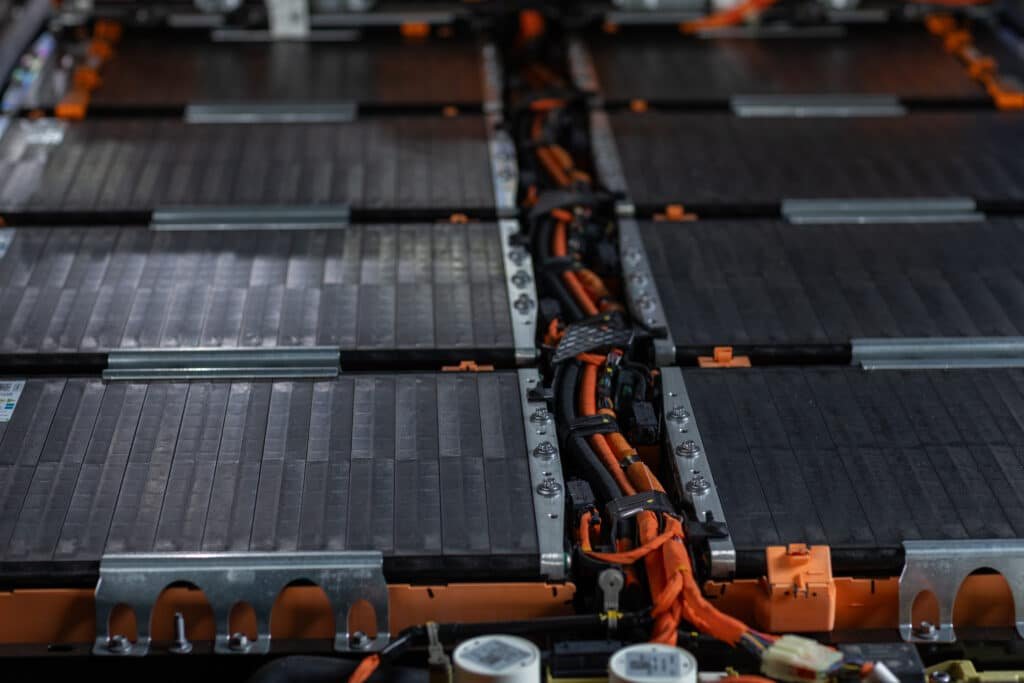
Automotive grounding studs for EV bonding should:
- Sit on a bare, conductive face, not on paint, sealer or anodized aluminum.
- Use a finish that stays conductive after corrosion testing.
- Use a locking feature such as a prevailing-torque nut or flange serrations, so clamp load holds under vibration.
- Be identified on the drawing as an electrical joint, with a resistance check after assembly.
For the wider battery pack fastening picture, see EV battery pack fasteners.
Why do ground connections fail?
Most ground failures are rising resistance, not broken studs.
| Failure | Root cause | Prevention |
|---|---|---|
| High resistance at build | Paint or sealer under the terminal | Masking, paint-cutting nut, defined contact face |
| Resistance rises in service | Corrosion at the contact, loss of clamp load | Conductive corrosion-resistant finish, locking nut |
| Intermittent electrical faults | Loose terminal from vibration | Prevailing-torque nut, torque audit |
| Stud pulls out or spins | Weak weld, clinch in thin or wrong sheet | Weld or clinch validation, push-out and torque-out tests |
| Galvanic corrosion | Copper or brass terminal on aluminum | Tin plating, sealing, isolating washers |
| Cross-threaded nut | Paint build-up on the stud thread | Thread masking, cutting thread on the nut |
How does KEYFIX supply grounding studs and nuts?
KEYFIX produces automotive grounding studs by cold heading and thread rolling, with thread sizes from M1.2 to M30, and ground nuts on 9 multi-station nut forging machines with 10 tapping machines. Flanges, shoulders and serrated faces are formed in the heading process. Surface options include zinc-nickel and zinc, applied to your specification.
Parts are checked with full thread go/no-go gauges, 2D video measuring and a salt spray chamber. Outgoing inspection runs at AQL 0.4 against a target below 25 PPM, under IATF 16949 (audited by NQA). Weld, push-out, torque-out and contact resistance tests in your assembly are arranged through third-party testing laboratories. See our cold forged parts and automotive fasteners pages.
What should the drawing or RFQ specify?
A complete RFQ for automotive grounding studs includes:
- Stud type and standard: weld stud to ISO 13918 (for example type PT), clinch stud, or threaded stud.
- Thread size, length, flange or shoulder dimensions and the contact face.
- Material and property class or hardness.
- Finish, with conductive areas named, and corrosion requirement.
- Mating nut: prevailing-torque or paint-cutting thread, serrated face, finish.
- Body or bracket material and thickness, and whether fitting is before or after paint.
- Electrical requirement: maximum resistance and the test current and method.
- Annual volume per part number.
Frequently Asked Questions
What is a grounding stud in a car?
A grounding stud is a threaded stud fixed to the body or chassis where ground cables and harness terminals are bolted on. It gives the electrical system a low-resistance return path to the battery negative.
Why must a grounding stud contact face be paint-free?
Paint and e-coat are insulators. If the terminal clamps against paint, current flows only through the thread contact, resistance is high and unstable, and electrical faults follow. Masking and paint-cutting nuts keep the contact metal-to-metal.
What resistance should an EV ground connection have?
UN Regulation No. 100 requires the resistance between exposed conductive parts and the electrical chassis to be below 0.1 Ω at a test current of at least 0.2 A. OEM standards may set their own limits and test methods.
What coating is best for grounding studs?
Zinc-nickel electroplate is common because it is conductive and corrosion resistant. Tin plating suits contact faces. Many zinc flake topcoats are insulating, so mask contact areas or use a conductive system.
Weld stud or clinch stud for grounding?
Weld studs suit steel bodies and form a metallurgical electrical joint. Clinch studs suit aluminum and pre-coated sheet where welding is difficult. Both need paint control on the contact face.
What is the minimum order quantity for grounding studs?
At KEYFIX, cold-headed studs and nuts typically start at 5,000–10,000 pieces per size. Samples typically take 7–14 business days, and production typically takes 4–6 weeks after sample approval.
Send your drawing and grounding requirement to KEYFIX. We usually return a quotation and DFM feedback within 48 hours of receiving a complete drawing.