L shaped brackets look like the simplest part in any assembly, which is exactly why they get specified badly. A right-angle piece of metal with a few holes hides a real structural problem: once the load sits away from the bend, the bracket becomes a lever and the corner becomes the most stressed point in the joint. Most field failures trace to three decisions made without analysis — load direction relative to the bend, whether stiffness came from thickness or a gusset, and where the mounting holes sit. This guide covers the load cases, the thickness-versus-gusset trade-off, bolt pattern geometry, the galvanized-or-stainless decision, and sourcing.
TL;DR — Key Takeaways
- An L bracket under offset load is a lever: stress at the corner scales with the distance from the bend to the load, not with the load alone.
- Deflection scales with the cube of thickness — going from 2 mm to 2.5 mm makes a bracket nearly twice as stiff for 25 % more material.
- A gusset beats extra thickness once the leg length grows, because it shortens the effective lever arm rather than fighting it.
- Two bolts on one line act as a hinge. Resisting rotation needs bolts offset across two axes, or a third fastener.
- Galvanized steel and stainless are different material systems, not two finishes — pick one on environment and cost, then specify it cleanly.
What Types of L Shaped Brackets Exist?
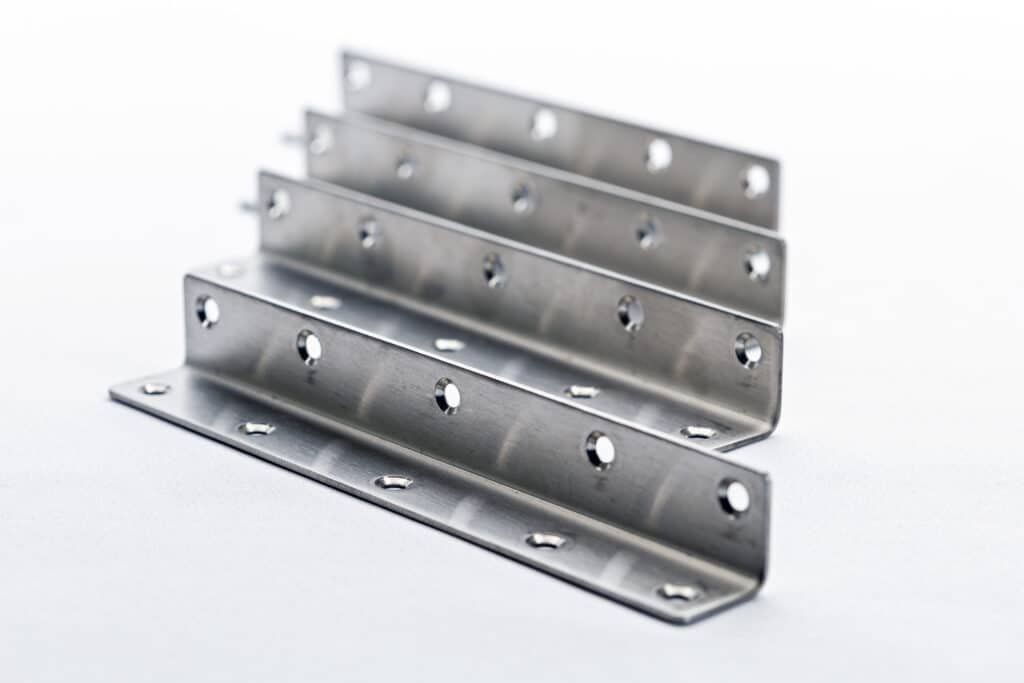
| Type | Distinguishing Feature | Best For |
|---|---|---|
| Plain angle bracket | Two flat legs, no reinforcement | Light loads, short legs |
| Gusseted bracket | Triangular rib at the corner | Long legs or high load |
| Slotted bracket | Elongated holes | Field-adjustable position |
| Flanged / lipped | Rolled edge on the free leg | Added stiffness without a gusset |
| Unequal-leg bracket | One leg longer than the other | Asymmetric mounting space |
| Heavy structural angle | Thick section, often hot-rolled | Load-bearing structural work |
The gusseted version is under-specified relative to how often it is the right answer. A triangular rib formed into the inside corner transfers load directly between the legs, changing the structural behaviour rather than merely adding material.
KeyFix produces bracket families through its stamping capability, with examples across the product portfolio.
How Does Load Direction Change Capacity?
The same bracket behaves in three quite different ways depending on where the load points, and this is the analysis most specifications skip.
| Load Case | What Happens | Relative Capacity |
|---|---|---|
| In-plane shear (load along the leg) | Metal loaded in its stiff direction | Highest |
| Perpendicular (peel) (load pulling the leg away) | Bending moment at the corner | Lowest — often 10× weaker |
| Torsional (twisting about the corner) | Corner distorts, angle opens | Low |
The peel case is where brackets fail in service. Loading a leg perpendicular to its own plane puts the full moment into the bend, which has no more material resisting it than the sheet thickness provides. A bracket rated comfortably in shear can deflect visibly under a fraction of that load applied sideways.
💡 Engineer’s Note: Before sizing anything, sketch the load vector against the bracket. If the force pulls a leg away from its mounting face rather than sliding along it, the bracket is in its weakest orientation — and rotating the bracket 90°, so the load acts in-plane, often solves the problem at no cost at all.
Why Does Thickness Matter So Much More Than It Looks?
Bending stiffness depends on the second moment of area, which for a flat section scales with thickness cubed — so small thickness changes produce large stiffness changes.
| Thickness | Relative Stiffness | Relative Weight |
|---|---|---|
| 1.5 mm | 1.0× (reference) | 1.0× |
| 2.0 mm | 2.4× | 1.33× |
| 2.5 mm | 4.6× | 1.67× |
| 3.0 mm | 8.0× | 2.0× |
Doubling thickness makes a bracket roughly eight times stiffer for twice the material — no other change offers that ratio, which is why added thickness is usually the cheapest fix for a bracket that flexes. Stress capacity scales with thickness squared rather than cubed, so thickness helps strength substantially and stiffness dramatically.
When Should You Add a Gusset Instead?
Thickness has limits: it raises material cost across the whole part, increases the minimum bend radius, and eventually exceeds the press capacity. A gusset attacks the problem differently.
| Situation | Better Answer | Why |
|---|---|---|
| Short legs, modest load | Thickness | Simple, no extra operation |
| Long legs, moderate load | Gusset | Shortens the effective lever arm |
| High load, space-constrained | Gusset + thickness | Both mechanisms |
| Very high load | Structural angle section | Beyond sheet-bracket territory |
The distinction is mechanical. Adding thickness makes the lever stronger; a gusset makes the lever shorter, giving the load a direct path between the legs near the corner. Once the free leg exceeds roughly three or four times the bracket width, the gusset almost always wins.
⚠️ Common Pitfall: Specifying a thicker bracket to cure flexing without checking the bend radius. Minimum inside bend radius scales with thickness, so a 3 mm bracket needs a noticeably larger corner radius than a 1.5 mm one. If the mating part was designed to sit tight into a sharp corner, the thicker bracket no longer fits flush — the fix creates an assembly interference that only appears at first article.
Where Should Mounting Holes Go on L Shaped Brackets?
Hole placement decides both the lever arm and whether the joint can resist rotation at all — and the second point surprises people.
| Bolt Pattern | Rotation Resistance | Notes |
|---|---|---|
| Two bolts on one line | Poor — acts as a hinge | The bracket pivots about the bolt axis |
| Two bolts offset across two axes | Good | Creates a resisting couple |
| Three bolts (triangle) | Best | Fully constrains rotation |
| Single bolt | None | Requires a separate anti-rotation feature |
Two fasteners in a straight line clamp firmly but do nothing to stop rotation about that line once friction is overcome; under vibration the joint works loose and the bracket swings. The fix is geometric, not a larger bolt: offset the holes across two axes, or add a third.
Hole distance from the bend sets the lever arm, so moving holes closer to the bend reduces the moment the corner carries. Slotted holes allow adjustment but reduce clamped contact area and friction grip, so they rely more on bolt shear and deserve a washer with generous bearing area.
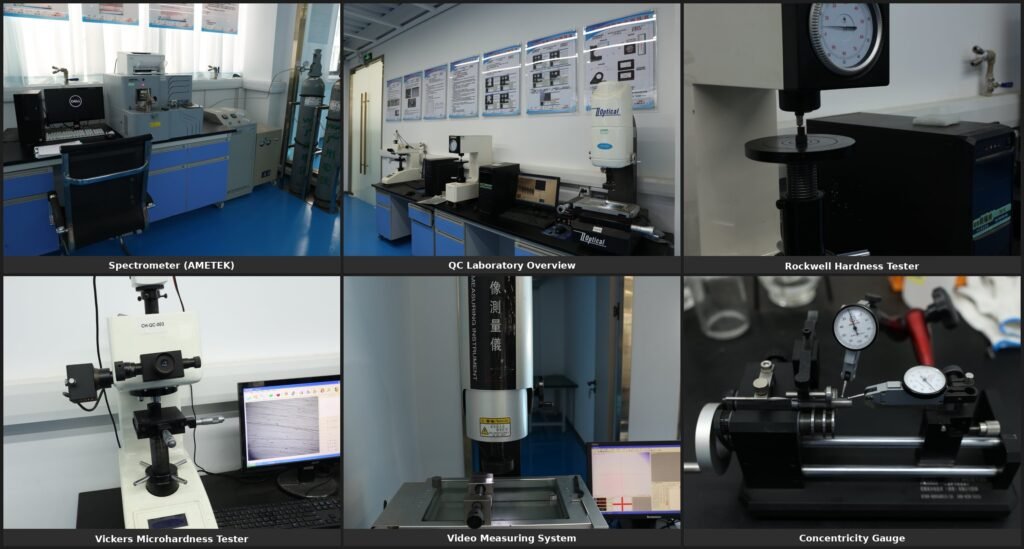
Hole positions and formed geometry are verified by 2D video measuring and Shining3D 3D scanning, documented under KeyFix’s inspection standards programme.
Galvanized or Stainless — Which Applies?
These are two separate material-and-finish systems rather than two coatings on the same part, and mixing the terms on a drawing produces quotes that cannot be compared.
| Option | Corrosion Behaviour | Relative Cost | Best Use |
|---|---|---|---|
| Zinc-plated steel | Coating-dependent, 96–240 hr | 1.0× | Dry indoor, cost-driven |
| Zinc-nickel steel | 720–1,000+ hr salt spray | 1.4× | Outdoor, automotive |
| Hot-dip galvanized | 1,000+ hr, thick coating | 1.2× | Structural, outdoor, thick sections |
| Stainless 304 (A2) | Inherent, cannot wear off | 2.5× | Humid, food, visible hardware |
| Stainless 316 (A4) | Outstanding in chloride | 3.5× | Marine, coastal, chemical |
The practical rule: zinc protects only while the coating survives, and brackets get scratched during installation. For outdoor, structural, or roughly handled service, zinc-nickel or stainless justify their premium. KeyFix supplies zinc, zinc-nickel, and DACROMET finishes specified to the neutral salt spray hours the drawing requires (per ASTM B117), with alloy confirmed by SPECTRO optical emission spectrometry through its raw material control process.
How Are These Brackets Manufactured?
| Route | Tooling | Tolerance | Sweet Spot |
|---|---|---|---|
| Laser cut + press brake | None | ±0.3 mm across the bend | 1–500 pcs |
| Progressive stamping | Dedicated die | ±0.05 mm punched | 1,000+ pcs |
| Stamped + machined feature | Die + CNC | ±0.005 mm on one feature | Mixed requirements |
| Step | What Happens | KeyFix Capability |
|---|---|---|
| Coil verification | Grade and temper by OES | SPECTRO (Germany), 100 % of heats |
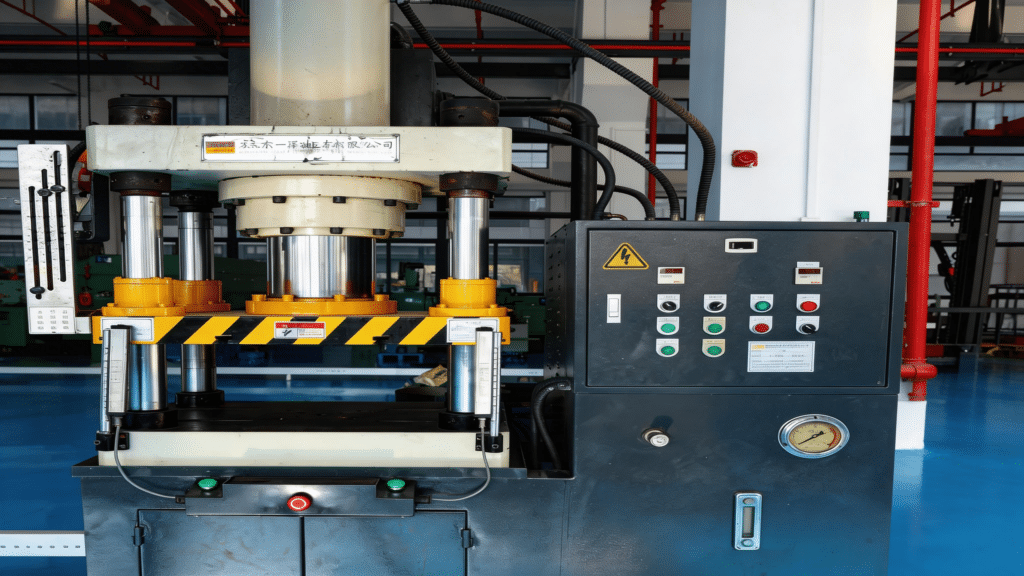
| Blanking and forming | Profile, holes, bend in one die | 50–300 T presses, 80 strokes/min |
| Deburr | Edges broken, burr side tracked | Controlled |
| Machined features | Precision holes where required | 32-machine CNC line |
| Finishing | Zn, Zn-Ni, DACROMET; passivation | To specification |
| Verification | Hole position, bend angle, flatness | 2D video measuring + 3D scanning |
Process detail sits on the technology overview, with hardware from the cold forging line and delivered work in the project case studies.
Need a quote on custom L shaped brackets? Send your drawing with the load case noted to KeyFix — DFM review and quotation within 48 hours. Get a quote or email sales@keyfixpro.com.
What Should the Drawing Specify?
| Call-Out | What to Specify | Why It Matters |
|---|---|---|
| Material and finish system | Zinc-plated steel or stainless — one system | Prevents uncomparable quotes |
| Thickness | With tolerance | Drives stiffness cubically |
| Leg lengths | Both, with tolerance | Sets lever arms |
| Inside bend radius | Stated, not assumed | Affects flush fit |
| Bend angle | With tolerance (±0.5–1°) | Springback varies by material |
| Hole pattern | Position to the bend line as datum | Lever arm and rotation resistance |
| Gusset | Present or not; dimensions | Structural, not decorative |
| Load case | Direction and magnitude | Lets the supplier flag a weak orientation |
📋 Spec Tip: Reference hole positions to the bend line, not the free edge. Bend position carries its own tolerance, so dimensioning from the outer edge stacks that variation into every hole — and the holes must line up with a mating part, while the edge rarely matters.
How Do You Qualify a Manufacturer?
| Audit Point | Minimum Requirement | KeyFix Status |
|---|---|---|
| Quality system | ISO 9001 minimum | IATF 16949 + ISO 9001 + ISO 14001 |
| Press capacity | Tonnage matched to thickness | 50–300 T presses |
| Material verification | OES per coil | SPECTRO OES, 100 % of heats |
| Formed-part measurement | 3D scanning or checking fixtures | Shining3D + 2D video measuring |
| Finishing | In-house, with salt spray records | Zn-Ni / DACROMET, 1,000+ hr |
| Outgoing quality | Stated defect rate | <25 PPM at AQL 0.4 |
Steel sheet follows ASTM A1008 and stainless A240, with general tolerances per ISO 2768, under the system documented in KeyFix’s company background and applied across its machinery hardware programmes.
What Are the Logistics and Shipping Terms?
| Term | Detail |
|---|---|
| Manufacturing location | Guangdong Province |
| Standard shipping term | FCA at our Guangdong plant |
| Sea freight term | FOB Shenzhen Yantian Port |
| Prototype lead time | 7–14 business days (air-expressed) |
| Production lead time | 4–6 weeks after sample approval |
Frequently Asked Questions
Which direction should an L bracket be loaded?
In-plane, along the leg, where the metal works in its stiff direction. A load pulling a leg perpendicular to its own plane puts the full bending moment into the corner and can be roughly ten times weaker. Rotating the bracket so the load acts in-plane often fixes a marginal design for free.
Is it better to add thickness or a gusset?
Thickness for short legs — stiffness scales with thickness cubed, so 1.5 mm to 2 mm gives about 2.4× the stiffness for 33 % more material. Once the free leg grows past roughly three times the bracket width, a gusset wins because it shortens the lever arm rather than strengthening it.
Why does my bracket rotate even though the bolts are tight?
Two bolts on a single line act as a hinge — they clamp well but cannot resist rotation about their own axis once friction is overcome. Offset the holes across two axes or add a third bolt.
Galvanized or stainless for an outdoor bracket?
Zinc plating protects only while intact, and brackets get scratched during installation. For outdoor service, specify zinc-nickel (720–1,000+ hr salt spray) or stainless, which cannot lose its corrosion resistance.
What is the minimum order quantity?
Laser-cut and brake-formed prototypes run from 10–100 pieces. Progressive-die production typically starts at 1,000–5,000 pieces, with the die quoted separately. Contact sales@keyfixpro.com for quotations.
What shipping terms apply for international orders?
Standard shipping is FCA at our Guangdong plant, with sea freight as FOB Shenzhen Yantian Port from our Guangdong production base.
If your next assembly needs custom angle brackets — plain, gusseted, slotted, or heavy gauge, in zinc-plated or stainless — send your drawing to KeyFix for a free DFM review and a quotation within 48 hours. Explore the product portfolio or contact KeyFix at sales@keyfixpro.com.
Author: KeyFix Engineering Team Published: July 11, 2026 Last Updated: July 11, 2026