Galvanized washers on an electric wheelchair carry a responsibility most hardware never does: they sit inside a device that supports a person’s full weight, moves them across kerbs and thresholds, and is often serviced by the user or a family member rather than a technician. A washer that corrodes into its bolt, or a joint that loosens under 3,000 daily load reversals, is not a maintenance nuisance — it is a safety event. This guide covers the load and vibration environment specific to powered mobility, anti-loosening washer selection, the zinc coating classes that match indoor and outdoor use, galvanic isolation between steel fasteners and aluminum frames, and how to specify and source custom parts.
TL;DR — Key Takeaways
- Powered mobility joints see continuous load reversal — user transfers, kerb impacts, camber loads — so vibration loosening, not static strength, is the dominant failure mode.
- Plain zinc at 5–8 μm suits indoor-only frames; outdoor and all-weather use wants zinc-nickel at 720–1,000+ hours salt spray.
- Steel fasteners in an aluminum frame form a galvanic couple — the aluminum corrodes, and the washer is the part that can isolate it.
- Serrated and wedge-lock washers resist loosening by different mechanisms; serrated washers bite the surface and are unsuitable on soft anodised aluminum or painted frames.
- A qualified supplier verifies steel by OES, controls plating thickness per lot, and documents outgoing quality below 25 PPM at AQL 0.4.
What Load Environment Do Wheelchair Fasteners Face?
A powered chair is not a static frame. Every transfer, kerb drop, and camber correction cycles its joints, and the duty numbers are higher than most designers expect.
| Location | Load Character | Why It Is Demanding |
|---|---|---|
| Caster fork / stem | Rotational + impact | Every kerb and threshold shocks the joint |
| Seat frame and backrest | Load reversal on transfer | Full body weight applied and removed daily |
| Motor and gearbox mounts | Torque reaction + vibration | Continuous while driving |
| Battery tray | Static mass, high inertia | Heavy pack shifts under braking |
| Armrest and legrest pivots | User-adjusted repeatedly | Fasteners cycled by hand, not tools |
| Anti-tip wheels | Sudden shock loading | Rated for the whole chair plus occupant |
| Wheel and axle hardware | Rotational, unsprung | Loosening here is immediately hazardous |
The pattern that matters when choosing galvanized washers: cyclic loading dominates. A joint that never moves rarely loosens; a joint that loads and unloads thousands of times a year works its threads, and preload bleeds away unless something resists it. That is the washer’s job in this application, far more than load spreading.
💡 Engineer’s Note: Design the frame fastener set around the user, not the workshop. Armrest, legrest, and headrest hardware gets removed and refitted by people without torque wrenches, so specify captive or self-retaining washers where you can and pick anti-loosening types that still work when tightened by feel rather than to a number.
Which Washer Types Resist Loosening?
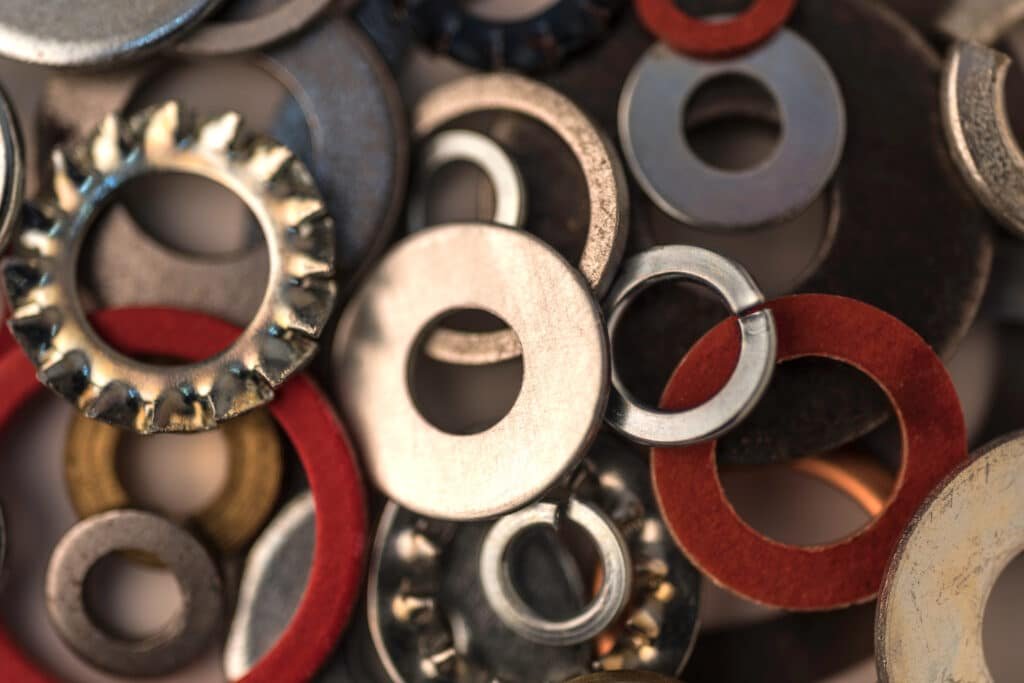
Anti-loosening galvanized washers work by three different mechanisms, and they suit different frame surfaces.
| Washer Type | Mechanism | Suits | Caution |
|---|---|---|---|
| Plain flat washer | Load spreading only | Under nuts, soft surfaces | No loosening resistance |
| Serrated (external tooth) | Teeth bite both surfaces | Bare steel, hard surfaces | Damages anodising and paint |
| Internal tooth | Teeth bite, hidden edge | Cosmetic positions | Lower grip than external |
| Spring / split lock | Spring tension | Light duty | Limited effect at full preload |
| Wedge-lock pair | Cam angle exceeds thread pitch | High-vibration, painted frames | Must install as a pair, correct way up |
| Conical (Belleville) | Maintains preload as parts settle | Compensating relaxation | Needs correct load range |
| Bonded seal washer | Rubber-bonded, seals fluid | Battery compartments, covers | Not a locking device |
The choice usually comes down to the frame surface. Serrated washers deliver excellent grip on bare steel but tear through anodising and paint — creating exactly the coating breach where corrosion begins on an aluminum chassis. Wedge-lock pairs work by cam geometry between the two halves rather than by biting the substrate, which makes them the safer choice on finished aluminum frames and painted steel.
⚠️ Common Pitfall: Fitting a wedge-lock pair upside down, or using a single half. The two washers must face cam-to-cam, with the radial-tooth faces outward against the joint. Installed as a single washer, or reversed, the pair loses its locking function entirely while looking correctly assembled — one of the few fastener errors that is invisible after the fact.
How Do You Choose the Zinc Coating Class?
“Galvanized” is not a specification on its own. Coating type and thickness determine whether the washer survives three years in a bathroom-adjacent indoor chair or six months on an outdoor all-weather machine.
| Coating | Thickness | Salt Spray (to white rust) | Suits |
|---|---|---|---|
| Zinc, clear trivalent | 5–8 μm | 24–72 hr | Indoor frames, dry environments |
| Zinc, thick trivalent | 8–12 μm | 96–200 hr | Indoor with humidity, occasional outdoor |
| Zinc-nickel (12–15 % Ni) | 8–15 μm | 720–1,000+ hr | All-weather outdoor, coastal |
| DACROMET / zinc flake | 6–10 μm | 500–1,000 hr | High corrosion, no hydrogen risk |
| Hot-dip galvanized | 45–85 μm | 1,000+ hr | Too thick for small washer fits |
| Stainless (A2/A4) | No coating | Inherent | Premium, wet environments |
Two points shape the decision. Hot-dip galvanizing, despite the name most buyers reach for, is generally too thick for small washers — the coating fills threads and changes fits, so electroplated zinc or zinc-nickel is the correct route in this size class. And the environment is more aggressive than it looks: an indoor chair still meets bathroom humidity, spilled drinks, cleaning chemicals, and perspiration, so plain 5 μm clear zinc is an economy choice rather than a safe default.
KeyFix supplies zinc, zinc-nickel, and DACROMET finishes specified to the neutral salt spray hours the drawing requires (per ASTM B117), with coating thickness reported for every lot through its raw material and surface treatment control.
Why Does Galvanic Corrosion Matter on Aluminum Frames?
Most powered chairs use aluminum frame tubing for weight, and most fasteners are plated steel. Those two metals sit apart on the galvanic series, so in the presence of moisture the aluminum becomes the anode and corrodes — around the very hole the fastener passes through.
| Fastener Material | Frame Material | Galvanic Risk | Mitigation |
|---|---|---|---|
| Zinc-plated steel | Aluminum | Moderate — zinc buffers initially | Adequate indoors; reassess outdoors |
| Bare / worn steel | Aluminum | High | Restore coating; isolate |
| Stainless steel | Aluminum | High | Isolating washer or coating |
| Zinc-nickel steel | Aluminum | Low–moderate | Good general choice |
| Aluminum hardware | Aluminum | None | Limited strength |
The useful detail here is that zinc plating is itself protective in this couple — zinc sits close to aluminum galvanically, so a zinc-plated washer is a far better neighbour to an aluminum frame than a stainless one, despite stainless being the more corrosion-resistant metal in isolation. This surprises buyers who assume upgrading to stainless always improves durability; in an aluminum frame, stainless hardware can accelerate frame corrosion unless isolated.
Where isolation is needed, the washer is the natural place to do it: a bonded or coated shoulder washer separates the fastener from the frame bore and face, and a sealing washer keeps moisture out of the interface altogether. Delivered programs of this kind appear in KeyFix’s project case studies and machinery hardware programs.
What About Hydrogen Embrittlement?
Small high-strength parts are the classic embrittlement risk, and mobility devices use plenty of them. Electroplating charges high-strength steel with hydrogen; under sustained load the fastener can fracture without warning days after assembly.
| Part Class | Risk | Requirement |
|---|---|---|
| Property class ≤ 8.8 | Low | Standard plating acceptable |
| Class 10.9 and above | High | Bake 190–220 °C within 4 hours of plating |
| Hardened washers (HRC ≥ 39) | High | Bake, or use zinc flake / DACROMET |
| Spring and lock washers | Moderate–high | Bake or mechanical plating |
| Stainless | None | No bake required |
For safety-relevant hardened parts, zinc flake coatings such as DACROMET sidestep the problem entirely because they are applied without electroplating — no hydrogen is introduced. That makes them a strong option for lock washers and hardened components in a load-bearing mobility frame.
Which Galvanized Washers Does a Chair Need?
| Family | Function on the Chair | Typical Sizes |
|---|---|---|
| Flat washer (DIN 125 / ISO 7089) | Load spreading under nuts and heads | M4–M12 |
| Large-OD fender washer | Spreading load on thin tube walls | M5–M10 |
| Shoulder / isolating washer | Separates steel hardware from aluminum | M5–M8 |
| Wedge-lock pair | Anti-loosening on painted or anodised frames | M5–M10 |
| Belleville washer | Holds preload as plastics and coatings settle | M4–M8 |
| Bonded seal washer | Sealing battery and electronics covers | M4–M8 |
| Wave washer | Takes up play in pivots and bearings | M4–M10 |
Thin-wall aluminum tube deserves special mention. A standard washer under a nut on a 1.5 mm tube wall concentrates load enough to dimple the tube, and once the tube deforms the joint loses preload permanently. Large-OD fender washers or internal tube inserts spread that load across enough area to prevent it — the same bearing-pressure logic that governs any soft-host joint.
How Are Custom Galvanized Washers Produced?
| Step | What Happens | KeyFix Capability |
|---|---|---|
| Coil verification | Grade and temper by OES | SPECTRO (Germany), 100 % of heats |
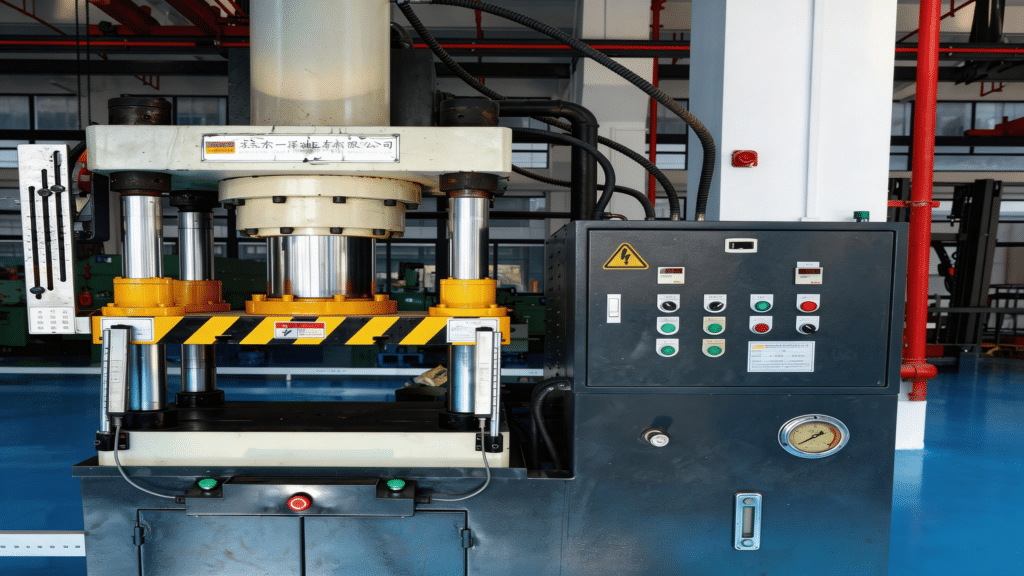
| Blanking | Washer profile stamped | 50–300 T stamping presses, ±0.05 mm |
| Forming | Serrations, cams, cones, shoulders | In-die forming stations |
| Heat treatment | Hardening for lock and spring types | Controlled-atmosphere furnaces |
| Plating | Zinc, zinc-nickel, or DACROMET | To specification, thickness reported per lot |
| Hydrogen bake | 190–220 °C within 4 hours | Mandatory for hardened parts |
| Machined specials | Shoulder and isolating washers | 32 CNC machines, ±0.005 mm |
| Verification | ID, OD, thickness, flatness, coating | 2D video measuring + Mitutoyo gauges, 100 % optical sorting |
Stamping is the right process because washer geometry, serration form, and cam angles all form in one stroke with die repeatability. For shoulder washers and isolating profiles that need a machined bore, work moves to the CNC production line; related hardware is produced on the cold forging line, with equipment detail on the technology overview and the wider precision range in the CNC parts portfolio. Dimensional and coating conformance is documented under the inspection standards program.
Need a quote on custom galvanized washers for mobility devices? Send your drawing or a sample to KeyFix — DFM review and quotation within 48 hours. Get a quote or email sales@keyfixpro.com.
What Should the Drawing Specify?
| Call-Out | What to Specify | Why It Matters |
|---|---|---|
| Standard | DIN 125 / ISO 7089, or custom profile | Anchors dimensions |
| ID, OD, thickness | With tolerances | Fit and bearing area |
| Material + class | Carbon steel, hardened, or stainless | Strength and embrittlement risk |
| Coating class | e.g., zinc-nickel 8–12 μm, trivalent | Corrosion life — never just “galvanized” |
| RoHS compliance | Trivalent, hexavalent-free | Regulatory for medical devices |
| Hydrogen bake | Required for hardened parts | Prevents delayed fracture |
| Locking function | Wedge-lock pair, serrated, Belleville | Anti-loosening mechanism |
| Frame material note | State if mating with aluminum | Drives galvanic decision |
📋 Spec Tip: Write “coating measured after plating, XRF verified” alongside the thickness class. Coating adds to every surface, so a washer that gauges correctly bare may not fit its counterbore once plated — and stating the measurement condition settles it before the first shipment.
How Do You Qualify a Supplier?
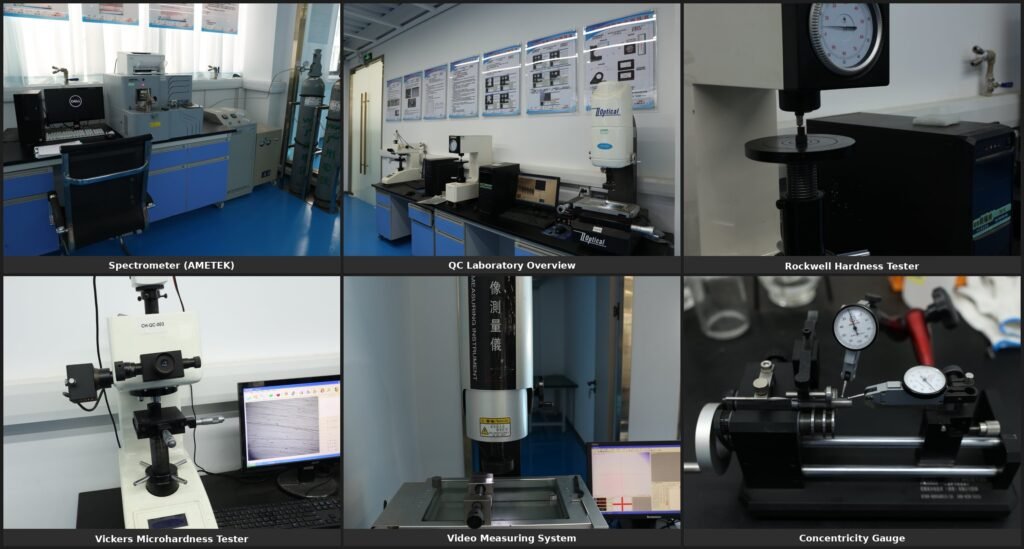
| Audit Point | Minimum Requirement | KeyFix Status |
|---|---|---|
| Quality system | ISO 9001 minimum | IATF 16949 + ISO 9001 + ISO 14001 |
| Stamping capacity | Precision blanking, burr control | 50–300 T presses, ±0.05 mm |
| Material verification | OES per coil | SPECTRO OES, 100 % of heats |
| Plating capability | To specification, thickness reported per lot | Zn, Zn-Ni, DACROMET |
| Salt spray records | Documented test results | 1,000+ hr validated |
| Hydrogen bake control | Time and temperature records | Documented per lot |
| Outgoing quality | Stated defect rate | <25 PPM at AQL 0.4 |
Washer dimensions follow ISO 7089 and coating classes follow ASTM B633, under the quality system documented in KeyFix’s company background, with the wider range in the product portfolio.
What Are the Logistics and Shipping Terms?
KEYFIX manufactures in its own plant in Guangdong Province, near South China’s export ports.
| Term | Detail |
|---|---|
| Manufacturing location | Guangdong Province |
| Standard shipping term | FCA at our Guangdong plant |
| Sea freight term | FOB Shenzhen Yantian Port |
| Prototype lead time | 7–14 business days (air-expressed) |
| Production lead time | 4–6 weeks after sample approval |
Frequently Asked Questions
What does “galvanized” mean when ordering washers?
On small hardware it means electroplated zinc, not hot-dip galvanizing — hot dip is too thick for washer fits. Specify the coating class and thickness (for example zinc-nickel 8–12 μm, trivalent passivate) rather than the word alone.
Should I use stainless instead of galvanized washers on an aluminum frame?
Not automatically. Stainless is more corrosion-resistant by itself but sits far from aluminum galvanically and can accelerate frame corrosion. Zinc-plated or zinc-nickel steel is often the better neighbour, or use an isolating shoulder washer with stainless.
Which washer stops fasteners loosening on a wheelchair?
Wedge-lock pairs are the safest general choice on painted or anodised frames because they lock by cam geometry without biting the coating. Serrated washers grip well on bare steel but damage finishes and open a corrosion path.
What coating suits an outdoor powered wheelchair?
Zinc-nickel at 8–15 μm, giving 720–1,000+ hours to white rust, or a zinc flake coating such as DACROMET where hardened parts make hydrogen embrittlement a concern.
What is the minimum order quantity for custom washers?
Stamped washers typically start at 5,000–10,000 pieces per size once tooling exists, with sample lots from 500; machined specials have no MOQ. Contact sales@keyfixpro.com for quotations.
What shipping terms apply for international orders?
Standard shipping is FCA at our Guangdong plant, with sea freight as FOB Shenzhen Yantian Port from our Guangdong production base.
If your mobility device program needs custom galvanized washers — flat, wedge-lock, isolating, sealing, or hardened types with documented coating and bake records — send your drawing to KeyFix for a free DFM review and a quotation within 48 hours. Explore the product portfolio or contact KeyFix at sales@keyfixpro.com.
Author: KeyFix Engineering Team Published: July 8, 2026 Last Updated: July 8, 2026