Precision shim washers are the smallest parts in an electrical appliance and the ones that make everything else fit. Motors, gearboxes, solenoids, and switch assemblies all accumulate tolerance — a few hundredths per part — and the shim is where that stack-up gets absorbed. From 0.01 mm foil discs that set a solenoid air gap to 2 mm spacers that locate a gear on its shaft, the engineering lives in three quiet specifications: thickness class, burr height, and flatness. This guide covers shim types, appliance applications, the honest way to specify ultra-thin gauges, material selection near motors, and how production is verified.
TL;DR — Key Takeaways
- Shim thickness runs from 0.01 mm foil to 3 mm plate; below 0.1 mm, thickness comes from calibrated rolled stock (±3–10 μm by gauge), and the maker’s job is blanking it clean.
- Flat shim rings follow DIN 988 ID × OD series, so a standard callout quotes in one pass.
- Burr height should be capped at ≤10 % of thickness with the burr side marked — the spec that separates precision shims from punched scrap.
- Near motor stators, use non-magnetic 304 or brass: a carbon-steel shim in the flux path shifts the air gap the shim was meant to set.
- A qualified supplier verifies alloy by OES, checks thickness with calibrated gauges, and documents outgoing quality below 25 PPM at AQL 0.4.
What Are Precision Shim Washers?
A washer spreads load under a fastener; a shim sets a distance. A shim washer does both — a flat, precisely thick ring installed to position one component relative to another. Unlike a plain washer, its thickness is the functional dimension, often toleranced tighter than anything else in the joint.
| Type | Form | Function |
|---|---|---|
| Flat shim ring (DIN 988) | Plain ID × OD ring | Axial positioning, endplay control |
| Support washer | Thicker DIN 988 series | Load-bearing spacer |
| Laminated peelable shim | Bonded 0.05 mm layers | Field-adjustable thickness |
| Slotted / horseshoe shim | Open-sided | Insert without disassembly |
| Tab / notched shim | Anti-rotation feature | Keyed shafts, indexed stacks |
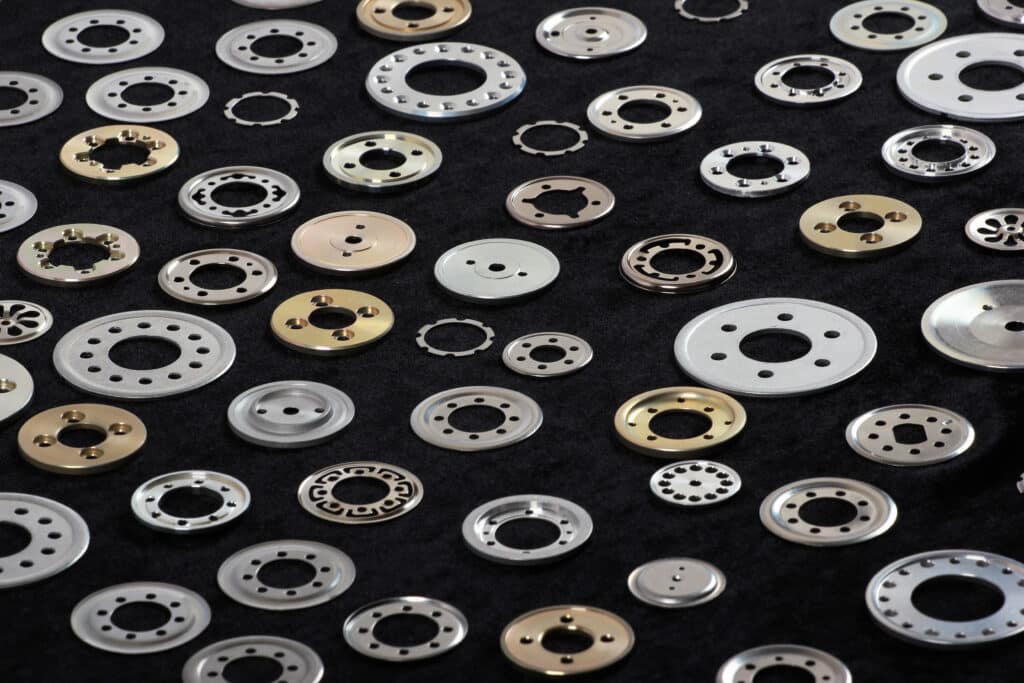
Standard rings follow the DIN 988 ID × OD size ladder, which is why quoting them takes hours, not days. KeyFix produces the full family through its stamping capability, with finished examples across the product portfolio.
Where Do Electrical Appliances Use Shim Washers?
| Location | What the Shim Sets | Typical Gauge |
|---|---|---|
| Motor armature | Axial endplay (rotor float) | 0.1–0.5 mm |
| Solenoid / relay | Magnetic air gap | 0.01–0.1 mm foil |
| Gearbox shafts | Gear position, backlash stack | 0.1–1.0 mm |
| Pump impeller | Clearance to housing | 0.05–0.3 mm |
| Switch / contact assemblies | Contact spacing, over-travel | 0.05–0.2 mm |
| Panel and bracket leveling | Assembly alignment | 0.5–3 mm |
The motor case is the instructive one: rotor endplay is typically set to a small float by selecting shim thickness at assembly — too tight and the bearings preload and heat; too loose and the rotor chatters axially. The shim is not packaging; it is the adjustment mechanism. Delivered appliance and machinery programs of this kind appear in KeyFix’s project case studies and machinery hardware programs.
💡 Engineer’s Note: Anywhere a shim sits in a magnetic circuit — solenoid gaps, stator end zones — specify non-magnetic material (304 stainless or brass). A carbon-steel or 430 shim becomes part of the flux path, and the air gap you carefully set no longer measures what the magnetics see.
What Thickness Range and Tolerance Are Realistic?
The number every buyer asks about — 0.01 mm — is real, but the tolerance logic differs from machined parts. Below about 0.1 mm, thickness is not created by the press at all: it comes from precision-rolled foil whose gauge is set at the mill. Precision shim washers in this range are blanked from that calibrated stock with small-clearance tooling; the manufacturer’s contribution is a clean edge and an unthinned, unstretched disc.
| Gauge Band | How It’s Made | Thickness Tolerance (typical stock class) |
|---|---|---|
| 0.01–0.05 mm foil | Blanked from calibrated foil | ±3–5 μm |
| 0.05–0.20 mm | Blanked from rolled strip | ±5–10 μm |
| 0.20–1.0 mm | Stamped, 50–300 T presses | ±10–20 μm |
| 1.0–3.0 mm | Stamped or machined | ±0.02–0.05 mm |
⚠️ Common Pitfall: Writing “0.010 mm ±0.001” on a foil shim drawing specifies a tolerance no foil mill sells. Specify the stock class instead — “0.010 mm foil, thickness per mill class ±0.003, 100 % verified” — and the part becomes quotable, inspectable, and honest.
Every lot’s thickness is verified against calibrated Mitutoyo precision gauges from KeyFix’s 145-gauge measurement library, with OD, ID, and flatness checked by 2D video measuring under the inspection standards program.
Single Shim or Laminated Peel Stock?
| Option | Adjustment | Best For |
|---|---|---|
| Solid shim, selected thickness | Fixed at assembly | Production lines with known stack |
| Laminated peelable (0.05 mm layers) | Peel to size in the field | Service, prototypes, variable stacks |
Laminated shims bond foil layers that peel by hand, letting a technician tune endplay without a shim kit. They cost more per piece and less per adjustment.
Which Materials Suit Electrical Appliances?
| Material | Magnetic? | Conductivity | Why in Appliances |
|---|---|---|---|
| Stainless 304 (½-hard) | No | Low | The default — springy, non-magnetic, corrosion-proof |
| Stainless 316 | No | Low | Humid or washdown appliances |
| Brass | No | High | Conductive spacing, EMI paths |
| Copper C110 | No | Highest | Thermal / grounding shims |
| Carbon steel 1018 + zinc | Yes | Moderate | Cheap structural leveling — away from magnetics |
| Aluminum 6061 | No | High | Light spacers, thermal paths |
Alloy identity is verified on every incoming coil and sheet by SPECTRO optical emission spectrometry through KeyFix’s raw material control — the check that catches a magnetic 430 coil sold as 304 before it reaches a solenoid line.
How Are Precision Shim Washers Produced and Verified?
| Step | What Happens | KeyFix Capability |
|---|---|---|
| Stock verification | Alloy by OES; gauge on receipt | SPECTRO OES; Mitutoyo gauges |
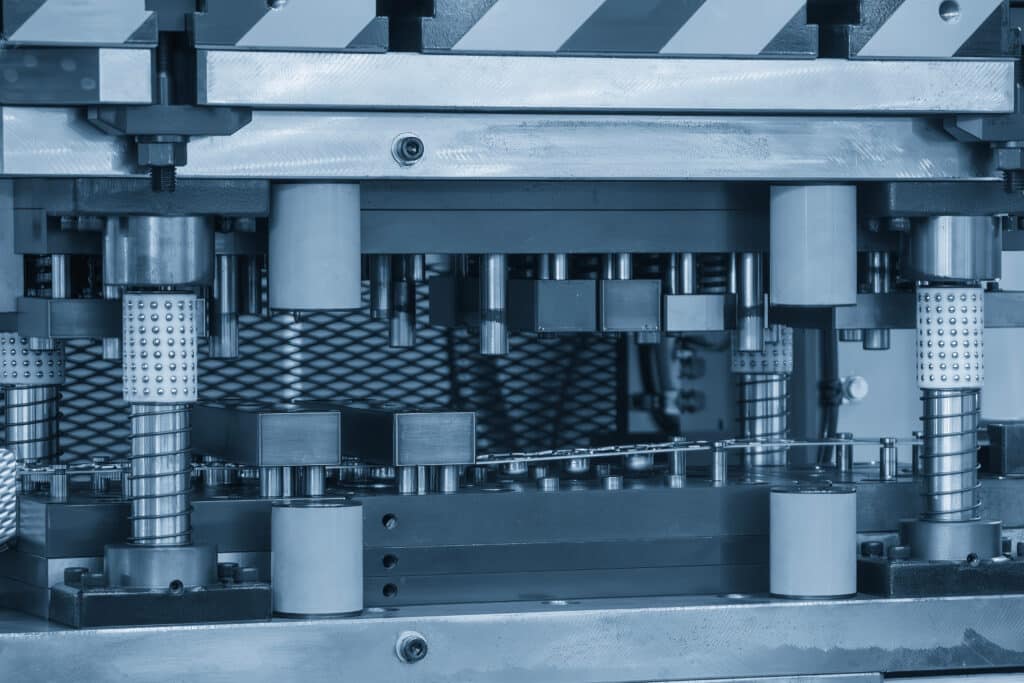
| Blanking | Small-clearance dies; foil handled flat | 50–300 T stamping presses |
| Deburr / edge finish | Tumble or fine deburr to ≤10 % t | Controlled, burr side tracked |
| Thick spacers | Machined when > 1 mm or tight ID | 32-machine CNC line, ±0.005 mm |
| Verification | Thickness 100 %, OD/ID/flatness optical | Mitutoyo + 2D video measuring, optical sorting |
Process logic and equipment detail sit on the technology overview.
Need a quote on precision shims or spacer washers? Send your drawing — DFM review and quotation within 48 hours. Get a quote or email sales@keyfixpro.com.
What Should the Drawing Specify?
| Call-Out | What to Specify | Why It Matters |
|---|---|---|
| ID × OD | Per DIN 988 where possible | One-pass quoting |
| Thickness | Nominal + stock class | Honest, inspectable |
| Burr | Side marked; height ≤ 0.1 × t | Seating and stack accuracy |
| Flatness | Per diameter band | Stack behaves as its sum |
| Material + temper | e.g., 304 ½-hard | Springback and magnetics |
| Finish | Passivated / plain / zinc (steel) | Corrosion, cleanliness |
| Magnetic requirement | State “non-magnetic” if it matters | Blocks silent substitutions |
📋 Spec Tip: Two words on the print — “burr side: this face” with an arrow — do more for stack accuracy than a tighter thickness tolerance. Burrs seat first; marked burrs stack predictably.
Behind every order sits the IATF 16949 / ISO 9001 / ISO 14001 system documented in KeyFix’s company background, with stainless strip per ASTM A666, general tolerances per ISO 2768, delivered quality below 25 PPM at AQL 0.4, and the broader precision range visible in the CNC parts portfolio.
What Are the Logistics and Shipping Terms?
KEYFIX manufactures in its own plant in Guangdong Province, near South China’s export ports.
| Term | Detail |
|---|---|
| Manufacturing location | Guangdong Province |
| Standard shipping term | FCA at our Guangdong plant |
| Sea freight term | FOB Shenzhen Yantian Port |
| Prototype lead time | 7–14 business days (air-expressed) |
| Production lead time | 4–6 weeks after sample approval |
Frequently Asked Questions
What is the thinnest metal shim washer available?
0.01 mm (10 μm) foil, blanked from calibrated rolled stock. Thickness tolerance follows the foil mill class — typically ±3–5 μm at that gauge — and every lot is 100 % thickness-verified.
What is the difference between a shim and a washer?
A washer distributes clamping load; a shim sets a distance. A shim washer is a ring whose thickness is the functional dimension — it positions parts first and spreads load second.
Why must shims near motors be non-magnetic?
A magnetic shim inside a flux path becomes part of the magnetic circuit, effectively shrinking the air gap it was installed to define. Solenoid response and motor behavior shift accordingly. Specify 304 stainless or brass in any magnetic zone.
What is the minimum order quantity?
Stamped shims start at 1,000–5,000 pieces per size once tooling exists; die-cut prototypes run from 100 pieces. Contact sales@keyfixpro.com for quotations.
What quality documentation ships with shim orders?
Material certificates with OES verification, 100 % thickness records against calibrated Mitutoyo gauges, burr-side and flatness reports, and coating or passivation records where applicable — under IATF 16949 / ISO 9001 / ISO 14001.
What shipping terms apply for international orders?
Standard shipping is FCA at our Guangdong plant, with sea freight as FOB Shenzhen Yantian Port from our Guangdong production base.
If your appliance program needs precision shim washers — foil-thin air-gap discs, DIN 988 rings, laminated peel stock, or machined spacers — send your drawing to KeyFix for a free DFM review and a quotation within 48 hours. Explore the product portfolio or contact KeyFix at sales@keyfixpro.com.
Author: KeyFix Engineering Team Published: July 5, 2026 Last Updated: July 5, 2026